REVIEW · LISBON
Lisbon: Belem Walking Tour with Jeronimos Monastery Entry
Book on GetYourGuide →Operated by LP FASSI SIMARDI VIAGENS E TURISMO ME · Bookable on GetYourGuide
Belém clicks fast when you have the right story. This tour ties Jerónimos Monastery to Portugal’s Age of Discovery, with an actual entrance ticket taken care of in advance, not after you arrive. I especially love the skip-the-line access and the included stop for the real Pastéis de Belém. One consideration: the Belém Tower can’t be entered right now due to restoration, so part of that final act is outside viewing.
The flow works well for a morning start. You’re scheduled to enter the monastery around 9:30 am, and the tour is led in English so you’re not left guessing at what you’re seeing. One more practical point: this is a mostly walking route, and it isn’t a great fit if you have mobility challenges.
In This Review
- Key moments you’ll remember
- Jerónimos Monastery: where the tour really earns its value
- Upper Cloister + the building’s meaning in the Portuguese Navigations era
- Chapter Room, old Refectory, and Fernando Pessoa’s tomb
- Santa Maria de Belém Church and the Manueline style clues
- From Empire Square Garden to the Monument to the Discoveries
- Pastéis de Belém: the included taste stop you should plan for
- Belém Tower during restoration: what you can still get from it
- Price and timing: does $70 make sense for a 3–3.5 hour walk?
- Practical tips so the morning goes smoothly
- Should you book the Jerónimos and Belém walking tour?
- FAQ
- How long is the tour?
- What’s included in the price?
- Do I need to buy Jerónimos tickets separately?
- What time do you enter Jerónimos?
- Is the Belém Tower included and accessible?
- Where do we meet the guide?
- Is the tour canceled if it rains?
- Is this tour suitable for wheelchair users or mobility impairments?
Key moments you’ll remember
- Separate fast access to Jerónimos so you spend less time in queue chaos
- Upper Cloister views where the architecture makes instant sense with an expert guide’s explanations
- Church + tombs tied to the Age of Discovery, including Vasco da Gama and Luís Vaz de Camões
- Pastéis de Belém stop included, made from the famous monks’ recipe tradition
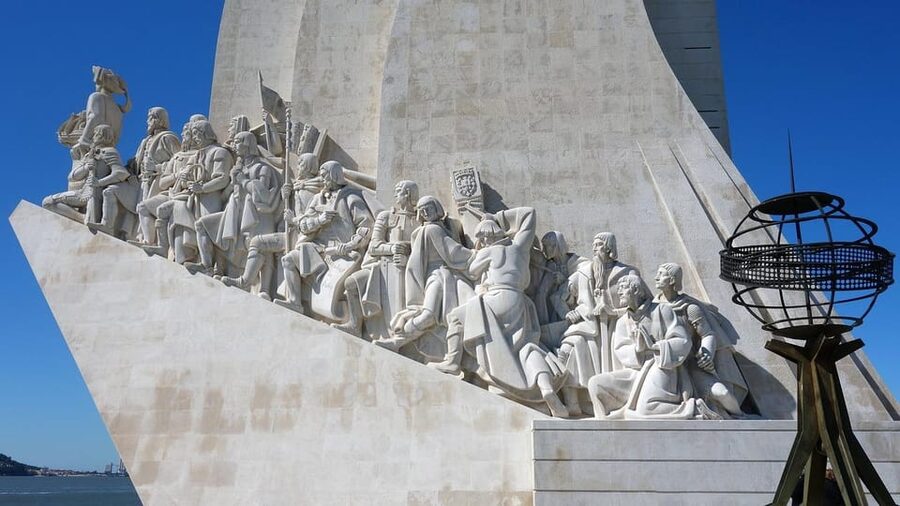
- Monument to the Discoveries framing Infante D. Henrique’s 500-year commemoration
- Belém Tower seen during restoration, with guided context even if you can’t go inside
Jerónimos Monastery: where the tour really earns its value
Jerónimos Monastery is one of those places where you can walk through on your own and still miss the point. The walls are impressive, yes, but the real magic is why the complex was built the way it was—and what it signaled to society during Portugal’s global expansion.
That’s exactly where a guided format pays off. This tour positions you to start in the monastery area early, with your tickets already handled. Your guide meets you at the Jerónimos entrance while people are still lining up for general entry. Then you head in, get a quick orientation about the complex, and only then start moving deeper into the spaces.
The other value here is interpretation. The monastery’s design is full of symbolic details—especially in the cloisters and the church—yet there’s not always obvious signage that tells you what you’re looking at. With the guide’s explanations (the kind you’ll hear from leaders like Luis, Leonardo, Leo, and Federico in the recent run of tours), you come away with a clear mental map of the site rather than a handful of pretty photos.
You can also read our reviews of more walking tours in Lisbon


Upper Cloister + the building’s meaning in the Portuguese Navigations era
The tour’s first big architectural payoff is the Upper Cloister. You start there for a reason: the views help you understand the complex as a whole, not as scattered rooms. From this level, you can see how the design organizes light, movement, and ornament, and you start spotting the stylistic signals that make this part of Lisbon feel unmistakably Portuguese.
Then the guide connects construction details to historical context. You’ll hear how the complex relates to the Great Portuguese Navigations in the 15th and 16th centuries, and how the monastery’s presence mattered beyond religion. It wasn’t just a quiet spiritual place. It also functioned as a statement tied to power, wealth from maritime expansion, and Portugal’s growing identity as an ocean-facing nation.
This is also where the tour stays practical. The timing matters. Going early means fewer crowds pressing into the same narrow viewpoints, and it helps you absorb the explanations without standing shoulder-to-shoulder the entire time.
Chapter Room, old Refectory, and Fernando Pessoa’s tomb
After the Upper Cloister, you move to the lower sections, where the experience shifts from “look at the architecture” to “learn the human story inside the stone.” You’ll get access to key rooms such as the Chapter Room and the old Refectory—spaces that feel quieter and more grounded than the open sightlines of the cloister.
One specific moment that tends to stick with people is the tomb of Fernando Pessoa. The guide explains that it was moved to this space only in the 20th century. That detail helps you realize the monastery isn’t just a medieval artifact frozen in time. It’s a living cultural landmark that keeps changing in how it’s used and remembered.
This section is one of the reasons I like doing Jerónimos with a guide first: the monastery’s most important themes (faith, power, art, national identity) show up in different forms. You see how the site tells multiple eras of Portugal’s story, not just the Age of Discovery.
Santa Maria de Belém Church and the Manueline style clues
Next comes the church: Santa Maria de Belém Church. This is where Manueline architecture really lands. You’ll learn what makes it Manueline in the first place: it blends late Gothic structure with Renaissance elements, and it wears Portugal’s maritime ambition on its sleeve through ornate forms and decorative symbolism.
Inside, the guide points out what you’d probably miss if you were just walking through. The church is also where the tour connects architecture to legacy through burials. You’ll hear about prominent names linked to the monarchy, including King D. Manuel I and his son João III.
Then the story widens to the navigation era. The guide highlights how the church is a final resting place for major figures tied to Portuguese exploration, including Vasco da Gama and Luís Vaz de Camões. When you hear those names while you’re standing in the spaces connected to them, it becomes easier to understand why Belém mattered so much to Portugal’s image abroad.
From Empire Square Garden to the Monument to the Discoveries
Once the monastery portion is done, you shift into Belém’s outdoor rhythm. There’s a short walk to the Empire Square Garden, then onward toward the Monument to the Discoveries. That walking stretch is more than a simple transfer point—it’s how you get your bearings.
At the Monument to the Discoveries, the guide keeps the focus on meaning. The monument was erected in 1960 to commemorate the 500th anniversary of Infante D. Henrique’s death, with other major characters from the Portuguese navigation era represented as well. If you’re trying to understand the Age of Discovery, this stop works like a visual summary: the monastery gives you the religious-royal frame, and the monument gives you the public, mythmaking frame of exploration.
The viewing time is short but targeted, so you’re not left standing without context. You get enough explanation to read what you see, and then you move on.



Pastéis de Belém: the included taste stop you should plan for
Yes, you’re going to eat. But this isn’t just a snack break—it’s a historical taste test tied to the monastery story.
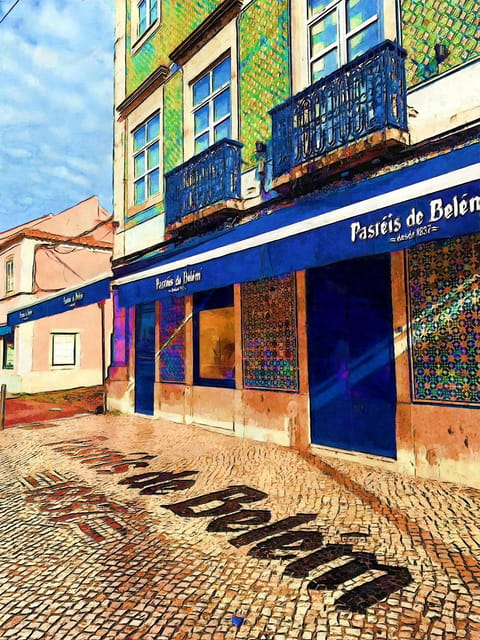
The tour includes a stop at Pastéis de Belém for the original custard tart. The guide explains that the recipe was created by monks from the Jerónimos Monastery tradition, and that these tarts have been sold in the same establishment since the mid-19th century. That connection makes the pastry feel like part of the itinerary, not a random tourist detour.
You’ll typically have around 30 minutes here. That’s enough time to buy, eat, and regroup without dragging the pace. Practical advice: go in ready to stand a bit (it’s a famous place), and keep your pastry in hand while the guide’s still talking nearby so you don’t lose the thread.
If you like food stops that have a real place in the story, this is one of the strongest values in the whole tour.
Belém Tower during restoration: what you can still get from it
The finish heads to Torre de Belém. The key update is right in the plan: the tower is currently under restoration and cannot be visited. So don’t expect to go inside or climb.
Still, you can get a lot out of the guided outdoor portion. The guide explains why it matters: Torre de Belém and the Jerónimos Monastery are both tied to the UNESCO World Heritage status, and the tower is another major example of Manueline architecture. It also served as a defensive point, built to watch for invaders trying to reach Lisbon.
In other words, even with limited access, you’re not wasting your time. The guide’s framing helps you see the tower as part of a system: monastery + church + monuments + defenses, all connected to Portugal’s maritime era.
Price and timing: does $70 make sense for a 3–3.5 hour walk?
At $70 per person for roughly 3 to 3.5 hours, the math works best when you treat this as two things in one: (1) an entrance ticket you don’t have to buy yourself, and (2) a guided walkthrough that saves you from playing “guess what this means” for hours.
You’re getting:
- Monastery entry tickets included, plus the biggest practical perk: skip-the-line access through a separate entrance
- An expert English-speaking guide
- The original Pastéis de Belém tart included
What you’re not getting is also important. There’s no lunch and no transportation included, so you’ll want to plan a meal afterward.
Is this a good deal for everyone? It’s especially strong if it’s your first time in Belém and you want your time to pay off fast. If you already know the names, dates, and design terms, you might enjoy building your own route. But for most people, the guided story plus the faster entry makes the price feel justified quickly.
Practical tips so the morning goes smoothly
A few details can make or break this kind of tour.
Start with footwear. This is a walking route with several stops, so you want comfortable shoes.
Also bring sun and weather gear. The tour runs rain or shine, and you’re advised to bring sunscreen and a sun hat, plus an umbrella if the sky looks questionable.
For timing, don’t treat meeting time like a suggestion. You’ll want to arrive a bit early because your guide is coordinating access and keeping the group moving. The guide is waiting at the Jerónimos area near the south entrance to the church, with a specific photo marking the meeting point. Use that photo marker so you don’t end up stuck in the wrong line.
One more note: the activity isn’t listed as suitable for people with mobility impairments or wheelchair users, so if that’s you, you’ll need a different plan.
Should you book the Jerónimos and Belém walking tour?
Book it if:
- You care about architecture with meaning, not just architecture as decoration
- You want the Jerónimos Monastery experience to feel organized and understandable
- You like pairing big monuments with a local food stop that actually connects to the story
Skip it (or at least reconsider) if:
- You specifically want to enter Belém Tower, because it’s currently closed for restoration
- You struggle with walking long distances or uneven historic-stone areas
- You prefer total independence over a structured route
If you’re doing Lisbon for the first time and you want Belém to make sense quickly, this tour is a solid way to get there—especially because the monastery entry and the story context are the hardest parts to nail on your own.
FAQ
How long is the tour?
The tour runs about 3 to 3.5 hours.
What’s included in the price?
Your ticket includes entrance to Jerónimos Monastery, an original Pastéis de Belém custard tart, and an English-speaking live guide.
Do I need to buy Jerónimos tickets separately?
No. Your entrance tickets for Jerónimos Monastery are included, and the guide helps you access the site using a separate entrance to avoid the main line.
What time do you enter Jerónimos?
The visit is scheduled to start entering the monastery around 9:30 in the morning.
Is the Belém Tower included and accessible?
The Belém Tower cannot be visited right now due to restoration work, but you will still get guided sightseeing from outside.
Where do we meet the guide?
Meet the guide in front of the Jerónimos Monastery entrance area, near the south entrance to the church of the Jerónimos Monastery, and use the photo indicated as the meeting point.
Is the tour canceled if it rains?
No. The tour runs rain or shine.
Is this tour suitable for wheelchair users or mobility impairments?
It is not listed as suitable for people with mobility impairments or wheelchair users.