REVIEW · LISBON
Private Tour: Best of Lisbon Walking Tour
Book on Viator →Operated by Inside Lisbon · Bookable on Viator
Lisbon reveals itself fast on foot. This private 3-hour walk ties together Rossio, Alfama, and the riverfront with clear history stops and included tastings that keep your energy up. You get a flexible route with a guide who can steer you around hills and stairs when needed.
Two things I really like: the tour hits the places you’ll want to return to later (like Elevador de Santa Justa and panoramic Miradouro stops), and the included food pace is smart—pastel de nata, tapas, and a glass of wine are timed so you do not burn out before the views. One possible drawback: this is a walking route through Lisbon’s steep streets, so plan for a moderate fitness level, especially if stairs slow you down.
In This Review
- Best of Lisbon in Quick, Walkable Chunks
- Starting at Praça D. Pedro IV: How the Tour Sets Your Bearings
- The Food Breaks: Pastel de Nata, Tapas, and Wine on the Move
- Largo do Carmo to Baixa de Lisboa: Revolutions, Santa Justa Views, and Rebuilt Streets
- Chão do Loureiro to Alfama: Panoramas and Time-Warp Streets
- D. José I and Praça do Comércio: Closing at the Riverfront
- Price and Value: What $96.79 Covers in a Private Walk
- Pacing, Hills, and Getting the Most From Every Stop
- Should You Book This Best of Lisbon Walking Tour?
- FAQ
- How long is the private walking tour?
- What’s included in the tour price?
- Where does the tour start and end?
- Is hotel pickup available?
- What language is the tour offered in?
- Can I get a full refund if I cancel?
Best of Lisbon in Quick, Walkable Chunks
- A private route that stays flexible so your group sets the tempo
- Landmarks that make sense fast, from Praça D. Pedro IV to Praça do Comércio
- Views planned into the route, not tacked on at the end
- Included breaks with pastel de nata, tapas, and wine en route
- Guides who answer everything, with examples from local experts like Natalia and Jose
Starting at Praça D. Pedro IV: How the Tour Sets Your Bearings

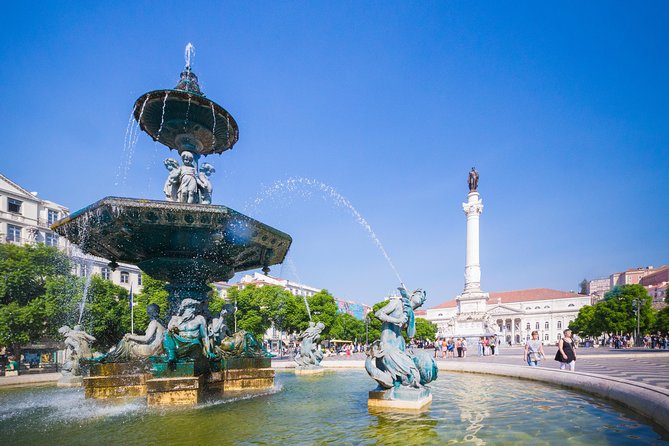
The tour begins at Praça Dom Pedro IV (Praça D. Pedro IV), right in the Rossio area. This is a great starting point because it anchors the whole walk: you start with a landmark tied to King Peter IV, then you move outward through the city’s layers instead of wandering randomly.
From there, the first stretch is about orientation. You’ll learn what to look for as you move—squares as political stages, churches as time capsules, and rail points as more than just transport. The pace is deliberately “walk-and-talk,” with short stops (usually around 10–15 minutes) that keep you from getting stuck at one place too long on a first day.
Stop 1: Praça Dom Pedro IV
This square pays homage to King Peter IV. In practice, it also works like your compass for the rest of the walk: you get a quick context for how this part of Lisbon developed and why the city’s identity centers on both royalty and resilience.
Stop 2: Largo de São Domingos
Here you visit a church area that has been injured many times through history. You also hear about the Lisbon massacre. It is heavy subject matter, but the stop is short enough to stay respectful and focused—think of it as a checkpoint for understanding why Lisbon remembers as much as it celebrates.
Stop 3: Praça dos Restauradores
Look up at the obelisk in the middle of the square and you’ll hear the meaning behind it: it connects to independence and what this place wanted to represent. It’s one of those moments where the city stops being a postcard and starts becoming political geography.
Stop 4: Estação do Rossio
This is more than a rail station stop. You’ll hear how Rossio marked the city during World War II. Even if you are not a history buff, this quick framing helps you read Lisbon’s built environment as a timeline.
By the time you reach the next cluster of stops, you’ll understand why the route is shaped the way it is: you are walking a gentle arc from central Lisbon toward the older neighborhoods and then back toward the river.
You can also read our reviews of more walking tours in Lisbon



The Food Breaks: Pastel de Nata, Tapas, and Wine on the Move
Lisbon is best on a full stomach. What makes this tour work for many people is that you refuel before you hit the steepest parts and before you start craving snacks every five minutes.
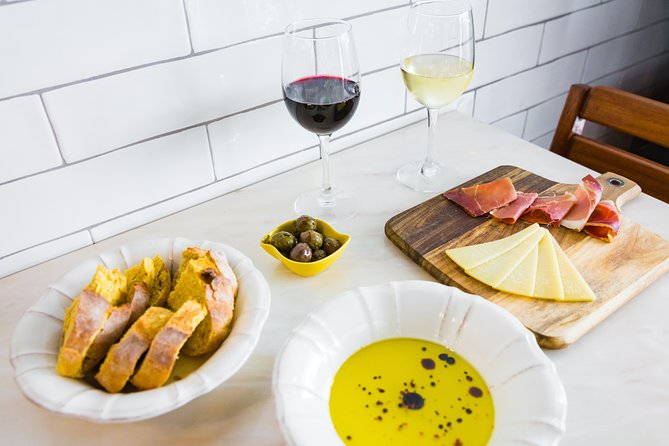
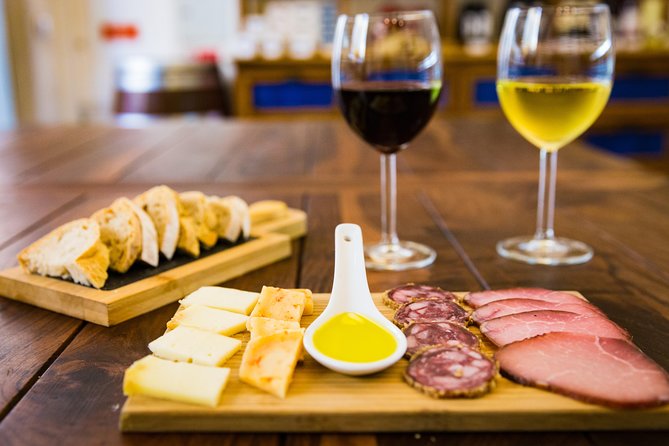
The tour includes pastel de nata pastry, tapas, and one glass of wine. The key is not just that it is included—it is that the food is built into the flow of the walk, so it feels like part of the experience rather than a separate detour.
A couple of practical notes I like to share with you:
- Pastel de nata is richer than it looks. If you are sensitive to sweets or dairy, pace it and do not rush.
- The wine is one glass, so you can still enjoy the rest of the walk. Still, if you plan to do lots of hills after, consider sipping slowly.
Food-wise, this is also where the tour earns its value for first-timers. Lisbon can feel like you are paying for every little thing. Here, one of the classic local snacks (pastel de nata) plus a savory break (tapas) plus wine means you spend less time hunting and more time seeing.
If your group wants a little extra flexibility, guides often adjust the rhythm. One example from past groups: guides such as Andre and Anna were praised for setting a comfortable pace, including finding places to sit when someone had trouble standing. That matters because the route includes real walking.
Largo do Carmo to Baixa de Lisboa: Revolutions, Santa Justa Views, and Rebuilt Streets
After Rossio, the story shifts from squares and stations into Lisbon’s defining themes: change, rebuilding, and memory.
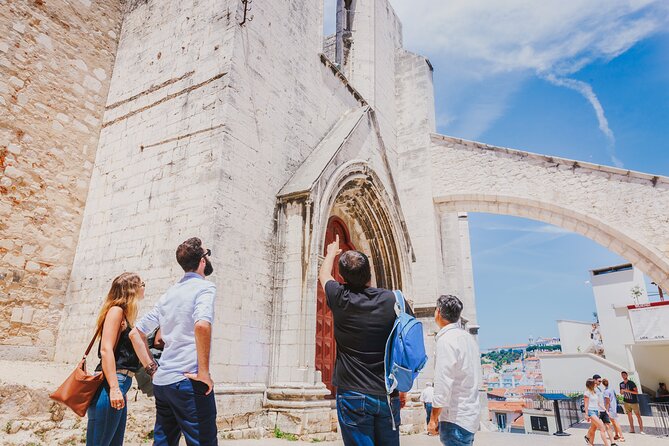
Stop 5: Largo do Carmo
This spot is linked to either the 14th-century convent or the Carnation Revolution. That mix is the point. Lisbon layers eras on top of each other, and this stop shows how a single location can matter for multiple chapters of the city’s identity. The timing stays tight, so you get the meaning without turning the walk into a lecture.
Stop 6: Elevador de Santa Justa
Now you get one of the highlights of the historic center. Elevador de Santa Justa is described as one of the most interesting monuments here, and the big payoff is the breathtaking view. Even if you have only a little time in Lisbon, this is the kind of sight that makes the walking worth it.
If your group is tired, this is a smart moment to slow down. You’ll be moving through streets soon, and views give your legs a mental break.
Stop 7: Chiado
Chiado is introduced as a bohemian and artistic neighborhood. This is where the city vibe shifts. You get a sense of Lisbon as more than history—it is also culture, style, and people watching. It’s a good transition from the monumental to the human scale.
Stop 8: Baixa de Lisboa
Then comes the city’s “heart” section. Baixa was completely rebuilt after the earthquake of the 18th century, using new rules of urbanism and anti-systemic architecture based on very innovative solutions for its time. You do not need to memorize architectural terms to get it. You’ll feel it underfoot: the streets here are more planned than the older lanes, so the walk is easier to track visually.
This is also where the tour becomes useful for planning your next days. Seeing how Baixa was rebuilt helps you understand why some streets feel open and others feel like a maze.
Stop 9 (preview): Miradouro Chão do Loureiro
You won’t linger yet, but the tour sets you up for it by building momentum—next you move toward a panoramic viewpoint that helps connect the central city to the older quarters.
Chão do Loureiro to Alfama: Panoramas and Time-Warp Streets
This portion is where Lisbon starts to feel like Lisbon in the movies—but without the “fake” feeling. It is the oldest neighborhood vibe, the narrow lanes, and the way the city climbs.
Stop 9: Miradouro Chão do Loureiro
You get a panoramic view here. Miradouro stops are important because they reset your perspective. After walking streets that twist and slope, the view gives you a map in your head, which makes the next neighborhood easier to enjoy.
Stop 10: Alfama
Then you step into Alfama, with 30 minutes set aside for it. You are traveling through narrow streets and alleys of Lisbon’s oldest neighborhood. This is the stop many people remember long after the tour ends because it feels like a different pace of life—slower, tighter, older.
One reason private tours work well in Alfama: you can ask questions on the spot. Past groups often highlighted guides who kept a watchful eye and answered all questions, with examples like Ricardo and Catarina. That kind of back-and-forth is exactly what makes time in Alfama feel meaningful rather than rushed.
A practical drawback to know: Alfama’s streets can be physically demanding, and the tour is designed for moderate fitness. If stairs are a problem, this is where a good guide’s route planning helps. Several guides in past experiences were praised for offering easier alternatives or shortcuts when possible—so if you need it, ask early.
When you finish Alfama, you are not just “done.” You’ve reached the part of Lisbon where the city’s layers feel most real, and the rest of the route becomes a clean return toward the river.
D. José I and Praça do Comércio: Closing at the Riverfront
The final phase shifts from winding old streets to big open spaces and big-picture Lisbon.
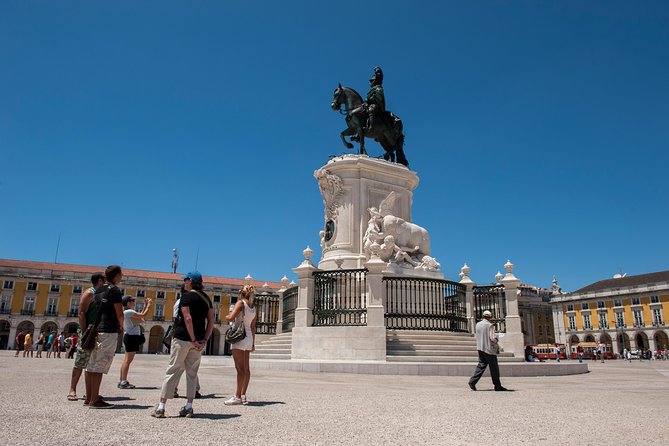
Stop 11: Statue of D. José I
This statue connects to King José I, who was king during Lisbon’s earthquake. Your guide explains the rest, and the stop functions like a bridge: you connect what you learned about rebuilding and memory to the person at the center of that era.
Stop 12: Praça do Comércio (Terreiro do Paço)
Finally, you end at Praça do Comércio, the riverfront square that connects Lisbon and the world. This is also described as the residence of King José I. In plain terms, it is a dramatic finish: you go from tight alleyways to an expansive space where the city feels outward-looking.
It is also a smart landing zone for practical plans. After the tour, you’ll have a clear sense of where the historic center sits and where the river area begins.
You can also read our reviews of more private tours in Lisbon


Price and Value: What $96.79 Covers in a Private Walk
At $96.79 per person for about 3 hours, the value comes from the blend: you are paying for a private guide plus included food, not just a route on a map.
Here’s what that means for you:
- Private means no waiting around for a big group. If your pace is slower (or faster), you stay in control.
- The included pastel de nata, tapas, and wine reduce your out-of-pocket spend and keep breaks from feeling random.
- Pickup is offered, but only when your hotel is a short walk from the meeting point area. If your hotel is farther out, you meet at Praça Dom Pedro IV (Rossio). Either way, the tour is structured around a central start.
There is also a hidden value: the tour covers multiple “zones” in a short time—Rossio, central squares, viewpoints, and Alfama—so you leave with a sense of what to prioritize later.
If you hate wasted time on day one, this is the type of tour that often wins. One of the most common praises in past experiences was how guides balanced broad overview with lots of questions, and how the route stayed easy-paced while still covering a lot of ground.
Pacing, Hills, and Getting the Most From Every Stop

Lisbon is not flat. This tour is built around walking through different elevations, and that is part of the experience.
A few tips to help you enjoy it:
- Wear shoes you trust on uneven stone. Lisbon sidewalks can surprise you.
- Bring water. Stops are frequent, but it is still a walk.
- If you have a condition that makes stairs tough, let your guide know right away. In past tours, guides were praised for adjusting with easier options or shortcuts when needed.
Another tip: use the tastings as a break, not a race. The pastel de nata and tapas are there so you keep moving, not so you rush through the next viewpoint half-stuffed and tired.
Finally, if you care about understanding Lisbon beyond the surface, this tour’s format is made for questions. Some guides were specifically called out for being fun and engaging (with stories and humor) and for connecting past events to what Lisbon feels like today.
Should You Book This Best of Lisbon Walking Tour?
Book it if you want a clean first-day overview of Lisbon that actually helps you plan the rest of your trip. The route makes sense: it starts with orientation, adds history and architecture in short, digestible stops, includes major viewpoints, and finishes at Praça do Comércio where you can immediately continue exploring.
Skip or consider a different option if you want a low-walking experience with zero hills, or if you are hoping for lots of extra add-ons like a tram ride. This walk is designed to be efficient and focused, and some classic Lisbon transport can mean long queues on your own time.
If you are arriving in Lisbon and want to get your bearings fast, this is a strong choice—especially for couples, solo travelers, and families who appreciate a private pace and included food breaks.
FAQ
How long is the private walking tour?
It runs for about 3 hours.
What’s included in the tour price?
The tour includes a private guide, pastel de nata, 1 glass of wine, tapas, and hotel pickup (in the specified pickup area). The tour uses a mobile ticket.
Where does the tour start and end?
It starts at Praça Dom Pedro IV (41, 1100-200 Lisboa) and ends at Praça do Comércio / Terreiro do Paço (574, 1100-148 Lisboa).
Is hotel pickup available?
Hotel pickup is offered only if your hotel is a short walk from the original meeting point. If it is outside that limit, you will meet at Praça Dom Pedro IV.
What language is the tour offered in?
The tour is offered in English.
Can I get a full refund if I cancel?
Yes. There is free cancellation, and you can cancel up to 24 hours in advance for a full refund.