REVIEW · SEVILLE
Seville Small-Group Monumental Highlights Walking Tour
Book on Viator →Operated by Seville Unique Experiences · Bookable on Viator
Seville clicks into place fast on foot. This small-group highlights walk strings together City Hall, the Giralda, Real Alcázar, and Plaza de España in about two hours, with a guide helping you read the city street by street.
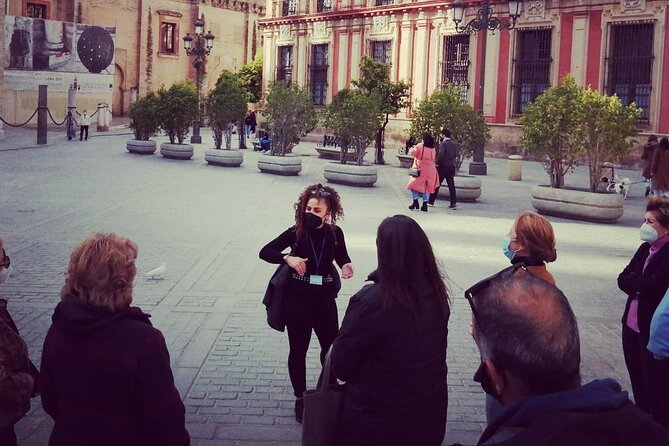
I really like two things here: first, the group stays small (up to 10), so it does not feel like you are rushing past monuments with zero chance to ask questions. Second, the guides bring Seville’s story to life with entertaining explanations, and I’ve seen praise for hosts like Carmen, Laura, Miguel, Marta, and Valentín for making the history feel understandable—not just listed.
One caution before you go: tickets and visits inside the monuments are not included, and Plaza de España can also close due to heavy wind alerts from the city council. So plan this as an outside-orientation and save monument entry plans for add-on bookings.
In This Review
- Key things to know before you walk
- Start at Plaza de San Francisco and get oriented quickly
- Seville’s City Hall: why the 1500s still matter
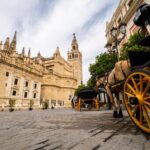
- From mosque-era roots to the Giralda tower
- Seville as the Port of the Indies: trade that changed the map
- Real Alcázar from the outside: royal power you can see
- A last Muslim building turned entry point from the ocean
- Tobacco Factory: reading industrial architecture from the 1700s
- Plaza de España and the Ibero-American Exhibition urban shift
- About the pacing: easy walking, a tight loop, and lots of stops
- What you get for $30.25: value that comes from interpretation
- Who should book this walking tour
- Should you book Seville Monumental Highlights?
- FAQ
- How long is the Seville Small-Group Monumental Highlights Walking Tour?
- What is the group size for this tour?
- What language is the tour offered in?
- Where does the tour start and end?
- Does the tour include tickets to enter monuments?
- Do I need to bring a paper ticket?
- Can Plaza de España close during the tour?
Key things to know before you walk
- Max 10 people means more conversation and a tour that moves at a human pace
- Licensed English guide with storytelling that connects religion, trade, and power
- Mostly outdoors helps you understand Seville’s layout instead of just collecting photos
- Port of the Indies context makes the city’s role in the New World click
- A timeline in stone: mosque-era influence → Giralda area → Alcázar → watchtower → Tobacco Factory → Plaza de España
- Plaza de España may close on windy days, and interior entries are not part of the tour
Start at Plaza de San Francisco and get oriented quickly
Your walk begins at Pl. de S. Francisco, 17 in the Casco Antiguo area. It is a smart start point because it puts you near the core of old Seville right away, before you’ve even had time to get lost in the maze of side streets.
The end point is Plaza de España, Av. Isabel la Católica. That’s useful if you want your afternoon to land near one of Seville’s biggest photo targets, plus an easy place to keep exploring after the tour.
You can also read our reviews of more walking tours in Seville

Seville’s City Hall: why the 1500s still matter
One early stop focuses on the city council building and what it represented when Seville was flexing political muscle in the 1500s. This is where the tour does a good job turning a building into context—why it mattered, and how Seville’s status shaped the city you walk through today.
If you like history that connects to real places, you’ll appreciate how the guide frames Seville’s power as a force that changed the city’s direction. And because this is an outdoor walk, you get to see the setting as you hear the story.
From mosque-era roots to the Giralda tower
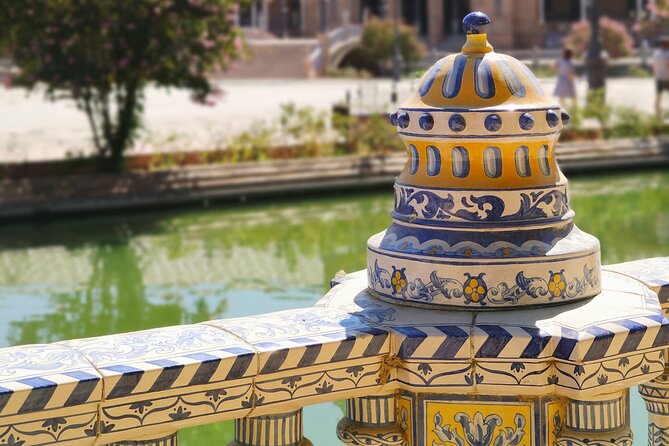
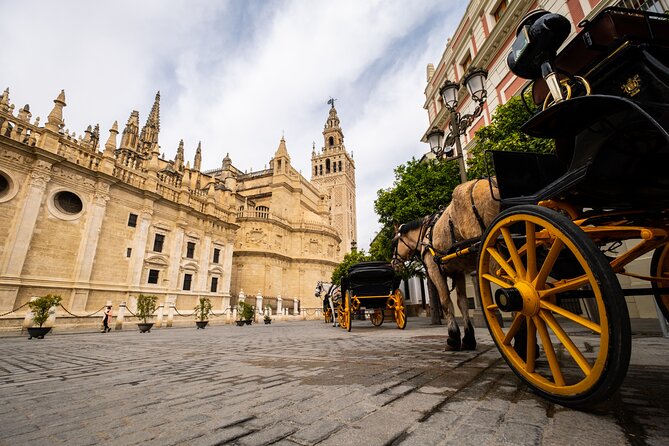
Next comes a stop that explains the outdoors and the earlier mosque influence, plus how it ties into the Giralda Tower. The key idea is that Seville did not grow as one single culture in one single layer—it grew from multiple waves of influence that left traces in architecture and urban design.
The walk helps you understand how these cultures and religions shaped what you see now. So when you look at the Giralda area, it is not just a landmark. It becomes evidence of how a city transforms across centuries.
Seville as the Port of the Indies: trade that changed the map
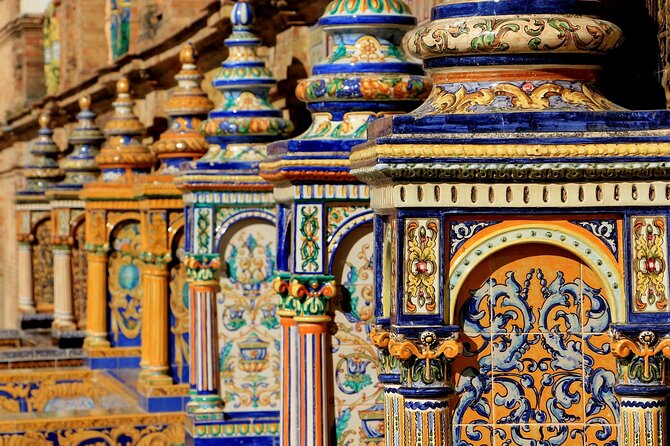
A later stop places Seville in the spotlight as the Port of the Indies, describing how it functioned as a trade centre tied to the New World. This part matters because it explains why the city became so wealthy and influential—and why so many buildings, institutions, and power structures grew up around that role.
When you get this trade context, it is easier to connect the dots across the rest of the walk. The city starts to feel less like a set of random monuments and more like a single story with a clear plot.
Real Alcázar from the outside: royal power you can see
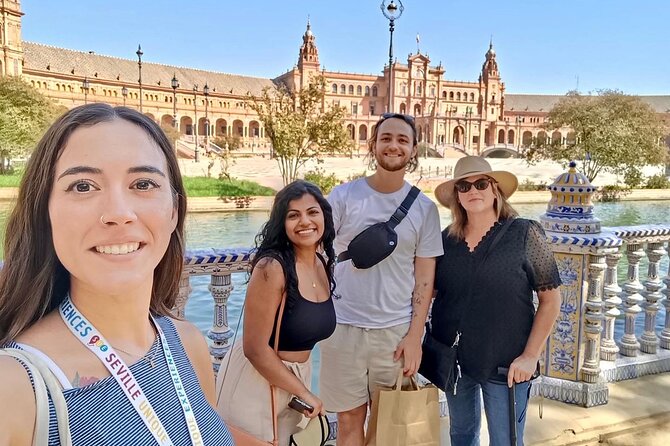
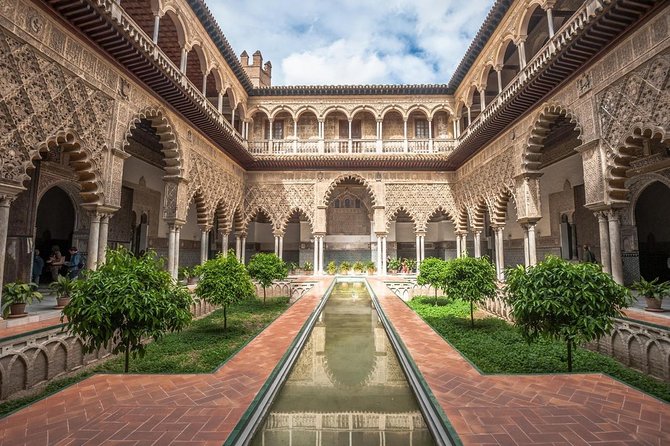
The tour then points you toward the Real Alcázar, often described as the oldest royal palace still in use in all of Europe. You will learn why the place is unique and how rulers have used it for centuries, with roots reaching back to much earlier periods.
You don’t go inside on this walk—interior tickets and visits are not included—but you still get value. Seeing the palace from outside with the right explanations helps you understand why it matters before you decide whether to add entry later.


A last Muslim building turned entry point from the ocean
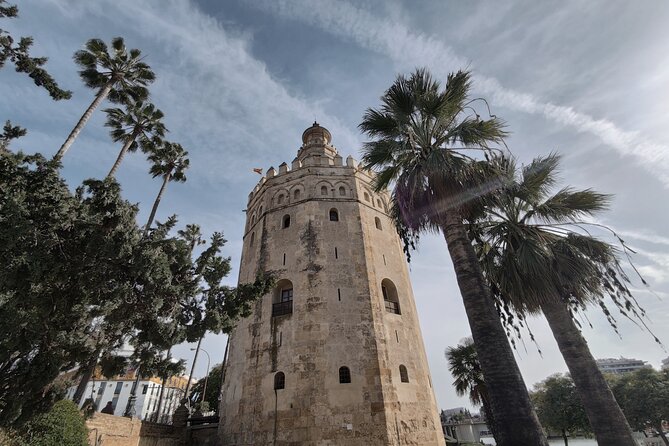
Another stop focuses on the last Muslim building of the city in this area: a watchtower that later became an entry point connected to the ocean. The tour frames it as a shift in function, where a structure originally tied to one era’s needs becomes part of how the city welcomed arrivals later on.
This is the kind of moment where good guiding pays off. Instead of you simply noticing a tower, you start seeing how the coastline, movement of people, and city borders influenced what got built—and what got repurposed.
Tobacco Factory: reading industrial architecture from the 1700s
The walk also covers the old Tobacco factory building, built in the 1700s, as an example of Seville’s industrial architecture. That one detail—industrial—often surprises people. Seville is usually marketed for churches and palaces, but this stop widens the picture.
Industrial buildings can be just as revealing as royal ones. They show what jobs existed, how production shaped the city, and how big economic systems left physical traces. It’s a smart contrast that keeps the tour from becoming one long parade of religious and royal sites.
Plaza de España and the Ibero-American Exhibition urban shift
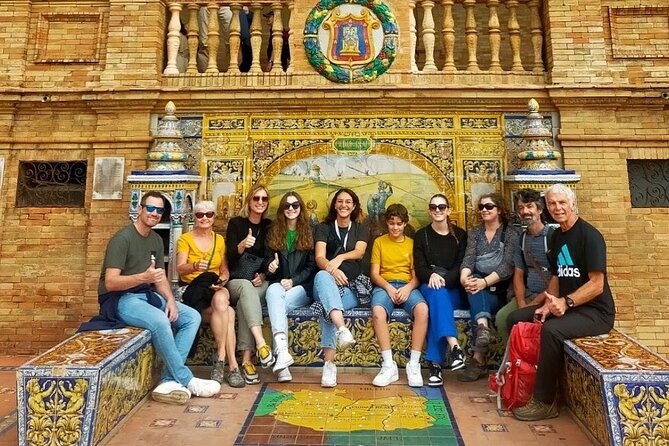
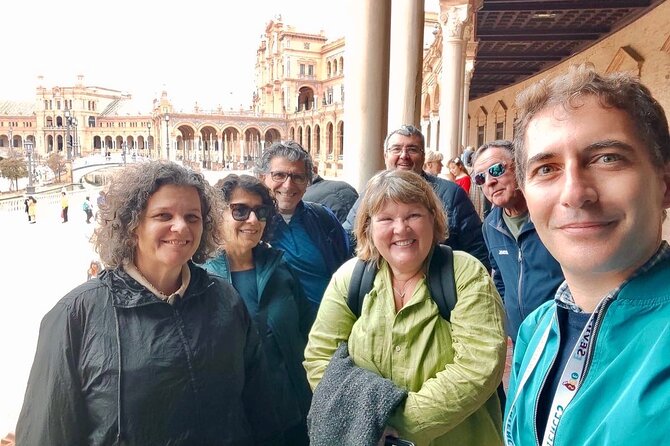
The tour finishes by tying Seville’s modern showpiece to a major turning point: the Ibero-American Exhibition, which changed the city’s urbanism, with Plaza de España as the best example. This is where the city’s “look” becomes part of the explanation. You’ll understand what the plaza represented and how it fit into a broader moment of planning and display.
One practical note: the tour information warns that the city council can close Plaza de España due to heavy wind alert. So if you’re traveling in a stormy season or you see weather warnings, keep your expectations flexible for the final stop.
About the pacing: easy walking, a tight loop, and lots of stops
This is a 2-hour (approx.) small-group walk, and the experience is designed to cover many monuments without needing interior tickets. Expect a solid walking circuit—some people have described it as running a touch longer—so I’d treat it as about two to two and a half hours in real life, depending on questions and pacing.
The good news: the format is built for orientation. You get outdoor time, but you do not feel like you are stuck in one endless stretch of pavement. The small group size helps the guide keep things moving without sprinting.
What you get for $30.25: value that comes from interpretation
At $30.25 per person, the value is not in entry tickets. It’s in having a licensed English guide connect multiple landmarks into a coherent story—City Hall power, mosque-era influence, the Giralda area, the Port of the Indies, Real Alcázar, the watchtower, Tobacco Factory, and the Ibero-American Exhibition.
If you only have a short stay in Seville, this is the kind of tour that helps you choose later. After an overview like this, you’re better prepared to decide what’s worth buying tickets for and what’s worth skipping.
Who should book this walking tour
This one fits best if you:
- want a high-impact introduction to Seville’s big themes in a short time
- like asking questions and getting direct answers from a guide (a recurring point in the guide feedback is how approachable they are)
- prefer learning through walking and looking out at buildings, not just sitting indoors
- want a route that ends at Plaza de España, then you can keep exploring on your own
If you already know Seville well and you’re hunting for deep interior access, you may find this tour more useful as a primer than as a full monument day. It is built for outside views and big-picture context.
Should you book Seville Monumental Highlights?
Yes, if you want to understand Seville faster than you can with a map alone. This is a practical, story-driven walk that links the city’s power, trade, and religious layers into one route, with enough time outside to really see how Seville works.
I’d book it especially if you are visiting for the first time or you want a clear game plan for the rest of your Seville days. Just remember the two limits: no monument interior tickets, and Plaza de España can close on windy days, so it’s best to treat the finale as a stop to learn from and look at—then adjust your follow-up plans if weather or access changes.
FAQ
How long is the Seville Small-Group Monumental Highlights Walking Tour?
It lasts about 2 hours.
What is the group size for this tour?
The tour has a maximum of 10 travelers.
What language is the tour offered in?
The tour is offered in English.
Where does the tour start and end?
It starts at Pl. de S. Francisco, 17, Casco Antiguo, 41004 Sevilla, Spain, and ends at Plaza de España, Av. Isabel la Católica, 41004 Sevilla, Spain.
Does the tour include tickets to enter monuments?
No. Tickets and visits inside the monuments are not included.
Do I need to bring a paper ticket?
No. It uses a mobile ticket.
Can Plaza de España close during the tour?
Yes. The city council can close Plaza de España due to heavy wind alerts, as noted by the tour provider.