REVIEW · LISBON
Half Day Historical Walking Tour about the Slave Trade in Lisbon
Book on Viator →Operated by My Lisbon Tours · Bookable on Viator
Lisbon has a darker side most tours skip. This half-day historical walking tour connects the dots between the Portuguese Age of Discovery and the enslaved people whose labor fueled it, using real streets and landmark corners instead of vague slides. You’ll walk through Alfama and Baixa while learning how slavery shaped Portuguese culture, religion, commerce, and even modern memory.
Two things I especially like are the focus on specific places (so the story feels grounded) and the small-group format, capped at just 8 travelers. One consideration: the walk is listed for people with moderate physical fitness, so if your mobility is limited, you may want to choose an easier option.
In This Review
- Key things to know before you go
- Why Lisbon’s slave trade story matters more than the postcard
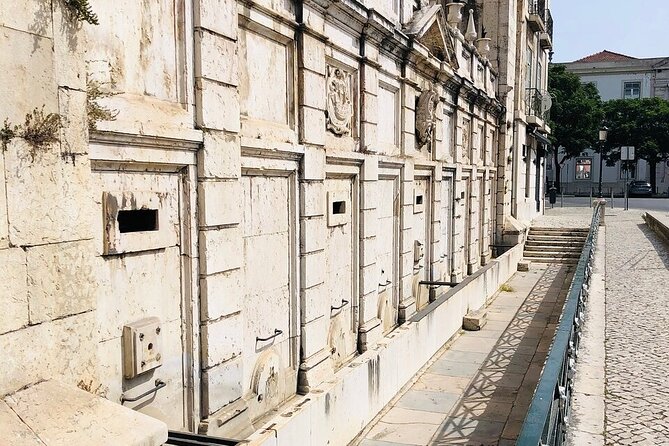
- Starting at Largo do Chafariz de Dentro: setting the theme fast
- Alfama: Lisbon’s oldest layers and Portugal’s Atlantic turning point
- Campo das Cebolas: where a future monument ties memory to place
- Praca do Comercio (Terreiro do Paco): the commercial heart of Lisbon
- Baixa, Rossio, and Restauradores: learning the city through everyday lives
- Igreja de S Domingos: religion, institutions, and real interactions
- Largo do Carmo: the 25th of April coup and the end of empire
- The guide experience: Rui Fernandes, docs, and staying factual
- How heavy is it? Expect sobering facts and careful pacing
- Practicalities: timing, distance, and what to wear
- Price and value: $39.78 for 3 hours with context that sticks
- Should you book this Lisbon slave trade walking tour?
- FAQ
- How long is the half-day historical walking tour?
- Where does the tour start and end?
- Is the tour offered in English?
- What’s included in the price?
- Are food and drinks included?
- What’s the cancellation policy?
Key things to know before you go
- Small group (max 8): Easier conversations, and questions don’t get lost in the crowd.
- Rui Fernandes’s question-friendly approach: The guide is known for answering follow-ups directly, not hand-waving.
- Place-based history: You learn in the exact areas tied to slavery, trade, and daily life in Lisbon.
- A wide time span: The tour links earlier forms of slavery across civilizations to Portugal’s later Atlantic involvement.
- Religion and commerce are in the mix: Not just big dates—how systems worked through institutions.
- End at Largo do Carmo: You finish with the 25th of April coup context and what happened to the colonial empire by the mid-1970s.
Why Lisbon’s slave trade story matters more than the postcard
Lisbon is famous for sailors, maps, and the shiny mythology of the Age of Discovery. This tour gives you the part people often leave out: how Portugal’s global reach was tied to human commodification. It’s not only about what happened overseas—it’s about what happened on Lisbon streets.
You’ll see how slavery wasn’t a side note. It was connected to economic systems and social hierarchy, and those choices left long shadows that still show up today. Expect the tone to be serious and thoughtful. This isn’t trivia. It’s context.
You can also read our reviews of more walking tours in Lisbon


Starting at Largo do Chafariz de Dentro: setting the theme fast
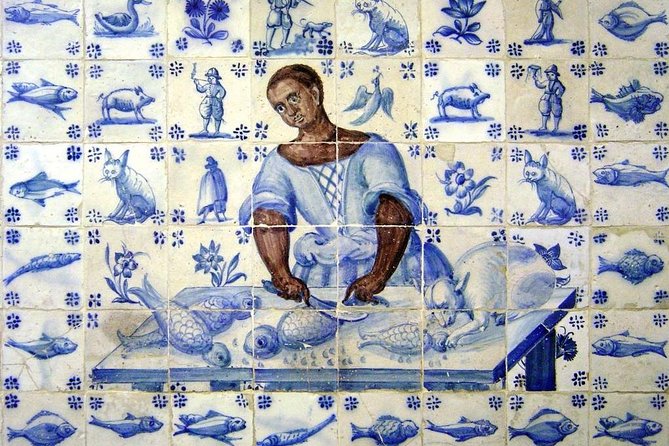
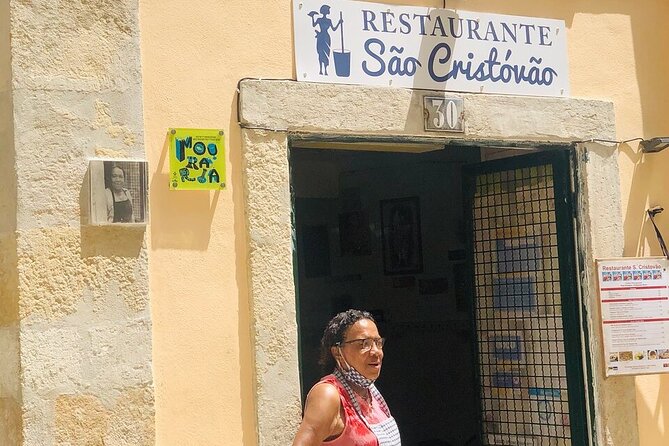
You meet at Largo do Chafariz de Dentro 30, right to begin with a theme-setting introduction. This first stop matters because it frames what you’re about to see: Lisbon’s role in slavery and how the story stretches beyond the usual headline version.
The tour starts with a short orientation, then keeps moving. That helps you get your bearings quickly, so the first neighborhood stop lands with impact instead of feeling like a lecture you need to translate.
Alfama: Lisbon’s oldest layers and Portugal’s Atlantic turning point

Alfama is where Lisbon’s history feels layered—street by street. Here, you learn how different civilizations that settled in Portugal practiced slavery, reaching back through the Romans and the Moors. Then the focus sharpens toward Portugal’s involvement in the Atlantic Slave Trade in the mid-15th century.
This is one of the most important parts of the walk because it changes how you think about timeline and responsibility. Instead of treating slavery as a sudden era, the guide shows how systems developed over time and were justified in different ways. It’s heavy, but it’s also clearer.
Practical note: Alfama’s streets are old and can be uneven. Even if the pace includes breaks, you’ll be more comfortable with grippy shoes.
Campo das Cebolas: where a future monument ties memory to place
Next you head toward Campo das Cebolas, a site connected to the eventual erection of a monument to victims of the Slave Trade. Even though the memorial isn’t described as complete, the point is powerful: Lisbon is still deciding how to hold this memory in public space.
This stop gives you a shift from historical reconstruction to contemporary remembrance. You’re not only learning what happened. You’re also watching how societies today choose what to acknowledge—and what it takes to say it out loud.
Praca do Comercio (Terreiro do Paco): the commercial heart of Lisbon
At Praca do Comercio, you step into what was historically Lisbon’s commercial engine. Here the guide connects slavery to colonial trade, showing how the economics of empire relied on more than ships and spices. It relied on forced human labor as part of the broader trading system.
This is where you start seeing the architecture as evidence. You’ll learn to read the city’s layout differently—why certain areas mattered, and how commerce and cruelty can occupy the same map.
If you’re the type who usually skips explanations at waterfront viewpoints, don’t. This stop turns a familiar scene into something you’ll remember for different reasons.
You can also read our reviews of more historical tours in Lisbon




Baixa, Rossio, and Restauradores: learning the city through everyday lives
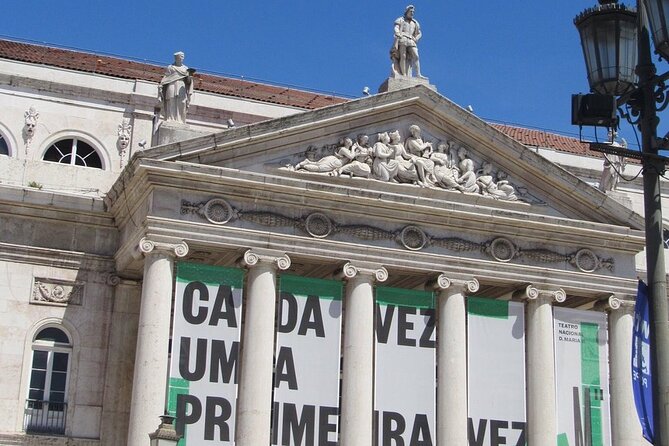
In Baixa, Rossio, and Restauradores, the tour slows down in a useful way. You’ll explore how enslaved captives lived in Lisbon, including people from Africa and from around the globe. The goal here isn’t just scale. It’s day-to-day reality.
This section is valuable because it challenges a common mental picture. You may have learned about slavery as a distant event—far from your daily life. Here, you connect the event to urban routines, movement, and institutions that made exploitation feel ordinary to the people profiting from it.
You’ll also get a better sense of how Lisbon’s neighborhoods fit together. By the time you reach this part of the walk, you’re not only collecting facts. You’re building a map of how power moved through the city.
Igreja de S Domingos: religion, institutions, and real interactions
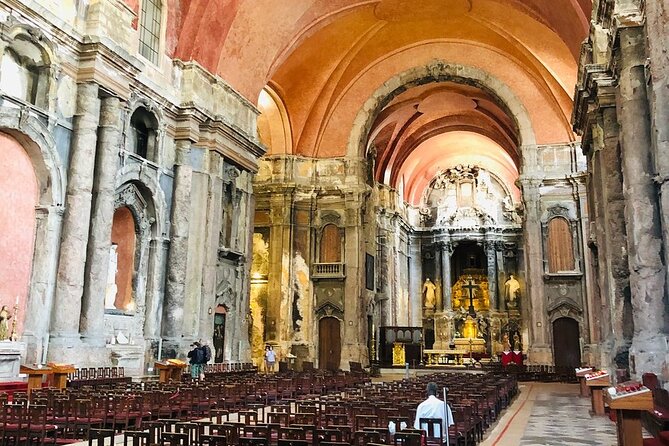
At Igreja de S Domingos, the story expands beyond economics. You learn how Lisbon’s enslaved captives interacted with the city’s religious organizations. That makes the subject even more uncomfortable, because it raises a question many visitors have: how could religious institutions coexist with enslavement?
The tour treats this with sensitivity, not sensationalism. You’re not asked to perform disbelief or adopt a script. Instead, you’re shown how systems can bend morality while still using moral language.
This stop is short, but it has a big payoff: it reminds you that slavery wasn’t only enforced through force. It was also upheld through social structures, rules, and justifications.
Largo do Carmo: the 25th of April coup and the end of empire
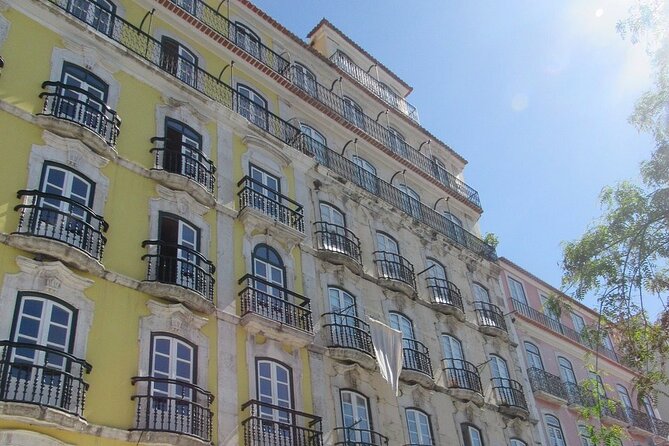
The walk finishes at Largo do Carmo, with a connection to the 25th of April coup and the later demise of the Portuguese colonial empire in the mid-1970s. Ending here is a smart choice because it makes the story continuous.
You’re not left with slavery as a closed chapter. You see that empire didn’t evaporate into history without consequences. Political change in Portugal matters, and the tour connects that turning point to what came after.
It’s a more reflective ending than a photo-op finish. You’ll likely leave thinking about what gets remembered, what gets rebuilt, and what gets renamed when regimes change.
The guide experience: Rui Fernandes, docs, and staying factual
A lot rides on the guide with a topic this sensitive. Here, the reviews point to one key strength: Rui Fernandes is prepared, organized, and direct. You should expect a tour that uses pictures and historical documents to support the story, instead of relying only on broad claims.
Another praised element is how he handles questions. People describe asking a lot, and getting clear answers. There’s also mention of him correcting misinformation without softening the truth to fit everyone’s comfort level. That approach can be emotionally demanding, but it also makes the tour feel more honest.
One practical detail you might appreciate: on rainy days, Rui is described as taking care to keep the group out of bad weather as much as possible. That matters in Lisbon, where plans can get damp quickly.
How heavy is it? Expect sobering facts and careful pacing
This isn’t a light walking tour where the worst thing that happens is you miss a viewpoint. The tour is designed around serious history, and you should expect moments that feel emotionally heavy. That’s normal. The value is in the clarity and the careful connection to real places.
That said, the pacing is built from shorter segments at each stop, with time for the guide to explain and for you to take it in. The structure also helps if you’re visiting with teens or relatives who can get restless on long talks. People mention staying focused for the full walk.
Practicalities: timing, distance, and what to wear
The tour runs about 3 hours. You’ll spend small chunks of time at each location, usually 10 to 30 minutes, which helps keep the day from dragging. The walk is listed for moderate physical fitness, and it’s not recommended for people with walking difficulties.
What I recommend you do:
- Wear comfortable shoes with good traction.
- Bring a light layer. Lisbon weather shifts fast.
- If it might rain, plan like it will. You’ll thank yourself.
The tour is in English, and you get a mobile ticket. Food and drinks are not included, so plan a snack or a pre-meal depending on your schedule.
Price and value: $39.78 for 3 hours with context that sticks
At $39.78 per person for about 3 hours, this isn’t a bargain, but it also isn’t overpriced for what you get. You’re paying for a professional guide, local taxes included, and a focused, small-group route that stays connected to specific places tied to slavery and colonial commerce.
Many Lisbon tours give you a neighborhood highlight loop. This one uses the same streets but tells a different story. If you care about understanding Portugal beyond the standard Age of Discovery storyline, the value is strong—especially because the group size is capped at 8, which helps the guide tailor answers.
If your time is limited, this is also an efficient use of a half day. You get multiple districts in one walk, with explanations that connect the city’s past to the present.
One more practical upside: the tour is described as often booked in advance. With a small group, it’s smart to reserve early so you’re not gambling on last-minute availability.
Should you book this Lisbon slave trade walking tour?
Book it if you want the honest side of Lisbon—without fluff—and you’re ready for a grounded history walk through Alfama and the city center. This is a strong choice if you care about how systems work through institutions, not just big historical dates.
Skip it (or rethink) if you know you struggle with heavy topics, or if your mobility is limited enough that a moderate walking route won’t feel comfortable. The guide can’t change the fact that you’re moving through older streets.
Also, if you prefer tours that stay surface-level, this one will feel too direct. But if you want a meaningful Lisbon experience that respects the topic and teaches you how to see the city differently, it’s an excellent pick.
FAQ
How long is the half-day historical walking tour?
It lasts about 3 hours (approx.).
Where does the tour start and end?
It starts at Largo do Chafariz de Dentro 30, 1100-605 Lisboa, Portugal, and ends at Largo do Carmo, 1200-092 Lisboa, Portugal.
Is the tour offered in English?
Yes, it’s offered in English.
What’s included in the price?
The price includes local taxes and a professional guide.
Are food and drinks included?
No, food and drinks are not included.
What’s the cancellation policy?
Free cancellation is available up to 24 hours in advance for a full refund.