REVIEW · LISBON
Lisbon: History, Stories and Lifestyle Walking Tour
Book on GetYourGuide →Operated by LISBOA AUTÊNTICA LDA · Bookable on GetYourGuide
Lisbon on foot is fast, steep, and full of stories. This 3-hour tour strings together the city’s key neighborhoods with real viewpoints and a ride on an iconic Lisbon tram. I like how the route mixes big landmarks with neighborhood texture, so you come away with both facts and street-level understanding.
Two things I especially like: the stops are chosen for views that make Lisbon make sense, and the guide-led storytelling (often with names like Paulo, Ana, and Ricardo showing up as recent guides) turns famous sites into something you can picture. One thing to consider: Lisbon hills mean steps and climbs. Even when the pace stays relaxed with frequent stops, you should still wear good shoes.
In This Review
- Quick hits before you go
- Bairro Alto to Miradouro São Pedro de Alcântara: your hill-top orientation
- São Roque Church and the Carmo Convent: art and the 1974 turning point
- Santa Justa Elevator and Baixa: a viewpoint plus the city’s core
- Tram from the castle area to Portas do Sol: the Lisbon way to move
- Alfama streets and St. Anthony energy: fado atmosphere in daylight
- Lisbon Cathedral finish at 1150: a strong closing anchor
- What you actually get for $29: value that’s more than a discount
- Who this tour suits best
- Should you book this Lisbon walking tour?
- FAQ
- How long is the tour?
- Where does the tour run?
- What’s the price per person?
- Is hotel pickup included?
- What is included in the tour?
- Do I get to ride the tram?
- Where does the tour end?
- What languages are available for the guide?
- Is it a private or small-group tour?
- What if I need to change plans?
Quick hits before you go
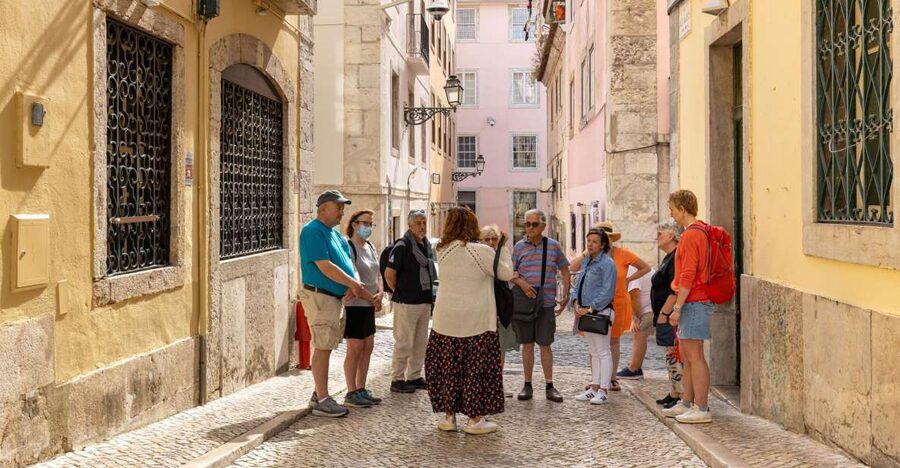
- Bairro Alto (16th century) starts the story in one of Lisbon’s most dramatic hill districts
- Miradouro São Pedro de Alcântara delivers a classic postcard view over Baixa and the Tagus
- São Roque Church and the Carmo Convent add art, faith, and a major 1974 turning point
- Santa Justa Elevator and Baixa give you sweeping angles plus a feel for the city’s core
- Tram to Portas do Sol links the castle area to Alfama in the most Lisbon way possible
- Alfama ends with Cathedral 1150 for a strong finish and a sense of continuity
Bairro Alto to Miradouro São Pedro de Alcântara: your hill-top orientation
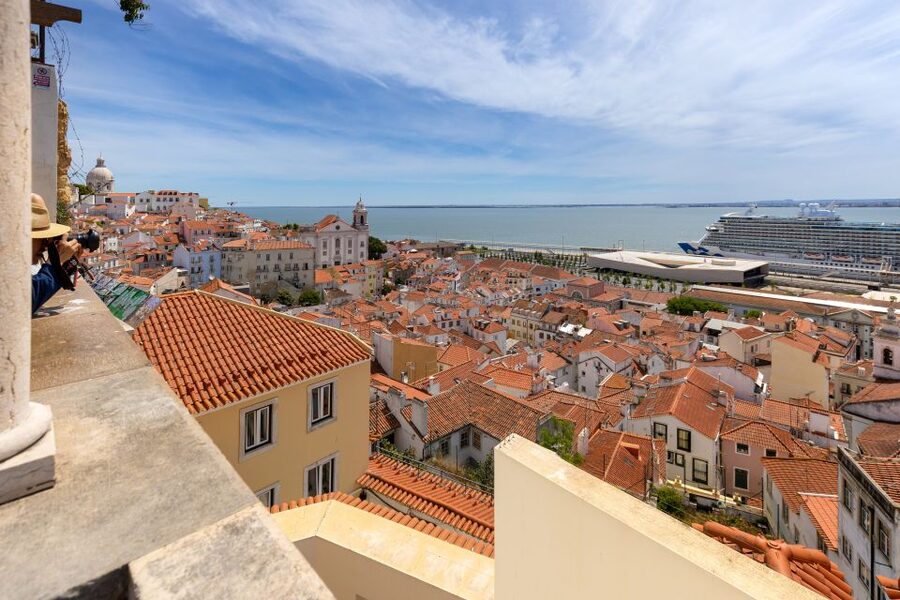
The tour kicks off in Bairro Alto, a neighborhood with roots going back to the 1500s. You start by understanding how Lisbon grew upward and across hills—so later, when you’re bouncing between viewpoints, the geography feels less random. It’s not just where you are; it’s why Lisbon was built this way.
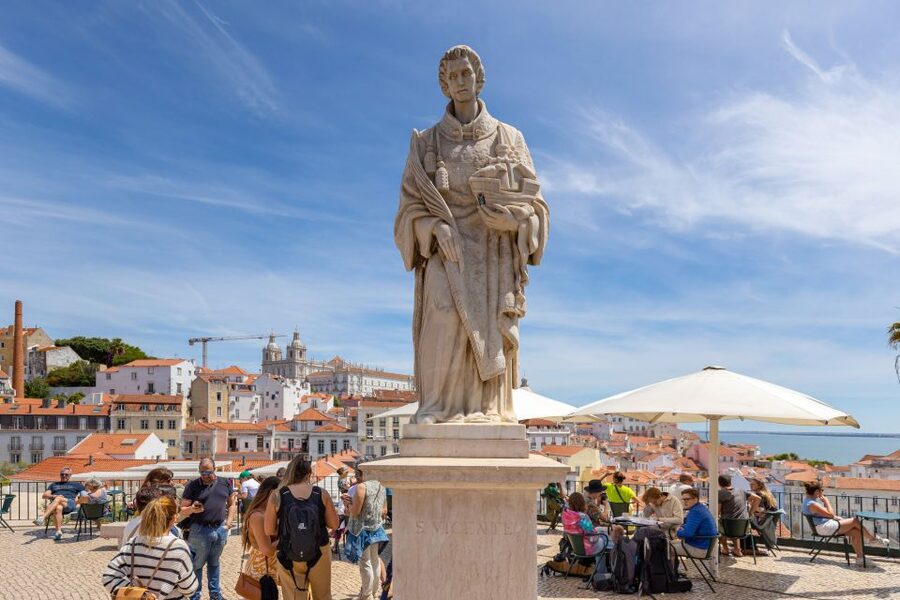
From there you shift toward one of the best “look-and-got-it” spots: Miradouro São Pedro de Alcântara. This is the kind of viewpoint where the city instantly clicks. You can see Baixa and the south bank of the Tagus, which helps you connect the dots between Lisbon’s waterfront life and the hills above it. Bring your phone, sure. But also take a minute to just stand there and orient yourself. Lisbon is easier once you see how it sits.
A small practical note: viewpoints often mean short walking bursts followed by pauses. That’s good. It helps with the classic Lisbon rhythm—step, stop, look, repeat.
You can also read our reviews of more walking tours in Lisbon



São Roque Church and the Carmo Convent: art and the 1974 turning point
Next comes a stop with strong visual payoff: São Roque Church, built by the Jesuits. The outside is described as austere, which is exactly what makes the inside hit harder. Once you step in, you’re looking at the gilding, tiles, and paintings that mix Mannerist and Baroque styles. Even if churches aren’t your thing, this one is an easy win because the art is so specific.
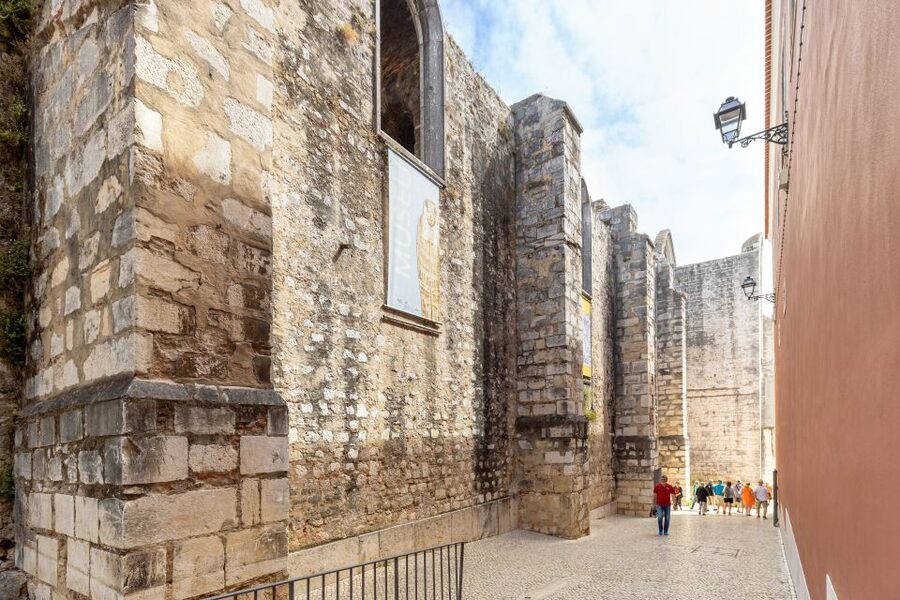
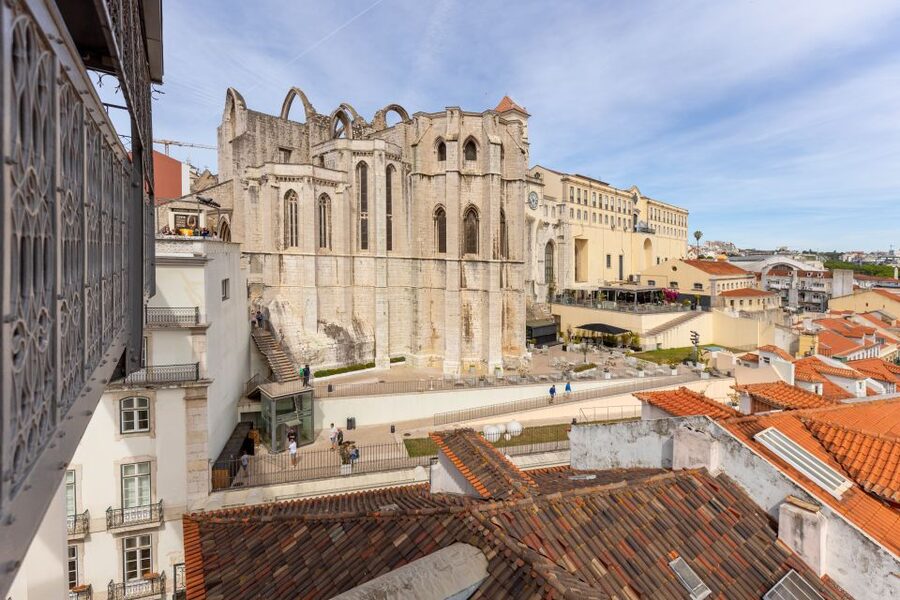
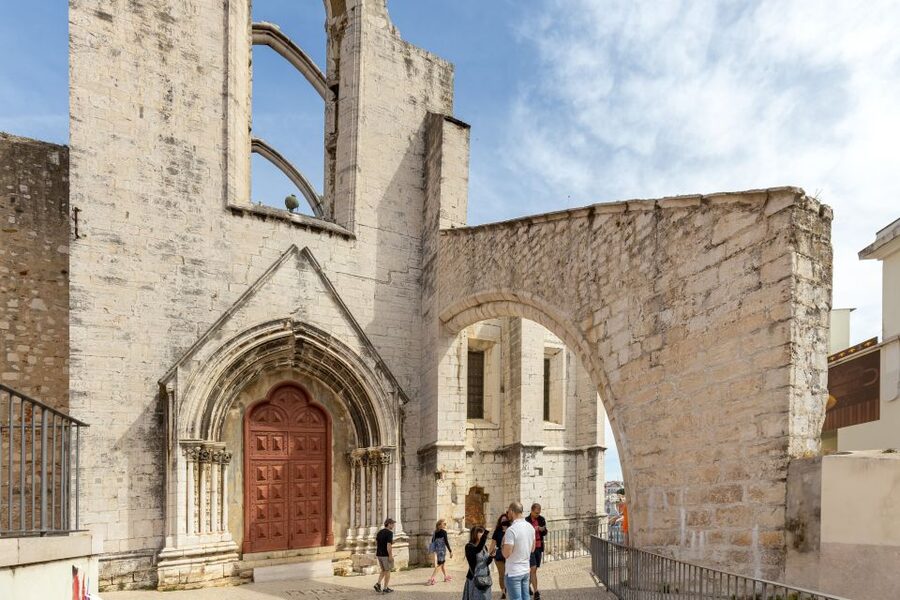
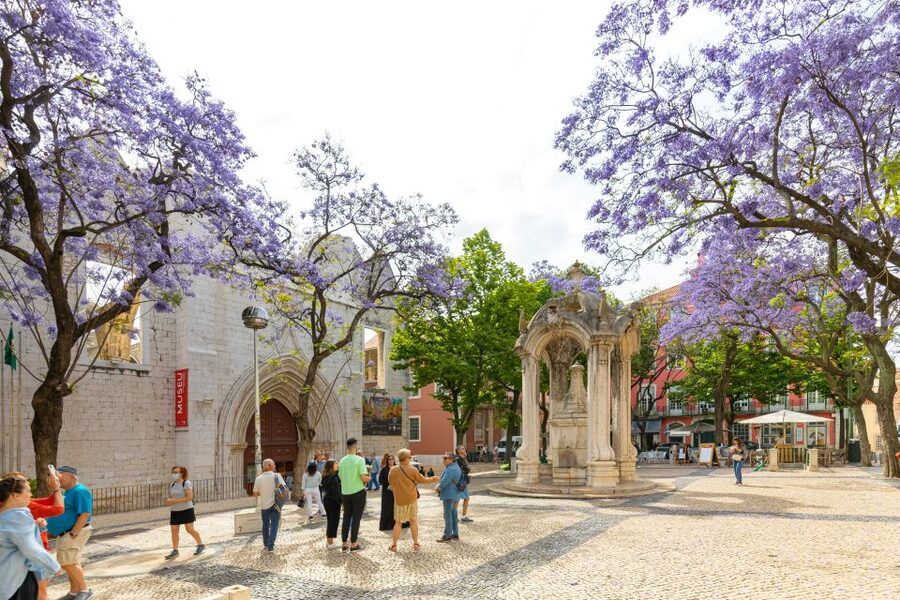
Right after that, the tour heads down toward the Carmo convent and church, known for its Gothic architecture. This is where the tour goes beyond beauty and adds meaning. The Carmo site is tied to the Carnation Revolution in 1974—one of Portugal’s defining modern moments—and that context makes the stone-and-stained-glass feel like more than decoration.
If you like your history in story form, this portion usually works well. Guides tend to connect the building to the people and the turning points, so you remember it instead of just scanning it.
Santa Justa Elevator and Baixa: a viewpoint plus the city’s core
Baixa is where Lisbon’s “everyday” urban logic shows up—wide streets, central energy, and the sense that everything connects. The tour builds to that with a visit to the Santa Justa elevator, a Gothic Revival monument that also functions as a top-tier viewpoint.
It’s worth treating the elevator stop as a double win: you get the architecture and you get height. From up there, you’re positioned to understand how Baixa sits in relation to the hills. It’s the kind of viewpoint that makes your future photos better because you start seeing Lisbon in layers.
After that, you’ll spend time passing major sights in Baixa. The goal here isn’t to list every building; it’s to show you the structure of the city center so you don’t feel lost later when you’re wandering on your own.
Tram from the castle area to Portas do Sol: the Lisbon way to move
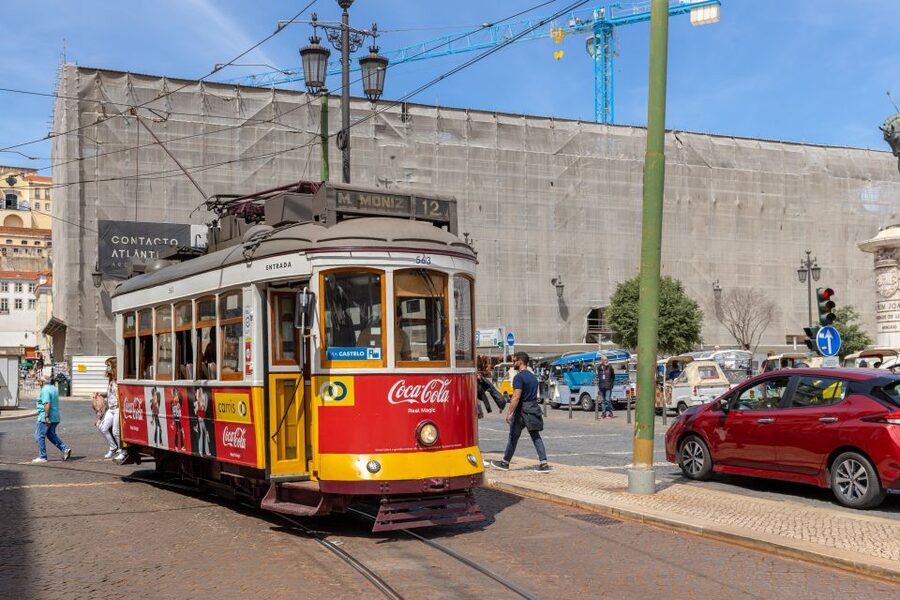
Now comes one of the most fun parts: a ride on an iconic Lisbon tram. The tour takes the tram going up from the castle area toward Portas do Sol. If you’ve ever thought Lisbon felt like it was made for trams and stairs, this is where that feeling becomes real.
At Portas do Sol, you pause at key monuments and get that “old city in motion” vibe: you’ll see the Monastery of São Vicente de Fora and the National Pantheon, and you’ll also look out toward Alfama. This is the moment when Alfama stops being a name on a map and starts being a physical place: narrow streets, steep angles, and the feeling that the city is constantly turning.
The tram ride also helps break up walking. Even for people who don’t love public transit, this one is short, scenic, and part of the cultural rhythm—Lisbon’s public life, not a museum transportation prop.
Alfama streets and St. Anthony energy: fado atmosphere in daylight
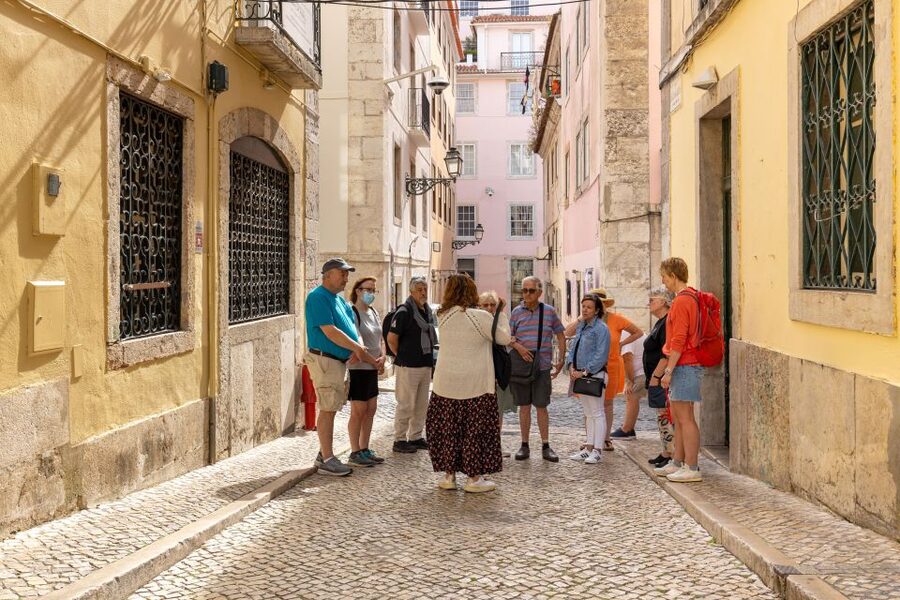
Then you move into Alfama, Lisbon’s oldest and most traditional neighborhood. Expect a maze of narrow lanes that runs down toward the Tagus. This is the district you picture when someone says Lisbon and then describes tiles, laundry lines, and small doorways that seem to lead into stories.
Alfama is also known for fado houses and for saint festivals, especially St. Anthony. Even if you’re not visiting during peak festival days, you’ll still get the neighborhood logic: why the music matters here and why the celebrations feel woven into everyday life.
The practical trick with Alfama is to keep your expectations realistic. This is a walking tour, not a sprint. The route includes stopping points and photo moments, and guides often keep the pace relaxed with frequent breaks. Some recent feedback specifically notes how manageable the walk feels, even for people who aren’t super fit, because the group stops often and the route planning helps.
You can also read our reviews of more historical tours in Lisbon



Lisbon Cathedral finish at 1150: a strong closing anchor
You end at Lisbon Cathedral, originally built in 1150, three years after Lisbon was taken back from the Moors. That timeline matters. Lisbon’s layers aren’t theoretical here—they’re right in the stone.
Over the centuries, the cathedral has been reshaped by changing architectural styles. Finishing here gives you a clear sense of continuity: you started in the 1500s neighborhood story, and you end in a medieval origin point that anchors everything that followed.
If you want a simple way to remember the tour, use this: hills and viewpoints (how Lisbon is built), church art (how Lisbon expresses faith), revolution context (how Lisbon changed), tram movement (how Lisbon lives), and cathedral history (how Lisbon began).
What you actually get for $29: value that’s more than a discount
At $29 per person for a 3-hour guided walk with a live guide, tram trip, and coffee plus cake, this tour prices itself like a smart intro. You’re not paying for “just walking.” You’re paying for someone to connect the places, translate the architecture, and keep the route coherent.
Here’s why that matters for value:
- Lisbon is big on viewpoints, but you can’t always tell what you’re looking at from street level. The guide helps you read the city.
- A tram ride and a coffee-and-cake stop turn a history lesson into a small shared break.
- The route covers multiple districts in one outing, which makes it easier to decide where you’ll return later.
There’s also a clear upside for first-timers. If you’re trying to get your bearings fast (without cramming), this is the kind of tour that helps you navigate your next days with less guesswork.
Who this tour suits best
This one fits best if you want:
- a first-pass orientation across Lisbon’s core neighborhoods
- story-driven stops where you’ll actually understand why each place matters
- a mix of walking plus a short tram ride, not a nonstop marathon
It’s less ideal if you hate hills or you need a fully step-free route. The route includes downs and ups, and even with breaks, you should expect stairs.
Should you book this Lisbon walking tour?
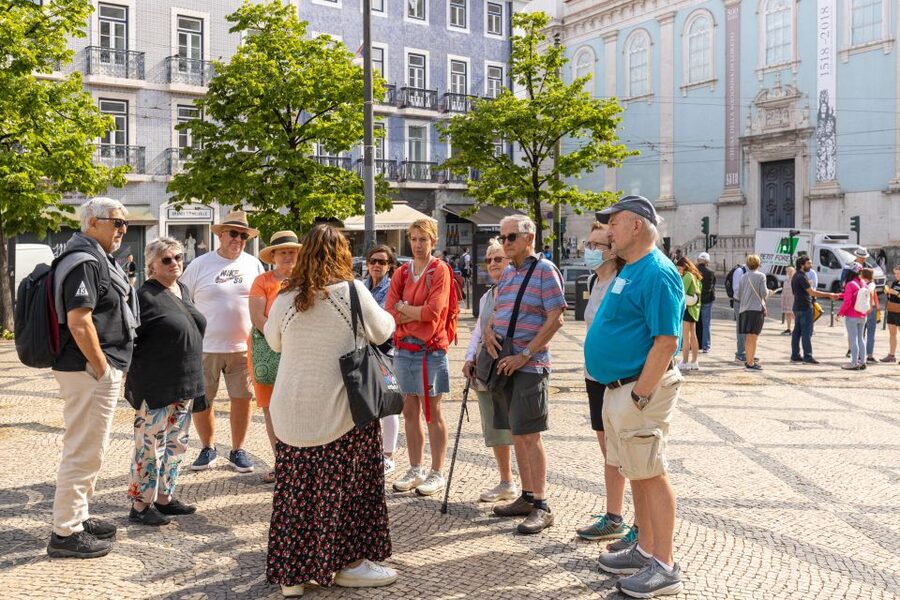
If it’s your first time in Lisbon, I’d book it. The itinerary is built like a street-level guide to how the city works: Bairro Alto to viewpoints, then churches with meaning, then tram-to-Alfama energy, ending with Lisbon Cathedral’s long timeline. For the price, it’s a lot of “Lisbon essentials” packed into a manageable 3 hours.
If you’re the kind of traveler who likes facts but also wants your day to feel enjoyable, the guide-led storytelling is a big part of the payoff. Names like Paulo, Ana, Beatrice, Raquel, and Ricardo keep showing up as examples of how the narration and pacing can turn a walking tour into a highlight.
One final decision tip: wear shoes you can trust on uneven streets. Lisbon will do its thing—then you’ll enjoy the views even more.
FAQ
How long is the tour?
The tour lasts 3 hours.
Where does the tour run?
It takes place in Lisbon District, Portugal, moving through central and historic neighborhoods like Bairro Alto, Baixa, and Alfama.
What’s the price per person?
The price is $29 per person.
Is hotel pickup included?
No, hotel pickup and drop-off are not included.
What is included in the tour?
Included items are a live guide, a walking tour, a tram trip, coffee, and cake.
Do I get to ride the tram?
Yes. The itinerary includes an iconic Lisbon tram ride, going up from the castle to Portas do Sol.
Where does the tour end?
The tour ends at Lisbon Cathedral.
What languages are available for the guide?
Guides are listed in Portuguese, Spanish, Italian, German, French, and English.
Is it a private or small-group tour?
Private or small groups are available.
What if I need to change plans?
Free cancellation is available up to 24 hours in advance for a full refund.