REVIEW · LISBON
Lisbon: City Highlights Guided Walking Tour
Book on GetYourGuide →Operated by Hi Lisbon Walking Tours · Bookable on GetYourGuide
Lisbon tells its story on foot. This guided walk maps the center of the city in a way that actually sticks, starting at Praça do Comércio and moving through the places you’ll want to return to on your own. You get landmark time plus context: the earthquake rebuild, the political twists, and the culture behind what you’re seeing.
What I like most is how the tour turns major sights into scenes you can picture later. The stop at São Domingos Church is a great example, because the guide’s explanations make it feel like more than a photo opportunity. I also like the way Baixa Pombalina and Chiado connect—square, street, and café culture in one continuous route.
One thing to consider: the walk can feel crowded and a bit noisy, so you may need to keep an eye on where you stand to hear clearly. The only recurring complaint is that there are no audio headsets, so peak times can make it harder to catch every word.
In This Review
- Key things you’ll notice on this Lisbon highlights walk
- Starting at Praça do Comércio: the Lisbon you’ll orient to fast
- Baixa Pombalina and Chiado: the earthquake rebuild route you can walk
- Augusta Street, the arch, and the “main streets” you should see once
- São Domingos Church: a unique Lisbon stop with stories that click
- The Jewish memorial and the darker chapters
- Carmo Convent area, Carmo Square, and Lisbon’s “remembering” spaces
- Cafés and central food stops: where the guide helps you eat like a local
- Santa Justa Elevator area: icon photos, with enough context to matter
- How long is the walk, and is it strenuous?
- Price and value: why $17 can be a smart buy
- What guide style to expect (and how to pick your best moment)
- Who should book this Lisbon highlights guided walking tour
- Should you book this Lisbon City Highlights Guided Walking Tour?
- FAQ
- Where does the tour start?
- How long is the Lisbon city highlights walking tour?
- Is the tour in English?
- What landmarks and areas are included?
- What’s included in the price?
- What’s not included?
- Is it refundable if plans change?
Key things you’ll notice on this Lisbon highlights walk
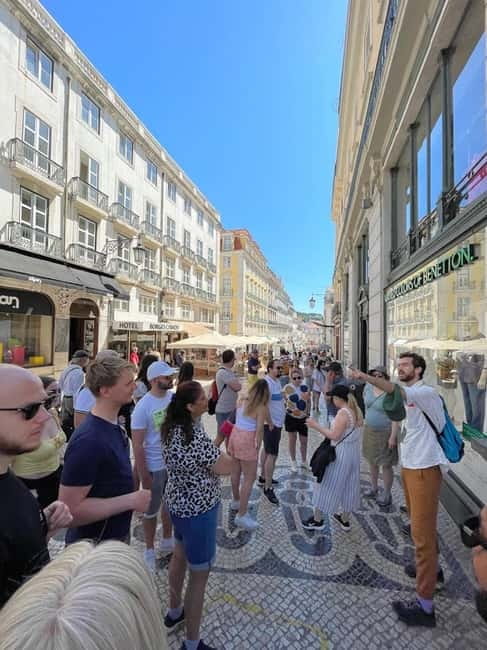
- Praça do Comércio first: the tour opens at Lisbon’s grandest square so the rest of the city has a clear starting point
- São Domingos Church as a story stop: not just architecture, but legends and explanations you’ll remember
- Baixa Pombalina and Chiado in one loop: you connect streets, viewpoints, and culture without jumping around
- Multiple “stop-and-look” landmarks: Augusta Street, the arch, Rossio, the station area, Carmo, and more are built into the route
- Food-and-drink pointers: you pass classic places and also get practical suggestions along the way
- Walkable pace with a few uphill bits: it’s generally manageable, but wear shoes you’re comfortable in
Starting at Praça do Comércio: the Lisbon you’ll orient to fast
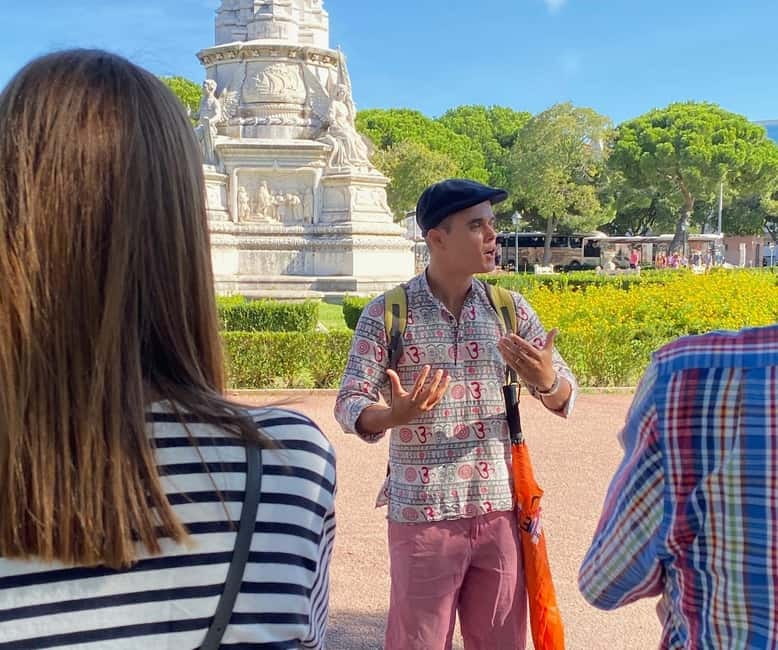
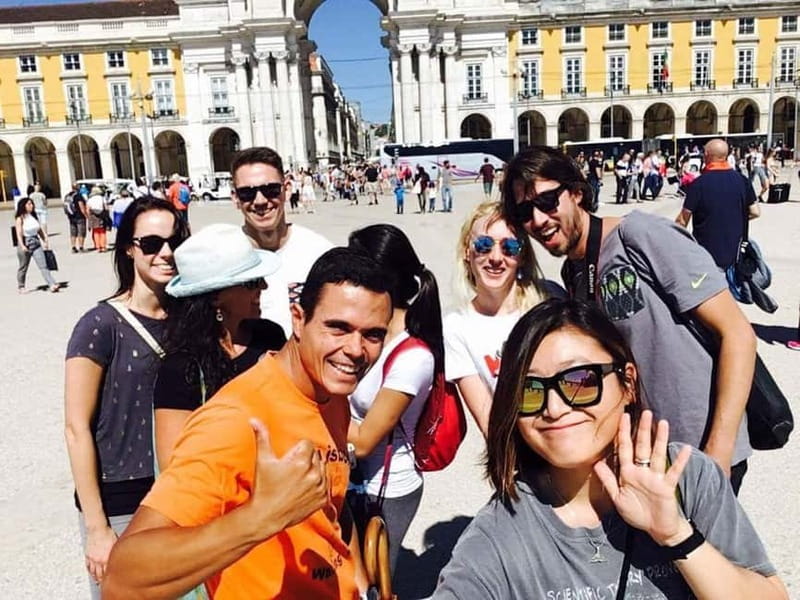
You begin at Praça do Comércio, the big riverside square that looks like it was designed for grand entrances. It’s also a smart place to start because it gives your brain an easy anchor. From there, you’re not wandering aimlessly—you’re following a line that points to how Lisbon developed, especially after massive disruption.
In the square area, you’ll take in Lisbon’s civic face and the sense of “center” that still drives the city’s energy. The tour route then funnels you into the older commercial streets and monuments nearby, where the guide can explain what happened, not just what exists.
Practical tip: this is where you should look for your guide with the orange umbrella, positioned between the big arch and the statue in the middle of the square. Once you lock onto that point, the rest of the walk gets easier to track.
You can also read our reviews of more walking tours in Lisbon



Baixa Pombalina and Chiado: the earthquake rebuild route you can walk
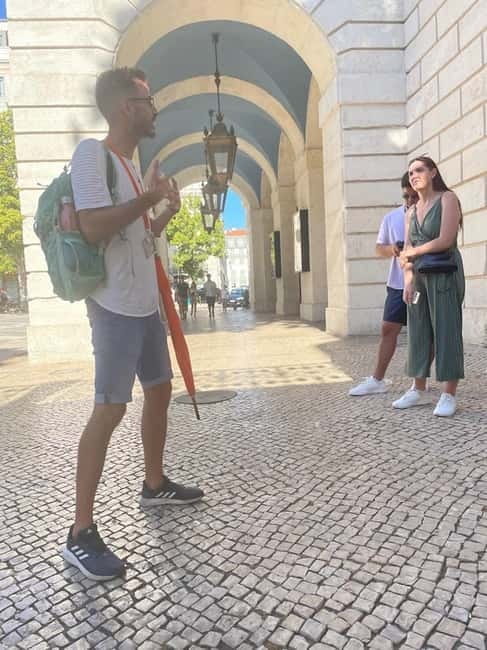
After the square, the walk moves into Baixa Pombalina and toward Chiado. This matters because these neighborhoods are tightly linked in Lisbon’s story. They’re also the parts of town where you’ll find the most “I’ve seen this before” landmarks—yet they still feel different when you understand the timeline.
A key theme here is the Great Lisbon Earthquake of 1755 and what followed. You’ll hear how the area was heavily damaged and then rebuilt in the 1700s, which is why this part of the city is often described as early earthquake-aware urban planning. The guide ties this to what Lisbon became afterward: the end of the monarchy, changing political power, and the long shadow of dictatorship and later revolution.
As you walk, notice how streets and buildings line up like they were meant to function as a system. That’s why Baixa feels especially logical compared to other hilly Lisbon areas. You’re not just seeing pretty streets—you’re seeing a design philosophy shaped by crisis.
From a comfort standpoint, this part of the route also matches what people tend to like: the walk is generally not physically punishing. One guide-led group described the route as having only a few uphill bits, with overall pacing that stays friendly.
Augusta Street, the arch, and the “main streets” you should see once
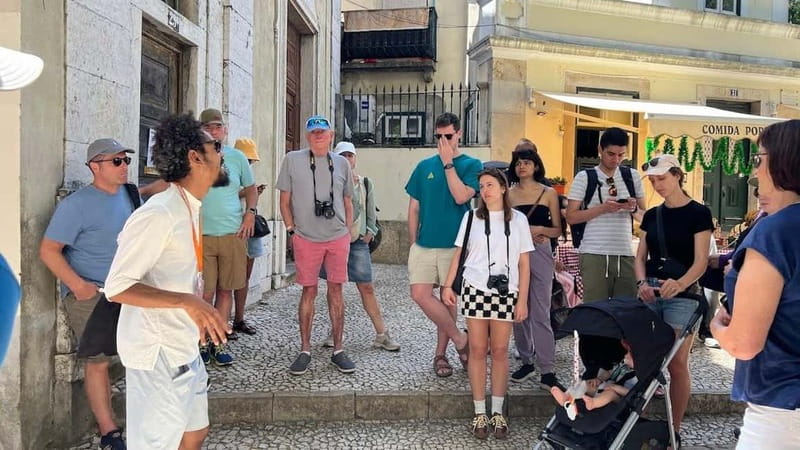
One of the neat aspects of this tour is that it doesn’t just orbit “views.” It takes you through the main streets that define everyday Lisbon. You’ll pass (or pause near) Augusta Street and see the famous arch there. This is one of those stops that works even if you think you know Lisbon already, because it’s a clear visual landmark.
From there you’ll also encounter the Santa Justa area and other central sights. You’re doing a smart mix: iconic exteriors, quick context, and short stretches where the guide points out how Lisbon’s urban layout supports movement through the city.
Rossio Square and the station area also come into play. If you’ve ever felt like Lisbon has too many streets and not enough orientation, these are your tools. They help you understand how travelers and locals flow between neighborhoods, and they make your next self-guided day feel less chaotic.
São Domingos Church: a unique Lisbon stop with stories that click
The tour’s standout religion-and-legend moment is São Domingos Church (often described as one of the most unique churches around). What makes it memorable is the way the guide explains it—so you don’t just stand there for a quick glance.
This is also a good example of why a guided walk earns its fee. The guide’s stories help you see the church as part of Lisbon’s layered identity: faith, politics, conflict, and survival. It’s the kind of stop where the meaning lands because you were just given the historical thread moments earlier.
If you’re a museum person, you’ll like how this works like a living lecture: one landmark, then context, then a quick walk that carries you forward before you lose momentum.
The Jewish memorial and the darker chapters
This route includes a Jewish memorial stop, and it’s handled in a way that adds weight to everything you see afterward. Lisbon’s central streets hold reminders of painful history, including violence and forced change over centuries. The guide connects these facts to broader political shifts, so the city doesn’t read like a postcard only.
This portion is valuable because it keeps the tour balanced. It’s not all grandeur and sunny squares. You get the cultural and historical reasons behind Lisbon’s communities, including references to a Jewish massacre and the later ripple effects across Portuguese life.
If you prefer history that’s told with human stakes (not just dates), this is one of the times to pay close attention.
You can also read our reviews of more guided tours in Lisbon

Carmo Convent area, Carmo Square, and Lisbon’s “remembering” spaces
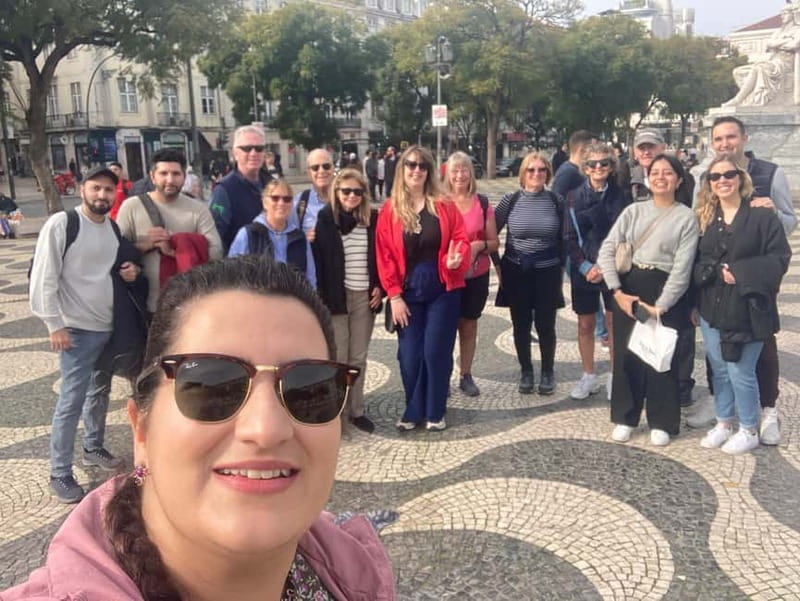
As the tour continues, you’ll reach the Square and Monastery of Carmo. Places like this often make Lisbon feel real in a different way, because convent and monastery grounds tend to sit at the intersection of devotion, art, and memory.
You also get a sense of how Portuguese culture handles the past: not only by preserving stones, but by keeping the story active through street-level explanations. Even if you don’t linger long inside any single site, the guide gives you enough context to understand why these places matter.
It’s also a good checkpoint for your legs. By the time you hit Carmo, you’ve already walked through several landmark zones, so the pacing feels like it’s building toward a natural midpoint rather than dragging.
Cafés and central food stops: where the guide helps you eat like a local
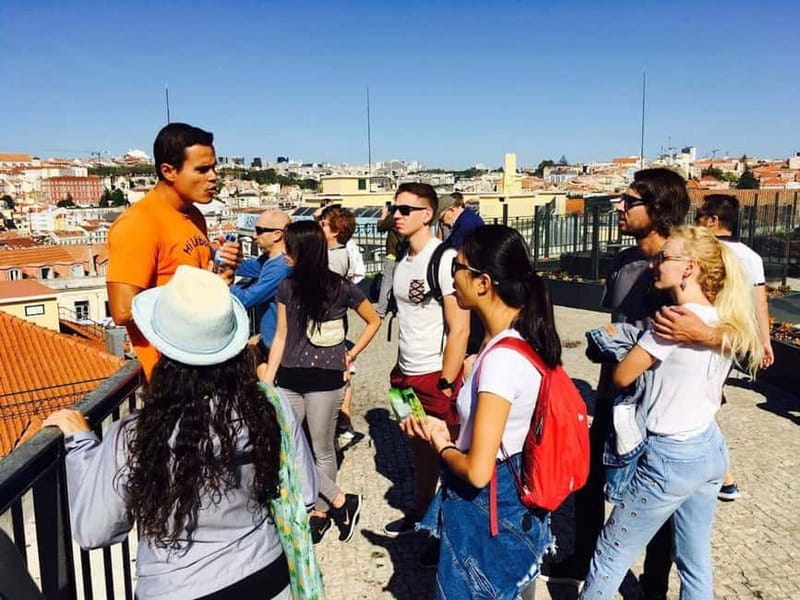
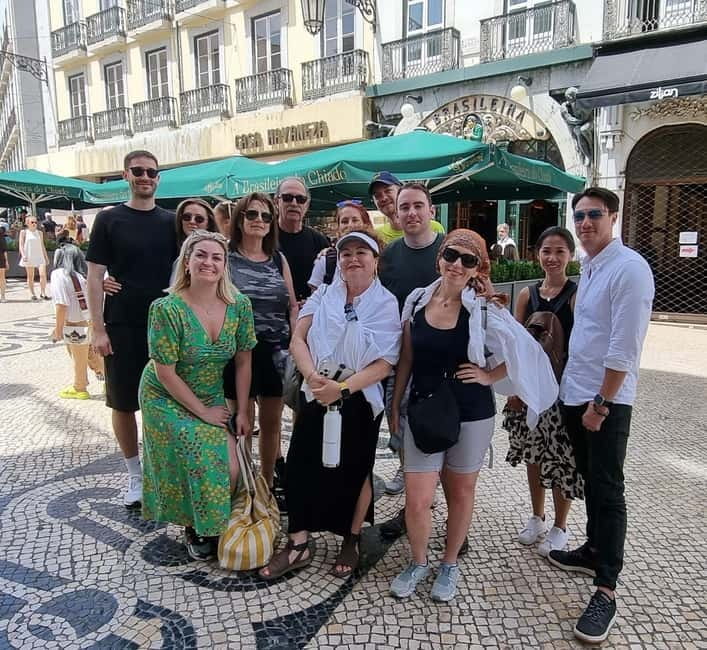
One reason people like this tour is that the guide doesn’t treat Lisbon as a checklist. You’ll pass places like a Brasileira Café and the original Ginjinha shop (Ginjinha is not included, but you’ll see where the classic cherry liqueur comes from). You also stop near Casa do Alentejo, which gives the tour a cultural flavor beyond monuments.
Camões Square also appears on the route, and it’s one of those areas where you can feel Lisbon’s intellectual and literary connections. The guide ties this kind of cultural association back to the neighborhood’s role as a meeting point for artists, writers, poets, and politicians over the centuries.
A practical note: if you want to sample anything, plan to pay for it separately. The tour doesn’t include Ginjinha, so think of these stops as inspiration points plus a chance to match your mood to something sweet or savory.
Santa Justa Elevator area: icon photos, with enough context to matter
The Santa Justa Elevator shows up as you work your way through the center. Even if you don’t plan to ride it, the area is a strong visual anchor. The guide helps you place it in the bigger story of how Lisbon rebuilt and reinvented itself.
I like this stop because it also reminds you what Lisbon is good at: mixing engineering, design, and drama into one city layer. After you’ve been walked through the 1755 rebuild narrative, an iconic structure like this feels less random.
How long is the walk, and is it strenuous?
The tour lasts about 150 minutes, roughly 2.5 hours. That’s enough time to cover a lot of the city center without turning into a day-long hike.
In terms of effort, the tone I’d plan for is moderate. One participant described it as not physically demanding, with only a few uphill bits. Still, wear comfortable shoes. Central Lisbon streets can be uneven, and you’ll appreciate good grip.
If you’re short on time, this tour works well as a first-day or second-day activity because it gives you an organized mental map. If you’re on the fence, it’s usually easier to manage this early, before you start branching out.
Price and value: why $17 can be a smart buy
At $17 per person for a 150-minute guided walk, you’re paying for three things that are hard to replicate alone:
- A clear route through the densest “must-see” areas
Praça do Comércio to Baixa and Chiado is a perfect coverage line. You see multiple landmark zones in one go without wasting time deciding where to go next.
- Historical context that changes how you see the buildings
The guide’s explanations connect earthquake aftermath, monarchy shifts, persecution, dictatorship, revolution, and the evolution of Portuguese culture. That makes the central sights feel connected rather than separate snapshots.
- On-the-ground suggestions that save time
Several guides have been praised for adding practical tips on transport and where to eat and drink. Some even point toward extra stops that fit your interests, like where to try Portuguese cherries liqueur and pastel de nata on or around the route.
In plain terms: you’re buying orientation plus story. If you enjoy walking but don’t want to research each square like a student, this is good value.
What guide style to expect (and how to pick your best moment)
The guide experience tends to be the main strength, with people highlighting both humor and engagement. Names you may see include Claudia, Samuel, Tiago, Beatrice, Walter, and José, and the common thread is fast delivery with lots of stories tied to what you’re standing in front of.
Still, one caution: because the tour is voice-only, you should pick a spot near the front if the group is lively. One suggestion that came up is that audio headsets would help. So if you know you struggle to hear in crowds, plan to position yourself carefully.
Also, group size can vary. Some people reported larger-than-expected groups in certain cases, which can affect how easily you can ask questions or hear at every stop. If you’re the type who likes close interaction, try to go at a time you expect fewer crowds.
Who should book this Lisbon highlights guided walking tour
This is a strong choice if you:
- Want an organized first look at Baixa Pombalina and Chiado without juggling maps
- Care about history but don’t want it to feel like a lecture
- Like walking city centers and picking up food and culture pointers along the way
- Plan a short stay and want maximum sense-making per hour
It may be less ideal if you:
- Need audio amplification to catch every detail
- Get frustrated by crowds or noisy streets
- Want a slow, quiet walk with lots of free time at each individual monument
Should you book this Lisbon City Highlights Guided Walking Tour?
If you’re trying to get your bearings in Lisbon quickly, I’d book it. Starting at Praça do Comércio and walking through the center gives you a mental map that makes your next day easier. The tour’s big win is the way landmark sightseeing gets tied to Lisbon’s turning points—especially the earthquake rebuild and the political shifts that followed.
Go in with two expectations: you’ll walk, and the guide’s voice is the main soundtrack. If you can handle that, this one is a solid, story-driven way to understand Lisbon without spending hours planning.
FAQ
Where does the tour start?
It starts at Praça do Comércio. Look for the guide with an orange umbrella between the big arch and the statue in the middle.
How long is the Lisbon city highlights walking tour?
The tour runs for about 150 minutes, roughly 2.5 hours.
Is the tour in English?
Yes, the tour is conducted in English.
What landmarks and areas are included?
You’ll visit parts of the Baixa and Chiado areas and see several central highlights, including Praça do Comércio, Augusta Street and its arch, Rossio Square and the train station area, São Domingos Church, and the Square and Monastery of Carmo, among others.
What’s included in the price?
The price includes an expert local guide, an approximately 2:30 walking tour, and extensive knowledge of Portuguese history and culture, plus stories and fun facts.
What’s not included?
Gratuities are not included, and Ginjinha is not included.
Is it refundable if plans change?
Yes. You can cancel up to 24 hours in advance for a full refund.