REVIEW · LISBON
Lisbon: 3-Hour The Slave Trade – An Historical Walking Tour
Book on GetYourGuide →Operated by My Lisbon Tours · Bookable on GetYourGuide
Lisbon’s best sights come with hidden receipts. On this 3-hour historical walking tour, you connect the city center you already want to see with the Atlantic slave trade that helped shape Portugal. It is not just facts. It is a guided path that shows you how power, economics, and politics lived right here in the streets.
I love two things about it. First, the small group feel, with a cap around 6 people, makes questions easy and answers personal. Second, I like how the guide, Rui Fernandes, teaches from a mix of history and political economy, using Lisbon landmarks as evidence instead of talking in the abstract.
One drawback to consider: this tour tackles a violent topic head-on. The pace is relaxed, but the subject matter is heavy, and it is meant to be understood, not softened.
In This Review
- Key things to know before you go
- Lisbon’s streets, the Atlantic route, and the story you don’t hear
- Meeting at Largo do Chafariz de Dentro (and why foot makes sense)
- Alfama-style streets: where the “evidence” is in the details
- Prince Henry to abolition: the tour’s “timeline you can walk”
- The day-to-day angle: what slavery looked like in historical Lisbon
- Why this tour ends up changing how you see present-day Portugal
- Value check: is $35 fair for 3 hours of this much context?
- Who should book this Lisbon slavery history walk?
- Should you book this tour or skip it?
- FAQ
- How long is the Lisbon 3-Hour The Slave Trade walking tour?
- Where do we meet the guide?
- What is the price per person?
- Is the tour offered in English?
- How big is the group?
- Is there a break included?
- Is hotel pickup or drop-off included?
- Do I need to bring anything?
- FAQ
- Can I cancel for a full refund?
- Are pets allowed on the tour?
- Is there a pay-later option?
Key things to know before you go
- Small group format keeps the walk interactive, not lecture-only
- Rui Fernandes leads with a history + political science + economics lens
- You walk central Lisbon and Alfama to see how the story is built into streets and buildings
- One café coffee break plus a WC stop helps you reset without losing momentum
- You cover the full chain from Prince Henry’s era to abolition and African liberation struggles
Lisbon’s streets, the Atlantic route, and the story you don’t hear

Lisbon is full of beautiful stonework, church façades, and viewpoints that make you want to slow down. The tour gives you a different way to look. Instead of treating the city as scenery, you treat it like a document—written by trade, law, religion, and money.
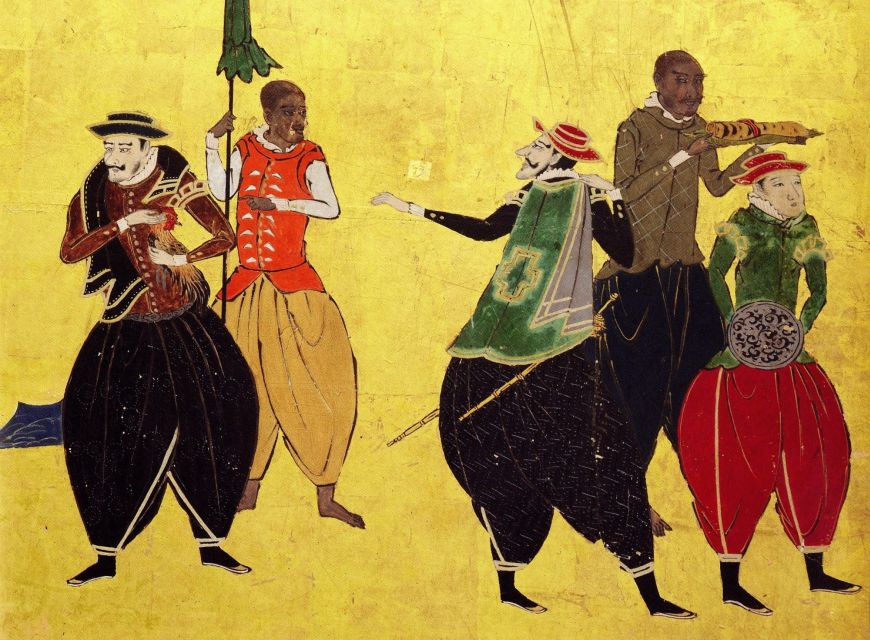
The core idea is simple: Portugal helped drive the Atlantic slave trade. In the early 1400s, Portugal began routes that led millions of Africans to be sold into slavery and shipped across the ocean. That system lasted for centuries. And in Lisbon, you can still trace its fingerprints—sometimes in plain sight, sometimes hidden behind what today looks like normal city life.
The best part is the way the walk turns history into practical understanding. You start to see how wealth and expansion weren’t only about ships and maps. They were also about institutions that enabled human exploitation. You’ll also learn that this story is tied to Portugal’s later connections, especially Brazil, and to broader political changes, including abolition and African nationalist liberation movements.
You can also read our reviews of more walking tours in Lisbon



Meeting at Largo do Chafariz de Dentro (and why foot makes sense)
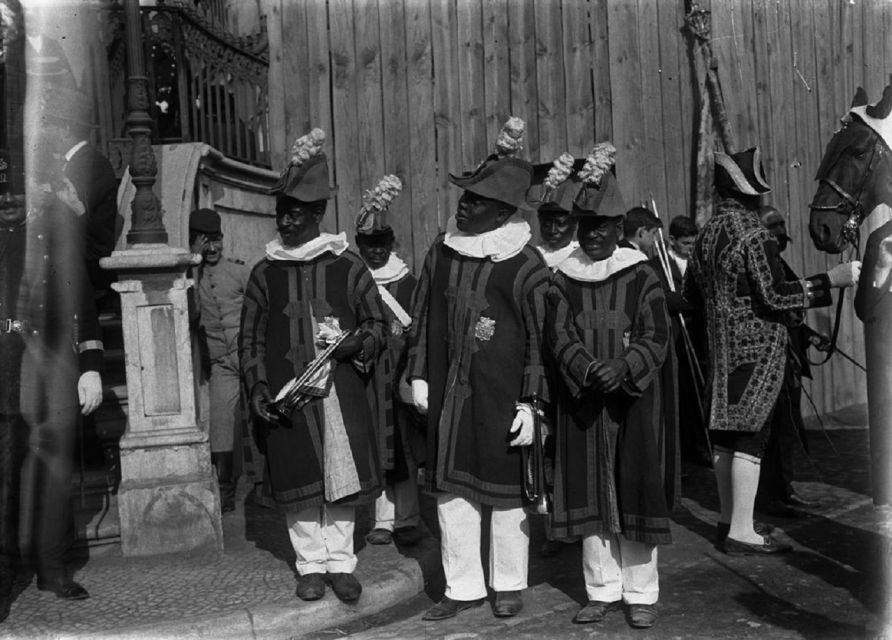
You meet at Largo do Chafariz de Dentro, a real Lisbon square you can find without needing special access. From there, you’re walking through a mix of back streets and main avenues, plus churches and public squares that relate directly to the slave-trade story.
This is the kind of tour where shoes matter more than stamina. Bring comfortable walking shoes. The walking is mostly manageable—there are minimal steep uphill sections according to the experience of people who’ve done it—so it works for a range of travelers who still want a structured history walk.
Also, the small size changes the feel immediately. With a cap around 6 participants, you get enough time to ask questions without the guide having to rush you out the door to make the next stop.
Alfama-style streets: where the “evidence” is in the details

Expect cobblestones, old neighborhood textures, and street-level clues. Many tours stop at monuments and call it done. This one uses everyday urban features—street names, building uses, and the way older spaces evolved into today’s grand city scenes—to anchor the narrative.
In the start area, you’re in the direction of Alfama, Lisbon’s oldest neighborhood. The atmosphere is exactly what you want for a story like this. Dense streets and older layers of the city help you imagine how people moved, worked, and were controlled in earlier centuries.
What you’ll do with these clues is the key. The guide doesn’t just point and say this existed. He connects the site to how slavery and the slave trade were part of Lisbon’s development. That means you’re watching the city for symbols of power—who benefited, who governed, and what economic logic made the system durable.
You’ll also get practical support during the walk. People have noted the guide finds shade on hotter days and keeps a pace that doesn’t feel like punishment. It’s a smart way to keep attention on the story instead of on your breathing.
Prince Henry to abolition: the tour’s “timeline you can walk”
The tour is built like a thread you can hold. It starts in the early 15th century, when Prince Henry the Navigator’s Portugal helped set the Atlantic system in motion. From there, the guide brings you forward through the major phases that mattered for how slavery became commercial and institutional.
You’ll focus on topics like:
- the genesis of slavery in the Iberian peninsula
- the birth of the Atlantic slave trade
- the Age of Discovery and how exploration and profit fed each other
- the importance of Brazil in the larger network
- the eventual abolition of the trade in Portugal
- Portuguese colonies in Africa and the struggle for liberation by African nationalists
This is where the guide’s background in history, political science, and economics shows. Instead of treating the subject as a series of tragic events, you see it as a system—laws, markets, and political decisions reinforcing one another over time. You come away with a clearer sense of how quickly “discovery” turned into an engine for forced labor.
And because it is a walking tour, you’re constantly translating ideas into geography. You’re not only remembering facts. You’re learning where in Lisbon those facts belong. That makes the information easier to keep later, when you’re back at your hotel trying to explain what you learned to someone who only sees postcards.
The day-to-day angle: what slavery looked like in historical Lisbon
A lot of “big history” talk stays on ships and laws. This tour doesn’t ignore that, but it also addresses the day-to-day aspects of the life of a slave living in historical Lisbon. That change matters. It moves the conversation from abstract economics to the lived reality inside the city’s systems.
You’ll also hear how the trade reshaped Lisbon’s development. That includes how institutions supported it, how people experienced it, and how public life carried the consequences long after the trade intensified. The guide’s approach is respectful, with room for questions throughout, so you can ask when something feels unclear or when you want more context.
One useful detail: the guide uses relevant pictures to help frame key points. That means you’re not only relying on memory and narration. You can connect scenes and concepts in a more visual way, which helps especially when the material covers multiple centuries.
You can also read our reviews of more historical tours in Lisbon




Why this tour ends up changing how you see present-day Portugal
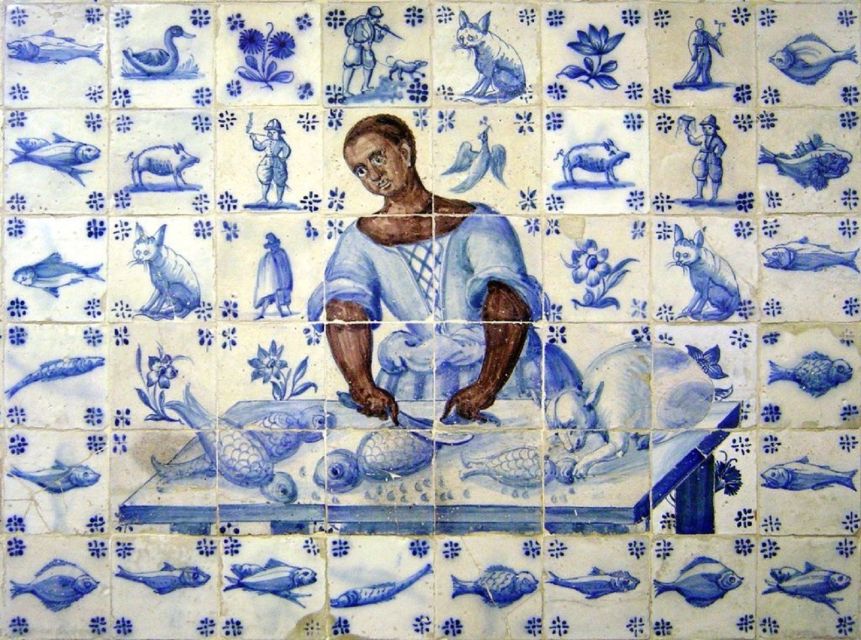
Here’s the payoff I found most useful: you leave with a better ability to interpret Lisbon as a product of its past. You start noticing how prosperity can be linked to morally violent systems. The tour pushes you to hold that tension, instead of treating it as a distant footnote.
This is also why the guide’s Q&A style is such a big part of the experience. People have mentioned his patience and his willingness to answer questions in an evenly paced way. In practice, that means you can steer your learning—whether you care more about the political decisions, the economic incentives, or the human stories.
You’ll also learn how broader liberation efforts in Africa connect to what happened later. That’s not just name-dropping. It helps you understand that the end of trade didn’t mean the end of oppression. The struggle for freedom and self-determination is part of the long arc.
And if you care about having a more informed conversation at dinner, this tour does that. You’ll be able to explain Portugal’s role in the long history of slavery without getting stuck in simplified myths.
Value check: is $35 fair for 3 hours of this much context?
At $35 per person for about 3 hours, this tour sits in the “serious learning” category rather than the “quick overview” category. You’re paying for a licensed, local guide and for a tight route that uses the city as a classroom.
The small group size is a major part of the value. With a cap around 6, you get dialogue, not just listening. That alone can make the experience feel worth it, especially if you’ve ever been stuck in a large group where questions die in the crowd.
You also get one coffee break and one WC break included. That’s not just comfort. It helps you keep your attention during a heavy topic. Better rest usually means better recall.
If your goal is to see Lisbon and also understand the deeper political and economic forces behind it, this price is a solid trade.
Who should book this Lisbon slavery history walk?
Book it if you want:
- a walking tour that uses Lisbon’s streets and buildings as evidence
- the economic and political angle, not only moral outrage
- a guide who invites questions and keeps a calm pace
- a small group experience that doesn’t feel rushed
It may be less ideal if you’re only looking for light sightseeing, or if you want a story that avoids difficult details. This is designed for understanding, even when the material hurts.
Should you book this tour or skip it?
I think you should book if you’re the type of traveler who likes to know why a city is the way it is. Lisbon can be easy to romanticize. This tour gives you the context to romanticize more honestly—or to pause your awe and replace it with understanding.
Skip it if you want a purely scenic walk or if you find it hard to process heavy historical content. Even then, you might still benefit later in your trip if you’re able to approach the material with seriousness and respect.
FAQ
How long is the Lisbon 3-Hour The Slave Trade walking tour?
The tour lasts about 3 hours.
Where do we meet the guide?
Meet at Largo do Chafariz de Dentro.
What is the price per person?
The price is $35 per person.
Is the tour offered in English?
Yes. The tour is conducted in English.
How big is the group?
It’s a small group with a limit stated as up to 8 participants, and noted as a maximum of 6 participants for an engaging experience.
Is there a break included?
Yes. There is one coffee break and one WC break included.
Is hotel pickup or drop-off included?
No. Hotel pickup and drop-off are not included.
Do I need to bring anything?
Bring comfortable shoes for the walking portion.
FAQ
Can I cancel for a full refund?
Yes. You can cancel up to 24 hours in advance for a full refund.
Are pets allowed on the tour?
No. Pets are not allowed.
Is there a pay-later option?
Yes. You can reserve now & pay later and keep your plans flexible.