REVIEW · TOKYO
Tsukiji Fish Market Small-Group Food Walking Tour
Book on Viator →Operated by MagicalTrip Inc. · Bookable on Viator
A world-famous fish market is a sensory riot. This Tsukiji Small-Group Food Walking Tour turns that chaos into a guided, tasty route with lunch plus cultural stops. I especially like how you get fresh seafood samples in multiple stalls instead of just one quick bite, and I also like the added stop for Japanese shrine and Buddhist temple culture—so it’s not only eating, it’s understanding.
One thing to consider: this tour focuses on the Tsukiji area you can still access today (Outer Market and nearby lanes), not the old-style inner auctions people picture from years ago—so if you’re chasing that exact tuna-auction vibe, your expectations may need a tweak.
In This Review
- Why This Tour Works for First-Time Tsukiji Fans
- Key Points at a Glance
- Tsukiji Outer Market, Not the Old Tuna Auction Daydream
- Meeting at Tsukiji Station and Getting Oriented Quickly
- Seafood Samples That Actually Build a Meal
- A Real Consideration: Dietary Limits
- Old Tsukiji Market: History, Temple Energy, and Calm Moments
- Tsukiji Jogai Market: Lively Lanes and More Snack Hunting
- Lunch: The Included Sit-Down Moment That Makes the Price Make Sense
- What Guides Actually Add: More Than Just Ordering Help
- Timing, Heat, and How to Stay Comfortable
- Price and Logistics: Is $87.37 Worth It?
- Should You Book This Tsukiji Tour?
- FAQ
- How long is the Tsukiji Fish Market Small-Group Food Walking Tour?
- Where do I meet the guide for the tour?
- Is a seafood lunch included?
- What market areas does the tour cover?
- Are vegan options available?
- Can the tour guarantee allergy-free food?
- What group size is this tour limited to?
Why This Tour Works for First-Time Tsukiji Fans
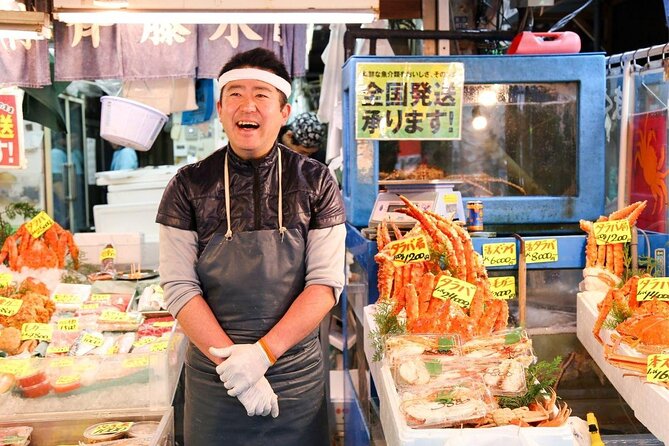
Tsukiji’s reputation is huge. The streets have that “everyone’s here” energy. But the real value of a guide is simple: you don’t just wander. You hit the right corners for snacks, you learn what you’re looking at, and you get a sit-down seafood lunch included, which keeps the whole morning from turning into “wait, what should we eat now?”
Key Points at a Glance
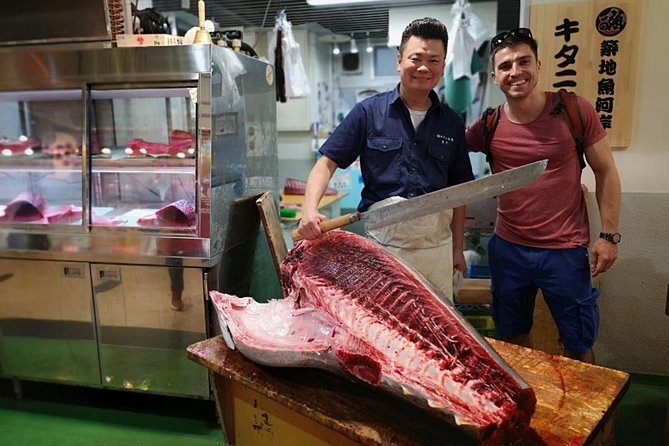
- Small group (max 7): less waiting, easier to hear your guide, and more time to actually eat.
- Lunch included: the price isn’t just for samples and walking.
- Outer Market focus: you’ll explore stalls and food shops you can access today.
- Food + faith stops: Buddhist temple and Shinto shrine elements add context.
- Tokyo Bay viewpoint: you get at least one proper “look up and reset” moment.
- No vegan options: plan for seafood-heavy choices and ask when needed.
You can also read our reviews of more walking tours in Tokyo


Tsukiji Outer Market, Not the Old Tuna Auction Daydream
Let’s get the expectation setting right. Tsukiji’s inner wholesale action moved to Toyosu in 2018. So if your mental movie is built around the old inner auction floors, this isn’t that exact experience.
That said, you’re still in Tsukiji’s food universe. The tour centers on the Outer Market area and adjacent shopping streets, where you’ll see plenty of seafood sellers and snack counters. You’ll also get a structured route, so you’re not spending your limited Tokyo time trying to map alleys while everyone else is doing the same.
I like that the tour doesn’t pretend you’ll be watching the old inner wholesale spectacle. Instead, you get a practical walk through the still-busy marketplace world: stalls, food specialties, and the kind of “what is that?” seafood curiosity you come to Tokyo for.
Meeting at Tsukiji Station and Getting Oriented Quickly
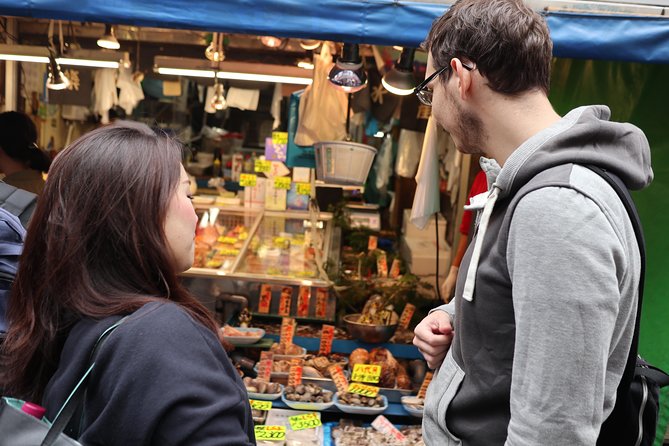
The start is at Tsukiji Station, Exit 1, with your guide waiting there. This matters more than it sounds. Tsukiji is crowded and confusing in the best way, and it’s easy to drift half a block in the wrong direction and lose 30 minutes of your tour time.
A short early orientation also helps because the market lanes have lots of signs and tight rules about where you can pause. In other words, you don’t want to be the person doing a slow-motion traffic jam in the middle of a walkway. With a guide, you know when to stop, where to stand, and how to keep moving.
One practical tip you’ll hear echoed by savvy market walkers: show up early enough to confirm you’re at the right meeting point. Tsukiji is busy. The safest move is to get there, look for the guide, and settle in before you start eating.
Seafood Samples That Actually Build a Meal
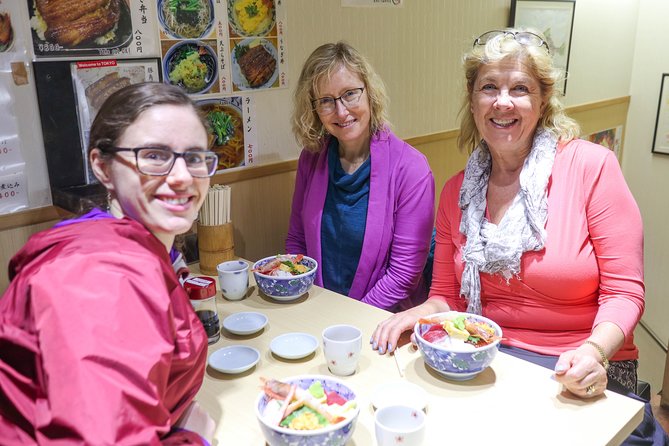
This is a food tour, but it’s not only “two snacks and done.” The tour is designed so you taste around the market and then finish with a fresh seafood lunch included.
You can expect a mix of:
- small seafood and snack tastes across several stops
- a sit-down meal you can choose within (the tour experience is described as allowing choice for the main meal)
You’ll see items like sushi, tamagoyaki (Japanese sweet omelette), scallops on a stick, unagi (eel) BBQ, and crab mentioned in guide-led experiences. Even if your exact menu differs by timing, season, and what’s available at stalls, the pattern is consistent: you’ll be eating more than you planned to.
Why that matters for value: $87.37 for about 3 hours sounds “market-high” until you remember the tour includes lunch and multiple tasting moments. If you did this solo, you’d likely spend similar money anyway—and still waste time figuring out what stalls are worth trusting.
Also, the tour pace helps. A small group of up to 7 means you’re not stuck waiting behind a huge crowd for the next stop. You get to try things, then move on before you get too full or too rushed.
A Real Consideration: Dietary Limits
The tour notes that it can’t guarantee allergy-free meals and that some substitutions may not be possible at every stop. Vegan options are also not available.
So if you have strong dietary needs, don’t assume every stall can meet them on the spot. Do what you can beforehand: tell your guide clearly and ask what’s realistically possible. There’s a story from a guide experience where a guest with coeliac needed appropriate options and the guide worked hard to make it work with substitutions. That’s encouraging—but it still doesn’t turn into an allergy-certified guarantee.
You can also read our reviews of more food & drink experiences in Tokyo

Old Tsukiji Market: History, Temple Energy, and Calm Moments
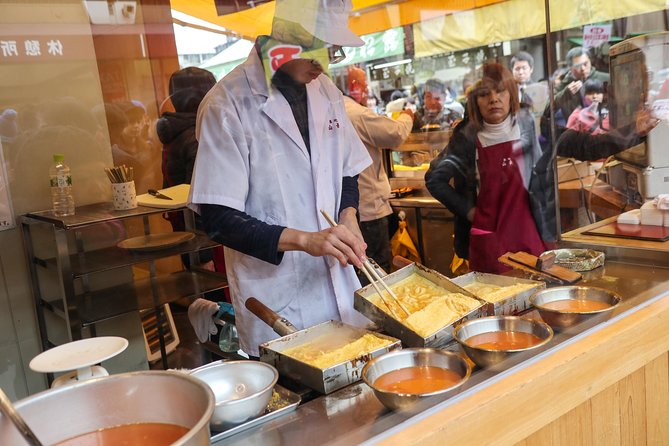
One of the best surprises here is the cultural layering. Tsukiji isn’t only fish. It includes religious spaces, and the tour uses that to slow things down for a minute.
At the stop around the Old Tsukiji Market area, you’ll get food sampling plus context about the building and Japan’s religions, including a Buddhist temple element and a Shinto shrine. This is a helpful pairing with seafood, because it reminds you how deeply food, place, and ritual connect in Japan.
Even better, you get a moment to look out over the city. Some parts of the experience mention a Tokyo Bay view, which is a nice counterweight to narrow market lanes and nonstop eating.
What to watch for: these areas can be tight and busy, especially when you’re moving as a group. If you’re easily overwhelmed by crowds, plan to breathe through it and treat it like a sensory workout. The tour’s timing is set to keep you moving and tasting without turning into a standstill.
Tsukiji Jogai Market: Lively Lanes and More Snack Hunting
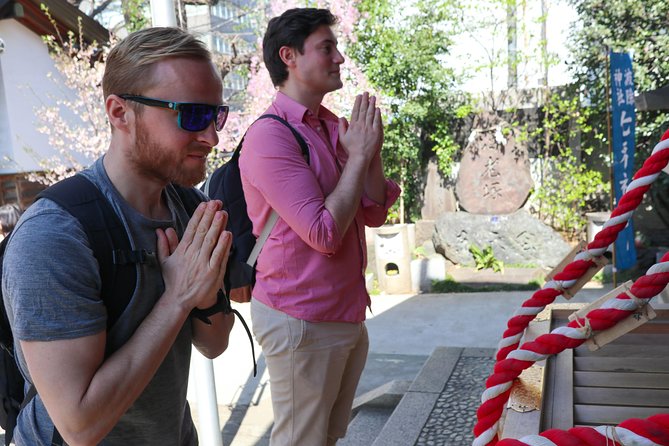
After the older-market and food context, the walk continues through Tsukiji Jogai Market—another stretch where you’re hunting fresh seafood and local snacks.
This is where you’ll often get that “one more thing” feeling. The smells are strong. The displays are eye-level and hands-on. And since you’re with a small group, it’s easier to keep the line moving at each tasting moment.
A realistic drawback: some market alleys are so packed that signs often ask you not to stop and eat in certain areas. That means your tour stops help you stand in the right places. If you were self-guiding, you could spend time figuring out where it’s socially acceptable to eat without blocking people.
If you love the atmosphere—narrow lanes, quick purchases, seafood chatter—this part is great. If you don’t like crowd density, come with patience and bring water.
Lunch: The Included Sit-Down Moment That Makes the Price Make Sense
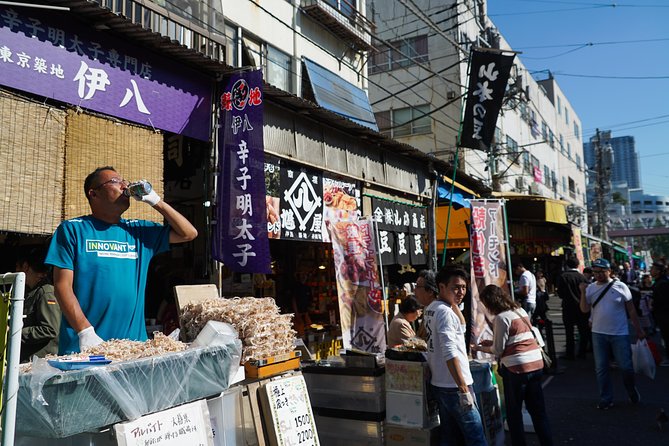
Here’s what I love about tours like this: they force you to plan around one quality meal instead of treating Tokyo food as a constant string of choices.
The experience includes a seafood lunch in the market area. In some guide-led experiences, guests appreciated that they could choose what they wanted for the sit-down meal. That small freedom goes a long way. Markets are loud. Menus can be unclear. Choice reduces stress and helps you get a meal that fits your taste.
Also, the included lunch helps you avoid the common Tokyo travel mistake: spending money on bites that don’t add up. With lunch, you’re more likely to leave Tsukiji feeling satisfied instead of snack-drunk.
If you’re doing Tsukiji as a first major Tokyo food stop, treat the lunch as your anchor. You’ll have energy for the rest of your day, not just for the next stall.
What Guides Actually Add: More Than Just Ordering Help
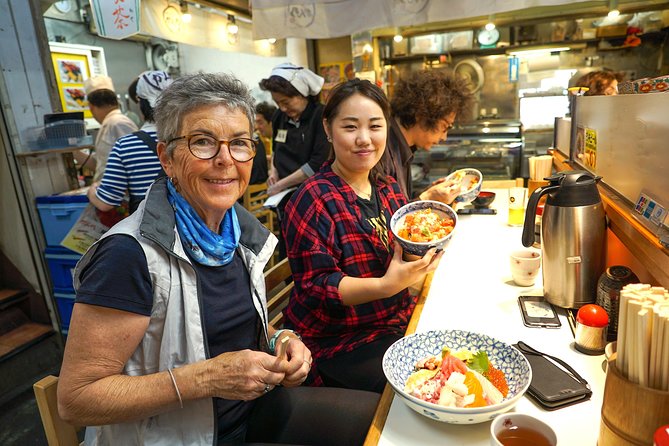
The food is the headline. But the guide is the difference between “we ate a lot” and “we understood what we ate.”
You’ll run into different guide styles across dates, with names that have been associated with the tour experience including Hitomi, Yuki, Mark, Kazu, Tiger, and even a duo referred to as Mia and Mummy. Across those variations, a consistent theme shows up: the guides help you connect seafood types to context and keep the walk fun.
You’ll likely get:
- explanations before tasting, so bites feel intentional
- directions to good stops so you don’t miss the best sampling points
- help navigating tight lanes so you’re not stuck at the wrong counter
And if you care about accuracy—like what you’re eating and why it’s popular—your guide can turn that into a story you’ll remember later.
Timing, Heat, and How to Stay Comfortable
This tour is about 3 hours. That’s enough time to eat several things and see the cultural parts without dragging on.
But Tsukiji in summer can feel like a sauna with snacks. The tour info specifically recommends bringing water and wearing a hat to reduce heat stress. Do it. Market walking is physical. Even if you don’t think of yourself as a “walking tourist,” Tsukiji turns you into one.
Bring:
- a small water bottle (and refill when you can)
- a light hat
- comfy shoes with grip
- a plan to slow down if the crowd thickens
Also, this tour uses a mobile ticket, so it’s best to have your phone charged and ready. You don’t want to hunt for confirmation while the group is moving.
Price and Logistics: Is $87.37 Worth It?
At $87.37 per person for about 3 hours, you’re paying for three things:
- the included seafood lunch
- multiple tasting stops around the market
- a guide to keep you moving and to explain what you’re seeing
If you self-guide, you can often eat well for less. But you’ll also spend time sorting out what’s worth your money and your stomach. Markets reward people who know where to go at the right moment.
This tour feels like good value if:
- you want a guided eating route rather than total wandering
- you’re a seafood fan who enjoys variety
- you want the shrine and temple element without researching each stop yourself
It’s less of a fit if:
- you’re strict vegan (vegan options aren’t available)
- you need allergy-controlled dining (allergy-free guarantees aren’t provided)
- you’re expecting the old inner wholesale auctions
Should You Book This Tsukiji Tour?
Book it if you want Tsukiji that’s practical and delicious: seafood samples, an included sit-down lunch, and cultural stops that add meaning beyond the food counters. The small group size helps the whole thing feel smoother than a big-tour stampede.
Skip or rethink it if your top goal is the old inner auction vibe, or if you have dietary needs that require allergy-safe handling. Also, if crowds make you miserable, decide before you go. Tsukiji is busy by nature, and this tour leans into that reality.
For most food-first Tokyo travelers, this is an easy “yes.” You get guided taste testing, you leave fed, and you see Tsukiji as a living market with religious landmarks—not just a photo stop.
FAQ
How long is the Tsukiji Fish Market Small-Group Food Walking Tour?
It’s about 3 hours.
Where do I meet the guide for the tour?
You meet at Tsukiji Station (Exit 1). The guide will be waiting there.
Is a seafood lunch included?
Yes. A fresh seafood lunch is included as part of the tour.
What market areas does the tour cover?
The experience focuses on the Tsukiji Outer Market area, including the Old Tsukiji Market and Tsukiji Jogai Market.
Are vegan options available?
No. The tour notes that vegan options are not available.
Can the tour guarantee allergy-free food?
No. The tour says it cannot guarantee allergy-free meals and that food is prepared in kitchens not belonging to the tour operator.
What group size is this tour limited to?
It has a maximum of 7 travelers.