REVIEW · HUE
Hue Imperial City Walking Tour: Citadel & Forbidden City
Book on Viator →Operated by Vietnam Legacy Tours · Bookable on Viator
Imperial Hue makes more sense with a guide. On this 2.5-hour walk inside the Imperial City, you follow royal routes through gates, palaces, pavilions, and gardens. You won’t waste time guessing what you’re looking at, because the stops are picked for meaning, not just scenery.
My favorite part is the way the tour turns big stone-and-brick spaces into clear court stories. I also love the focus on specific, standout spots like Thai Hoa Palace and the women-only gate Cửa Chương Đức—details you’d likely miss on your own.
The main catch is practical: the $9 tour price usually doesn’t include the main Imperial City entrance fee for the group option, so you’ll want to budget for that (or consider a combo ticket).
In This Review
- Key points worth your attention
- Why this Hue walking tour feels different from a solo visit
- Noon Gate and Thai Hoa Palace: where court power becomes concrete
- Hien Lâm Pavilion, Nine Dynastic Urns: the Nguyen story in objects
- Mieu Temple and Cửa Chương Đức: etiquette is part of the architecture
- Forbidden Purple City (Hue Royal Palace) and Kiến Trung Palace’s big return
- Thai Binh Pavilion, Thiệu Phương Garden, and the final mandarin gate
- Price and entry fees: where your $9 actually goes
- Meeting point, walking flow, and staying comfortable
- Guides matter: the storytelling makes the buildings click
- Should you book this Hue Citadel & Forbidden City walking tour?
- FAQ
- How long is the Hue Imperial City walking tour?
- How many people are in the group?
- Is the Imperial City entrance fee included in the price?
- Where does the tour start and end?
- What major places do you see during the walk?
- Are there separate admission tickets for each stop?
- Is there a mobile ticket?
- What if the weather is bad?
- Can I cancel and get a refund?
Key points worth your attention
- Max 8 people means you can actually hear your guide and keep your bearings inside the walled complex
- Royal-route walking plan hits the most meaningful ceremonial and residential areas, gate to palace to garden
- Forbidden Purple City access stories explain what life meant behind the king’s “family-only” enclosures
- Kiến Trung Palace is newly restored and reopening after reconstruction adds extra wow-factor
- Architecture + rituals, not just dates—you learn what ceremonies happened in halls and why gates were used
- Entrance fee can cost extra (group option) so check ticket details before you go
Why this Hue walking tour feels different from a solo visit
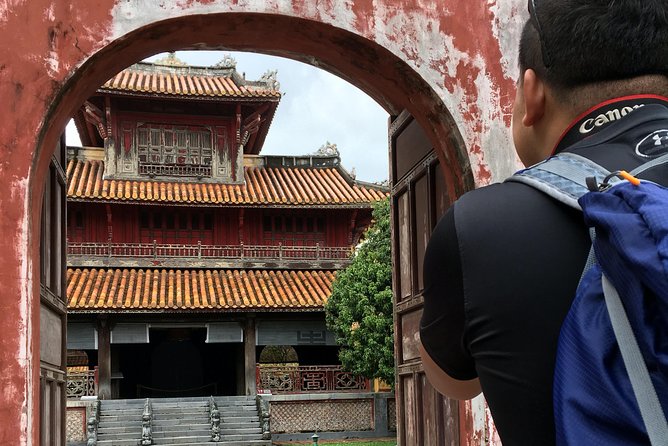
Hue’s Imperial City is UNESCO-listed, but it’s also big, layered, and easy to wander through without context. That’s where this tour earns its keep. You get a guided path that makes the space readable: gates aren’t just pretty—they controlled movement. Palaces aren’t just impressive—they hosted power.
This is built as a small-group experience (up to 8 people). That matters in Hue because you’re walking through courtyards where crowds can form, and you still want time to ask questions. With fewer people, your guide can slow down at key spots and translate the “why” behind the “what.”
Timing also helps. At about 2 hours 30 minutes, you’re moving at a comfortable pace, then you have room to explore on your own afterward if you want. If your plan is to see the Imperial City and still do other Hue highlights the same day, this length is a good fit.
Noon Gate and Thai Hoa Palace: where court power becomes concrete
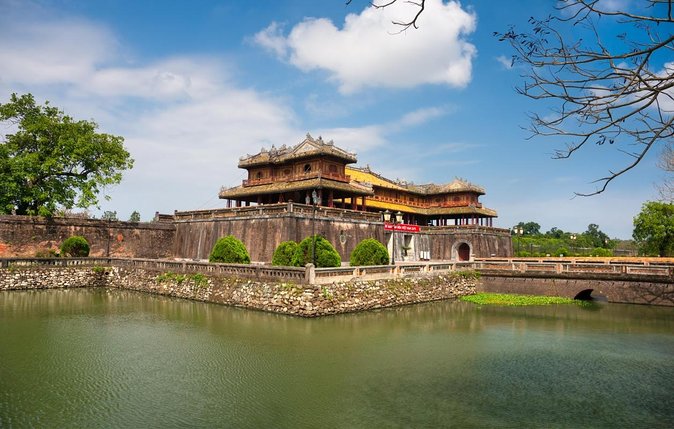
The walk starts at the Noon Gate (Cua Ngo Mon), the kind of gateway that sounds ceremonial because it was. You’ll learn why this grand entrance mattered during the Nguyen Dynasty—used for royal ceremonies and major moments. Standing there, you can start to picture the daily logic of the compound: who could enter, who watched from where, and why these big doors were more than decoration.
From there, the focus moves into Thai Hoa Palace, the most important hall in the Imperial City. This is the space where emperors held court sessions and coronations. The key value here is interpretation. Instead of just admiring columns and roofs, you connect the architecture to royal rituals—what ceremonies looked like, and how the hall functioned as a stage for authority.
If you care about photography, this is also a smart early cluster. In the morning or late afternoon, you’ll often find better light for symmetrical fronts and long wall lines. Either way, you’ll know what to photograph because your guide gives you a clear mental map.
Practical note: the first stops can feel like “wow, okay, now what,” especially if you’re visiting in heat. Early context helps you stay engaged instead of just walking from landmark to landmark.
Hien Lâm Pavilion, Nine Dynastic Urns: the Nguyen story in objects
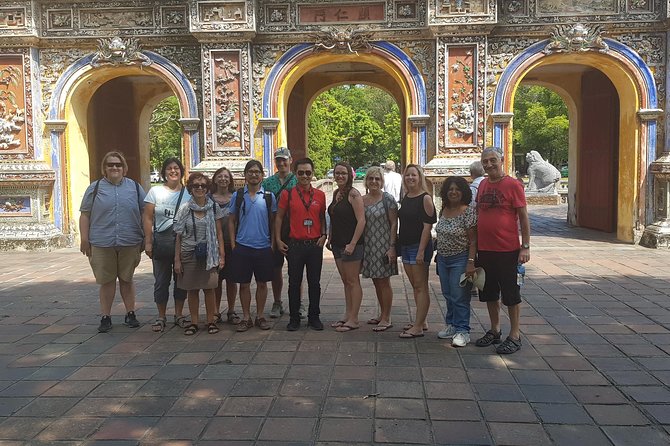
Next comes Hien Lâm Pavilion, famous for being over-200 years old and tied to honoring the Nguyen emperors. The tour emphasizes the cultural significance of the pavilion, including how it has survived with its original design. That’s the kind of detail that turns a pretty structure into a historical artifact you can actually imagine.
Right after, you’ll meet the Nine Dynastic Urns—bronze urns representing the nine emperors of the Nguyen Dynasty. Objects like this are easy to overlook if you don’t know what they symbolize. Here, you get the meaning behind the urns, so the stop becomes more than a quick glance. You start seeing how the dynasty “coded” power and legacy into the built environment.
This part of the tour is especially good if you like history that’s tangible. Buildings are one thing. Symbols you can stand near and read about through your guide’s explanation stick in your memory.
Mieu Temple and Cửa Chương Đức: etiquette is part of the architecture
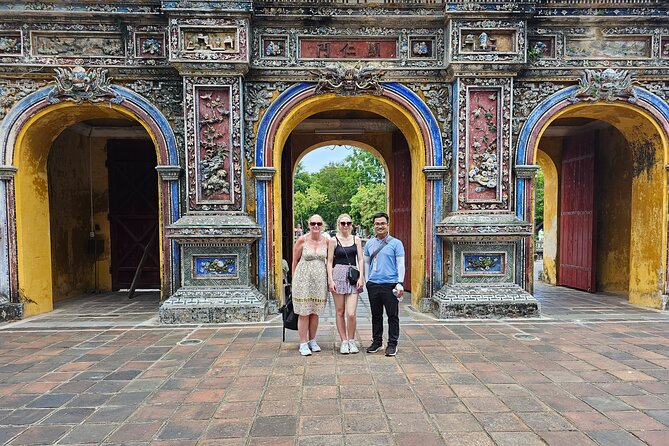
The walk then shifts from court halls to more sacred, tradition-driven space with the Mieu Temple. It’s the ancestral temple dedicated to past Nguyen kings. The best angle of this stop is how it shows continuity—how royal traditions were preserved and honored in a dedicated space within the compound.
Then comes Cửa Chương Đức, one of the Imperial City’s four gates with a special rule: it was exclusively for women. That fact gives you a new way to interpret what you’re seeing. You stop thinking of the compound as “one big palace” and start understanding it as a system with strict social boundaries built into how people moved.
This is one of the more memorable stops because the details feel human. You begin to picture daily life—who belonged where, and how the architecture helped enforce that.
Forbidden Purple City (Hue Royal Palace) and Kiến Trung Palace’s big return
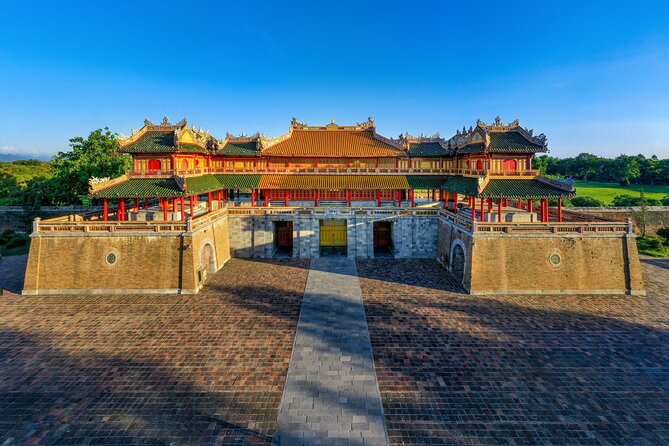
One of the highlights is entering the world of the Forbidden Purple City, also known as the third enclosure within the Hue Imperial City. Your guide explains that it was reserved for the king’s family, including wives and children. This is the moment the tour really helps you “read” the compound as a layered home with controlled access—not a public monument.
Inside this area, the guide connects multiple structures and enclosures, so it doesn’t just feel like you walked into another courtyard. The stories help you understand what these spaces were for and why they were arranged the way they were.
After that, the tour moves to Kiến Trung Palace, which has been newly restored. It has reopened after years of careful reconstruction. If you like seeing how heritage sites come back to life, this stop gives you a strong sense of time: the past remains, but restoration work also becomes part of the current experience.
This combination—family-restricted enclosures plus a palace that just reopened—makes a powerful contrast. It’s not only history. It’s history that you can still see being maintained.
Thai Binh Pavilion, Thiệu Phương Garden, and the final mandarin gate
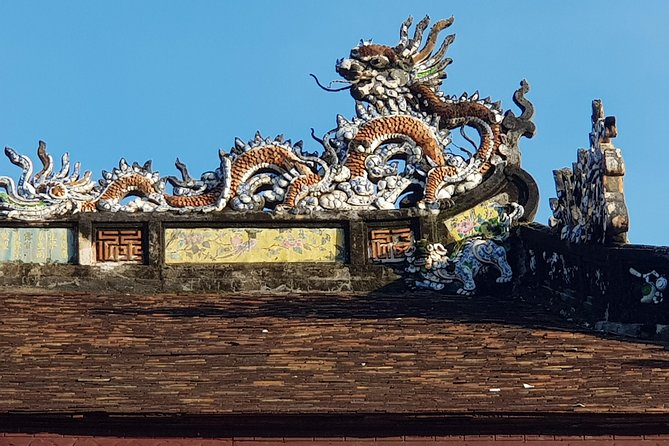
The tour closes with a more relaxed, scenic stretch that still ties back to royal life.
At Thai Binh Pavilion (Thai Binh Lau), you learn that this was where the king would read books and enjoy the scenery. That detail matters. It nudges you away from thinking of the compound only as a place of ceremonies and into a place of quiet moments.
Then comes the Thiệu Phương Garden, also known as the Royal Garden. This is presented as a place restored with eye-catching scenery, where the king and his family strolled and enjoyed the views. Even if you’re not a “garden person,” the value is context: you understand why gardens were designed inside power centers, not just outside them.
Finally, you end at Cửa Hiển Nhơn, the gate used by mandarins. Ending at a gate tied to officials completes the story loop: it connects the royal family spaces back to the administrative world that ran the dynasty.
By the last stop, you’ve walked the main arc—ceremonial entry, court power, symbolic objects, restricted spaces, and daily court life. That’s why the tour leaves you feeling oriented instead of “landmarked.”
Price and entry fees: where your $9 actually goes
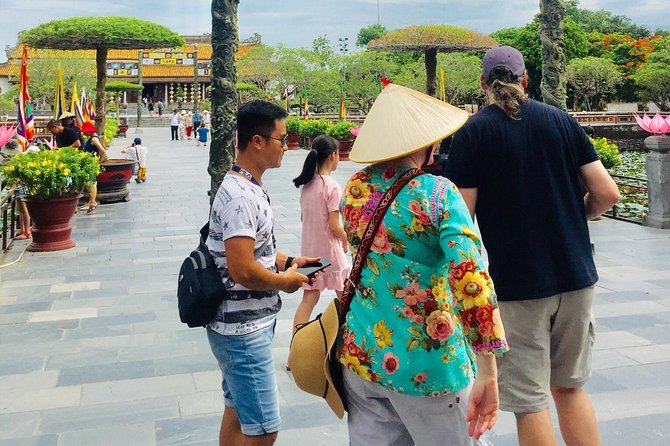
The advertised tour price is $9.00 per person, and that’s unusually low for a structured guided walk lasting about 2 hours 30 minutes. For most people, the real question is how it stacks up against what you still need to pay for the site.
Here’s the key point: Imperial City entrance fees cost extra for the group option. The fee listed is 200,000 VND per person. For private tour options, the Imperial City entrance ticket is applied—but for group tours it’s not automatically included.
So what’s the value? You’re paying for:
- a planned route that doesn’t waste time
- help understanding what each area meant
- a small-group pace you can’t get from random wandering
Also, the tour info notes that you might prefer a COMBO TICKET for Citadel and Tombs. If you’re already planning to add the royal tombs later, bundling can be better value than buying separate site tickets.
My practical advice: before you go, decide whether you want to pay the standard entrance fee for the day or bundle for tombs too. Then the $9 guide price becomes a bargain rather than a surprise.
Meeting point, walking flow, and staying comfortable
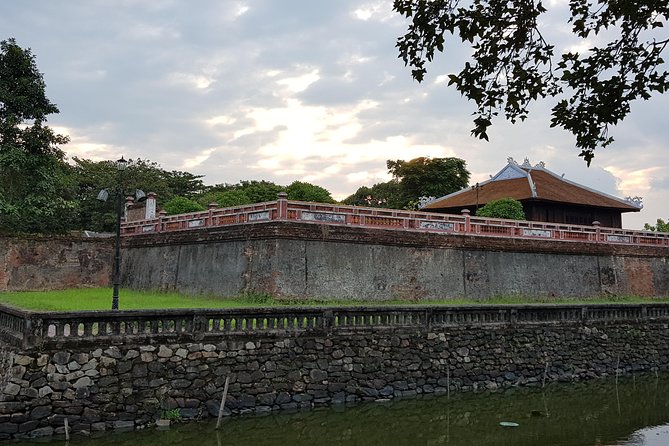
The tour meets near Hai Mươi Ba Tháng Tám, Thuận Hòa, Huế and ends at 46 Đinh Công Tráng. It’s also described as near public transportation, which helps if you’re juggling Hue’s heat and timing.
Because you’re walking inside a large compound, comfort matters. Wear something breathable, bring water, and consider a hat or scarf for sun protection. The tour duration is long enough that the wrong outfit can turn “history walk” into “survival walk.”
One more tip: if you care about photos, ask your guide to pause at the key front-facing spots and corners. Some guides also help with picture-taking, but it’s not something you should assume every time—so ask early and be clear about what you want.
Guides matter: the storytelling makes the buildings click
A lot of the strongest feedback centers on guide delivery—clear English, patient pacing, and an ability to connect the Nguyen emperors to bigger Hue and Vietnam context.
You may encounter guides such as Matthew, Ngọc, Linh, Sue, Hoa, or Xi. Different people have different teaching styles, but the common thread is storytelling that puts faces, rules, and court life behind the architecture. That’s why you finish this tour feeling you can explain what you saw—not just that you saw it.
If you’re the type who asks questions, this format rewards you. With a small group, your guide can answer without rushing you. If you’re quieter, you still get value because the route is built to carry the story step by step.
Should you book this Hue Citadel & Forbidden City walking tour?
Book it if you want more than a self-guided “walk and point.” This is a good fit when:
- you love history that has names, roles, and rules
- you get lost easily in large sites
- you want a practical route that fits into a busy Hue day
- you’re paying extra attention to architecture and symbolism
Skip it (or swap to a lighter option) if:
- you only want the general highlights and plan to read from guidebooks
- you strongly dislike walking for about 2.5 hours
- you don’t want to deal with entry fees on top of the tour price
If you’re on the fence, here’s the easiest way to decide: if the Imperial City sounds like a “must-do,” a guided route will save you time and make the visit feel like a story with chapters instead of disconnected buildings.
FAQ
How long is the Hue Imperial City walking tour?
It lasts about 2 hours 30 minutes.
How many people are in the group?
The tour has a maximum of 8 travelers.
Is the Imperial City entrance fee included in the price?
For group tours, the Imperial City entrance fee (200,000 VND per person) is not included. For the private tour option, an Imperial City entrance ticket is applied.
Where does the tour start and end?
It starts at Hai Mươi Ba Tháng Tám, Thuận Hòa, Huế and ends at 46 Đinh Công Tráng, Ward, Hue City.
What major places do you see during the walk?
You pass through key areas such as the Noon Gate, Thai Hoa Palace, Hien Lâm Pavilion, Nine Dynastic Urns, Mieu Temple, Cửa Chương Đức, the Forbidden Purple City area, Kiến Trung Palace, Thai Binh Pavilion, Thiệu Phương Garden, and finish at Hien Nhơn Gate.
Are there separate admission tickets for each stop?
The stops listed are marked as admission ticket free, but the overall Imperial City entrance fee is an extra cost for the group option.
Is there a mobile ticket?
Yes, a mobile ticket is included.
What if the weather is bad?
This experience requires good weather. If it’s canceled due to poor weather, you’ll be offered a different date or a full refund.
Can I cancel and get a refund?
Yes. You can cancel up to 24 hours in advance for a full refund. If you cancel less than 24 hours before, the amount paid is not refunded.