REVIEW · TOKYO
The Old Quarter of Tokyo – Yanaka Walking Tour
Book on Viator →Operated by Localized Walking & Food Tours · Bookable on Viator
Yanaka feels like a secret Tokyo neighborhood. This 3-hour Old Quarter of Tokyo – Yanaka Walking Tour takes you on foot through wooden houses, shrines, temples, and local shopping alleys that survived the World War II bombings. You’ll get the kind of context you just don’t pick up when you wander alone.
I love two things most: the small-group attention (max 10) and how the guide makes the religious and neighborhood stories click. You’ll move at a walking pace that lets you actually look, ask questions, and take photos without feeling rushed.
One thing to plan for: it’s mostly walking, and the tour runs best in good weather. If it’s very hot or rainy, you’ll feel it, so pack accordingly.
In This Review
- Key points to know before you go
- Why Yanaka is the calm side of Tokyo
- Meeting at Nippori and walking with a group of up to 10
- Is the $40 price fair for this 3-hour Yanaka route?
- Tennoji Temple: the Yanaka Buddha story from 1690
- Yanaka Cemetery: how locals treat rest and remembrance
- Ueno-Sakuragi Atari: old houses turned café and community space
- The 100-year-old cyder tree and the symbol of Yanaka
- Enju-ji Temple: a god for strong legs and foot wishes
- Nezu Shrine’s red torii and shrine etiquette you will follow
- Hebimichi back streets and Yanaka Ginza shopping street at the end
- Who should book this Yanaka walking tour (and who should skip it)
- Should you book the Old Quarter of Tokyo Yanaka Walking Tour?
- FAQ
- How long is the Old Quarter of Tokyo – Yanaka Walking Tour?
- What is the tour price?
- Where does the tour start and where does it end?
- How big is the group?
- Is the tour ticket mobile?
- Are temple or shrine admissions included?
- Are food and drinks included?
- What’s included in the tour besides the guide?
- What if the weather is bad?
- Can I cancel for a full refund?
- Are service animals allowed?
Key points to know before you go
- Max 10 people means more time to talk and get answers, not just follow the crowd
- Temple-and-shrine route includes Tennoji, Enju-ji, and Nezu Shrine, with clear cultural context
- Yanaka Cemetery stop helps you understand local customs around remembrance
- Ueno-Sakuragi Atari is a community hub built from renovated old wooden houses
- Yanaka’s symbol shows up via a stop at a 100-year-old cyder tree
- Finish at Yanaka Ginza gives you a simple next step for snacks and browsing
Why Yanaka is the calm side of Tokyo
Central Tokyo can feel like nonstop motion. Yanaka is different. It’s the kind of neighborhood where you slow down without trying—because the streets are narrower, the houses are older, and the whole feel is more residential than sightseeing.
This tour is designed for that contrast. Instead of starting with a headline temple and calling it a day, you work through a sequence of places that connect to everyday belief and everyday life. That matters because Yanaka isn’t just a set of photogenic spots. It’s a neighborhood with routines, faith practices, and local community spaces that still function.
If you want Tokyo that feels human-scale, this is a smart way to get it. And because you’re walking, you can actually read the neighborhood—what changes from block to block, what people pass every day, and what’s still preserved.
You can also read our reviews of more walking tours in Tokyo



Meeting at Nippori and walking with a group of up to 10
You start at Nippori Station (2 Chome-19 Nishinippori, Arakawa City). Getting going from a major train hub is helpful. You don’t waste your morning figuring out how to reach a distant corner of town.
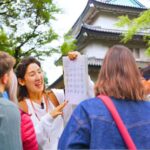
The group size is capped at 10 travelers. In plain terms: you’ll have less crowd friction, and it’s easier for the guide to answer questions. Several guides leading the tour have been praised for clear English and for making sure the group stays together, which is exactly what you want on a walking route.
The tour runs about 3 hours. That’s long enough to cover meaningful ground, but short enough that it won’t wreck the rest of your day. If you’re balancing this with other Tokyo highlights, this is the right length to keep your schedule sane.
Practical note: since it’s outdoors for most of the time, I’d plan around the weather. The tour itself requires good weather, and humid heat can make “short stops” feel longer.
Is the $40 price fair for this 3-hour Yanaka route?
At $40 per person, you’re paying for three things: a local English-speaking guide, guided walking with photo opportunities, and a route that links multiple stops into one storyline.
Here’s the value logic I use: if you were to visit these places on your own, you’d still enjoy the sights. But you’d likely miss why they matter—how the temple history connects to local belief, what customs you’re observing in a cemetery, and how Yanaka’s everyday street life fits into the larger Tokyo picture. That’s the “you don’t get this alone” part.
You also get structure. The tour doesn’t just hand you a list. It gives you a sequence, with explanations timed to what you’re seeing. For a neighborhood like Yanaka—where the details can be subtle—that structure is worth real money.
On costs to watch: food and drinks aren’t included, and gratuities aren’t included. Also, some stops list admissions as free, while others say admission isn’t included. That doesn’t mean you’ll pay at every single stop, but it does mean you shouldn’t assume everything is included.
Tennoji Temple: the Yanaka Buddha story from 1690
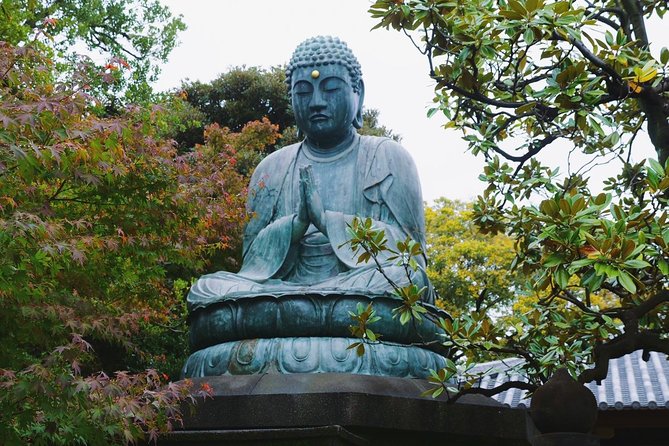
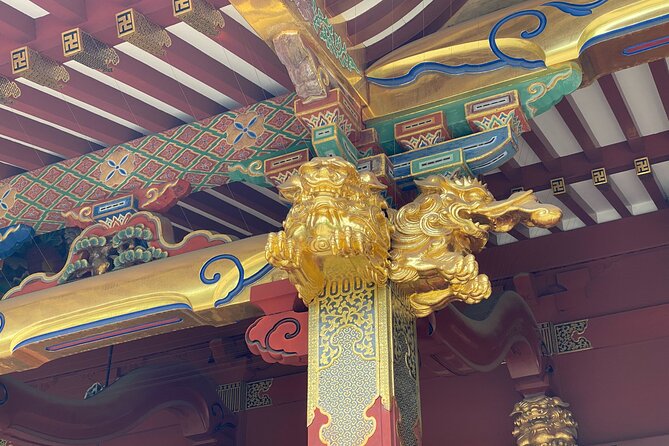
Your first major stop is Tennoji Temple, where you’ll see the Yanaka Buddha. The tour highlights that this Buddha was created in 1690, and you’ll get the temple history plus the kinds of insights that explain how Japanese religion works in practice.
Why this stop is a good start: it sets the tone. You’re not yet in “random temple mode.” Instead, you begin with a specific feature—the Yanaka Buddha—and then the guide helps you connect it to broader religious context.
The visit window is about 15 minutes, and admission is free for this stop. That’s a nice balance for your first stop: you get real content without eating up time early.
If you want the most out of it, look closely at what’s around the Buddha area and take your photos when others shift positions. A lot of the value here is learning what you’re looking at, not just snapping pictures.
Yanaka Cemetery: how locals treat rest and remembrance
Next up: Yanaka Cemetery. Expect to walk into the cemetery itself and spend time learning what a Japanese cemetery looks like and what customs locals follow.
This is one of the stops that can surprise people—in a good way. Cemeteries can feel intense, but with the right context they stop being scary or confusing. You’ll come away with a clearer sense of respect, routine, and symbolism.
You’ll have about 15 minutes here, and admission is free. The time is brief, so lean into the guide’s explanations. This is not a stop where you should sprint through. Slow down for the details they point out—those are usually the things that make the biggest difference in understanding.



Ueno-Sakuragi Atari: old houses turned café and community space
Then comes Ueno-Sakuragi Atari, a break stop that’s also part history lesson.
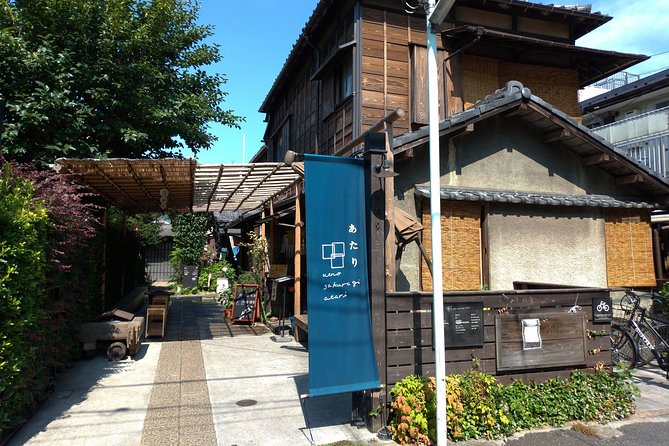
Here you’ll see how about 80-year-old wooden houses have been renovated into a café, a bakery, and a beer hall, creating a community space for locals. It’s not just an aesthetic redevelopment. It’s a living example of how older Tokyo gets reused instead of erased.
You’ll get around 15 minutes at this stop. Admissions aren’t listed as part of what’s included, but the key point is that it’s a pause where the neighborhood doesn’t feel like a museum. This is also where you can reset your legs—though you should note that any purchases (if you choose them) are not included.
If you want a real-world Tokyo vibe, this kind of spot delivers. It shows how daily life continues in buildings that still carry age.
The 100-year-old cyder tree and the symbol of Yanaka
Some tours hit a landmark and move on. This one takes a moment at a small but meaningful landmark: a 100-year-old cyder tree, described as a symbol in Yanaka.
This is the kind of stop I actually like. It’s not flashy, but it gives the neighborhood a personality. Trees like this become markers—people remember places by what they grow from and what they shade.
Time here is brief, but it helps tie the earlier temple and shrine stops back to the neighborhood itself. It’s a reminder that Yanaka’s identity isn’t only religious sites. It’s also streets, corners, and long-lasting natural symbols.
Enju-ji Temple: a god for strong legs and foot wishes
At Enju-ji Temple, you’ll encounter something that’s described as not the typical Buddhist figure: it enshrines a god of strong legs.
What makes this stop especially practical is the human angle. People with foot problems write their wishes on wooden boards, and that lets you see religion as something people use in daily life—not just something you look at from a distance.
You’ll spend about 5 minutes here. Admission is listed as not included, so don’t assume it’s fully covered the way some other stops are.
This is a short stop, which can be perfect if you like variety. It adds a different flavor to the route: the story isn’t only about old architecture; it’s about coping, hope, and community practice.
Nezu Shrine’s red torii and shrine etiquette you will follow
Next comes Nezu Shrine, and this is one of the most photo-friendly stops in the route.
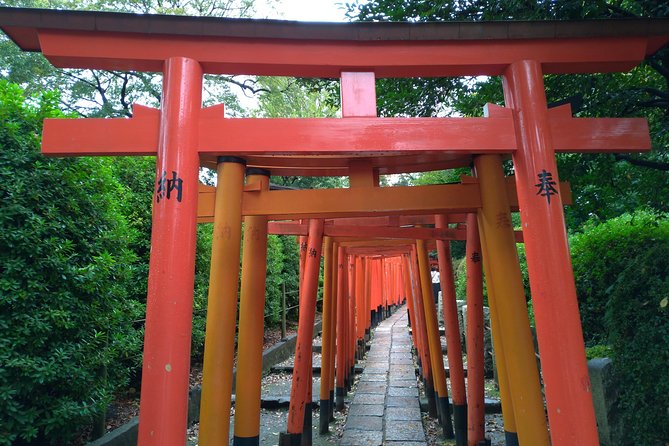
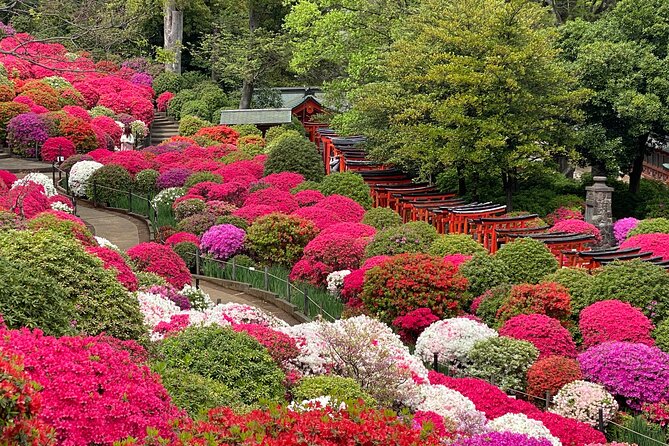
You’ll see lots of red torii gates, and the description makes a clear comparison to Fushimi Inari in Kyoto. In other words: if you’ve ever wanted that torii tunnel feel without leaving Tokyo, this is where you can find it.
You’ll also learn shrine etiquette. That’s important because it changes how you move through the space. A guide can help you avoid awkward misunderstandings and understand what’s respectful versus what’s just tourist behavior.
Time here is about 20 minutes, and admission is free. That combination—free entry plus meaningful context plus time to look—makes it a strong value part of the tour.
Tip: if you’re taking photos, be patient at the torii areas. People shift. Lighting changes. The guide’s timing can help you find a better angle without stepping into others’ space.
Hebimichi back streets and Yanaka Ginza shopping street at the end
After the shrine stops, you’ll transition into the residential feel.
You’ll see Hebimichi, described as a back street in the residential area. This is where you’ll get a closer look at daily life—how people live when no one is actively performing for a camera.
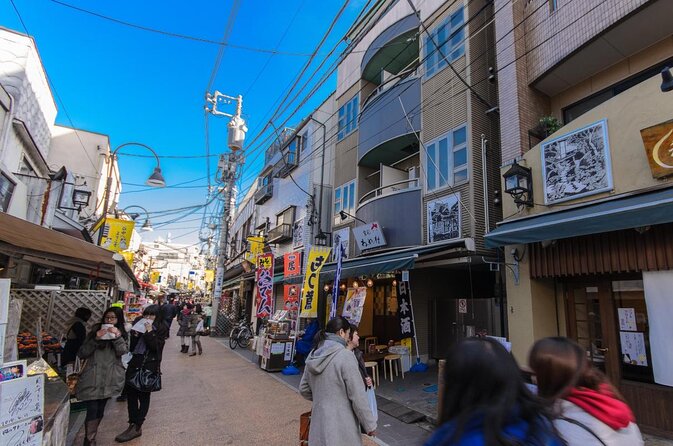
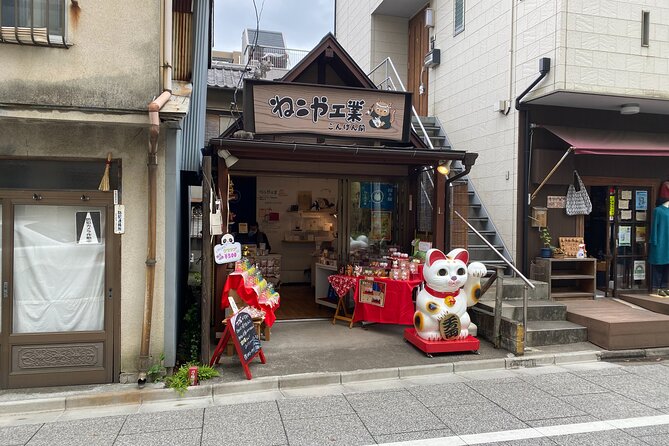
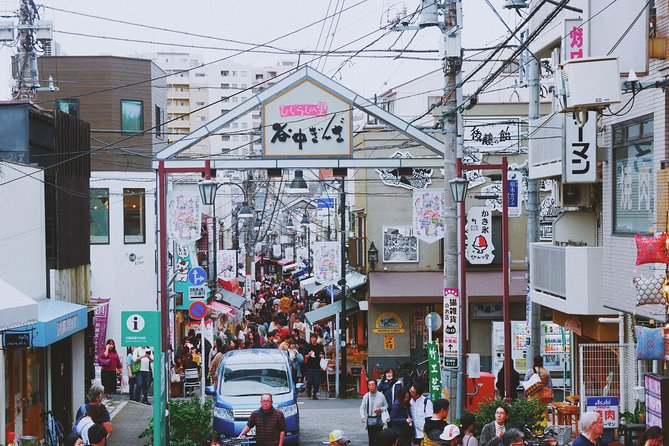
Then you’ll finish at Yanaka Ginza Shopping Street (around 20 minutes), where the local guide explains the shopping street and points you toward shops for normal Japan lifestyle. You may even be able to try local foods and sweets, but food fees aren’t included.
This end section is smart because it gives you choice. You can continue browsing with ideas from the guide, or you can just use the street as a practical hub to meet up for lunch or snacks.
Who should book this Yanaka walking tour (and who should skip it)
This tour is a great fit if you want:
- A small-group walk with real context, not just sightseeing
- To focus on temples, shrines, and neighborhood life in an older Tokyo district
- A route that includes both standout sights and everyday corners
You might want to skip or swap to a different plan if:
- You don’t enjoy walking for about 3 hours
- You’re traveling during poor weather, since the tour requires good weather
- You want a schedule centered on big-ticket attractions only (this is quieter, more human-scale)
For most people, though, this is a solid “add-on” experience. It works well as a half-day activity when you want contrast from Tokyo’s glossier areas.
Should you book the Old Quarter of Tokyo Yanaka Walking Tour?
Yes—if your goal is to understand Yanaka instead of simply photographing it. The best reason to book is the way the route connects religion, neighborhood customs, and daily life in one walk. You’re not just seeing Tennoji, Enju-ji, or Nezu Shrine. You’re also learning what those spaces mean to people who live nearby.
Also, this is one of those Tokyo experiences where the price makes sense because the guide’s explanations turn stops into understanding. And with a group limited to 10, you’re more likely to actually get your questions answered and stay comfortable as you move.
If you want Tokyo’s calm side, this is a very good bet.
FAQ
How long is the Old Quarter of Tokyo – Yanaka Walking Tour?
It lasts about 3 hours.
What is the tour price?
The price is $40.00 per person.
Where does the tour start and where does it end?
It starts at Nippori Station (2 Chome-19 Nishinippori, Arakawa City, Tokyo) and ends at Yanaka Ginza (3-chōme-13-1 Yanaka, Taito City, Tokyo).
How big is the group?
The tour has a maximum of 10 travelers.
Is the tour ticket mobile?
Yes, the tour uses a mobile ticket.
Are temple or shrine admissions included?
Some stops list admission ticket Free, while others list admission ticket Not Included. The tour description does not say every stop is fully covered.
Are food and drinks included?
No. Food, drinks, and personal expenses are not included. You can try local foods and sweets, but there’s an extra food fee.
What’s included in the tour besides the guide?
You get a guided walking tour with an English-speaking local expert and photo opportunities throughout.
What if the weather is bad?
The experience requires good weather. If it’s canceled due to poor weather, you’ll be offered a different date or a full refund.
Can I cancel for a full refund?
Free cancellation is available up to 24 hours in advance for a full refund.
Are service animals allowed?
Yes, service animals are allowed.