REVIEW · TBILISI
Tbilisi:Evening Walking & Talking Tour with Wine & Boat Ride
Book on Viator →Operated by Budget Friendly Tours FZE LLC · Bookable on Viator
Tbilisi at night is a fast education. This evening walking and talking tour strings together Tbilisi’s big-name sights and a few quieter corners, so you can understand how the city fits together after dark. For me, the best bits are the cheap $10 price for a full evening route and the guide-led storytelling that makes even quick stops feel like part of the same conversation; the only catch is you’ll cover lots of ground, with stairs and some darker old-town alleys.
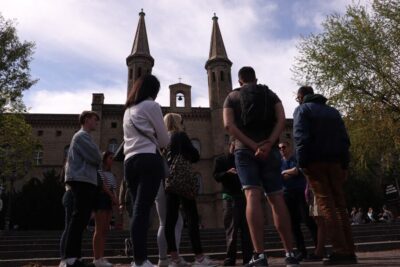
You’ll meet your guide at Rose Revolution Square (in front of the Radisson), and you start at 6:00 pm. The group stays small-ish (up to 50 people), the tour runs in English, and you’ll end back near the starting point—handy if you want to map out your next meal stop or plan the rest of your trip while the city is still lit up.
In This Review
- Key highlights to know before you go
- The best reason to book: you get your bearings fast
- Price and value: $10 for an evening that does real work
- Meeting at Rose Revolution Square and the first 20 minutes
- Stop-by-stop: the route that connects Tbilisi’s eras
- Rustaveli Avenue: Tbilisi’s main showpiece corridor
- Liberty Square (Freedom Monument): the center of the story
- The clock angel and the heart of old Tbilisi
- Rezo Gabriadze Marionette Theater: a one-of-a-kind clock tower
- Bridge of Peace: lights, LEDs, and a view you won’t forget
- Rike Park: where the city takes a breath
- The old-to-new transition: Vakhtang, Metekhi, and river cliffs
- Monument of King Vakhtang Gorgasali: myth and origin talk
- Metekhi Cathedral: a viewpoint on the cliff plateau
- Abanotubani and the sulfur baths: the most Tbilisi-feeling stop
- Abanotubani: public bathhouse street
- Chreli Abano Spa: a sulfur bath shaped like a mosque
- Escaping heat and finding skyline: Leghvtakhevi and Narikala
- Leghvtakhevi Waterfall: a breather stop
- Narikala Fortress: the best payoff for your legs
- Sololaki hill, Old Town lanes, and Shardeni Street glow
- Kartlis Deda: the wine bowl and the sword
- Old Town Tbilisi: wooden balconies and narrow lanes
- Shardeni Street: pedestrian energy you’ll want later
- Wine tasting and the boat ride: the two moments that make it feel special
- Wine tasting: optional, but it’s the standout add-on
- Boat ride: city lights from the river
- Pacing, group size, and what to expect from your guide
- Practical tips to make the most of your evening
- Who should book this walking and wine-and-boat evening?
- Should you book this tour?
- FAQ
- What time does the evening tour start?
- Where do we meet the guide?
- Is the tour really in English?
- How long is the tour?
- Is wine tasting included?
- Does the tour include a boat ride?
Key highlights to know before you go
- Meeting point that’s easy to find: Rose Revolution Square, by the Radisson
- A tight 3-hour loop: major landmarks plus Old Town lanes without wasting time
- Wine tasting is an optional add-on: if selected, you get a proper tasting stop
- A nighttime boat ride: a different view of the city lights from the water
- Views built into the route: river crossings, parks, and fortress outlooks
- Old Town baths + fortress + streets: enough variety to feel like more than a basic walk
The best reason to book: you get your bearings fast
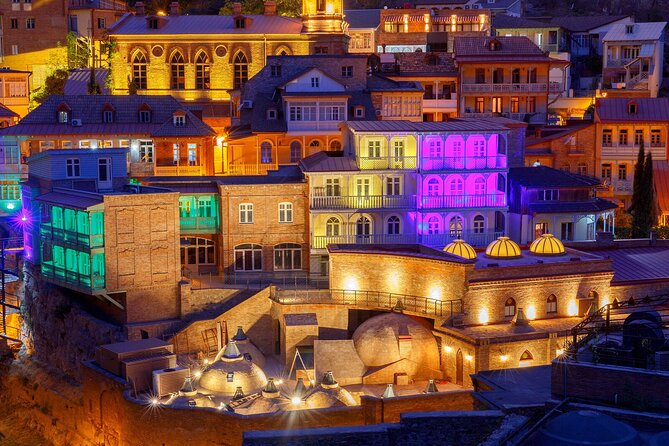
Tbilisi can feel layered—new architecture meets centuries-old streets, and the river quietly ties it all together. This tour is built for that feeling. In about 3 hours, you get a guided “map in motion,” moving from broad squares and modern boulevards into the narrow Old Town textures.
What I like most is that it’s not just a photo checklist. The stops are chosen so you’re always asking: why is this here, and how did the city become this? Even the brief segments (like stepping into a viewpoint for a moment) are framed with context, so you leave with a clearer mental model of Tbilisi.
You can also read our reviews of more walking tours in Tbilisi


Price and value: $10 for an evening that does real work
At $10 per person for an approximately 3-hour guided experience, the value is strong—especially if it’s your first evening in town. You’re paying for three things that add up quickly on your own:
1) a guided route that hits a lot of key areas,
2) English narration (not just dead walking),
3) extra experiences built in, like wine tasting (if you chose that option) and the boat ride.
Just be honest with yourself about one thing: this is a walking tour. If you’re hoping for a slow, sit-and-savor evening, this may feel like too much mobility. But if you want a productive start—then the price-to-effort ratio is excellent.
Meeting at Rose Revolution Square and the first 20 minutes
Your evening begins at Rose Revolution Square with a clear landmark for meeting: the spot is in front of the Radisson. Start time is 6:00 pm (the tour also runs other times depending on your booking, but your listed start is 6 pm).
Here’s a practical tip: arrive a few minutes early and stand where you can see people gathering. Many guides are quick to get everyone grouped so you don’t lose time—one reason this tour can cover so much.
From the start, you’re set up for good photos and good orientation. Rose Revolution Square is a strong “anchor” point: it’s wide open, and it helps you understand the direction the rest of the night will flow.
Stop-by-stop: the route that connects Tbilisi’s eras
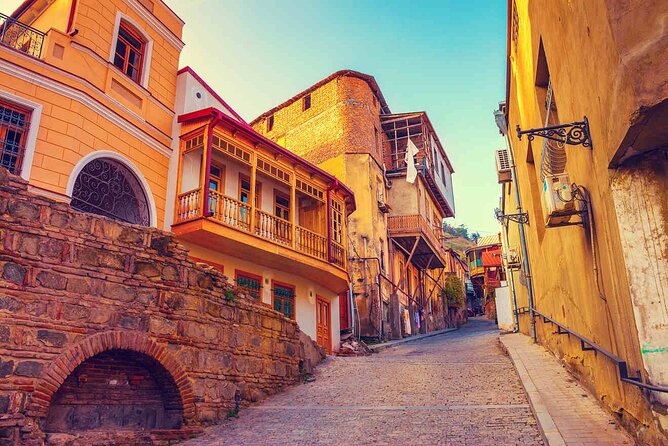
This tour basically walks you through a greatest-hits version of Tbilisi’s geography. The trick is the pacing—short explanations, then quick movement to keep momentum.
Rustaveli Avenue: Tbilisi’s main showpiece corridor
You’ll head to Rustaveli Avenue, the big, central promenade feel. It’s where you’ll see major buildings and a concentration of hotels, restaurants, cafes, and souvenir shopping. If you’re the type who likes to know what streets are good for wandering on your own later, this is useful.
One consideration: you won’t spend long here. That’s not a problem—just don’t expect a deep stroll. Think of it as a guided orientation segment before you shift into Old Town.



Liberty Square (Freedom Monument): the center of the story
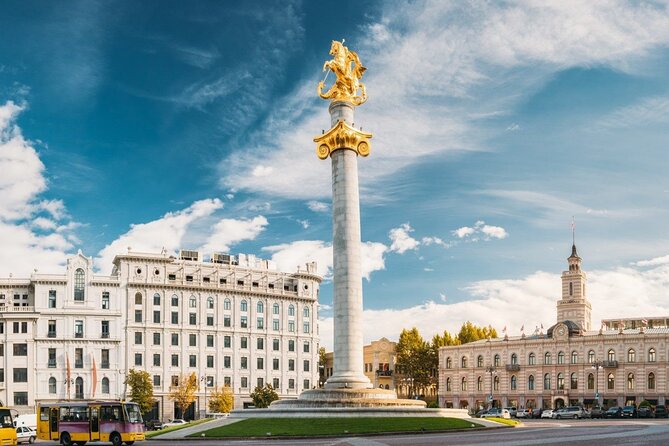
Next comes Liberty Square, where Freedom Monument anchors the city’s sense of identity. This is the kind of stop that works well at night: open space, visible lines, and a strong sense of scale.
Even though the stop is brief, it gives you context before the tour slides into smaller, more intimate Old Town sights.
The clock angel and the heart of old Tbilisi
Rezo Gabriadze Marionette Theater: a one-of-a-kind clock tower
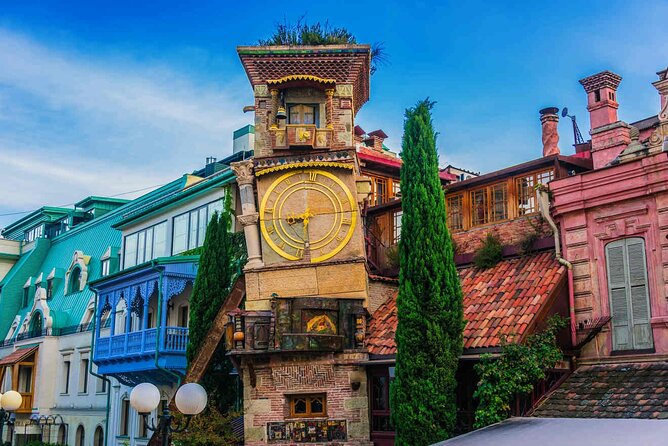
You’ll visit Rezo Gabriadze Marionette Theater, famous for the clock tower beside it. At the top of every hour, an angel comes out and rings a bell with a small hammer—simple, theatrical, and very Tbilisi.
There’s also a puppet show at 12:00 and 19:00, called The Circle of Life. If your tour timing lines up, you may catch something special—but even if you don’t, this stop is memorable because it’s not a generic monument. It’s playful, crafted, and immediately visual.
Bridge of Peace: lights, LEDs, and a view you won’t forget
Then you cross to the Bridge of Peace. It’s a glass-and-steel pedestrian bridge over the Mtkvari (Kura) River, in a bow-shaped design. It was opened in May 2010, and the details matter: the bridge has more than 10,000 LED bulbs, switched on 90 minutes before sunset.
This is one of those segments where timing really helps. If you arrive with the LEDs just turning on, the photos get much easier. Even without perfect timing, it’s a signature Tbilisi moment.
Rike Park: where the city takes a breath
Across the river you’ll reach Rike Park, a modern recreational space that’s become popular with locals and visitors. The park has plenty going on—singing and dancing fountains, children’s maze, and even mega-chess boards.
At night, it’s less about activities you can do and more about energy. It gives you a calmer pause between major landmarks and older, more atmospheric streets.
The old-to-new transition: Vakhtang, Metekhi, and river cliffs
Monument of King Vakhtang Gorgasali: myth and origin talk
You’ll see the Monument of King Vakhtang Gorgasali, tied to stories about Tbilisi’s origins and the Georgian Orthodox Church. This is the kind of stop where your guide’s narrative makes the statue feel alive—because the monument is really a prompt for the larger history conversation.
The base idea is simple: you’re stepping into the “why Tbilisi exists” thread of the evening.
Metekhi Cathedral: a viewpoint on the cliff plateau
Next is Metekhi Cathedral, on the left bank with a church on a cliff plateau. There’s legend here—stories about early church foundations and transferring saints. Even if you don’t go deep on legend, the setting works at night: the river, the angle, and the way you can feel the height of the plateau.
If you’re sensitive to stairs or uneven ground, take your time on this segment. It’s short, but it’s not flat.
Abanotubani and the sulfur baths: the most Tbilisi-feeling stop
Abanotubani: public bathhouse street
Abanotubani is the Old Town bath district. The name refers to an area packed with bathhouses drawing water from hot sulfur springs. Even if you don’t go inside a bath, just understanding how the district functions adds a lot to your Tbilisi picture.
This stop is where the tour shifts from big monuments to everyday local culture.
Chreli Abano Spa: a sulfur bath shaped like a mosque
You’ll also visit Chreli Abano Spa. It’s a popular stop for both tourists and Georgians, and the exterior is mosque-like—even though it’s a sulfur bath.
A reality check: the tour doesn’t promise a full bathing experience as part of the itinerary you provided. But it does give you the context and a chance to see what makes the bathhouses so iconic here.
Escaping heat and finding skyline: Leghvtakhevi and Narikala
Leghvtakhevi Waterfall: a breather stop
Leghvtakhevi Waterfall is described as a popular place for chilling when it’s hot. At night, you may or may not feel the same “escape from heat” vibe, but it still offers a calmer moment in the route.
Don’t rush this one. Even a short pause can make the later fortress climb feel less like a grind.
Narikala Fortress: the best payoff for your legs
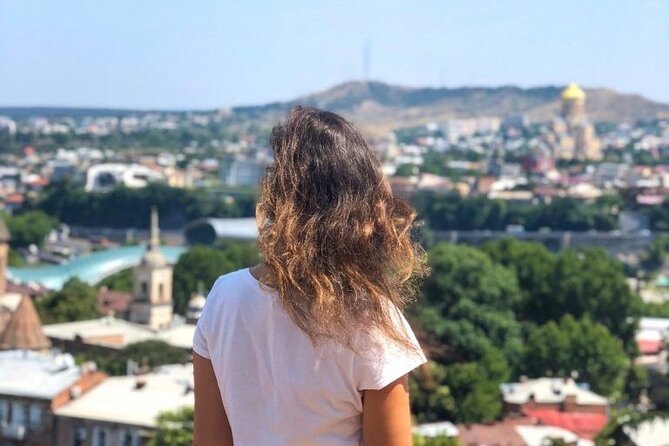
Then comes Narikala Fortress, one of Tbilisi’s most recognizable landmarks. It overlooks the Mtkvari River, and the viewpoints can feel dramatic even if some walls aren’t in perfect shape.
This stop is also a good example of why the tour works: you’re not just “passing by.” You’re being guided to the spot that makes the city look like a city—layered, spread out, and river-linked.
Sololaki hill, Old Town lanes, and Shardeni Street glow
Kartlis Deda: the wine bowl and the sword
Kartlis Deda (Mother of a Georgian), perched on Sololaki hill, is a city symbol. The monument is a big human figure in Georgian national dress: in her left hand she holds a bowl of wine for friends, and in her right she holds a sword for enemies.
It’s a strong night stop because you can read the symbolism instantly, and the elevated position helps you understand why this spot is so visually important.
Old Town Tbilisi: wooden balconies and narrow lanes
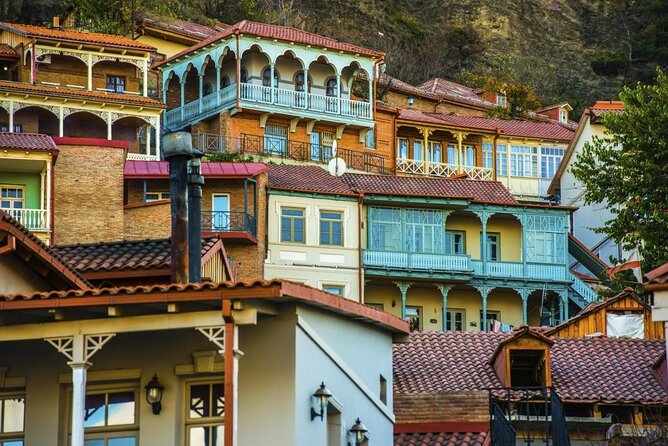
You’ll spend time in Old Town Tbilisi, with narrow streets and wooden balconies. This is where the tour becomes more about atmosphere than architecture facts. You’ll feel the tightness of the streets and the way the neighborhood changes character block by block.
Practical note: some alleys can be dark. Wear a shoe with grip. Take photos when there’s enough light, then keep moving.
Shardeni Street: pedestrian energy you’ll want later
Finally, you’ll reach Jan Shardeni Street, a pedestrian-friendly area that’s one of the most popular in Tbilisi. It’s famous enough that it’s basically a must for many first-time visitors. At night, it feels lively and easy to wander—so it’s a good place to finish if you want dinner nearby afterward.
Wine tasting and the boat ride: the two moments that make it feel special
Your tour is called Evening Walking & Talking Tour with Wine & Boat Ride, and the best part is that you get both land and water perspectives.
Wine tasting: optional, but it’s the standout add-on
Wine tasting is included if the option is selected. The tasting stop is usually described as a local wine shop moment—your guide brings the stories, then you sample Georgian wines.
If you have that option checked, it’s worth it for one reason: it turns the walk from sightseeing into culture. One feedback highlight was that guides offered a selection that sometimes included cha cha alongside wines. That mix is fun because you get a sense of what people actually drink and talk about.
Boat ride: city lights from the river
The boat ride is described as a key part of the experience. You’ll get a different scale of the city—views that don’t exist from sidewalks. Reviews also note comfortable seats and that the ride is a great moment to slow down after walking.
Weather can matter. If conditions are poor, the company may adjust the plan (for example, organizing a voucher for a later boat time). So don’t be surprised if the flow changes slightly when the sky acts up.
Pacing, group size, and what to expect from your guide
The tour runs for about 3 hours and covers a lot of notable places. With up to 50 people, it should feel organized, but it still moves like a group walk rather than a private stroll.
The biggest difference-maker is your guide. In the feedback, names like Freddie, Nino, Toko, Fantastika, Tanu, Manuka, Tornike, and Miguel show up tied to the same theme: energetic storytelling, humor, and a willingness to help with questions and photos.
So if you like learning in a friendly way—this tends to land well.
Practical tips to make the most of your evening
Here are the small things that help you enjoy this kind of tour without stress:
- Bring comfortable walking shoes. Expect stairs and uneven old-town ground.
- Keep your phone ready for the Bridge of Peace LED moment. The timing can help your photos.
- Use layers. Nights can feel cooler near the river.
- If you selected wine tasting, pace yourself after the stop so the fortress segment still feels fun.
- If you’re traveling with seniors or anyone who needs slower walking, mention it when you meet the group so the guide can manage the pace.
Who should book this walking and wine-and-boat evening?
This is a great fit if you:
- are visiting Tbilisi for a short time and want a high-value orientation night
- like guided history told in plain language, not museum-style lectures
- want a mix of modern icons and Old Town texture
- are interested in Georgian wine and a fun, low-effort activity at night
It’s less ideal if you:
- hate stairs or long walks
- need a completely quiet, low-stimulation evening
- want lots of time at a single site (this tour spreads time across many places)
Should you book this tour?
Yes, if you want your first evening in Tbilisi to do real work. The price is hard to beat, the route hits major landmarks plus Old Town texture, and the optional wine stop plus the boat ride makes it more memorable than a plain walk.
Book it especially if you like the idea of coming away with a mental map of Tbilisi—where to return, what neighborhoods match your style, and how the river-shaped city really connects all the sights.
FAQ
What time does the evening tour start?
The tour starts at 6:00 pm, with the meeting point at Rose Revolution Square.
Where do we meet the guide?
You meet at Rose Revolution Square in Tbilisi, in front of the Radisson.
Is the tour really in English?
Yes. The tour is offered in English.
How long is the tour?
It lasts about 3 hours.
Is wine tasting included?
Wine tasting is included if you select the wine option. Otherwise, it’s not listed as included in the base features.
Does the tour include a boat ride?
The experience is described as including a boat ride, and the itinerary is framed as a walking tour that pairs with the river boat portion.