Guadalajara unfolds fast on foot. This private walk strings together classic architecture and local culture across several neighborhoods, from Colonia Americana to the historic core, with an English-speaking guide setting the context as you go. My first big love is how the sights connect to the bigger Mexico–U.S. story behind what you see today.
My other favorite part is the pace and added local food energy, including stops that feel the most practical in real life. It is a tour that can work for first-timers because you get guidance on where to pause, what to notice, and how to order, with no rush. One drawback to plan for: this is still a warm, on-your-feet outing, and snacks or water are not included, plus it is not a good match for mobility challenges.
In This Review
- Key things I’d circle on your map
- Starting in Colonia Americana, where Guadalajara looks like two eras
- Templo Expiatorio: neo-Gothic church, plus the U.S. connection
- Guadalajara Cathedral and the plazas: Renaissance grandeur with multiple design languages
- Teatro Degollado: the exterior is the sure thing
- Plaza Fundadores: the city name story isn’t simple
- Mercado Libertad (San Juan de Dios): where the tour turns practical
- Instituto Cultural Cabañas: Orozco murals, UNESCO rules, and timing on Mondays
- Pace, shoes, and what weather does to your comfort level
- Price and value: why $42 can still feel like a bargain
- Where the tour starts and ends (so you can plan the rest of your day)
- Should you book the Guadalajara Private Walking Tour with Diego?
- FAQ
- How long is the Guadalajara Private Walking Tour?
- Is this tour private and offered in English?
- Are admission tickets included?
- Where does the tour start and end?
- Is Instituto Cultural Cabañas open on Mondays?
- What happens if weather is poor or if I need to cancel?
Key things I’d circle on your map
- Colonia Americana first: leafy streets and 19th-century industrial-era architecture, now turned into a hip hangout area.
- Multiple styles in the center: neo-Gothic, Renaissance, baroque, art nouveau, neoclassical, all in a walkable arc.
- San Juan de Dios energy (Mercado Libertad): the biggest indoor market in Latin America, with plenty of places to sample and shop.
- Cabañas UNESCO murals: Jose Clemente Orozco’s 57-mural sweep, with museum rules that affect how guides operate.
- A truly private group: only your party, with an English guide and room to ask questions.
- Flexible interior access: some interiors depend on scheduling, so exterior views are the reliable bet.
Starting in Colonia Americana, where Guadalajara looks like two eras
The tour begins at La Central Hamburguesería Libertad in Colonia Americana. That is a smart move, because Colonia Americana gives you contrast early. You get broad streets, tree-lined blocks, and the kind of eclectic architecture that makes you stop without trying.
This part of town was shaped by 19th-century American, European, and Mexican industrialists. Today, you feel that blend in the facades and street rhythms. It is also where younger energy shows up in galleries, restaurants, and bars. So even if you do not care about architecture, you still get the vibe right away.
Diego’s best trick here is turning what could be a sightseeing stroll into a street-level story. He points out what to look for in building details and how neighborhoods change meaning over time. That matters because it makes the rest of the day easier: you start seeing patterns, not just monuments.
You typically spend about 45 minutes in this area. That is enough time to walk, orient yourself, and catch photo angles without feeling like you got dragged from corner to corner.
You can also read our reviews of more walking tours in Guadalajara
Templo Expiatorio: neo-Gothic church, plus the U.S. connection
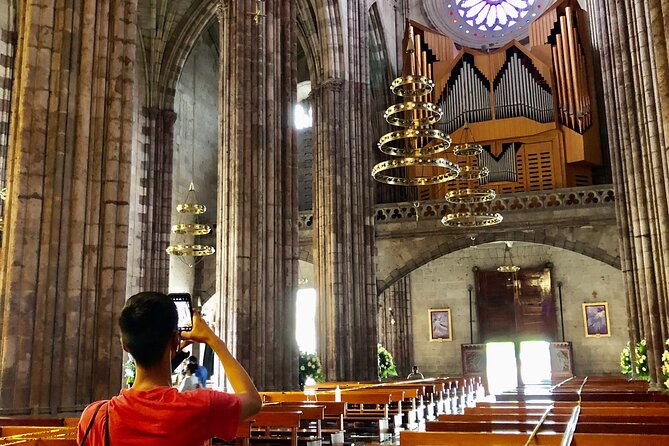
Next comes Templo Expiatorio del Santisimo Sacramento. This stop is shorter, about 20 minutes, but it is a real punctuation mark in the route. The church is neo-Gothic, which visually reads as big, formal, and European-leaning compared to what you might expect.
Here’s the part I think is most useful for you: you get historical context tied to religious conflicts and the influence of the U.S. in Mexico. That theme might sound abstract until you stand in front of a structure like this and realize how politics, religion, and economics can shape what gets built and how people feel about it.
In practice, this stop works as a breather too. You get a clear focal point, and then you move on with your brain already tuned to the day’s architecture theme.
Admission is free for this stop. That makes it an easy win on a route where the main cost is your guide time, not paying gate fees constantly.
Guadalajara Cathedral and the plazas: Renaissance grandeur with multiple design languages
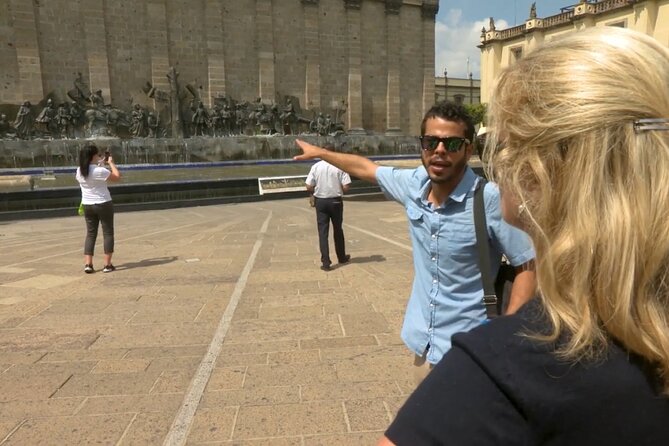
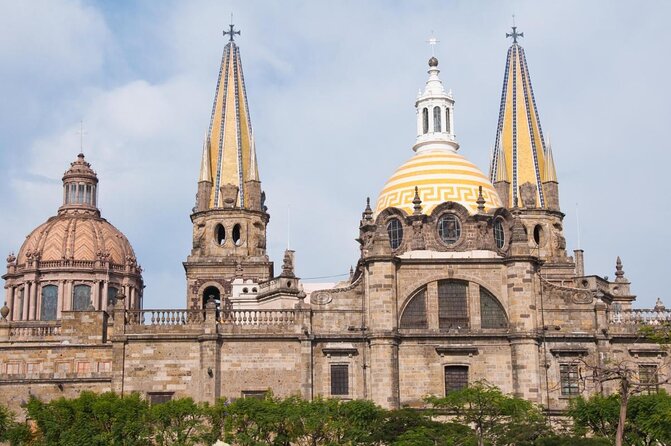
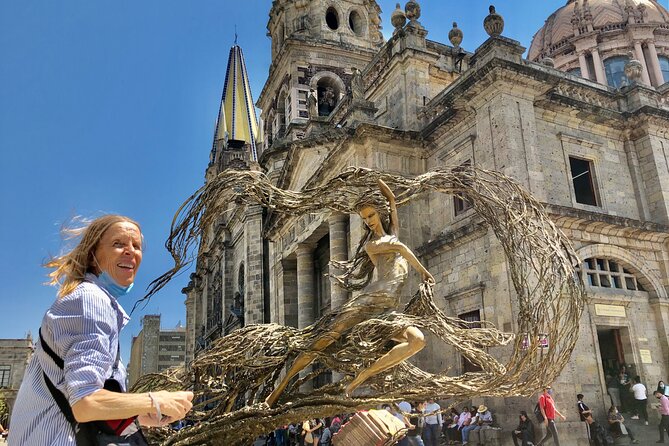
The biggest center-city anchor is Guadalajara Cathedral. It is a 16th-century Renaissance cathedral, and even from the outside you feel the weight of it. This is a 30-minute stop, including time to move through the surrounding plazas.
This is also where you get the walking-tour benefit of not just seeing one building. The surrounding area gives you a mix of architectural styles, including baroque, art nouveau, and neoclassical touches, plus other design languages around the square.
That mix is where first-timers can lose track on their own. On your own, you can easily treat it like a single postcard scene. With a guide, you learn what to notice so each facade and plaza corner makes sense instead of blending together.
If you like asking questions, this is usually a good time in the day to do it. Diego’s style is to answer, then tack on the small connections that help you remember the city later.
Admission is free here too, which keeps the day feeling efficient.
Teatro Degollado: the exterior is the sure thing
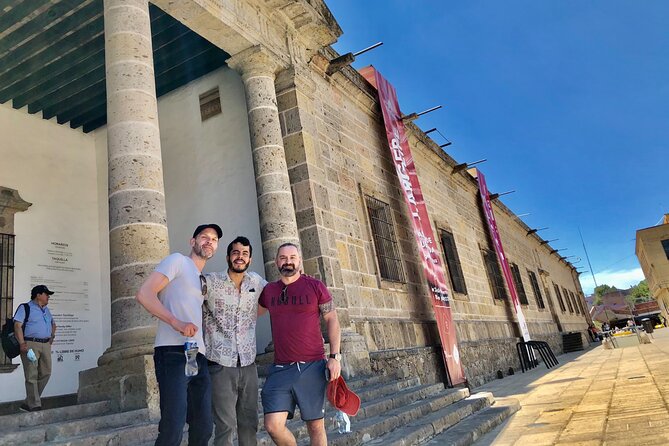
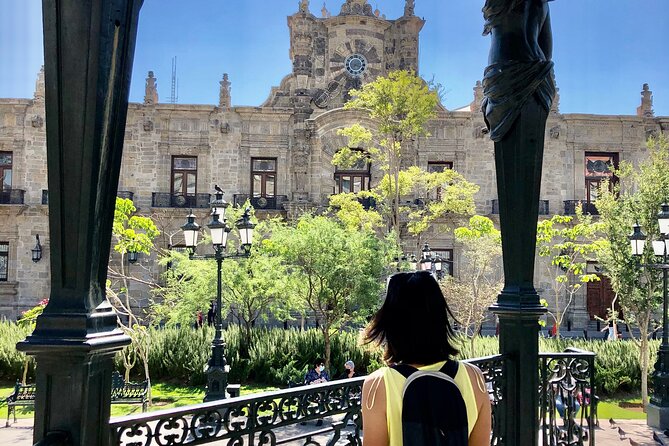
Then you hit Teatro Degollado. This is a quick stop, about 10 minutes, focused on the 19th-century neoclassical theater and the surrounding plazas and churches.
The honest detail: interior access cannot be guaranteed because of scheduling. So when planning your expectations, treat this as an exterior-and-street-experience stop. That way, you will not feel annoyed if you cannot go inside.
Even from the outside, Degollado sits in a meaningful civic zone. You get another design lens, and it helps bridge from cathedral power to the more everyday city life coming next.
This short timing is also practical. After a long morning of churches and plazas, a 10-minute stop keeps your energy from collapsing right before the market.
Plaza Fundadores: the city name story isn’t simple
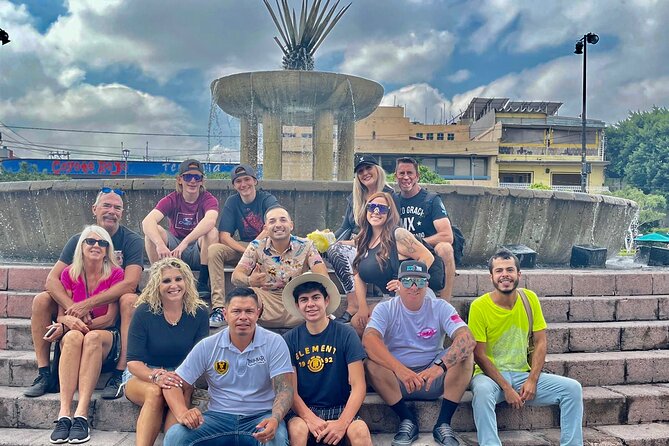
Plaza Fundadores is next, about 20 minutes. This is one of those stops that can be “just a square” if you do not have context. With context, it becomes a conversation about colonization and identity.
You learn about Spanish colonization in Western Mexico, and you also hear how Mexican society looks at that complicated legacy today. Then you get the origins of Guadalajara’s name—information that feels oddly satisfying once you can place it in the city’s bigger historical puzzle.
I like this stop for another reason: it gives you a break from the church-and-theater rhythm. It is still in the center, but it is less about architecture and more about meaning.
Admission is free, so you get the thinking part without the gate fee part.
Mercado Libertad (San Juan de Dios): where the tour turns practical
After all those stone landmarks, you switch gears to Mercado Libertad, also known as San Juan de Dios. This stop is about 40 minutes. It is the largest indoor market in Latin America, so it is big enough that going alone can feel like you are just wandering.
This is the part where the private-tour value shows up fast. Diego helps you navigate the crowd flow and figure out what to look for without turning it into a chaotic scavenger hunt.
You can expect colorful displays of souvenirs, handicrafts, and local delicacies. The market is also a place where you can talk to vendors and learn what is worth buying, not just what is priced high for tourists.
Food is a key theme here. Based on how Diego guides people, you should expect a focus on local eats rather than generic snacks. One example that comes up in his guidance is torta ahogada, plus quesabirria (a quesadilla with birria). Those are exactly the kind of dishes you might miss if you only follow instinct.
Keep in mind: snacks and water are not included on this tour. So if you plan to eat there, bring cash for purchases and make water part of your strategy. Wear shoes you trust. Markets are where blisters go to party.
Instituto Cultural Cabañas: Orozco murals, UNESCO rules, and timing on Mondays
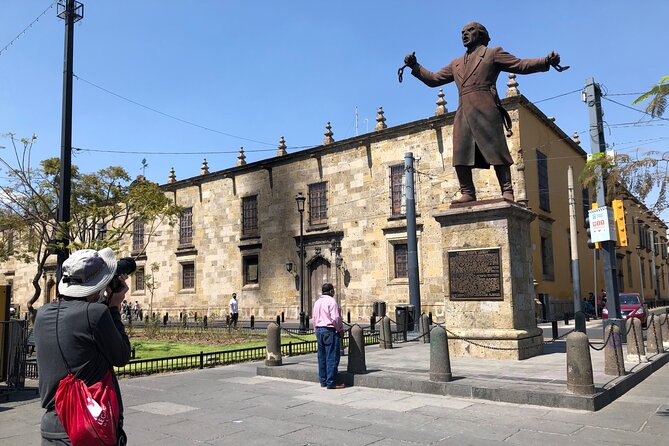
The final major stop is Instituto Cultural Cabañas, housed in Hospicio Cabañas. This is about 45 minutes. It is also UNESCO World Heritage, and it is famous for Jose Clemente Orozco’s mural work—57 murals by one of Mexico’s leading muralists.
This stop has a special rule that matters for how your experience will feel: UNESCO regulations are strict about external guides. That means you will explore the museum at your own pace, while your guide provides context to enhance what you’re seeing rather than leading you through every single room like a typical guided tour.
So the experience here is more self-guided on the floor, guided in the head. That can actually be a plus. You get space to stand in front of murals without feeling herded.
Important scheduling note: Hospicio Cabañas is closed on Mondays. If your trip lands on Monday, this stop might not run as planned, so check your booking date carefully.
Admission is not included for Cabañas. So budget for the museum ticket separately.
Pace, shoes, and what weather does to your comfort level
This is a walking tour with a moderate physical fitness level. It is not suitable for mobility challenges, so if stairs, uneven pavement, or longer walking stretches are a problem for you, skip this one.
Many people do best by treating it like a 3–4 hour neighborhood walk rather than a quick hit of major sights. The pacing is usually relaxed, and breaks are part of the experience. In the real world, you will feel the difference between a tour that just moves you along and one that builds in time to breathe and take photos.
A practical tip: plan your start time. Guadalajara is warm and sunny most of the year. Early hours, around 7 to 9 am, usually feel best. That advice is not just comfort—it also makes plazas and markets easier on you.
Bring:
- Comfortable walking shoes
- A hat
- Water (since it is not included)
And yes, a light layer can still help. Morning sun can shift quickly in this part of Mexico.
Price and value: why $42 can still feel like a bargain
At $42 per person for a private 3 to 4 hour walk, the price is mostly paying for time with a guide and the ability to move through the day with less guesswork. Since most major sites on this route have free admission, your spend stays mostly tied to guidance rather than tickets.
What you get for the money is not just facts on buildings. Diego’s approach tends to include:
- Clear neighborhood context, so you understand why the city looks the way it does
- Helpful photo moments, including attention to where to stand so you look good
- Food and market guidance that helps you choose what to try without wasting time
If you are traveling with a group, the listing also notes group discounts, which can lower the effective cost per person.
If you are solo, private is a real advantage. A solo traveler can spend less energy trying to blend in and more energy learning what to look for.
If you hate walking tours, this may not be your style. But if you like culture you can see and touch, this route is a good use of your limited time.
Where the tour starts and ends (so you can plan the rest of your day)
You meet at La Central Hamburgesería Libertad in Colonia Americana. From there, the walk progresses through the historic center and culminates near the museum area.
The tour ends outside Museo Cabañas, at C. Cabañas 8 in San Juan de Dios. Taxis and transportation apps are readily available there, and your guide can help if you need to get moving again.
That matters because you can plan dinner nearby without worrying about how to escape the far side of town.
Should you book the Guadalajara Private Walking Tour with Diego?
I’d book it if you want a first solid overview of Guadalajara that mixes neighborhoods, churches, plazas, and the market where you can eat and shop like a local. The route is strong for people who enjoy architecture and history, but it also works if you mainly care about practical city life.
Skip it if mobility is an issue, or if you cannot do a warm, on-foot outing. Also consider the Cabañas Monday closure if your dates fall on that day.
If your goal is to get your bearings fast and walk away with a sense of where to return for more time, this is one of the better ways to start.
FAQ
How long is the Guadalajara Private Walking Tour?
The tour runs about 3 to 4 hours.
Is this tour private and offered in English?
Yes. It is private, meaning only your group participates, and it is offered in English.
Are admission tickets included?
Most stops on the route have free admission. Admission for Instituto Cultural Cabañas is not included.
Where does the tour start and end?
It starts at La Central Hamburgesería Libertad, Libertad 1878, Col. Americana. It ends outside Museo Cabañas at C. Cabañas 8, San Juan de Dios.
Is Instituto Cultural Cabañas open on Mondays?
No. Hospicio Cabañas is closed on Mondays.
What happens if weather is poor or if I need to cancel?
This experience requires good weather. If it is canceled due to poor weather, you will be offered a different date or a full refund. You can cancel for a full refund up to 24 hours in advance.