REVIEW · LISBON
Lisbon Tram No. 28 Ride & Walking Tour
Book on GetYourGuide →Operated by Lisbon Spirit · Bookable on GetYourGuide
Tram 28 feels like a guided ride through time. This Lisbon Spirit tour pairs the historic Tram No. 28 climb with panoramic city views, then turns the afternoon into a focused walk through Alfama where you’ll hear how fado fits into everyday Lisbon life. I love that it’s built for both big sights and the small street-level details. One thing to keep in mind: the tram is real public transport, so traffic and delays can affect timing.
What really sells this experience is the way the walk connects the dots. When guides like Nuno lead it, you get a clear thread from medieval walls at Sé de Lisboa to the stories around the National Pantheon dome and the monastery skyline at São Vicente de Fora. The main drawback is simple: you’ll spend real time on steep, uneven Old Town streets, so comfortable shoes aren’t optional.
In This Review
- Key Things That Make This Tour Worth Your Time
- Tram 28 and Alfama: Why This Combo Works in 3 Hours
- Meet at Praça Luís de Camões (and Find the Right Guide Fast)
- Riding Tram No. 28: The Hill Climb, the Views, and the Reality Check
- Sé de Lisboa: When Medieval Walls Hide Nearly 1,000 Years
- São Vicente de Fora: The Monastery Skyline Moment
- Panteão Nacional: The Dome and the Legend You’ll Want to Remember
- Feira da Ladra on Tuesdays and Saturdays: Flea Market Energy, on Schedule
- Alfama on Foot: Steep Lanes, Small Squares, and Real Fado Context
- Guide Style That Makes or Breaks the Day: Why Nuno’s Approach Gets Praise
- Practicalities: Shoes, Walking Surfaces, and Keeping Your Expectations Real
- Who This Tour Fits Best (and Who Might Want Something Different)
- Value for $23: What You’re Actually Getting
- Should You Book Lisbon Spirit’s Tram 28 & Alfama Tour?
- FAQ
- What’s included in the Tram No. 28 Ride & Walking Tour?
- Is the tour guide speaking English?
- How long is the tour?
- Where does the tour meet?
- Do I need comfortable shoes?
- Does the Tram 28 route depend on traffic?
Key Things That Make This Tour Worth Your Time
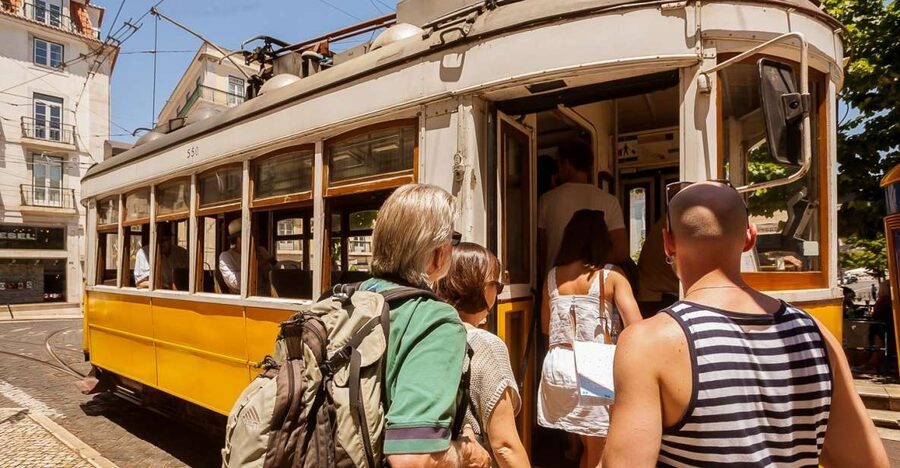
- Tram 28 with a plan: you ride the famous line and still end up seeing far more than the tram windows
- Alfama on foot: steep lanes, little squares, and fado context you won’t get from a quick stop
- Big-history stops: Sé de Lisboa, São Vicente de Fora, and the National Pantheon legend
- Flea market timing: on Tuesdays and Saturdays, Feira da Ladra can color your route
- Small group (max 10): easier pace, easier questions, less crowd stress
- Flexible transit when needed: if the tram slows, the guide may reroute with other transport to keep the day moving
Tram 28 and Alfama: Why This Combo Works in 3 Hours
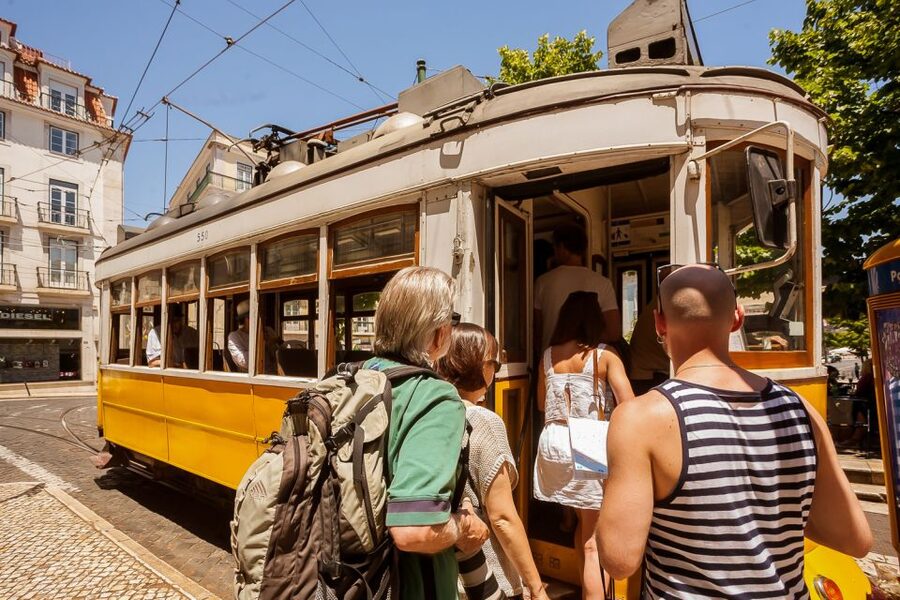
Lisbon can be a lot fast. Hills, winding streets, and one famous tram that everyone suddenly decides they need to ride at the same time. This tour’s smart move is pairing a classic “must-do” transit moment with an on-foot Old Town walk that actually explains what you’re seeing.
I like that it doesn’t treat Tram 28 like the whole day. You get the iconic ride across Lisbon Old Town, then you walk beyond it into Alfama, where the city’s “texture” shows up: narrow alleys, corner viewpoints, and small neighborhood squares that make Lisbon feel lived-in. And yes, fado comes up in a grounded way, not as a vague label.
The other reason the plan works is that it’s short—about 3 hours—yet still gives you multiple “time layers.” Medieval walls at Sé de Lisboa sit a few minutes from the street scenes where fado culture still feels close to daily life. That mix is exactly what makes Lisbon memorable: past and present standing side by side.
You can also read our reviews of more walking tours in Lisbon



Meet at Praça Luís de Camões (and Find the Right Guide Fast)
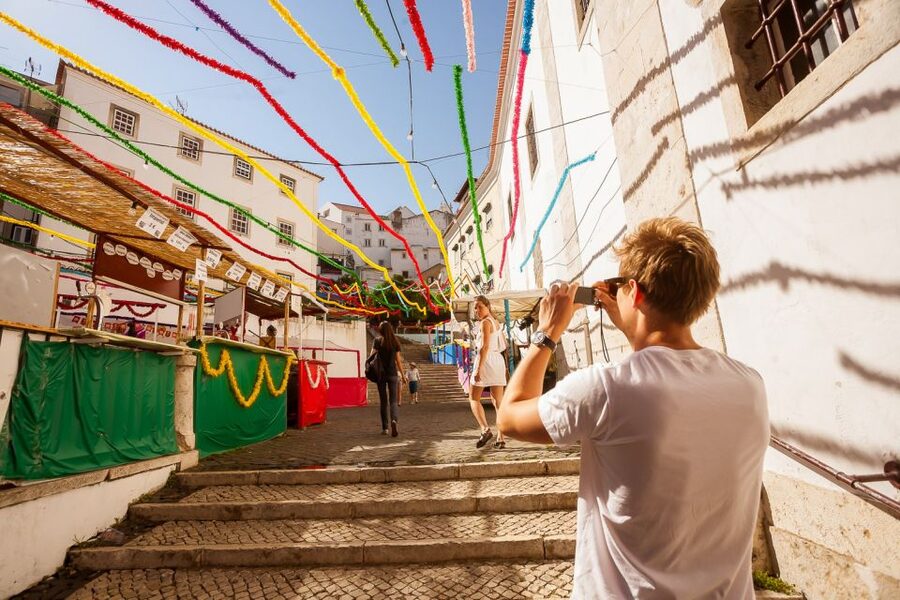
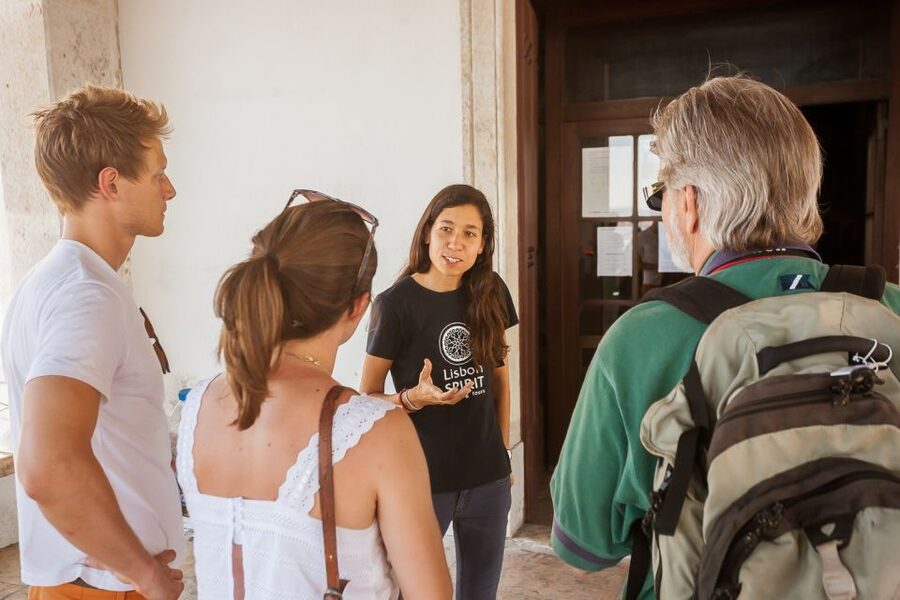
Your meeting point is Praça Luís de Camões, near the statue. Look for the guide wearing a black backpack with the Lisbon Spirit logo. This detail matters more than it sounds, because Old Town streets fill up quickly and it’s easy to drift away from the group if you’re hunting.
The tour is English live guided, and it runs with a small group capped at 10 people. In practical terms, that means you’re not stuck listening from the back of a crowd. You can ask questions at stops, and the guide can slow down when the street gets tricky.
Also note what the tour is not doing: there’s no pickup or drop-off. You’ll want to plan to arrive a few minutes early on foot or by your own transit. If you’re coming from far away, give yourself buffer time, because Lisbon timing and Lisbon hills love to surprise you.
Riding Tram No. 28: The Hill Climb, the Views, and the Reality Check
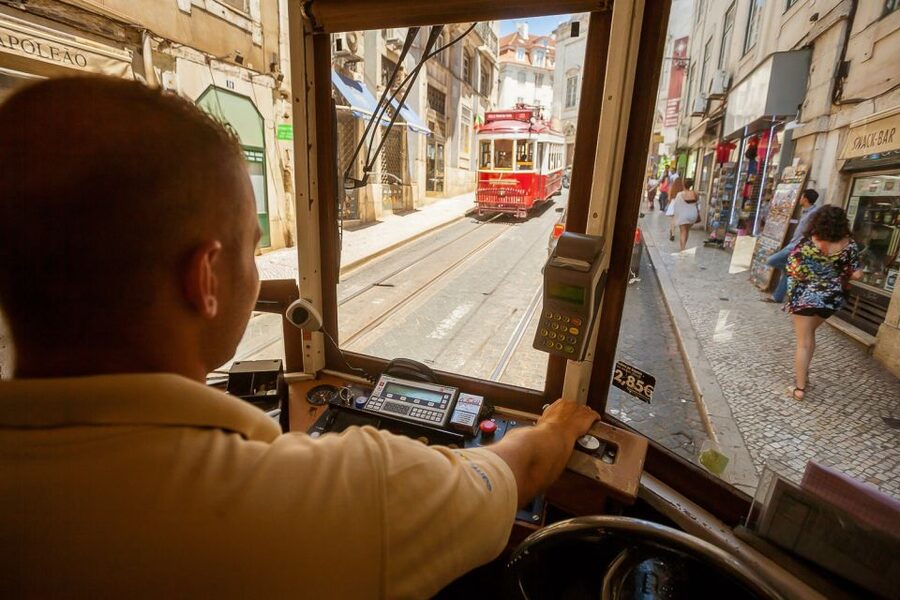
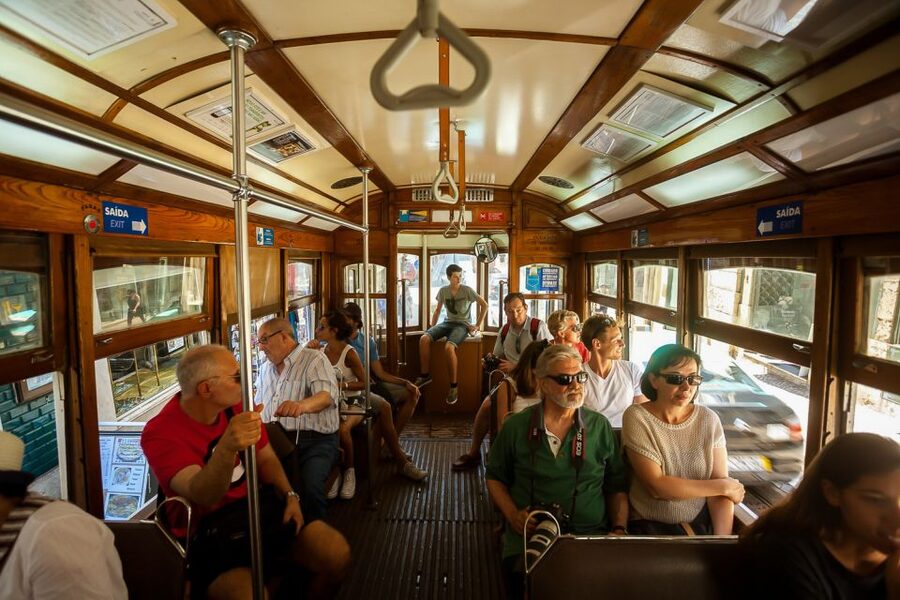
Tram 28 is famous for a reason. It threads through Lisbon’s older neighborhoods, and the ride naturally forces you to look outward. As the tram climbs Lisbon’s hills, you’ll get sweeping views over rooftops and down toward the river areas—enough to make the photos feel worth it even if you’re not a “photo person.”
Here’s what I think you’ll like most: the ride changes your perspective while you’re still moving. You’re not walking uphill just to find a view. The tram does the hard part, then your guide turns the scene into a story—what you’re looking at and why it matters.
Now for the practical part. Tram 28 is public transport, so it can be affected by traffic and other issues outside the provider’s control. This is not the tour where you assume everything runs like a movie. The good news: the guide can adjust. One account describes routing changes due to traffic, using other transit like a funicular or bus to keep things moving, then returning to Tram 28 when possible.
So think of Tram 28 as the backbone of the morning, not a fragile schedule you must defend. If you’re okay with a little Lisbon-style unpredictability, the ride lands perfectly.
Sé de Lisboa: When Medieval Walls Hide Nearly 1,000 Years
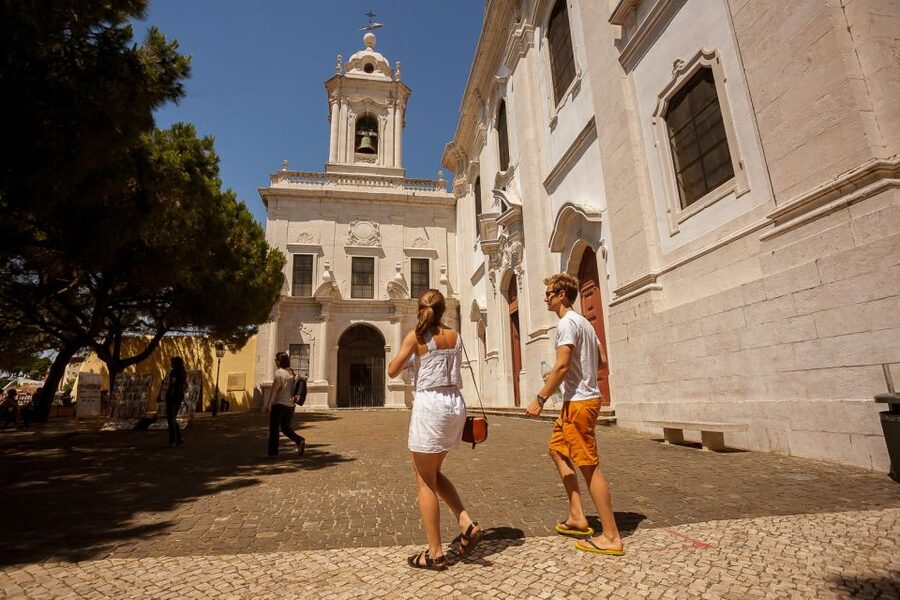
After the tram, the walk gets you into the layer of Lisbon people actually recognize as Lisbon: stone, slopes, and centuries stacked up in plain sight. A key stop is Sé de Lisboa, the medieval cathedral. The standout detail is that the cathedral’s walls conceal and reveal almost 1,000 years of history, which is a wild way to think about architecture.
What you’ll likely appreciate here is how the guide frames the cathedral within Lisbon’s bigger story. You’re not just seeing another church facade. You’re seeing a landmark that has had to “hold itself together” across huge political and cultural shifts.
This is also one of the places where you’ll start understanding why Alfama isn’t just a pretty neighborhood. It’s a historic hillside community, and Sé de Lisboa sits where you can grasp the scale of that story quickly.
São Vicente de Fora: The Monastery Skyline Moment
The tour also includes Mosteiro de São Vicente de Fora (Saint Vincent Monastery). This is the kind of stop that works even if you’re not a big museum person, because the monastery’s presence is tied to its surroundings. Lisbon is full of viewpoints, but there’s something about seeing a major religious complex perched in the city fabric.
Expect the guide to connect the monastery to the city’s evolution—where power, faith, and identity show up in stone and placement. Even if you only catch part of the details, the effect stays: you’ll look at that skyline differently afterward.




Panteão Nacional: The Dome and the Legend You’ll Want to Remember
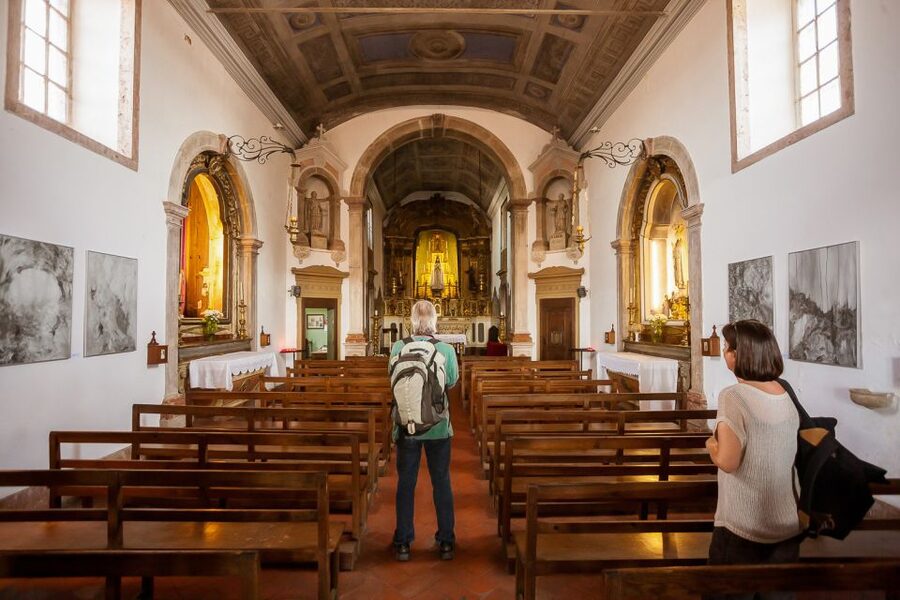
Next comes Panteão Nacional (National Pantheon), with special attention on the iconic dome that defines Lisbon’s skyline. The tour focuses on the legend behind it, which is exactly the right approach for a dome-based landmark. Domes are hard to “read” from the outside, but stories give you a way to understand why locals treat the view as meaningful.
If you’re the type who likes landmarks to have context, this is a good stop. If you’re not, it still works because the guide’s narrative gives shape to what you’re looking at—less random sightseeing, more cause-and-effect.
And because the tour includes both walking segments and tram movement, you’ll also notice how the dome-related skyline views appear as Lisbon rolls downhill and then rises again.
Feira da Ladra on Tuesdays and Saturdays: Flea Market Energy, on Schedule
One of the most charming schedule details is Feira da Ladra, the famous flea market, which runs on Tuesdays and Saturdays. If your day lines up, this portion adds energy to the tour in a very Lisbon way.
The best part is that it doesn’t just become a shopping stop. You’ll get a sense of how the city reuses spaces and traditions. Even if you don’t plan to buy anything, browsing at the right time gives you a more human feel for Lisbon’s daily rhythms.
If your tour date isn’t one of those days, you won’t lose the tour’s value. You’ll still cover major historic sites and spend plenty of time in Alfama. But if your calendar matches, Feira da Ladra is the kind of bonus that makes the morning feel extra personal.
Alfama on Foot: Steep Lanes, Small Squares, and Real Fado Context
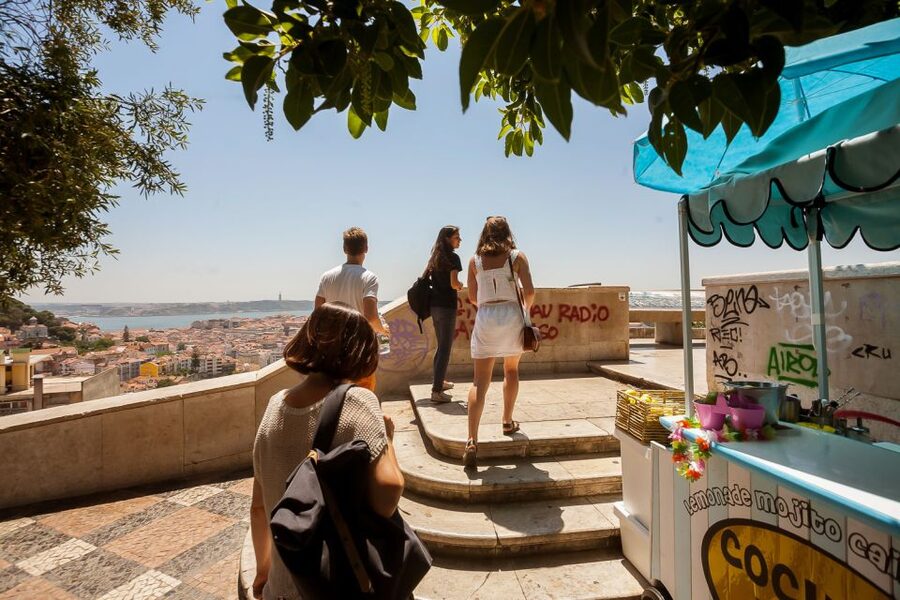
This is the heart of the tour. Once you leave the tram route, you enter Alfama—Lisbon’s traditional neighborhood—with a walking route designed around those narrow, steep lanes that people always mention but rarely experience slowly.
I like walking Alfama with a guide because it changes how you move. You stop at the corners, learn what to look for, and understand why certain streets feel like they lead to hidden squares. The walking pace is also described as relaxed, which matters a lot when you’re on uneven surfaces.
And then there’s fado. This tour doesn’t try to replace a full fado show. Instead, it explains the tradition in a way that makes later nights make more sense. You’ll hear about traditional Portuguese fado in tiny bars and cafés, so when you see music rooms down the street, you understand what kind of culture you’re stepping into.
If you want a “Lisbon you can feel” tour, this is it. You’re not just collecting photos. You’re learning how people live in steep streets and how music belongs to place.
Guide Style That Makes or Breaks the Day: Why Nuno’s Approach Gets Praise
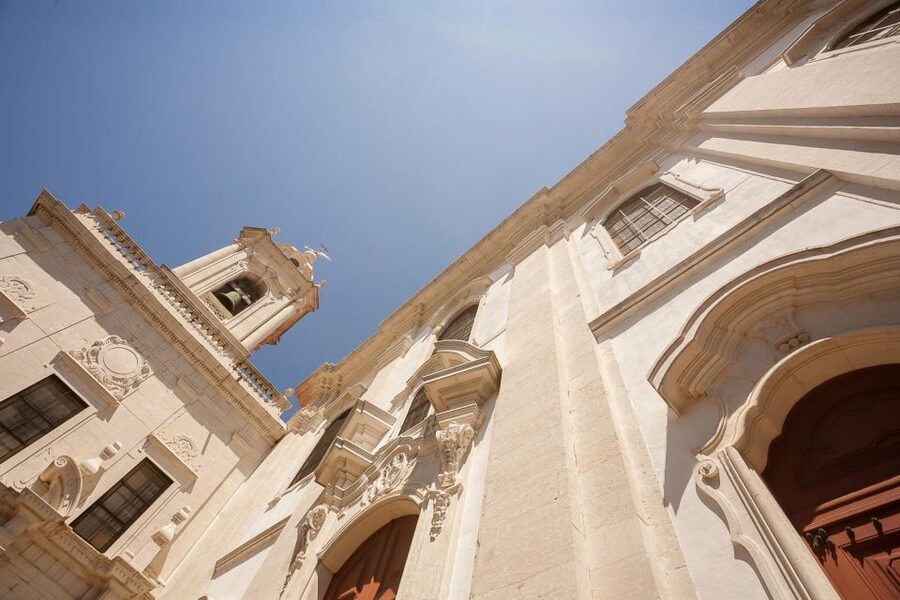
The guide is a big reason this tour performs well. In the accounts I read, the common thread is a person who goes beyond basic narration—someone who brings Lisbon’s past and present together with energy and humor.
Names like Nuno (and variations like Nono/Nunu in different notes) show up again and again, including mentions that the guide went a little beyond time when the group was still engaged, and stayed available to answer extra questions after the formal portion. That’s not required, but it’s a good signal: you’re not just paying for movement; you’re paying for someone to connect the dots.
You’ll also benefit from the guide’s practical street judgment. One example describes a detour when conditions changed during the tour, which shows the guide doesn’t freeze when Lisbon traffic does what Lisbon traffic always does. If you’re the kind of person who hates uncertainty, that flexibility helps a lot.
Practicalities: Shoes, Walking Surfaces, and Keeping Your Expectations Real
You should plan for real walking on uneven, steep Old Town streets. The one clear instruction is to wear comfortable shoes, and I’d follow it even if you think your feet are fine. Alfama can turn a normal stroll into a leg workout fast.
In terms of timing, the total duration is listed as 3 hours. That’s enough to see key landmarks and still enjoy the ride, but it’s not enough to do Lisbon “at museum speed.” Come ready to move and look.
Also remember: Tram 28 is part of public transport, so expect the possibility of delays. The guide may adjust with other transit modes to keep you on track. That’s one reason I’d treat this tour as a guided experience with a flexible backbone, not a clock you must match perfectly.
Who This Tour Fits Best (and Who Might Want Something Different)
This tour is a strong fit if you want:
- the famous Tram 28 experience without spending hours guessing where to go next
- a guided introduction to Lisbon’s older neighborhoods, including Alfama and major landmarks
- fado context that helps you understand what you’ll hear later
It’s also a good choice for mixed-age groups because the pace can be adapted, and the small group size helps keep things smooth.
If you’re someone who prefers minimal walking, this one might feel like too much hill time. The tram is easy compared to the streets, but the walking portion is a real part of the experience. If you’re traveling with mobility limitations, you’d need to think carefully before committing, because the route includes steep, uneven areas.
Value for $23: What You’re Actually Getting
At $23 per person for about 3 hours, you’re paying for two things that are hard to do well alone: a guided story and the best “how to see it” routing through Old Town.
You get Tram 28 ride time plus a walking tour of Alfama. That’s a practical combo. Tram 28 alone can eat your day in crowds and waiting. A guided approach gives you a reason to be there beyond the novelty.
The small group (up to 10) also improves value. You’re not just buying sights; you’re buying a guide who can answer questions and keep your group from stretching across lanes.
If you like learning as you go, and you want Lisbon’s big symbols explained in plain language, this price feels fair.
Should You Book Lisbon Spirit’s Tram 28 & Alfama Tour?
I’d book this tour if you want a guided intro that hits Lisbon’s highlights without turning your day into a stressful checklist. The Tram 28 ride is the headline, but the real payoff is what happens after—Sé de Lisboa, São Vicente de Fora, National Pantheon, and then Alfama on foot with fado context.
Choose it if you’ll enjoy a bit of walking on steep streets and you can roll with tram timing. The guide factor also matters here. When a guide like Nuno brings energy, humor, and solid stories, the tour becomes more than transport and stops—it becomes a map you can carry in your head.
If you’re short on time, this is one of the cleanest ways to get your bearings fast and then explore the rest of Lisbon with more confidence.
FAQ
What’s included in the Tram No. 28 Ride & Walking Tour?
You get a ride on Tram 28 and a walking tour through Alfama.
Is the tour guide speaking English?
Yes, the tour includes a live guide in English.
How long is the tour?
The tour lasts about 3 hours.
Where does the tour meet?
Meet at Praça Luís de Camões, near the statue. The guide wears a black backpack with the Lisbon Spirit logo.
Do I need comfortable shoes?
Yes. You should bring comfortable shoes, since the tour includes walking on steep and uneven Old Town streets.
Does the Tram 28 route depend on traffic?
Yes. Tram 28 is public transport, so the ride can be affected by traffic and other unpredictable situations outside the provider’s control.