REVIEW · LISBON
Lisbon: Starter Walking Tour to the highlights in German
Book on GetYourGuide →Operated by WALK 'N' ROLL Tours · Bookable on GetYourGuide
Lisbon rewards the curious, and this short walk is built for quick wins. In just 2 hours, you’ll move through Baixa, Chiado, and Bica while a German-speaking local guide points out what makes Lisbon tick beyond the postcards.
What I like most is the small-group feel (up to 12 people) and the way the guide connects sights with daily life, not just dates. The one possible drawback: the route includes stairs and some hills, so you’ll want comfortable shoes and a moderate fitness level.
In This Review
- Key highlights you’ll feel fast
- Why a 2-hour German highlights walk makes sense in Lisbon
- Starting at Rossio Square North Fountain: instant orientation
- Baixa and Rossio Square: how the city got rebuilt and why it feels European
- Santa Justa Lift: a postcard icon with real perspective value
- Carmo Convent Ruins: history you can see, not just read
- Chiado and Praça Luís de Camões: tiles, architecture, and street-level Lisbon
- Elevador da Bica: the cable car that teaches Bica’s geography
- Mercado da Ribeira and Time Out Market Lisboa: end your walk with a food plan
- Price and pacing: what $33 buys you (and what it doesn’t)
- Group size and guide style: why small groups matter here
- What to bring, and how to handle Lisbon walking (including rain)
- Who should book this Lisbon highlights walk, and who should skip it
- Should you book? My honest recommendation
- FAQ
- What’s the duration of the Lisbon highlights walking tour in German?
- Where do I meet the guide for the tour?
- Is the tour guided in German?
- How big is the group for this tour?
- What are the main sights included on the route?
- What should I bring and what should I avoid?
Key highlights you’ll feel fast
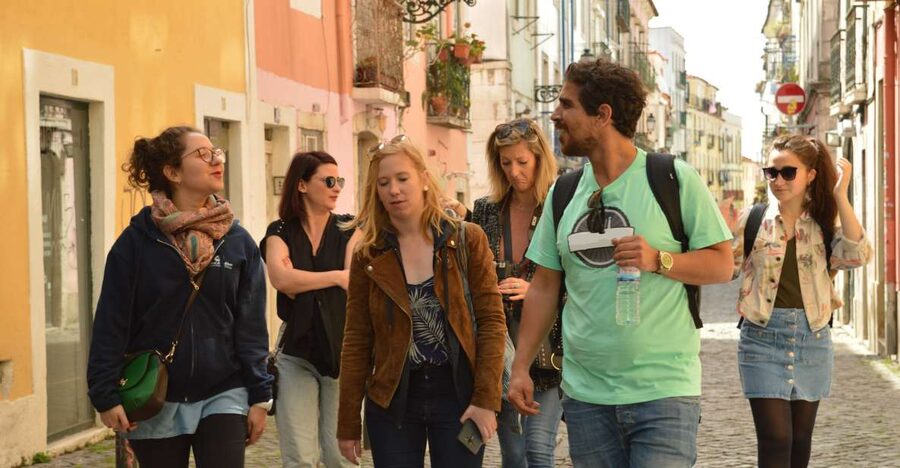
- German-speaking local guide who explains both history and current city life
- Santa Justa Lift plus the Carmo Convent Ruins for a strong “then-and-now” contrast
- Azulejos (wall tiles) and Art Nouveau details you’ll start spotting immediately
- Elevador da Bica and viewpoints that make the neighborhoods make sense
- Mercado da Ribeira / Time Out Market Lisboa to close with practical food ideas
Why a 2-hour German highlights walk makes sense in Lisbon
If you only have a day (or just a few hours) in Lisbon, you need orientation fast. This tour gives you that “map in your head” feeling quickly: squares, viewpoints, neighborhood streets, and a few big icons that act like landmarks.
I like that it stays focused on the historic core. You’ll cover Baixa, then head into Chiado and up toward Bica, which is the best way to understand how the city’s geography shapes everything from walking routes to views.
The guide also matters here. A German-speaking local guide can slow things down just enough to explain what you’re seeing, plus how Lisboners actually live with the city’s hills, routines, and traditions. That kind of explanation turns a quick walk into something you can use for the rest of your stay.
You can also read our reviews of more walking tours in Lisbon



Starting at Rossio Square North Fountain: instant orientation
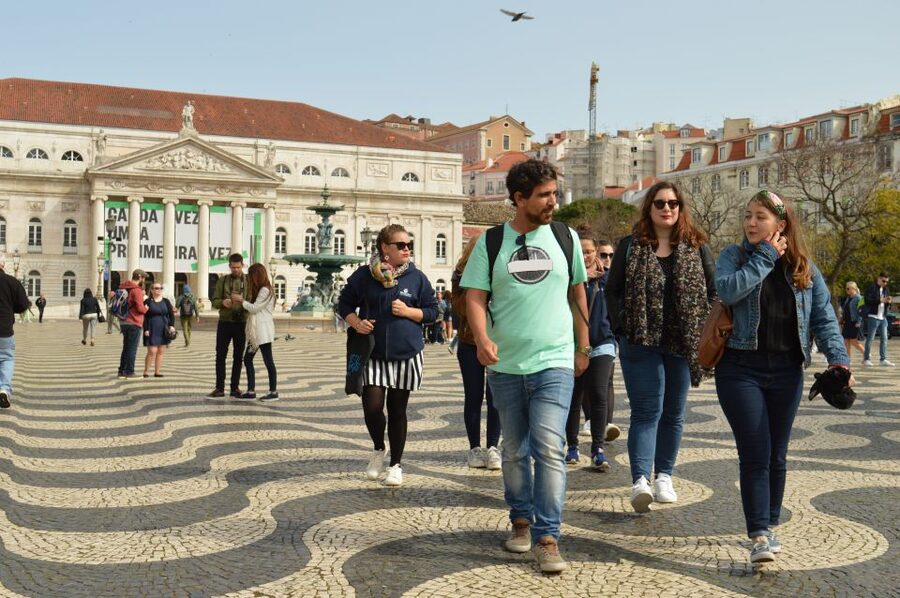
Your tour begins at Rossio Square (Praça Dom Pedro IV), at the northern fountain. The guide meets you between the National Theater and the Royal Statue, so you’re not hunting around for a random side street.
This matters more than you’d think. Rossio is a natural “hub” in Lisbon’s center, and using it as a starting point helps you understand the direction of travel before you even set off. You also get an early lesson in the layout of the city: where the action concentrates, where the streets open up, and where the climbs begin.
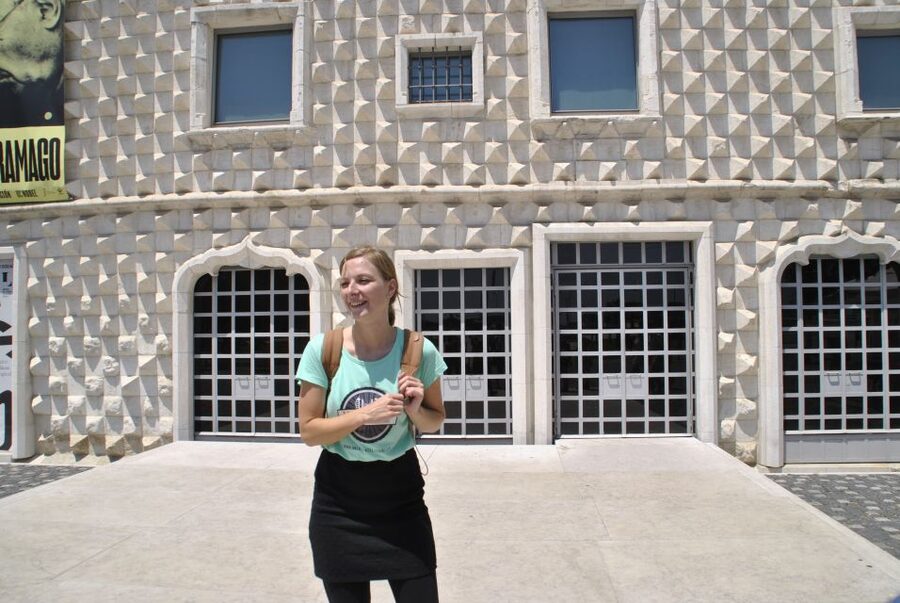
If you want an easy way to spot your guide, look for the mint-colored WALK ’N’ ROLL T-shirt or a mint burlap bag.
Baixa and Rossio Square: how the city got rebuilt and why it feels European
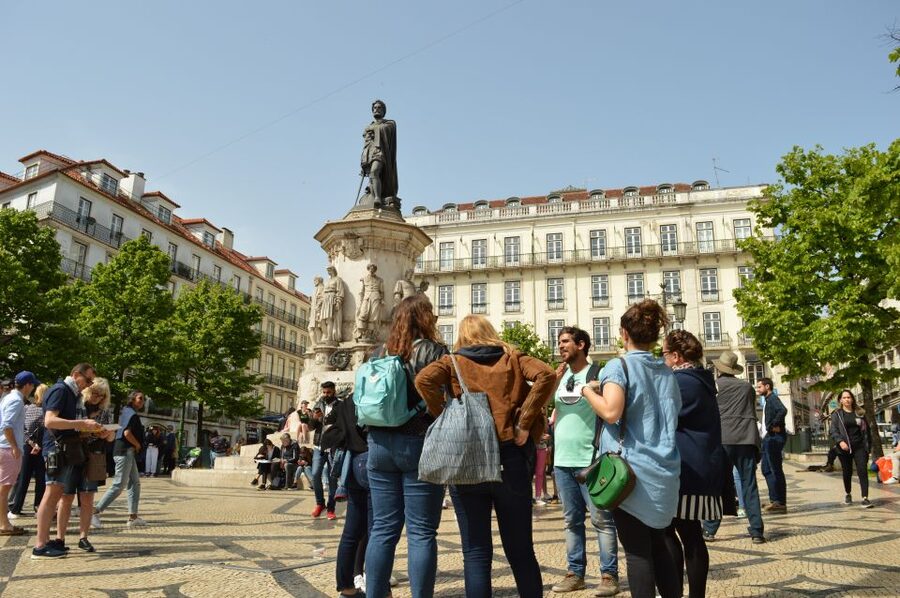
Baixa de Lisboa is where Lisbon looks most “plan-forward.” You’ll walk through the area with a guide who connects the streets to Lisbon’s bigger story, not just the names on signs.
Rossio Square is your first real anchor. It’s the kind of place where locals and visitors both pass through, which makes it a good starting point for understanding what daily life looks like in the center. You’ll get guided context on why this area feels the way it does now—especially helpful if you’re used to cities that grew randomly rather than through major rebuilding moments.
A practical note: since Baixa is in the center of the action, it can get crowded. The tour pace and small group size help you keep moving without spending your whole time “waiting for the street.”
Santa Justa Lift: a postcard icon with real perspective value
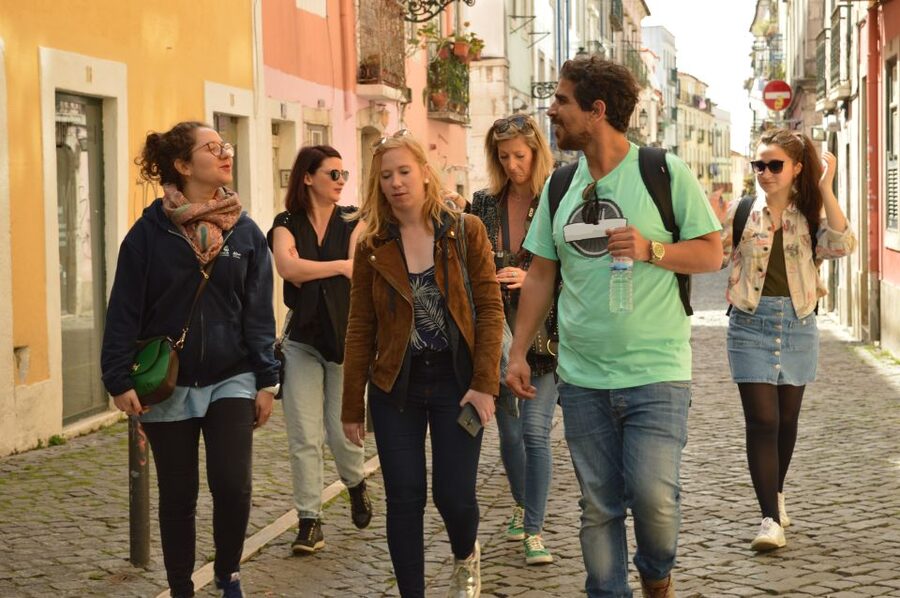
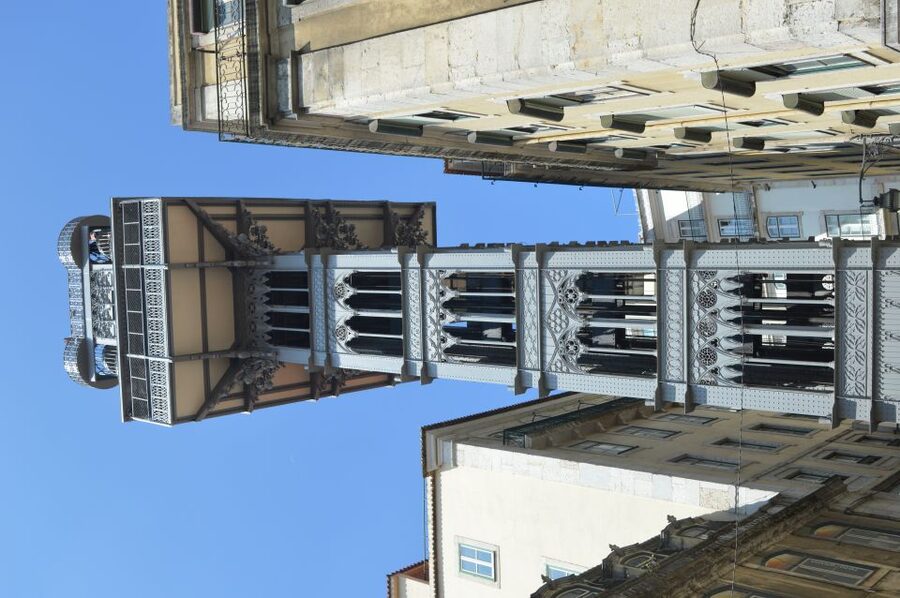
One of the tour’s star stops is the Santa Justa Lift area. Even if you’re not obsessed with lifts and engineering, it works as a Lisbon lesson.
Why? Because it shows how Lisbon solves elevation. This city is made of ups and downs, and Lisbon’s famous viewpoint culture doesn’t happen by accident. Santa Justa is a clear visual reminder that getting above street level is part of the experience here.
You’ll get guided explanation as you approach, plus a clearer sense of what the surrounding blocks are doing. That’s the big win: after this stop, you’ll understand why some streets feel narrow and others open up, and why walking routes don’t follow “easy logic.”
Potential consideration: if you’re expecting deep, long time at this landmark, the tour is short. You’re seeing the highlights and learning the connections—not doing a long independent sightseeing session.
Carmo Convent Ruins: history you can see, not just read
Next comes the Carmo Convent Ruins, which are one of Lisbon’s most emotionally straightforward sights. You’re looking at remnants that still feel exposed, and the setting does the storytelling for you.
What I like about including this stop is the contrast it creates. Lisbon isn’t only bright facades and scenic photos; it has places where you can see how the city changed after shocks. The guide helps you connect what you’re seeing to the city’s history and how those events shaped what Lisbon is today.
In a short tour, it’s a smart choice because the ruins give you an immediate, visual “why” for the city’s resilience. You don’t need to memorize dates to understand the mood of the place—you just need to look up, notice details, and listen to the guide’s framing.




Chiado and Praça Luís de Camões: tiles, architecture, and street-level Lisbon
From Santa Justa and the ruins, you’ll move into Chiado, a neighborhood that feels more refined but still everyday. This is where the tour starts to shift from landmark sightseeing into understanding Lisbon’s look and feel as you walk.
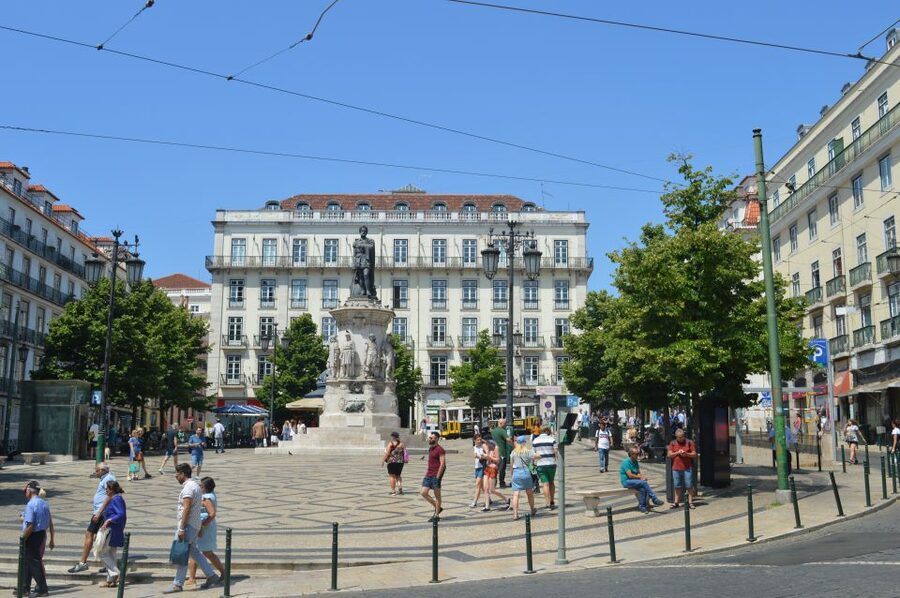
You’ll pass Praça Luís de Camões, which helps break the walking rhythm. Small squares give you a breather and give the guide space to talk about what you’re about to see next.
This section is also where Azulejos start to become your new favorite detail. The guide points out wall tiles and how they work in Lisbon’s architecture—how they decorate, how they frame street life, and how they give the city its signature look.
If you like “spotting” details while you move—tile patterns, building styles, and old-versus-new contrasts—this part of the route is especially rewarding.
Elevador da Bica: the cable car that teaches Bica’s geography
Then you’ll head to Elevador da Bica, the cable car connected to the Bica neighborhood. It’s the kind of Lisbon sight that’s easy to understand without a long explanation: it’s how the city handles steep terrain.
What’s useful here is not just the ride idea—it’s the orientation it gives you. After Bica, the hills around you stop feeling random. You start seeing the neighborhoods as connected by climbs, not by flat streets.
The tour also includes a special viewpoint stop, which helps you connect the streets you walked with the broader city picture. That viewpoint is exactly the kind of “mental map” moment that makes the rest of your trip easier. You’ll know which direction you’re headed, and why certain neighborhoods sit where they do.
Mercado da Ribeira and Time Out Market Lisboa: end your walk with a food plan
The tour continues to Mercado da Ribeira, near the Tagus River. This is a great pairing with what came before, because it shifts you from sights to taste.
If you’re trying to decide where to eat later, this is practical. You’ll finish at Time Out Market Lisboa, which is a strong place to keep exploring without having to think too hard. Even if you don’t snack right away, the market area gives you a natural next step.
One of the best-value aspects here is that your guide’s tips aren’t random. You’ll get ideas for where to eat and what to explore afterward, based on what you just saw walking through the center.
This is also a nice way to handle Lisbon’s walking reality. After 2 hours of hills and sights, you’re ready to sit down, compare options, and continue the day on your terms.
Price and pacing: what $33 buys you (and what it doesn’t)
At about $33 per person for a 2-hour walking tour, you’re paying for two things: a German-speaking guide and concentrated “highlight + context” time.
I think that’s good value if you:
- Want to cover major sights without planning transport or routes
- Prefer learning from a local who can explain how Lisbon works now
- Like a compact itinerary that helps you decide what to do next
What you shouldn’t expect is a long, stop-and-stare museum style visit. You’re walking. You’re seeing. You’re getting explanations as you go. It’s the right format for orientation and next-day planning, but it’s not designed for deep, slow sightseeing.
The timing also works well for short attention spans. You’ll see a lot, and the pace helps you keep energy for the rest of your Lisbon day.
Group size and guide style: why small groups matter here
This experience caps at 12 participants, and that’s a real advantage in a center-city walking tour. Smaller groups move faster through crowded areas, and you spend more time walking and less time waiting.
It also helps with questions. In the German group, the tone can stay conversational. One guide named Pedro stood out in feedback for being friendly, competent, and open to questions, and that kind of guide energy matters a lot on a short tour.
You get the best results when you treat it like a guided walk, not a checklist. Ask about what to do that evening. Ask what neighborhoods feel most local. Ask where to go next while you still have the guide’s context in your head.
What to bring, and how to handle Lisbon walking (including rain)
The tour asks for a moderate fitness level. You’ll be walking for the full 2 hours and climbing a few stairs, with some hills built into the route.
So pack like this:
- Comfortable shoes you can walk in for 2 hours
- Water, especially in warmer weather
- Sunscreen, since Lisbon sun can be sneaky
Weather matters too. If it rains, the last 30 minutes of the itinerary may change to avoid slippery slopes. That’s a sensible approach on hills and tiled streets.
Also keep it practical: baby strollers, luggage, and large bags aren’t allowed. This keeps the group moving smoothly, but it also means you’ll want to travel light.
Who should book this Lisbon highlights walk, and who should skip it
Book it if you want a guided “best of central Lisbon” orientation in German, with stops that make sense together: Santa Justa Lift, Carmo Convent Ruins, the neighborhoods of Chiado and Bica, and then a food-focused finish at Time Out Market Lisboa.
Skip it if walking and stairs are tough for you. It’s not suitable for people with mobility impairments or wheelchair users, based on the tour’s walking route.
This is also a strong pick for couples, solo travelers, and anyone who wants insider tips on where to eat and what to explore next—without spending half a day planning.
Should you book? My honest recommendation
I’d book this tour if you want Lisbon highlights plus local context in a short window. The German language option makes it feel welcoming rather than like you’re waiting for a translation. And the combination of landmark sights, Azulejos details, and a market-area finish helps you turn learning into action fast.
If you’re the type who prefers slow, long visits with plenty of free time in each spot, you might feel rushed. But if you want to hit the key ideas in 2 hours and get a clear plan for the rest of your Lisbon day, this is a smart use of time.
FAQ
What’s the duration of the Lisbon highlights walking tour in German?
The tour lasts 2 hours.
Where do I meet the guide for the tour?
Meet at Rossio Square (Praça Dom Pedro IV) at the northern fountain, between the National Theater and the Royal Statue.
Is the tour guided in German?
Yes. The live tour guide speaks German.
How big is the group for this tour?
The group experience has a maximum number of participants of 12. A private tour is also available.
What are the main sights included on the route?
You’ll visit highlights like Santa Justa Lift, the Carmo Convent Ruins, the Elevador da Bica, and you’ll also reach Mercado da Ribeira near the Tagus River. The tour finishes at Time Out Market Lisboa.
What should I bring and what should I avoid?
Bring comfortable shoes, sunscreen, and water. Baby strollers and luggage or large bags are not allowed.