REVIEW · FREEDOM TRAIL
Boston: Official Freedom Trail® Walking Tour
Book on GetYourGuide →Operated by Freedom Trail Foundation · Bookable on GetYourGuide
That red line connects Boston’s big moments. This official Freedom Trail® walking tour turns the maze of downtown streets into a clear story of revolution, with 18th-century costumed guides leading you from civic beginnings to tense confrontation. You’ll also spend time in the key meeting-and-address spaces where ideas got argued out in public, not just written down on paper.
I especially like starting at Boston Common, because it sets the scene fast: this is where public space and public power meet. I also like the human storytelling you get at the stops tied to named figures like Samuel Adams, Crispus Attucks, Paul Revere, and John Adams, plus time for questions and photos along the way. One possible drawback: the tour can run with a larger group, so if you’re hoping for lots of one-on-one attention, plan to keep your questions ready.
In This Review
- Key Points You’ll Care About
- A 90-Minute Freedom Trail Primer on the Red Line
- Boston Common: America’s First Public Park, Still the Best Starting Scene
- Faneuil Hall’s Orators: Where Independence Got Spoken Out Loud
- Paying Respect at the Boston Massacre Site Near Old State House
- Granary Burying Ground and Paul Revere’s Final Resting Place
- The Oldest Public School: Why Boston Latin School Fits This Story
- The In-Between Stops: How 11 Sites Still Feel Understandable
- Price and Value: What $18 Buys You (and What It Doesn’t)
- Guide Style That Can Make or Break the Tour
- Practical Tips for a Comfortable Freedom Trail Walk
- Reverse Walk Into History for a Different Feeling
- Should You Book This Boston Freedom Trail Tour?
- FAQ
- How long is the Boston Freedom Trail® Walking Tour?
- How many Freedom Trail sites does the tour include?
- Are admission tickets included for all the major sites?
- Where do the tours start?
- Do I need to pick a specific date and time?
- What should I bring and what is not allowed?
- Is there a different version of the walk?
Key Points You’ll Care About

- 11 Freedom Trail sites in about 1 mile (90 minutes) gives you a high-impact intro without turning your day into a marathon
- Period-costumed guides bring the era to life while still keeping the facts organized
- You see major touchpoints fast: Boston Common, Faneuil Hall, Granary Burying Ground, and the Boston Massacre area
- Some famous buildings aren’t included inside if they charge admission, so you may want a second stop later
- Good guide energy matters, and the best guides on this route are known for humor and strong, clear delivery
A 90-Minute Freedom Trail Primer on the Red Line

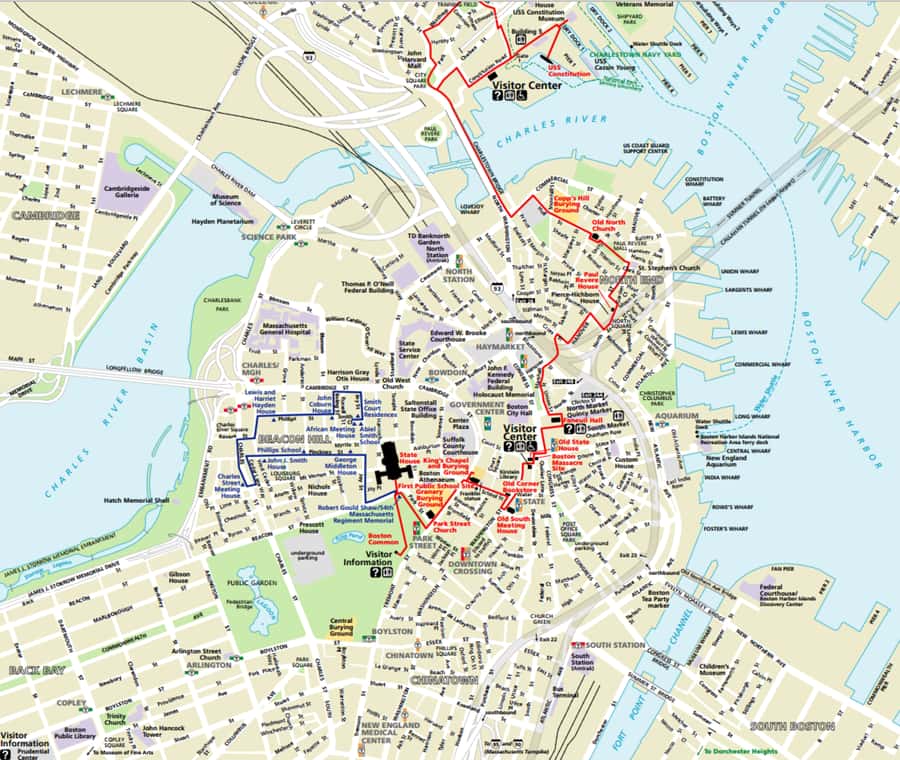
This tour is built for momentum. In about 1.5 hours, you walk roughly 1 mile along Boston’s famous red line, covering 11 of the 16 official Freedom Trail sites. That means you get the main storyline without spending half the day on just one route.
The format is simple: you move from stop to stop on foot, listening as the guide links events to people and people to places. You’ll also have time for questions and photographs, which is a big deal on a tour like this—Boston’s streets are crowded, so you want a guide who knows when to slow down.
Also note the pacing promise: it’s not a lecture you’re stuck inside. It’s an outdoor walk with guide-led storytelling as you pass the landmarks that shaped America’s early political identity.
Boston Common: America’s First Public Park, Still the Best Starting Scene

Your tour starts with Boston Common, and I get why that matters. It’s not just a pretty start; it’s a statement that public space has always been part of the civic argument in Boston. In the tour’s framing, you’re stepping into a place where community life and public debate naturally connect.
From there, the guide ties the green space to the revolution-era cast you’ll keep hearing about—names like Samuel Adams, Paul Revere, Crispus Attucks, and John Adams. You’re not just learning dates. You’re learning who mattered, what they stood for, and why the city’s public gathering spaces were so important.
A small practical note: Boston Common is a natural “breather” between tighter street scenes. If you’re the type who needs a quick moment to reset, this is where you get it before the tour turns more intense.
Faneuil Hall’s Orators: Where Independence Got Spoken Out Loud
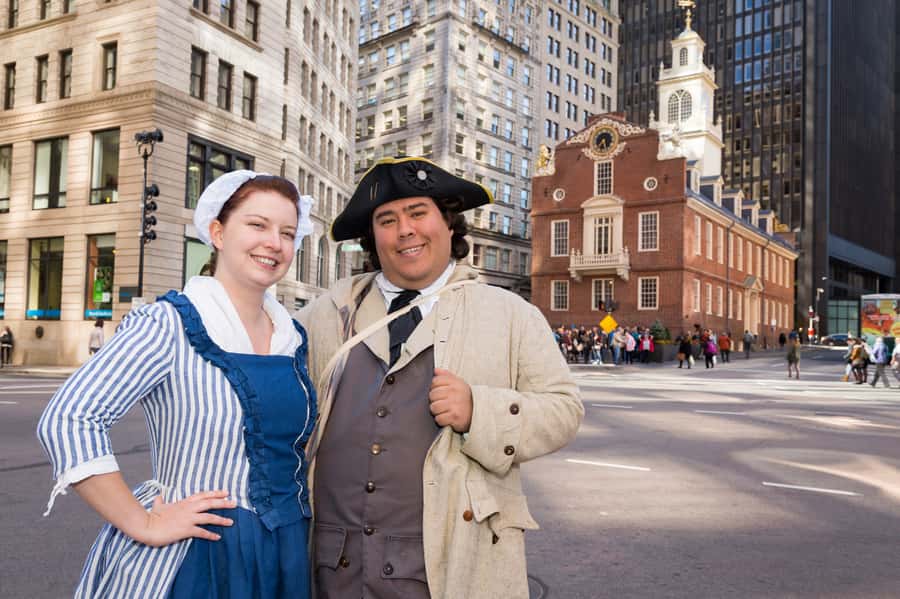
Next, you spend time in the precincts of Faneuil Hall, and this is where the tour gets theatrical in the best way. The guide talks about orators like Samuel Adams and James Otis, and you can feel how public speaking fueled public action in the 1700s.
This stop works especially well for first-timers, because it anchors the idea that revolution wasn’t only battles and weapons. It was persuasion—people arguing for independence in public, in a place designed for meetings and speeches. When the guide puts those stories into motion, you start to understand why the Freedom Trail isn’t just a list of sites.
Expect the tour to linger long enough for you to ask questions. That helps here because Faneuil Hall can feel “obvious” once you’re there. The guide’s job is to explain what wasn’t obvious back then: why certain arguments resonated, and why some crowds turned into pressure.
Paying Respect at the Boston Massacre Site Near Old State House
The emotional center comes when you remember the Boston Massacre. You’ll be guided to the site connected with the victims, and the story is presented with weight: the guide brings up the image of the blood in the snow outside the Old State House area.
I like this stop because it adds tension to the Freedom Trail’s narrative. Up until this point, you can think of revolution as a debate that slowly got louder. Here, it becomes something else. It becomes consequence—real bodies, real fear, real political fallout.
Important for planning: the tour focuses on what you can see and understand from the exterior and the immediate vicinity. Some of the buildings along the route have ticketed interiors you’d handle separately if you want to go deeper on your own.
Granary Burying Ground and Paul Revere’s Final Resting Place
One of the most memorable parts of the walk is Granary Burying Ground. You’ll hear how it connects to Paul Revere, including the fact that it’s his final resting place.
This is where the tour’s tone turns reflective. A burial ground sounds quiet on paper, but on a guided walk it becomes a different kind of history lesson: a place where you can connect the public figures you’ve heard about to a specific, physical ending. That shift helps you remember the names later when you’re looking at photos or reading plaques on your own.
What I like here is that it doesn’t turn into pure nostalgia. The guide typically uses the stop to connect the revolution-era story to the human reality of loss and legacy. You’re learning how the founding generation is remembered in space, not only on textbooks.
The Oldest Public School: Why Boston Latin School Fits This Story

Another highlight is the site of the oldest public school in the United States. During the tour, you’ll be pointed toward that educational landmark and it matters to the larger theme.
Revolution wasn’t only about overthrowing a government. It was also about imagining a system where ordinary people could learn to participate—where citizenship wasn’t limited to birth. This is one of those Freedom Trail details that can feel like a side note if you’re not paying attention, but it’s exactly why the tour works: it keeps showing you how revolution reshaped everyday institutions.
The guide usually links education and civic responsibility to the people and politics you’re hearing about elsewhere on the route. It helps you see the founding not as a single moment but as a chain reaction.
The In-Between Stops: How 11 Sites Still Feel Understandable
Even with 11 sites, the tour avoids the trap of turning into a rushed checklist. The route is still about story flow: each stop adds one more piece, and the guide keeps connecting them so you don’t feel lost between major landmarks.
What you’ll actually do in the “in-between” portion is follow the red line through the historic core, listening for the specific angles tied to each location. Some stops are more about political gatherings and public action. Others are more about the public infrastructure of a growing city—places where decisions and reputations took shape.
There’s also a practical reason this tour stays manageable: the walking portion is about 1 mile total. That’s short enough to stay comfortable, yet long enough to feel like you actually moved through the story rather than reading it off a map.
One more planning point: because the tour includes 11 of 16 official sites, you’ll likely notice famous markers you don’t cover on this particular walk. That’s not a flaw; it’s a smart design for time. If you want the full slate, you can do the rest later on your own.
Price and Value: What $18 Buys You (and What It Doesn’t)
At $18 per person, this is strong value if you want an organized start. You’re paying for live interpretation plus access to a guided route that hits a large chunk of the Freedom Trail’s key stops in a short window.
Here’s the balanced part: the tour includes the guided visit to 11 Freedom Trail sites, but it does not include admission into certain buildings that charge. The ones called out are Old South Meeting House, Old State House, Old North Church, and the Paul Revere House. You can buy tickets at the door for those.
This matters because you can use the walking tour as your decision-making tool. Watch how the guide frames each place. Then, if a particular building grabs you, you’ll know it’s worth paying to go inside later.
Also, you get 18th-century costumed guides and skip-the-ticket-line is listed as part of the experience. Even if some interiors are still ticketed separately, it generally means less friction when you’re near places that have entry processes.
Guide Style That Can Make or Break the Tour

This is a story-driven walk, so the guide matters more than you might expect. The strongest moments tend to be when the guide stays in character while keeping the narration clear and interactive.
In particular, guides such as Jeremiah Poope, James Sullivan, and Sean show up in the provided experiences as examples of hosts who mix facts with humor and invite questions. Another guide mentioned is Rob Cream, who’s described with a strong comedic delivery. I’d treat those names as encouragement: this tour is set up for live performance, not dry recitation.
One thing I’d watch for is group size. A couple of experiences highlight that the group can be large, which can reduce how easily you can get your question answered or how much you can linger at a specific moment. If you’re sensitive to that, arrive early, keep your questions brief, and ask as the guide calls for them.
Practical Tips for a Comfortable Freedom Trail Walk
Bring comfortable shoes and water. That sounds basic, but it’s exactly what will keep you enjoying the stops instead of thinking about your feet.
Also, video recording isn’t allowed. If you want photos, plan to take pictures during the photo pauses rather than filming for long stretches.
And don’t underestimate weather. One experience mentioned a bitterly cold day, with advice to dress warmly. Since most of the tour is outdoors and you’ll be standing and walking in open public spaces, layering helps you stay focused on the stories.
Finally, keep your expectations realistic: you’re going to hear a lot in 90 minutes. If you’re a “slow reader” type, you’ll want to come back later for plaques and interiors at the sites that interest you most.
Reverse Walk Into History for a Different Feeling
If you want a twist, there’s a Reverse Walk Into History option. I like this idea when you’ve already read some background, because starting from a different angle can change what you notice.
It can also help you avoid that feeling of predictability. Instead of moving forward through the founding timeline like a textbook, you get a different arc—and sometimes that makes the connections click faster.
If your schedule allows it, doing one direction first is a good move. Then, if you return on another day, a reverse-style walk can make the second pass feel new.
Should You Book This Boston Freedom Trail Tour?
Book it if you want a guided, fact-and-story start to Boston’s most famous revolutionary route. The $18 price is hard to beat for a 90-minute walk that covers 11 key sites with period-costumed guides, plus time for questions and photos.
Skip booking only if you already plan to spend hours and money inside every major building on the trail. This walk is a strong overview, but it doesn’t include admission to several top attractions like Old North Church or the Paul Revere House. You’ll likely still want a follow-up visit.
One more deciding tip: if you like tours where the guide uses humor and interactive storytelling, this one is set up for that. Guides mentioned by name like Jeremiah Poope and James Sullivan are part of why the experience can feel lively instead of scripted.
If you’re in Boston for a short visit, this tour is a smart first move. It helps you see the Freedom Trail, then choose what to explore next.
FAQ
How long is the Boston Freedom Trail® Walking Tour?
The tour runs for about 1.5 hours.
How many Freedom Trail sites does the tour include?
The tour features 11 of the 16 official Freedom Trail historic sites.
Are admission tickets included for all the major sites?
No. Entrance to sites that charge admission fees is not included. The ones listed are Old South Meeting House, Old State House, Old North Church, and Paul Revere House.
Where do the tours start?
Tours leave from Boston Common Visitor Information Center every hour on the hour, and from the ArtsBoston booth at Faneuil Hall every hour on the half-hour (based on the option booked).
Do I need to pick a specific date and time?
No. With your ticket, you are guaranteed a spot on a Freedom Trail Foundation tour any date and any time.
What should I bring and what is not allowed?
Bring comfortable shoes and water. Video recording is not allowed. You also need a printed voucher.
Is there a different version of the walk?
Yes. There’s a Reverse Walk Into History option if you want a different route spin.