REVIEW · BARCELONA
Barcelona Old Town & Gothic Quarter Small Group Tour
Book on Viator →Operated by In Out Barcelona Tours · Bookable on Viator
Barcelona’s backstreets make sense fast. This small-group route through the Gothic Quarter turns a maze of alleys into a simple story of Roman, medieval, and modern Barcelona, with lively guides such as Joris and Alba helping you keep up and ask questions.
I also like how the itinerary mixes big-name sights with street-level details, from the Mercat de la Boqueria stroll on La Rambla to the architectural finish at Palau de la Música Catalana. One thing to plan for: the main cathedral and Santa Maria del Mar interiors are not included, so if you want to go inside, you’ll need extra time and tickets.
In This Review
- Key things to love before you book
- A 2.5-hour plan for first-time Barcelona: Gothic Quarter to Born
- Stop-by-stop: what you’ll actually see (and why it matters)
- 1) Gothic Quarter: Roman edges in a maze of medieval streets
- 2) Ciutat Vella: the Old City without the textbook tone
- 3) La Rambla: from medieval river defense to today’s main drag
- 4) Mercat de la Boqueria: colors, aromas, and a smart food-cultural stop
- 5) Plaça Reial: Napoleonic architecture and Gaudí’s early fingerprints
- 6) Barcelona Cathedral: impressive exterior views, interiors need extra tickets
- 7) El Born: a walk where you can lose yourself on purpose
- 8) Basilica Santa Maria del Mar: Catalan Gothic built by the neighborhood
- Final stop: Palau de la Música Catalana, the UNESCO-style finale
- Value check: why the price feels fair for what you get
- Pace, walking style, and what to bring
- Who should book this tour (and who might not)
- A quick decision: should you book?
- FAQ
- How long is the Barcelona Old Town & Gothic Quarter Small Group Tour?
- What group size and language is this tour offered in?
- Where does the tour start and where do I end?
- Are tickets included for Barcelona Cathedral and Basilica Santa Maria del Mar?
- What is included in the ticket price, and what is not?
- Can I cancel for a full refund?
Key things to love before you book
- Small-group pacing with room for questions so you’re not rushed at every corner
- Gothic Quarter orientation that helps you stop getting turned around in the alleys
- La Rambla + Boqueria market focus for an easy taste of local food culture
- Plaça Reial details like the fountain de Tres Gracias and lanterns tied to a very young Gaudí
- UNESCO finish at Palau de la Música Catalana with modernism you can actually see up close
- A mix of Free stops and paid entrances so you can budget without surprises
A 2.5-hour plan for first-time Barcelona: Gothic Quarter to Born
If you only have a couple of hours and you still want the real Barcelona feel, this tour is built for that. The format is simple: you start near Ciutat Vella, walk the Old Town highlights on foot, and end in the Born area near Palau de la Música Catalana.
What makes this one work is the order. You don’t start with a museum ticket and then wonder what you’re looking at. You start with the streets, squares, and architectural clues, so the landmarks make sense as you walk. And with a small group capped at the low teens (max 12 in the tour description, maximum 15 in the activity limits), it stays manageable even when the Old Town gets busy.
Another big practical plus: it’s offered in English, uses a mobile ticket, and you can choose morning or afternoon times. That flexibility matters in Barcelona, where your day can change fast once you factor in heat, crowds, and where you want to eat afterward.
You can also read our reviews of more tours and experiences in Barcelona.


Stop-by-stop: what you’ll actually see (and why it matters)
1) Gothic Quarter: Roman edges in a maze of medieval streets
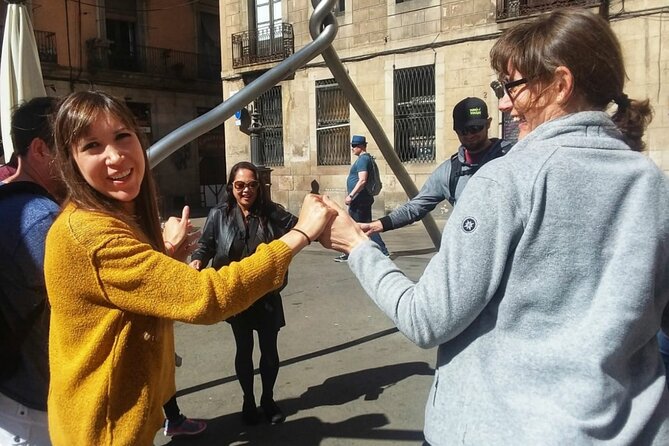
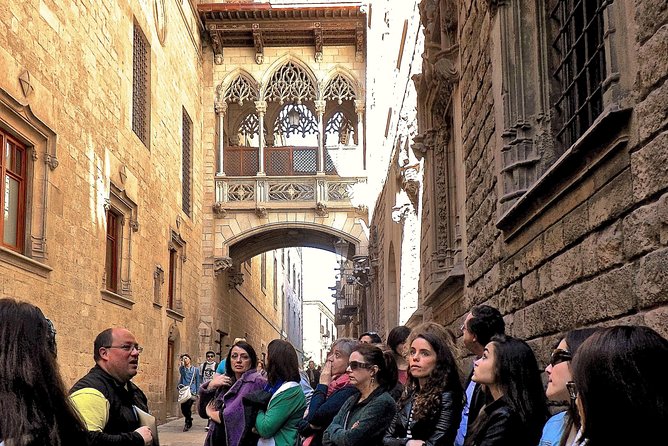
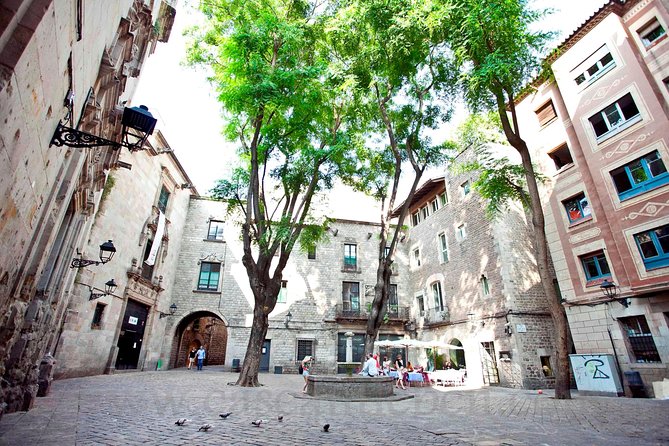
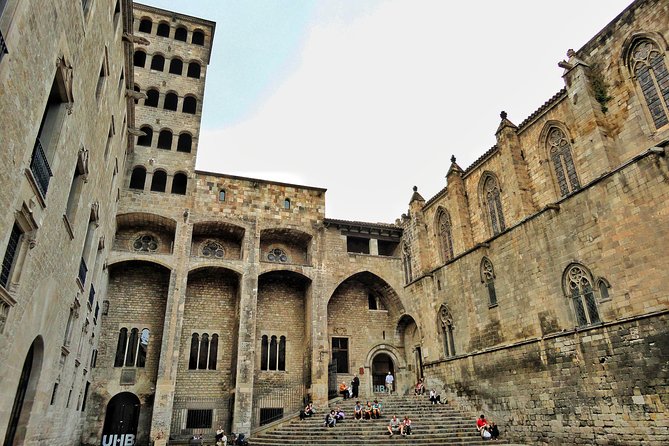
The tour begins in the Gothic Quarter, and the key is how your guide frames it. You’re not just looking at old buildings; you’re following layers of time. You’ll walk narrow lanes and small squares where Roman remains can still be spotted in corners, a reminder that this area grew from an old village before it became the Gothic Quarter we see today.
Why this helps: the Gothic Quarter can feel like an endless set of turns. On your own, that can mean lost time and second-guessing. With a guide, you get a mental map: Roman traces, medieval growth, and the gothic architectural language that became part of Barcelona’s identity.
A small caution: the streets are tight and sometimes uneven, so comfortable shoes are a must. Also, this is the kind of place where photos are easy to overdo. Let the guide’s story slow you down a bit, then take photos at the moments that match the explanation.
2) Ciutat Vella: the Old City without the textbook tone
Next is Ciutat Vella, which simply means Old City in Catalan. Your guide connects it to what you’re walking through now, not as a lecture, but as a way to understand why the Old Town is shaped the way it is.
The practical value here is orientation. After the Gothic Quarter lanes, you get a clearer sense of where you are in Barcelona’s oldest neighborhood and how the area connects to the rest of the city.
3) La Rambla: from medieval river defense to today’s main drag
Then you hit Las Ramblas, one of Barcelona’s most emblematic avenues. The tour doesn’t treat it like a checklist stop. You learn the surprising backstory: in medieval times, the boulevard was a small sandy river used as a natural defense at the limit of the old city walls, and later it became the lively Rambla we recognize now.
Why it’s worth your attention: it turns a street you already heard about into something you can read like a timeline. You’ll also notice the change in energy as you walk—bars, restaurants, and street artists set the tone immediately.
If you want a smoother experience, plan to walk with the group through the most crowded sections rather than trying to take shortcuts off the main artery.



4) Mercat de la Boqueria: colors, aromas, and a smart food-cultural stop
From the Rambla, you enter Mercat de la Boqueria. This is a high-impact stop because it combines architecture, color, and food culture in one place. You’ll have time to look around and (if you choose) taste things like fresh fruit juice, and you can learn where the world-famous Iberian cured ham comes from.
The practical takeaway: Boqueria can overwhelm you if you treat it like a shopping mall. With a guided walk-through, you get a sense of what’s worth paying attention to and how to navigate quickly.
Potential drawback: Boqueria is busy. If you’re easily distracted by crowds, keep your expectations grounded. Think of this as a taste-and-look stop, not a full market day.
5) Plaça Reial: Napoleonic architecture and Gaudí’s early fingerprints
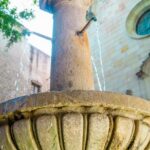
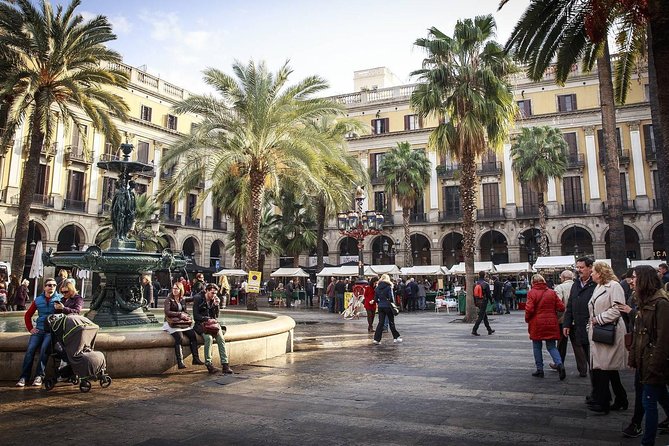
Plaça Reial is one of those squares that feels like a pause button. It’s open, lively, and made for sitting at a terrace. You’ll see Napoleonic architecture, the fountain de Tres Gracias, and lanterns associated with a very young Gaudí on his first public assignment.
And yes, the palm trees are a big part of why the square feels instantly recognizable. It’s also described as a meeting point inside the Gothic Quarter’s narrow streets, which matters because it shows how Barcelona uses small “breathing spaces” inside dense neighborhoods.
One practical note: squares are easy spots to get your bearings for the next stretch, especially if you’re planning your own post-tour wandering.
6) Barcelona Cathedral: impressive exterior views, interiors need extra tickets
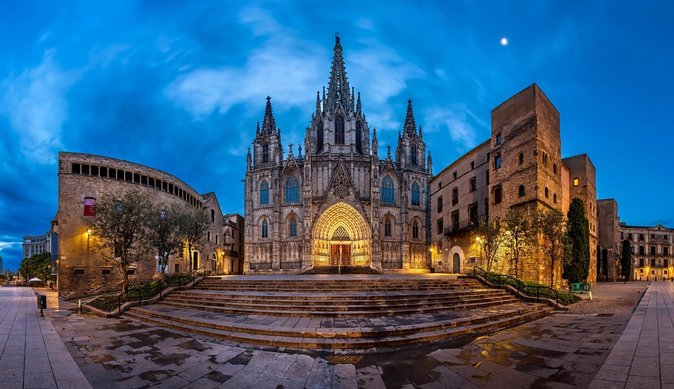
You’ll pass by Barcelona Cathedral and admire details like gargoyle sculptures at the top of the towers. You’ll also learn what it’s known for—bright interior spaces, a patio, towering columns, and its devotion to Saint Eulalia.
Here’s the consideration: admission is not included for the cathedral. The tour is built around stopping to see and understand, so if you want to go inside, you’ll need to buy tickets separately and you may need to adjust your schedule.
If cathedral interiors are a priority for you, this tour still sets you up well. You’ll arrive knowing what to look for, which makes the extra time feel worth it.
7) El Born: a walk where you can lose yourself on purpose
El Born is described as a neighborhood where getting lost is not the worst thing. You’ll notice the mix of old and new buildings, plus trendy squares where young and old gather.
This stop works because it’s a transition. After the Gothic Quarter’s dense medieval vibe, El Born feels different—still historic, but with more everyday life and modern energy in the streets.
If you like photography and street scenes, you’ll appreciate how the neighborhood keeps offering new corners to turn. Just don’t expect the tour to provide time for a long detour; it’s still a guided route with timing.
8) Basilica Santa Maria del Mar: Catalan Gothic built by the neighborhood
Santa Maria del Mar is often described as the real cathedral of the Old Town because it was founded and constructed by people from the neighborhood themselves in medieval times. The tour highlights it as an emblem of Catalan Gothic art.
Admission is not included here either, so again: if you want the interior, budget for tickets. Even without entry, the exterior and the context you receive help you understand why this building has such a strong reputation.
Final stop: Palau de la Música Catalana, the UNESCO-style finale
The tour ends near Palau de la Música Catalana, which is treated like the architectural highlight. The building was designed by Lluís Domenèch i Montaner, and it’s described as the only concert hall declared a World Heritage Site by UNESCO.
What you’ll notice is the idea of a music box made visible: applied arts show up in sculpture, mosaic, stained glass, and wrought iron. In other words, it’s not just a place for concerts. It’s a place to look closely at craft.
Ending here is smart. You finish in an area that’s walkable, photogenic, and easy to keep exploring after the tour. It’s also a good “capstone” if you’re trying to connect Barcelona’s Gothic roots to later modernism.
Value check: why the price feels fair for what you get
At about $22.15 per person for roughly 2 hours 30 minutes, the value comes from what’s included rather than what’s offered on a signboard.
You’re paying for:
- a professional local guide
- a walking tour covering the Gothic Quarter and Born District
- a guided route through major Old Town highlights
- a small group (kept capped low)
That guide factor matters in Barcelona’s Old Town. The streets are close together, the landmarks are small within the chaos, and the context can get lost if you’re just reading plaques. The guide helps you connect what you see—Roman traces to Gothic architecture to Catalan Gothic church design to modernism at Palau de la Música.
Also, this tour has a strong track record: it’s rated 4.8 with 1,309 reviews. That doesn’t guarantee your day will be perfect, but it does suggest the format and pacing land well for a lot of people.
Pace, walking style, and what to bring
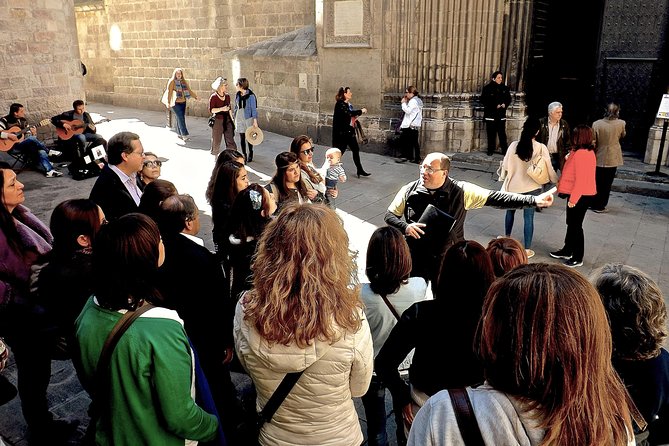
This is a walking tour. Expect steady movement and short stops that keep the momentum going. One review detail you can take seriously: the route has been described as working well even with strollers, which suggests the group stays organized and the guide keeps the flow manageable. Still, treat the sidewalks as uneven and plan for typical Old Town conditions.
What to bring:
- comfortable walking shoes
- water (especially if you’re touring in warm months)
- a charged phone for the mobile ticket
- curiosity, because the guide will answer questions as you go
If you’re visiting for the first time, this tour is also a great way to learn how the city “clicks” together. Afterward, you’ll know where to return on your own to spend more time.
Who should book this tour (and who might not)
You’ll like this tour if:
- you’re short on time but want an efficient Old Town orientation
- you enjoy history that explains the streets, not just facts on a sign
- you want a small group experience where you can ask questions
You might want to skip or add extra planning if:
- you mainly want interior visits. Key admissions like the cathedral and Santa Maria del Mar are not included, so you’d need separate tickets and extra time
- you’re not comfortable with crowds. Parts of La Rambla and Boqueria can be busy, even in a guided group
If you’re traveling with kids, the tour data says children under 2 join free, and ages 3 to 8 get 30% off. That’s a practical way to keep family costs down while still getting an easy walking route.
A quick decision: should you book?
I’d book this tour if you want a smart first pass through Barcelona’s oldest streets and you like learning as you walk. It’s especially good as a starting day activity because it gives you context before you decide what to revisit.
Skip it only if your priority is ticketed interiors. This route sets you up beautifully for those visits, but it won’t replace a full cathedral or basilica entry plan.
FAQ
How long is the Barcelona Old Town & Gothic Quarter Small Group Tour?
It’s approximately 2 hours 30 minutes.
What group size and language is this tour offered in?
It’s an English tour with a small group setup, listed with a maximum of 12 people in the tour description and a maximum of 15 travelers in the activity limits.
Where does the tour start and where do I end?
You start at Carrer de Fontanella, 2, Ciutat Vella, 08002 Barcelona, Spain. You end near Palau de la Música Catalana at Carrer del Palau de la Música, C/ Palau de la Música, Ciutat Vella, 08003 Barcelona, Spain.
Are tickets included for Barcelona Cathedral and Basilica Santa Maria del Mar?
No. Barcelona Cathedral and Basilica Santa Maria del Mar are listed as admission not included, so you would need to arrange tickets separately if you want to go inside.
What is included in the ticket price, and what is not?
Included are the professional local guide and the Old Town walking tour covering the Gothic Quarter and Born District. Not included are food and drinks, and hotel pickup/drop-off.
Can I cancel for a full refund?
Yes. Cancellation is free if you cancel at least 24 hours before the experience starts. If you cancel less than 24 hours before, you won’t receive a refund.