REVIEW · GUADALAJARA
History and Murals: Walking Tour Guadalajara
Book on Viator →Operated by Jalisco Trip Tours · Bookable on Viator
Guadalajara’s murals make the past feel present. This Walking Tour Guadalajara stitches together historic squares, standout churches, and José Clemente Orozco frescoes at the Cabañas Museum with an easy city-center route you can handle in a half day. I especially like how you get entry to the big mural stop without the hassle of waiting in line, and you still get real context from a guide like Fernando, not just a checklist of buildings.
My main caution: the tour is mostly on foot and you’ll spend a lot of time standing. Also, there’s no audio headset setup—so bring your best listening ears and choose a spot closer to Fernando when you can.
In This Review
- Key highlights that actually matter
- Why Guadalajara’s center feels like a live history textbook
- The 10:00 a.m. walk: route, pace, and what you’ll notice
- Plaza de Armas and the first look at Guadalajara’s foundation story
- El Sagrario Metropolitano and Guadalajara Cathedral: neoclassical meets power
- Civic monuments: Rotonda de Los Jaliscienses Ilustres
- Government buildings and street reality: Palacio de Gobierno, Teatro Degollado, and access limits
- Plaza de la Liberación, Plaza Fundadores, and Plaza Tapatía: why squares aren’t all the same
- Cabañas Museum and Hospicio Cabañas: Orozco’s murals in the flesh
- Mercado Libertad (San Juan de Dios): food, crafts, and souvenirs with real price sense
- Guide Fernando’s style: history with answers and room for questions
- Price and value: what $53.05 buys you in real time
- Practical tips so the tour feels easy (not tiring)
- Who should book this Guadalajara murals and history walk?
- Should you book this Walking Tour Guadalajara?
- FAQ
- How long is the walking tour in Guadalajara?
- What is the price per person?
- Where does the tour start and end?
- What time does the tour begin?
- Is the tour offered in English?
- How big is the group?
- What entrances are included during the tour?
- Which sights are free stops?
- Will I be able to enter government buildings and Teatro Degollado?
- Does this tour include food?
Key highlights that actually matter
- Skip-the-line entry for Cabañas Museum so the murals are the payoff, not the waiting
- José Clemente Orozco’s 57 fresco murals (and domes) inside Hospicio Cabañas
- A local guide’s story-first approach that links art, politics, and street life
- Market time at Mercado Libertad (San Juan de Dios) for regional food and souvenir bargaining
- Small group size (max 15), which keeps questions actually on the table
- A realistic route pace with short stops and breaks, including a rest moment around Café Degollado
Why Guadalajara’s center feels like a live history textbook
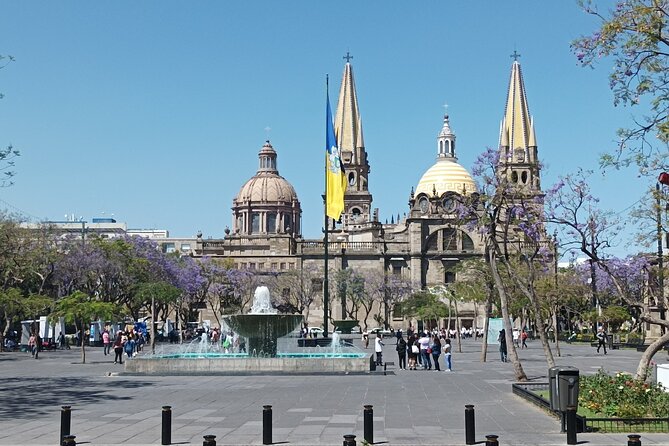
Guadalajara’s historic core can feel like two cities at once: old stone and newer civic life, sitting side by side. On this walk, you get that contrast fast—starting in the oldest civic heart and moving through churches, government spaces, and public monuments that explain how the city thinks about identity.
The tour also has a smart rhythm. You don’t just stare at facades. You pause long enough to understand why each place matters, especially once you reach the Orozco murals, where the guide helps you look with intention before facts take over.
The 10:00 a.m. walk: route, pace, and what you’ll notice
You start at Plaza de Armas in the Zona Centro area at 10:00 a.m., and you end at Mercado Libertad – San Juan de Dios. Expect about 3 to 4 hours, mostly walking, with short time windows at each landmark—enough to see, read the space with your eyes, and still keep the day moving.
Because there’s no headsets or microphones, the guide’s voice matters. If you’re near the front, you’ll catch more of Fernando’s details—timelines, why certain buildings look the way they do, and how politics shows up in architecture and public art.
Plan for a practical reality: it’s a “good shoes” tour. Some stops are quick, but the total standing time adds up. If you’re sensitive to that, it’s worth bringing a water bottle and taking advantage of any shade and pause moments the guide offers.
Plaza de Armas and the first look at Guadalajara’s foundation story
The walk begins at Plaza de Armas, a central square surrounded by major buildings in the historic center. This is the oldest square in the city, founded in the 16th century, and it’s a good place to get your bearings fast.
I like this start because it gives you context before the first big building. Instead of jumping immediately into one church after another, you learn how plazas work in Spanish-colonial city design—why this kind of public space sits at the heart of daily life and power.
El Sagrario Metropolitano and Guadalajara Cathedral: neoclassical meets power
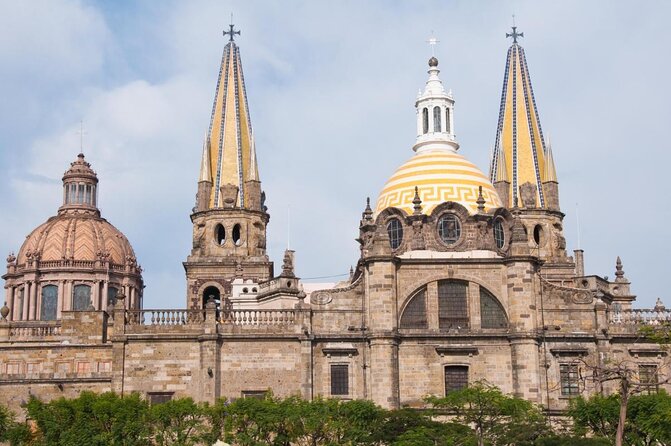
Next you head to Parroquia El Sagrario Metropolitano, inaugurated in 1839. It’s described as a first-parish-in-Guadalajara highlight built with golden quarry stone, with a beautiful neoclassical look. Even if you’re not a church-detail person, the guide’s explanations make the exterior style feel less random and more purposeful.
From there, you reach Guadalajara Cathedral, the bishopric’s headquarters. Construction began in the 16th century, and it’s presented as the most important church in Jalisco and one of the largest in Mexico. This stop works well because you get both the exterior and interior attention, so you’re not stuck only with a photo-op.
One small consideration: cathedral and parish buildings can have crowds or limits, so being flexible helps. The tour structure is designed to keep you moving while still giving you time to look.
Civic monuments: Rotonda de Los Jaliscienses Ilustres
You then pass by the Rotonda de Los Jaliscienses Ilustres, a neoclassical monument dedicated to major figures from the history of Jalisco. This stop is shorter, but it matters because it shows another way cities remember themselves: not only through churches and plazas, but through statues that turn people into public symbols.
If you like learning how public memory works—who gets honored and how—this quick pause pays off more than you’d expect.
Government buildings and street reality: Palacio de Gobierno, Teatro Degollado, and access limits
One of the most interesting parts is the transition from religious and civic spaces into government territory. You stop at the Palacio de Gobierno del Estado de Jalisco, inaugurated in 1790. The building’s role has shifted over time—court during the viceregal period, military barracks, and later the seat of the Jalisco congress.
Most importantly for your photos and understanding: the main staircase includes murals by José Clemente Orozco. Access is subject to availability based on state government indications, so the experience here depends on what’s open on the day.
You also stop by Teatro Degollado, which opened in 1866 during the War of Reform. The tour notes that access is subject to official indications as well. If you can’t enter, you still get the benefit of the architectural context from the guide, but you may miss interior time.
This is the one part where you should expect a little unpredictability. It’s not the tour’s fault; it’s how working civic buildings operate.
Plaza de la Liberación, Plaza Fundadores, and Plaza Tapatía: why squares aren’t all the same
Between big-ticket stops, you visit several plazas that help you read Guadalajara like a map of changing priorities.
- Plaza de la Liberación is dedicated to Mexican independence, built in the 1950s.
- Plaza Fundadores connects to the city’s foundation in 1542, with a bronze sculpture by local artisan Rafael Zamarripa.
- Plaza Tapatía is the largest and newest square in the historic center, built in the 70s and dedicated to commerce and handicraft sales.
I like this sequence because it stops the tour from becoming one long museum queue in disguise. You’re actively seeing how public space evolves: from founding-era importance to independence commemoration, and then into modern commercial life.
Cabañas Museum and Hospicio Cabañas: Orozco’s murals in the flesh
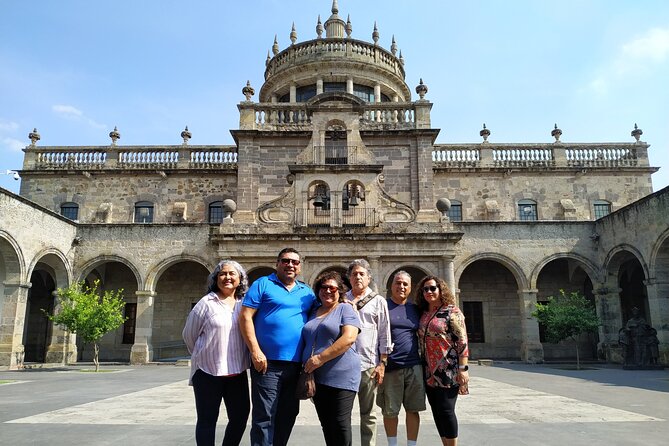
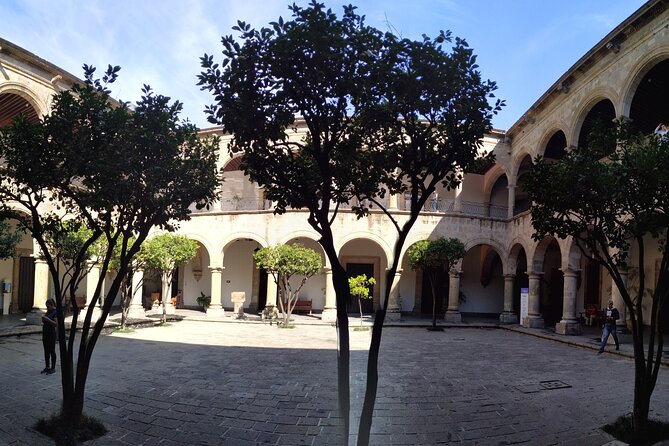
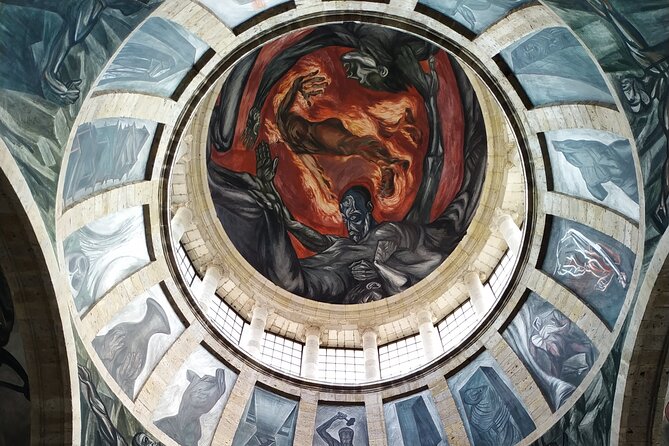
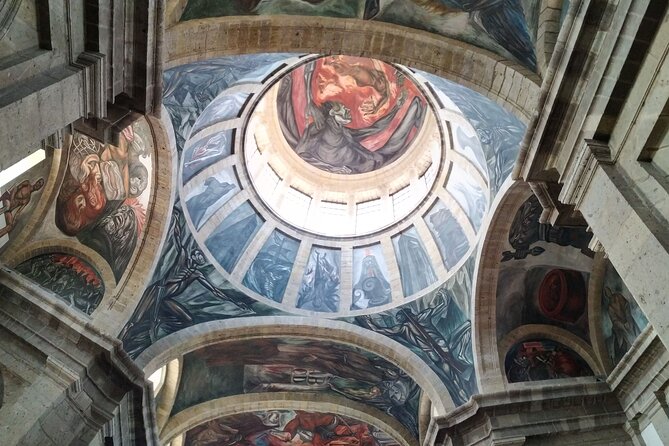
The main reason to book is the Cabañas Museum. This is where José Clemente Orozco’s work hits hardest, because the murals are not hanging on a simple wall—they’re wrapped through the architecture.
Inside, you’ll see the masterpiece of one of Mexico’s top muralists: 57 fresco murals painted across walls and domes of the main chapel. This is the kind of art where your first reaction is usually visual, then the guide’s context makes it stick. A standout detail from the tour experience: the guide tends to let you take in the murals on your own first, then follows with explanations.
That approach matters. It keeps you from feeling like you’re being graded on recognition. You get to form your own impressions first, then connect them to the history and themes behind the work.
This stop is also the one where the tour helps most with time. Entrance is included and designed to help you beat the queues, so you spend your energy on the murals instead of waiting.
Mercado Libertad (San Juan de Dios): food, crafts, and souvenirs with real price sense
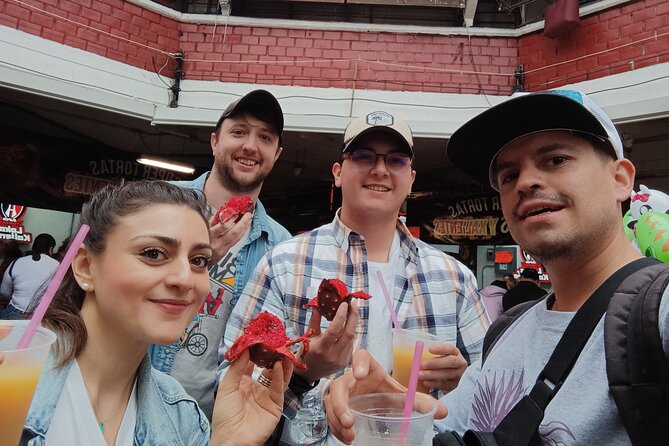
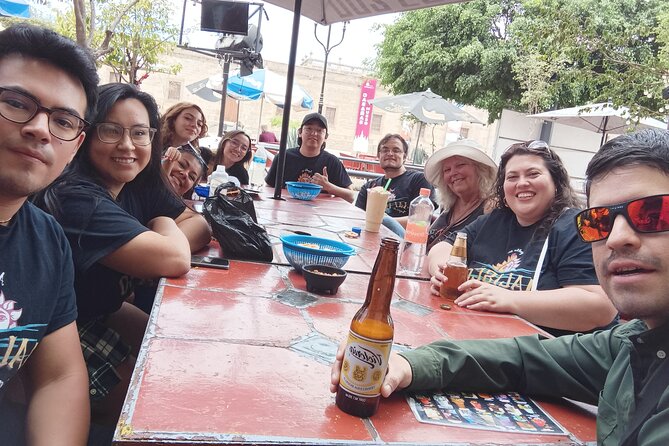
After the museum, you land at Mercado Libertad in San Juan de Dios, one of the biggest traditional markets in the city and Latin America for its category. The tour’s idea here is simple: see the market like a local, not like a tourist buying one thing and leaving.
You’ll have time at the market for typical regional food, crafts, and souvenirs. It’s also a good spot to get practical guidance—like what to try first—since the guide is happy to share personal recommendations.
A couple tips based on how the tour flows: bring cash if you use it for smaller purchases, and don’t rush your souvenir hunt. Prices can vary by stall, and part of the fun is comparing options while you eat your way through the market.
Guide Fernando’s style: history with answers and room for questions
If you do one thing right before this tour, it’s this: arrive ready to ask questions. Fernando’s thing is not just explaining where you are. He connects the dots between architecture, politics, and the way people live now.
You’ll also feel how he manages the group. In the practical notes from the experience, the guide helps with comfort—watching for shade, using breaks when possible, and keeping the pace friendly. There’s also a rest window around Café Degollado for restroom, hydration, and a chance to reset before the last stretch.
One important balance point: when the walk passes areas where you might see protest activity near government buildings, the guide doesn’t treat it as a sideshow. Explanations are framed to acknowledge what’s happening and why people are there, without turning the tour into a one-sided lecture.
Price and value: what $53.05 buys you in real time
At $53.05 per person for about 3 to 4 hours, the value comes from two places.
First, the tour includes key admissions where time matters most: Parroquia El Sagrario Metropolitano, Guadalajara Cathedral, Cabañas Museum, and Mercado Libertad time with the included entry portion. That’s not just convenience; it’s fewer logistics headaches while you’re already in the center.
Second, you pay for interpretation. The guide’s context helps you understand why each space looks the way it does—especially around Orozco’s murals and the city’s civic evolution. If you’re the type who likes to understand what you’re seeing rather than just posting photos, the price makes sense fast.
Practical tips so the tour feels easy (not tiring)
- Wear shoes you can stand in. This is mostly walking and standing, not sitting.
- Position yourself near the front since there are no headsets—hearing Fernando clearly improves everything.
- Bring water and use shade during pauses; the guide builds in comfort breaks.
- Don’t overpack your camera gear. You’ll want to move quickly at some stops.
- Keep an open mind about access at Palacio de Gobierno del Estado de Jalisco and Teatro Degollado. Government conditions can affect what’s possible.
Who should book this Guadalajara murals and history walk?
This tour is a strong fit if you want a short, high-impact introduction to Guadalajara’s historic center—especially if art and architecture are your thing. It’s also ideal if you’re traveling with a small group, because the cap of 15 keeps it interactive.
If you hate standing, or if you need audio support to hear details clearly, you might find the pace less comfortable. And if you expect every government building to be open no matter what, plan for access limits.
Should you book this Walking Tour Guadalajara?
I’d book it if you want the center of Guadalajara explained in a way that stays practical and human: plazas first, big churches, civic monuments, then the real payoff at Hospicio Cabañas with Orozco’s 57 fresco murals, followed by Mercado Libertad for food and souvenirs.
Skip it only if standing for a few hours is a deal-breaker for you, or if you require audio devices for the guide’s narration. Otherwise, this is one of the easiest ways to leave Guadalajara with more than photos—you’ll leave with a clearer sense of how the city built its identity, piece by piece.
FAQ
How long is the walking tour in Guadalajara?
The tour runs about 3 to 4 hours.
What is the price per person?
The price is $53.05 per person.
Where does the tour start and end?
It starts at Plaza de Armas, Zona Centro, 44100 Guadalajara, Jal., Mexico and ends at Mercado Libertad – San Juan de Dios, C. Dionisio Rodríguez 52, 44360 Guadalajara, Jal., Mexico.
What time does the tour begin?
The start time is 10:00 a.m.
Is the tour offered in English?
Yes, it’s offered in English.
How big is the group?
The tour has a maximum of 15 travelers.
What entrances are included during the tour?
Admissions are included for Parroquia El Sagrario Metropolitano, Guadalajara Cathedral, Cabañas Museum, and Mercado Libertad.
Which sights are free stops?
Some stops are marked as ticket-free, including Plaza de Armas, Rotonda de Los Jaliscienses Ilustres, Plaza de la Liberación, Plaza Fundadores, and Plaza Tapatía.
Will I be able to enter government buildings and Teatro Degollado?
Access to Palacio de Gobierno del Estado de Jalisco and Teatro Degollado is subject to availability based on state government indications.
Does this tour include food?
You’ll have time at Mercado Libertad, where you can taste traditional Mexican cuisine at the market.