REVIEW · TOKYO
Akihabara Anime & Game Adventure Walking Tour (Group or Private)
Book on Viator →Operated by MagicalTrip Inc. · Bookable on Viator
Akihabara can feel like sensory overload. This tour turns the chaos into a guided walk with must-see stops, plus an included maid cafe visit and photos. The best part for me is that you get a clear shortlist of where to go, and a guide can help you decode what you’re looking at. Still, the experience is partly store-hopping, so come with the right expectations if you want only deep history.
I also like that the group stays small (max 7), which makes it easier to ask questions and move at a pace that suits first-timers. The itinerary hits both the pop-culture side (anime goods, maid culture, purikura) and the game side (retro shops, classic arcade vibes). One possible drawback: the maid cafe stop can vary depending on circumstances, and dietary needs or allergies aren’t guaranteed to be accommodated.
In This Review
- Key things to love about this Akihabara adventure
- Entering Akihabara the easy way with a guide
- Meeting at Electric Town Gate and getting your bearings fast
- Super Potato: retro game shopping that feels like time travel
- Akiba Cultures Zone: where anime goods and subculture culture collide
- Gachapon Hall: capsule toy hunting for kids and adults
- Heaven’s Gate maid cafe: the included drink and what to expect
- Taito Station Akihabara: arcade classics right by the Space Invaders sign
- The final Akihabara walk: cosplay energy and mysterious vending machines
- Purikura photo booth and the optional Polaroid with a maid
- Price and value: why $90.86 can work for the right traveler
- Guides who tailor the vibe (and what you should watch for)
- Practical tips before you go: heat, stairs, and allergies
- Should you book this Akihabara anime and game adventure?
- FAQ
- How long is the Akihabara Anime & Game Adventure Walking Tour?
- Where do I meet for the tour?
- What’s the group size limit?
- What is included in the maid cafe stop?
- Is the purikura (photo booth) included?
- Is the Polaroid photo shooting with a maid included?
- Are additional drinks and food included?
- What about the maids’ live performance?
- What should I know about allergies or dietary restrictions?
- What if weather is bad?
Key things to love about this Akihabara adventure
- Small group size (max 7) for a less stressful walk
- Included maid cafe entrance + one drink so you avoid the biggest unknown
- Purikura photo booth experience built into the route
- Retro game shopping stops like Super Potato for nostalgic browsing
- Capsule toy moment at a long-running gachapon hall
- Flexible guide help from people who have helped families tailor the experience
Entering Akihabara the easy way with a guide
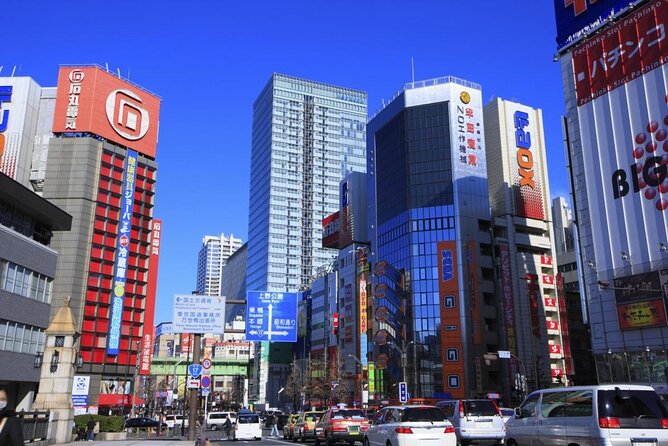
Akihabara is one of those places where you can wander for hours and still feel like you missed something. With this tour, I like that you start with an actual game plan: a set route through Electric Town territory, built around anime, games, and the subculture scenes people come to Tokyo for.
What makes it especially useful is the small size. A group of up to 7 means you’re not stuck waiting behind a crowd while someone tries to translate every tiny sign. You also get a guide’s answers on the fly—why certain stores exist, what kinds of items you’ll find, and how the area “works” day to day.
The tradeoff is that this isn’t a slow museum-style experience. It’s a walk-through with multiple stops, so if you want maximum lingering in one shop, you may feel a bit rushed.
You can also read our reviews of more walking tours in Tokyo



Meeting at Electric Town Gate and getting your bearings fast
You meet at the Ticket Office right outside of the Electric Town Gate of JR Akihabara station. That matters more than it sounds. Electric Town is the area most people picture, and starting here helps you avoid the first round of aimless wandering.
The tour runs about 3 hours, so you’re not committing a whole day to Akihabara. It’s also long enough to see several different “types” of shops: retro game dealers, anime goods stops, capsule toy zones, and then the maid cafe and photo moment.
One practical note from the tour details: the end point is back at the meeting location. That’s convenient when you’re planning dinner afterward, but it also means the route is designed to loop within a tight area rather than wander across all of Akihabara.
Super Potato: retro game shopping that feels like time travel
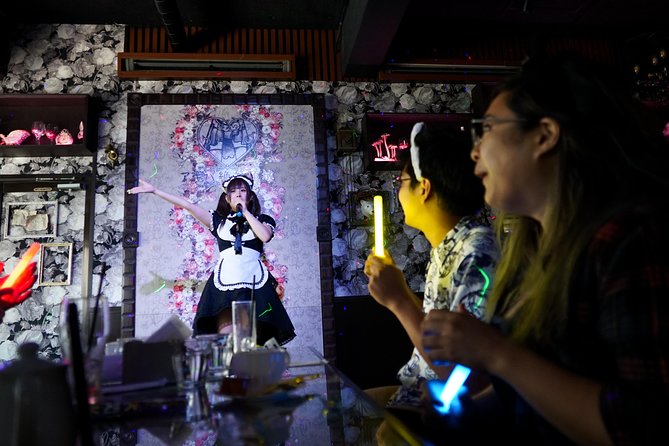
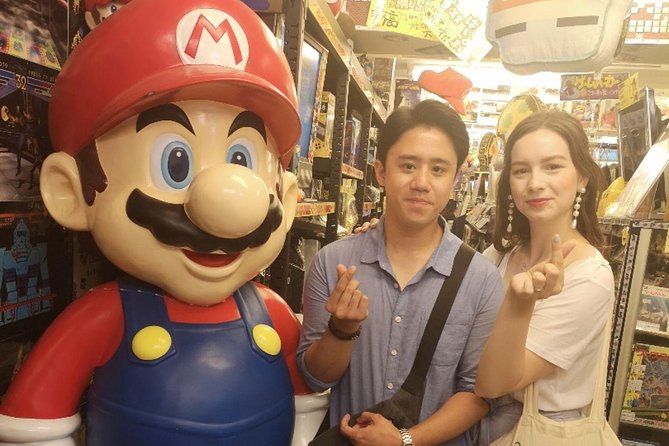
The first stop is Super Potato, a retro video game store that game fans often treat like a highlight reel. This is where you can browse older systems, classic titles, and the kind of “hard to find” items that you might not realize exist until you’re standing in front of them.
Even if you’re not hunting a specific game, it’s still a great orientation stop. You’ll learn what to look for—how retro inventory is organized, and what makes certain finds collectable. For a first visit, it helps your brain stop treating everything as one giant blur.
The downside is simple: if you expect a broad explanation of gaming history, you’ll probably want to ask questions directly. This stop works best for people who enjoy browsing and comparing.
Akiba Cultures Zone: where anime goods and subculture culture collide

Next you’ll walk into the Akiba Cultures Zone, a concentrated cluster where you’ll see idols’ smiles, lots of anime merchandise, and the kind of subculture browsing Akihabara is famous for. This stop is short, but it gives you a feel for the categories and what people actually buy.
This is also a moment where a guide adds real value. Without someone to point things out, it’s easy to focus only on the flashy items and miss what’s behind the counter or what’s unique to certain shops. If you love figuring out the “why” behind trends, this portion helps.
Potential consideration: merch variety can feel overwhelming fast. The short time here is great for coverage, but if you’re the type who wants to deeply explore one theme—say, a specific franchise or era—you may want to plan extra solo time afterward.
Gachapon Hall: capsule toy hunting for kids and adults
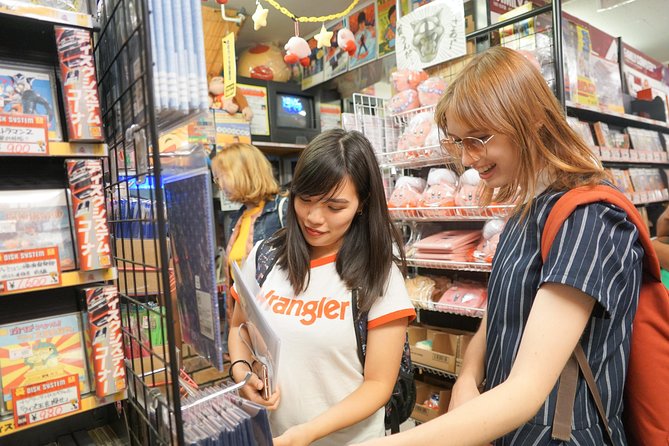
Then it’s off to Akihabara Gachapon Hall, often called a holy land of gachapon for years. Here you’re basically playing the most Japanese kind of vending-machine game: pick a capsule, see what you get, and chase one specific character or item.
This stop hits a sweet spot because it works across ages. It’s not only for collectors; it’s for anyone who likes the thrill of randomness and the satisfying clack of the machines. If you’re traveling with kids, it’s also a low-stress break from only shopping and signage.
Drawback to keep in mind: if you’re not interested in capsule toys, it can feel like a detour. But even then, it’s a good look at how Akihabara turns small-scale collectibles into a full-time hobby.
You can also read our reviews of more private tours in Tokyo



Heaven’s Gate maid cafe: the included drink and what to expect
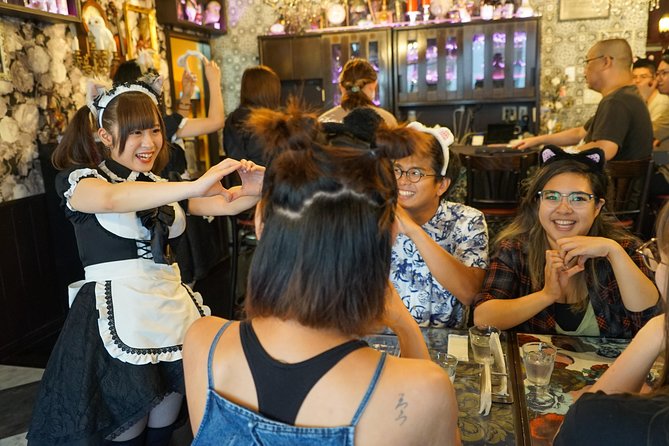
One of the core highlights is the maid cafe stop at Heaven’s Gate. This is the part you cannot really replace in Tokyo. The details say the maid cafe you visit may vary depending on the situation, but the concept stays the same: you’ll experience the maid cafe culture as part of the tour.
The tour includes entrance plus one drink, which is a big deal for value. Maid cafes can feel intimidating if you’re unsure what’s expected. Having the stop built into a guided route reduces the guesswork.
You should also know what’s not included. The maids’ live performance is listed as an additional ¥1,430 per person, and extra drinks and food are available for purchase. So budget a little flexibility if you want the show or want to turn the included drink into a full hangout.
Practical consideration: these places are theatrical. If you’re sensitive to loud performances or you prefer quiet spaces, you’ll want to enter with realistic expectations.
Taito Station Akihabara: arcade classics right by the Space Invaders sign
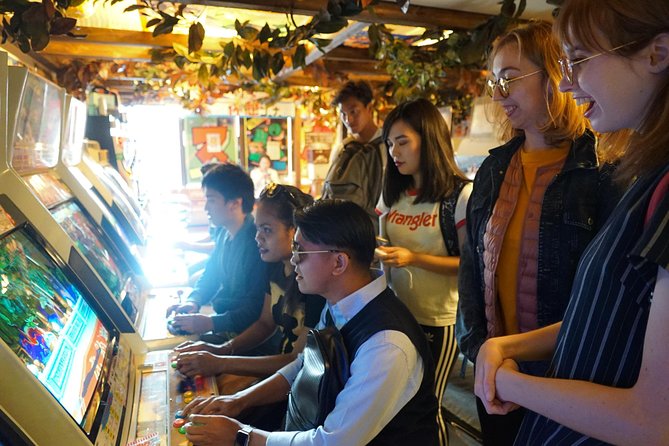
After the maid cafe, you’ll head to Taito Station Akihabara, just a short walk from the station and marked by the big Space Invaders sign. This is where the tour leans back into gaming culture—arcade energy, classic branding, and that feeling of stepping into a “player’s version” of Akihabara.
Time on this stop is about 25 minutes, which is enough to look around, maybe try a machine or two, and snap a few photos. It’s also useful for people who want something fun without shopping: you can interact with the area rather than just browse it.
One small tip: if you’re hoping to spend longer in arcades, use this stop as your warm-up. The time is tight by design to fit the rest of the route.
The final Akihabara walk: cosplay energy and mysterious vending machines

The last walking segment includes cosplay atmosphere and those infamous Akihabara vending machines. This part may sound like a loose finale, but it’s actually a smart way to end: you’ve already learned the types of shops you’re seeing, so the streets themselves start making more sense.
It’s also a good time to notice details you’d otherwise ignore. When you understand the categories—anime goods, retro games, capsule toys, maid culture—you become better at spotting what’s “themed” and what’s just normal city stuff.
If you’re someone who likes taking photos, this section gives you a low-pressure window to capture the look and feel of Akihabara at street level.
Purikura photo booth and the optional Polaroid with a maid
A big included extra is the Japanese photo booth experience (Purikura). This is one of the most fun souvenirs in Tokyo because it’s more than a picture—it’s a mini experience built around the style and filters that Japanese photo booths are known for.
The tour also mentions Polaroid photo shooting with a maid as an option available for purchase. That means you’re not forced into extra spending, but you can upgrade your memory if you want a more personal memento.
If you’re planning your budget, think of purikura as the main “photo value” and Polaroid as the add-on. Decide based on what kind of souvenir you prefer: printed collage fun, or a direct memento.
Price and value: why $90.86 can work for the right traveler
At $90.86 per person for about 3 hours, the value depends on what you’d otherwise do. If you’re the type to wander Akihabara on your own and only then decide about a maid cafe, this tour can save you time and uncertainty.
Here’s where the math starts to make sense:
- Maid cafe entrance + one drink are included, which reduces the biggest unknown cost.
- You also get Purikura included, so you’re not paying separately for a popular activity.
- A guide helps you hit several different sub-areas without planning a mini itinerary yourself.
- The group is capped at 7, which can make the experience feel less like you’re getting dragged along.
Could it feel pricey? Yes, if you mainly want to browse slowly at one or two stores and you don’t care about maid cafe or photo booth culture. In that case, you might do better with a self-guided plan and a single planned reservation.
Guides who tailor the vibe (and what you should watch for)
In the tour feedback, you’ll see guides like Naoki, Yuki, Seina, Ryo, Kenji, Ai, Eye, Taka, and Tommy showing up in people’s stories. What stands out in a good way is how many guides adjust based on your interests—especially for families and kids.
That tailoring can mean:
- helping you pick the right shops for your favorite anime or game style
- explaining what you’re seeing without turning it into a lecture
- helping with confidence at the maid cafe and photo stops
But balance matters. Some people felt the tour was lighter on deep explanations and more focused on getting from stop to stop. So if you want lots of history, come ready with questions and speak up early.
Practical tips before you go: heat, stairs, and allergies
Akihabara involves walking and shopping spaces that can be tight. The tour itself also flags a key seasonal issue: summer in Japan is hot and humid, so bring water and wear a hat to reduce heat stress.
Also keep this in mind for comfort and planning: the details say they cannot guarantee allergy-free or dietary restrictions because food is prepared in kitchens that don’t belong to the tour operator. If you have allergies, treat this tour as a visual and cultural experience first, not a food-based one, and ask questions before committing.
Finally, for any photo-based fun like purikura and maid cafe moments, follow the staff cues. If you’re taking pictures around others, be mindful and polite. This area runs on social etiquette as much as on fandom.
Should you book this Akihabara anime and game adventure?
Book it if you:
- are a first-timer and want a guided shortlist of what to see in Akihabara
- care about both retro gaming and anime culture, not just one side
- want maid cafe entry with a drink plus included purikura
- prefer small groups and a guide who can answer questions in the moment
Consider passing or adjusting expectations if you:
- want a slow, deep history lesson more than a fast tour of stops
- hate store browsing and only want one type of attraction
- have strict dietary needs and want certainty (the tour notes that allergy-free and dietary accommodation can’t be guaranteed)
- need heavy mobility support, since the route is designed for walking and fixed meeting points
If your goal is to get it right in a few hours—from retro shops to capsule toys to a maid cafe experience—this is a strong way to do it. If your goal is maximum freedom and maximum time in one shop, you’ll probably enjoy Akihabara more on your own and treat photo stops as planned add-ons.
FAQ
How long is the Akihabara Anime & Game Adventure Walking Tour?
It runs for about 3 hours.
Where do I meet for the tour?
You meet in front of the Ticket Office right outside of the Electric Town Gate of JR Akihabara station. The listing also shows a start address at Travel Service Center, 1 Chome-17 Sotokanda, Chiyoda City, Tokyo 101-0021, Japan.
What’s the group size limit?
The tour has a maximum of 7 travelers.
What is included in the maid cafe stop?
The tour includes entrance to the maid cafe and one drink.
Is the purikura (photo booth) included?
Yes. You’ll have a Japanese photo booth experience (Purikura) included.
Is the Polaroid photo shooting with a maid included?
It’s available for purchase, so it is not automatically included in the base package.
Are additional drinks and food included?
No. Additional drinks and food are available for purchase.
What about the maids’ live performance?
The maids’ live performance is not included. It costs ¥1,430 per person.
What should I know about allergies or dietary restrictions?
The tour notes that it can’t guarantee allergy-free or accommodate dietary restrictions because food is prepared in kitchens not belonging to the tour operator.
What if weather is bad?
The experience requires good weather. If it’s canceled due to poor weather, you’ll be offered a different date or a full refund.