REVIEW · BOSTON
Entire Freedom Trail Walking Tour: Includes Bunker Hill and USS Constitution
Book on Viator →Operated by Walk & Talk Boston Walking Tours · Bookable on Viator
Boston’s revolution comes alive on foot. This entire Freedom Trail walk takes you through the key American Revolution sites in downtown Boston and then keeps going to Bunker Hill and the USS Constitution, with a real guide narration that turns street corners into cause-and-effect moments.
I love the way the tour keeps you moving through major landmarks like Granary Burying Ground and Old State House without making you bounce between separate tickets and tour companies. One possible drawback: plan on a solid 4 hours of walking, and interior access at several stops is not included, so you may want to decide in advance what you’d pay to go inside.
In This Review
- Key Things To Know Before You Go
- From Park Street to Charlestown Navy Yard: the route that keeps the story moving
- Price and value: what $79 includes (and what it doesn’t)
- How 2.8 miles and four hours really feel: shoes, pace, and planning
- Stop 1: Massachusetts State House, where American governance gets designed
- Stop 2: Park Street Church and Brimstone Corner’s complicated past
- Stop 3: Granary Burying Ground, where the revolution’s people stay close
- Stops 4–7: King’s Chapel, Old City Hall, Old South Meeting House, and Old State House
- Stop 8: Faneuil Hall Marketplace, speeches that pushed the fuse
- Stop 9: Ebenezer Hancock House and the Blackstone Block context
- Stop 10: The Paul Revere House, not just a legend, but a real home
- Stops 11–13: Old North Church, Copp’s Hill, and the Battle of Bunker Hill
- Stop 14: USS Constitution, Old Ironsides ends the walk with real weight
- What makes the narration work on real people (including teens)
- Who should book this, and who might want a different option
- Should you book it? My practical take
- FAQ
- How long is the walking tour?
- How much does the tour cost?
- Where does the tour start and end?
- What time does it start?
- What language is the tour offered in?
- Is the tour ticket mobile?
- Is admission to interiors included?
- Is the guide gratuity included in the price?
- How large is the group?
- What’s the cancellation policy?
Key Things To Know Before You Go
- You get the full arc: downtown Boston through Charlestown, plus Bunker Hill and Old Ironsides at USS Constitution.
- A tight group (max 16): easier questions and less rushing for photos.
- Cause-and-effect storytelling: you’ll connect events instead of memorizing names and dates.
- Some interiors cost extra: several stops are exterior-focused unless you buy tickets separately.
- Good first-time Boston choice: a single walk covers a lot of the city’s most important Revolutionary-era stops.
From Park Street to Charlestown Navy Yard: the route that keeps the story moving
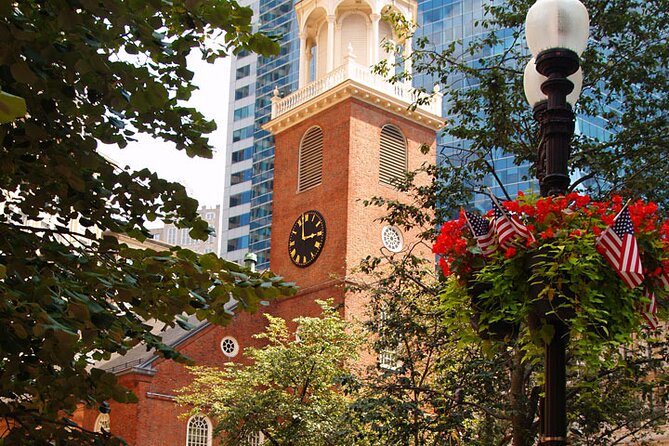
This tour starts at Beacon St @ Park St in central Boston and ends at the USS Constitution Museum area in Charlestown. That one-way flow matters because it mirrors how events unfold on the ground: you start in the political heart of the colony, work your way through the public meeting places and court sites, then finish with the military edge at the harbor.
Expect the walking to feel like a compact “greatest hits” route, built around the Freedom Trail’s main spine. You’ll also see a couple of spots that deepen the picture beyond the most famous plaques. It’s a clean way to get oriented fast, especially if it’s your first day in Boston.
You can also read our reviews of more walking tours in Boston



Price and value: what $79 includes (and what it doesn’t)
At $79 per person for about four hours, the best value angle here is not just the guide—it’s that the tour price includes the guide gratuity. That’s a rare comfort. It means you’re not standing there doing math in your head when the tour ends.
You also get a mobile ticket, which is the practical modern touch—less paper, less fuss. And because it’s limited to 16 people, you’re paying for a guided experience that’s designed to stay interactive, not chaotic.
What you don’t get is interior admission. Several marquee stops list interiors as ticketed separately, so if you have your heart set on going inside specific buildings, you’ll want to budget a little extra. In other words: you’ll get the story at the sites, but you may have to pay for the “inside the room” version.
How 2.8 miles and four hours really feel: shoes, pace, and planning
The Freedom Trail route covered here is about 2.8 miles (4 km), and the walking time is roughly four hours. In real life, that means you’re not doing a brisk hike—you’re taking short stops, listening, looking around, and moving through city sidewalks and intersections.
Still, don’t treat it as a casual stroll. Comfortable walking shoes are non-negotiable. One review highlighted the walk as roughly 10,000 steps, which sounds about right once you add the stops and city maneuvering.
Good news: the pace is described as manageable, with a slow feel for a mixed crowd, including seniors. You should still come with at least moderate comfort walking for stretches. If you need breaks, you’ll have them—just plan to keep the day moving.
Stop 1: Massachusetts State House, where American governance gets designed
You start with the Massachusetts State House, including a look at the three buildings tied to Massachusetts government. The current building is designed by Charles Bulfinch, and the whole point here is simple: before the rebellion, there had to be political infrastructure—courts, assemblies, rules.
Drawback to know: the narration is outside/at-stop focused, and the State House interior is not included. If you want that, plan to purchase separately. If you’re happy with context plus the exterior story, you’ll be set.
Stop 2: Park Street Church and Brimstone Corner’s complicated past
Next is Park Street Church, once the tallest building in the country. You’ll also hear how this church connects to the abolition movement and why it earned the nickname Brimstone Corner—fiery sermons, plus a surprising cellar use.
This stop is more than architecture. It shows how moral pressure and politics tangled together long before open conflict. It’s a great example of why Boston’s Revolution story isn’t only about battles—it’s about ideas turning into action.



Stop 3: Granary Burying Ground, where the revolution’s people stay close
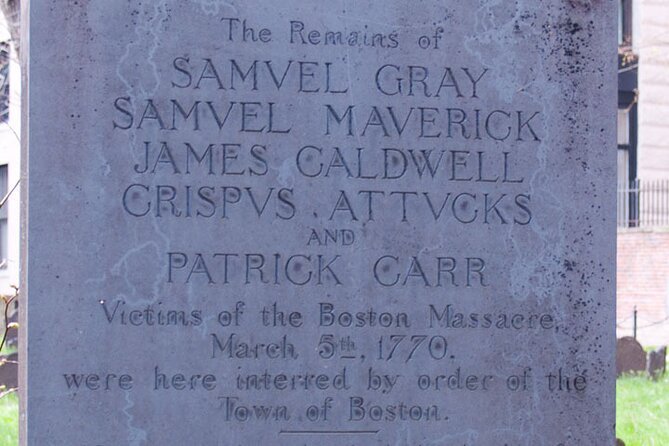
Granary Burying Ground is one of the most powerful “human scale” stops on the route. This is where you meet major figures of the Revolution, including Samuel Adams, Paul Revere, John Hancock, and the victims of the Boston Massacre.
Even if you don’t care about cemeteries, this is where names stop being textbook entries. It also helps that the tour gives brief introductions tied to roles—so your brain doesn’t just store names, it stores what they did.
Stops 4–7: King’s Chapel, Old City Hall, Old South Meeting House, and Old State House
These are four stops that shift the mood from religious and civic authority into the sharp edge of conflict.
- King’s Chapel (1749 Anglican church) is where early tension between Puritans and the King is discussed, including land and church conflict in the 1680s.
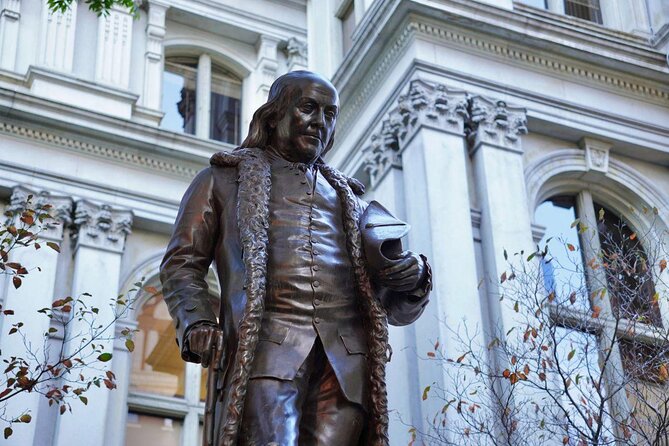
- Old City Hall brings in Benjamin Franklin and a marker for the oldest still-operating school in the colony—education as a foundation for civic life.
- Old South Meeting House is where the Boston Tea Party story connects to public speech and organized action. This is one of the places where you learn how the colony mobilized.
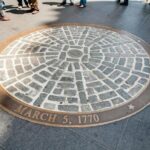
- Old State House covers a court-battle moment tied to Colonial rights and also the site of the Boston Massacre. You’ll also hear how the story gets interpreted—because this is history with argument, not just dates.
A practical note: interiors are not included at these stops. You’ll get the context and the site significance without paying again for building entry.
Stop 8: Faneuil Hall Marketplace, speeches that pushed the fuse

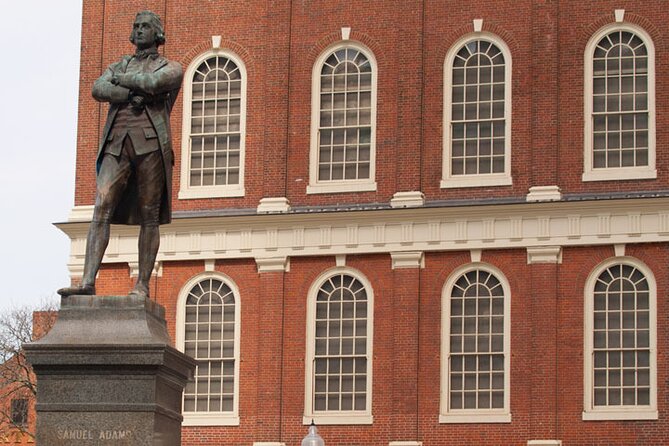
Faneuil Hall Marketplace is famous for speakers, and the tour uses that purpose well. You’ll connect the slogan No taxation without representation with the way public rhetoric kept the pressure on—and you’ll also hear about Frederick Douglass, which broadens the story beyond the 1770s.
This stop is valuable because it shows how revolution wasn’t only about armed conflict. It was also about who had the microphone—and who could turn crowds into momentum.
Stop 9: Ebenezer Hancock House and the Blackstone Block context
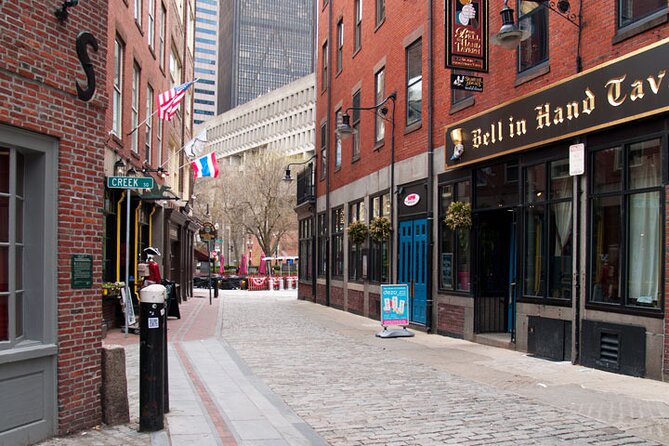
Then you move through the Blackstone Block area, where you’ll see references that connect media, money, and Revolution logistics. This stop points you to the Massachusetts Spy newspaper offices and Headquarters of the Revolution (a bar now), plus Ebenezer Hancock’s home, including how money sent from the French was stored there.
What I like about this part is that it makes the Revolution feel like a system. You’re not just seeing heroic moments. You’re seeing the support structures that made them possible.
Stop 10: The Paul Revere House, not just a legend, but a real home
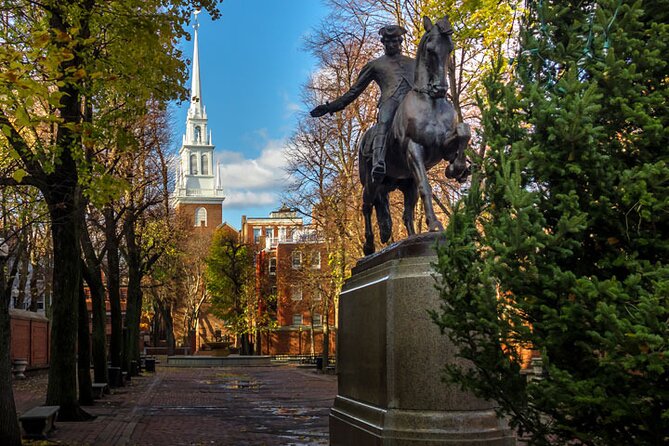
At the Paul Revere House, you learn it’s one of the oldest homes remaining in Boston. The tour highlights that Revere bought the post-medieval home in 1770 and raised sixteen children across two wives.
This stop works because it humanizes the iconic figure. Instead of only thinking about midnight rides and famous warnings, you get the sense of daily life beside the events. It’s a helpful reset after the heavier public conflict stops.
Again, interior access isn’t included, so if you want to step inside, you’ll need to plan for separate admission.
Stops 11–13: Old North Church, Copp’s Hill, and the Battle of Bunker Hill
Old North Church and historic site brings in one of the most visual parts of the Revolution story: the signal across narrow waters in Charlestown. You’ll hear how Patriots used it to notify that British regulars would pass through Cambridge on their march to Lexington and Concord.
Then you head to Copp’s Hill Burying Ground, where the geography of the Bunker Hill battle is discussed and you’ll see a grave marker with an interesting story. This stop is short but smart. It teaches you to read the terrain—why hills and sightlines mattered.
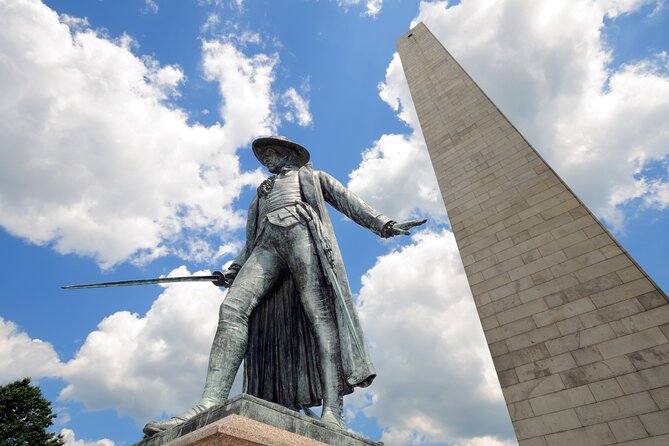
Finally comes Bunker Hill Monument. Even though the Patriots lost the battle, the lesson emphasized here is scale: British losses were triple those of the Patriots. That’s the kind of detail that makes the site more than a photo stop.
Stop 14: USS Constitution, Old Ironsides ends the walk with real weight
The tour’s finale is the USS Constitution, billed as the oldest commissioned war ship in the world. It’s a major capstone because you finish with technology and force, not just speeches and courts.
The ship’s nickname Old Ironsides is part of the cultural package, and the narration ties it to service both in U.S. waters and abroad. Even for people who aren’t “navy people,” the experience tends to land because you’re staring at something built to last, and that changes how you picture military history.
This stop is also listed as admission free at the tour level, and the tour ends at the USS Constitution area (Old Ironsides).
What makes the narration work on real people (including teens)
The best guided history tours don’t just talk. They build a chain in your head. This one aims for cause-and-effect, connecting what happened to why it mattered next.
I also like the teaching style described by recent guests: your guide doesn’t rely on theatrics or a memorized script. The narration is described as detailed, with maps used to keep you oriented, plus a friendly approach that makes questions feel normal.
One more bonus: some of the storytelling explicitly includes women’s contributions to this part of history. For families, that matters because it broadens the story beyond the default set of names people expect.
Is it right for every kid? If you’ve got history nerds, this is a strong win. If you’ve got kids who mostly want snacks and playground breaks, you might find four hours tough. But if your teen can handle long-interest mode, this tour gives them a front-row seat to how real events connect.
Who should book this, and who might want a different option
This is ideal for:
- First-time Boston visitors who want one guided walk covering the main Revolutionary-era spine
- History buffs who like context, not just the biggest names
- Families with teens who can tolerate a longer, story-driven route
- Couples who want a shared “learning day” without museum fatigue
You might want to choose something else if:
- You hate walking for four hours, even with breaks
- You only want quick, inside-the-building sightseeing
- Your group needs step-free routing guarantees beyond what’s stated as moderate fitness
The tour is capped at 16, runs in English, allows service animals, and is near public transportation. That makes it easier to fit into a normal itinerary day.
Should you book it? My practical take
If you’re coming to Boston to understand how independence happened—not just when—it’s a strong choice. You’ll see the big markers in downtown Boston, then you’ll get the payoff at Bunker Hill and the USS Constitution without needing to stitch together separate experiences. For $79, the value is boosted by the guide gratuity being included and by the manageable group size.
My main caution is the walking time and the fact that interiors are not included at multiple stops. If you go in with comfortable shoes and a flexible mindset about what you’ll see outside versus inside, you’ll likely love this format.
If you’re deciding today: book this if you want one guided “spine of the Revolution” day. Skip it only if you’d rather do shorter, fewer-site stops or you don’t enjoy long guided narration.
FAQ
How long is the walking tour?
It’s about 4 hours.
How much does the tour cost?
The price is $79.00 per person.
Where does the tour start and end?
It starts at Beacon St @ Park St, Boston, MA 02108, and ends at USS Constitution Museum Building 22, Charlestown Navy Yard, Charlestown, MA 02129.
What time does it start?
The start time listed is 10:00 am.
What language is the tour offered in?
The tour is offered in English.
Is the tour ticket mobile?
Yes, it uses a mobile ticket.
Is admission to interiors included?
No. Admission to interiors is not included.
Is the guide gratuity included in the price?
Yes. Guide gratuity is included, and the guide does not expect or accept gratuities.
How large is the group?
The tour has a maximum of 16 travelers.
What’s the cancellation policy?
Free cancellation is available. You can cancel up to 24 hours in advance for a full refund. If the tour is canceled due to poor weather, you’ll be offered a different date or a full refund.