REVIEW · SAINT EMILION
Saint-Émilion: Vineyard Walking Tour and Tasting
Book on GetYourGuide →Operated by Château Haute-Nauve · Bookable on GetYourGuide
Saint-Émilion without the big-tour circus. At family-run Château Haute-Nauve, I like how you walk the vines with the owners, then see how the wine goes from fermentation to barrel aging before finishing with a 4-wine tasting.
Two things I especially like: the vineyard walk with 4th-generation insight and the chance to taste multiple wines from the estate, including two with Grand Cru appellations.
One heads-up: it’s a short 2-hour visit and it includes the wine, but no food, so you’ll want a plan for a snack or lunch nearby.
In This Review
- Key things I’d notice right away
- Château Haute-Nauve in Saint-Émilion: why this feels personal
- The vineyard walk with Marie-Anne or Florent: what you’ll see
- Why the walk matters (even if you’re not a vineyard nerd)
- Frost, sustainability, and diversification: the real-world challenges
- Inside the vinification cellar: fermentation, pumping, pressing
- The practical value: you’ll taste with context
- Barrel cellar aging: how the wines develop
- The guided tasting of four Saint-Émilion wines (with Grand Cru pours)
- What value you’re getting for $29
- Time, logistics, and what to bring
- Where to meet
- What to bring
- Group size and languages
- Who should book this tour (and who might skip it)
- Should you book Château Haute-Nauve’s vineyard walk and tasting?
- FAQ
- How long is the Saint-Émilion Vineyard Walking Tour and Tasting?
- How many people are in the group?
- Who guides the tour at Château Haute-Nauve?
- Where do I meet the guide?
- Is food included in the experience?
- Can I buy wine during or after the tasting?
- What wines will I taste?
- What languages are offered?
- Is the tour wheelchair accessible?
- Do I need my own transport?
Key things I’d notice right away
- Owner-guided by Marie-Anne or Florent for a more personal, down-to-earth feel
- Small group (max 10 people) so questions don’t get lost
- Vineyard to cellar flow: grapes in, tech explained, aging shown
- Two Grand Cru tasting pours inside the 4-wine lineup
- Hands-on vineyard details like frost worries, sustainability, and diversification
- A memorable vineyard sight including a 6-meter wine bottle and a wind turbine
Château Haute-Nauve in Saint-Émilion: why this feels personal
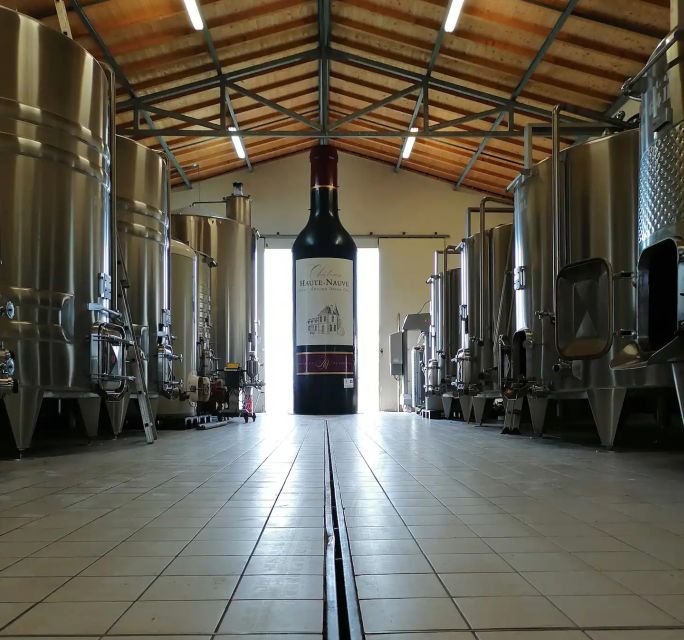
If your idea of a wine tour is a glass in your hand and a bus full of strangers, this one plays differently. Château Haute-Nauve is family-run, and the tour is led by the owners—either Marie-Anne (mother) or Florent (son)—so you’re hearing wine from the people doing the work. With a small group limited to 10, you get time to ask questions and actually talk.
I also like the pacing. You get a real vineyard walk, then you move inside to the vinification areas and barrel cellar, and you end with tasting. It’s not just a highlight reel; it’s the full story of how the estate thinks about wine.
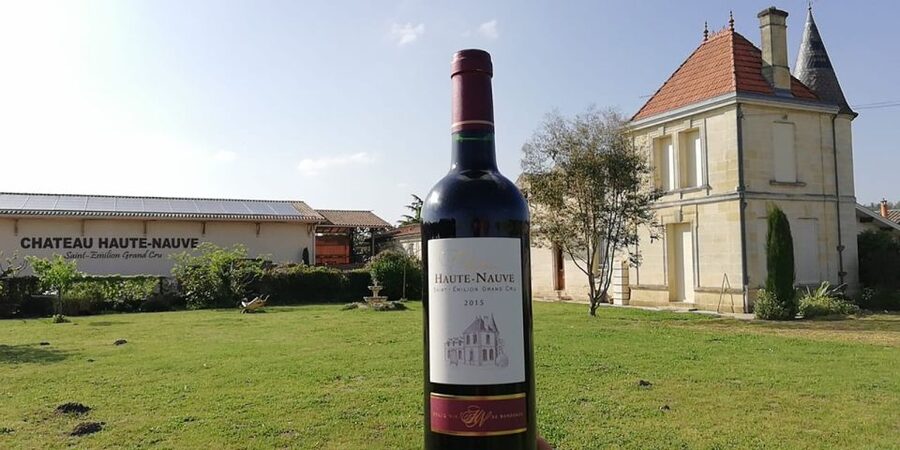
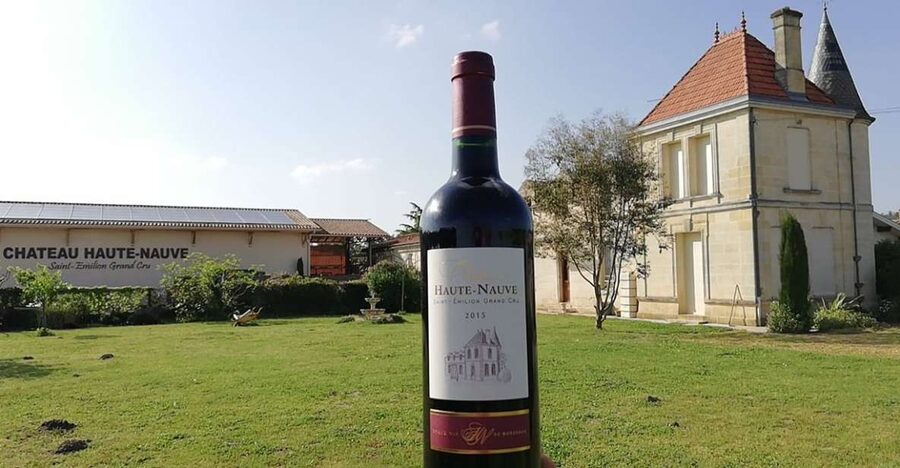
Finally, the location makes it easy to fit into a day. Château Haute-Nauve sits about 3 km from the village of Saint-Émilion, and you can park near the main building with solar panels by the purple Château Haute-Nauve sign. They recommend arriving by car, which usually means you won’t be stressed about timing.
The vineyard walk with Marie-Anne or Florent: what you’ll see
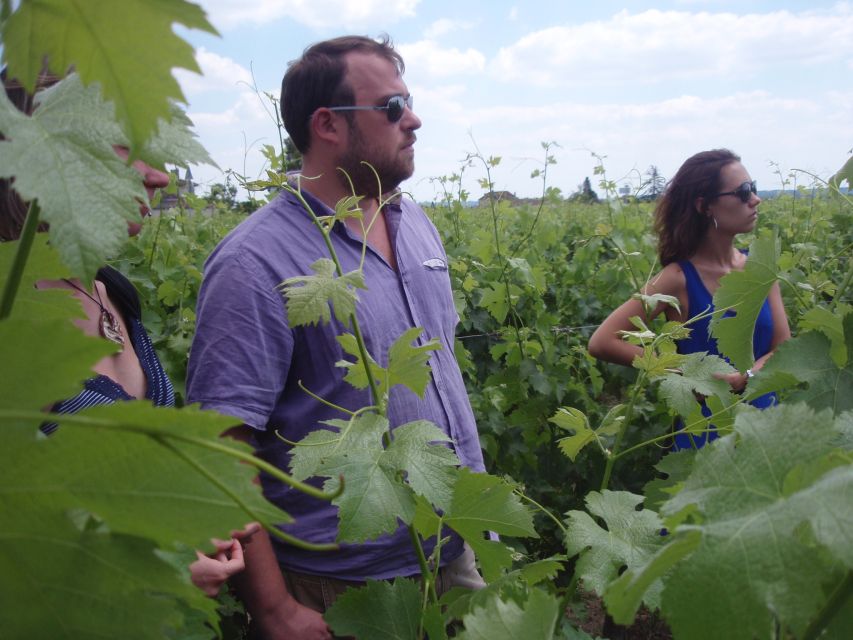
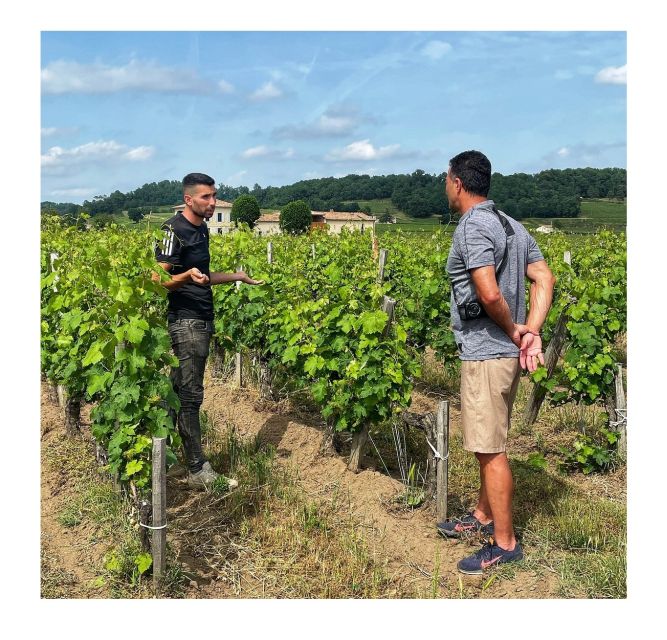
Your tour starts at the château meeting point inside Château Haute-Nauve. Expect a warm welcome and a guided walk through the vineyards, where your guide connects the land to the final glass.
You’ll hear about the estate’s 4th-generation history, and you’ll get a practical sense of what matters in Saint-Émilion: the varieties planted, how plots differ, and how vineyard work changes through the year. That part is surprisingly useful because it helps you stop thinking of wine as something that just happens in a cellar.
As you stroll, you’ll look at different plots of vines and learn how work shifts across seasons. You might spot a wind turbine on the property, a detail that signals the estate’s approach to energy and long-term thinking. And yes, there’s also a wine bottle about 6 meters tall—it’s an eye-catching, almost playful landmark that makes the whole place feel memorable.
Why the walk matters (even if you’re not a vineyard nerd)
This is where the tour earns its keep. When you see the vines up close and you’re told why this block gets handled differently than that one, the tasting at the end stops being random. You start tasting with questions like: Why does one wine feel smoother? Why does another feel more full-bodied? The vineyard walk gives you the vocabulary to notice.
If you’re traveling with kids or friends who get bored easily, the scenery helps, too. One reason people rate this tour so highly is that it stays friendly and talk-based rather than lecture-style.
Frost, sustainability, and diversification: the real-world challenges
In many wine tours, you get pretty stories. Here, you also get the hard parts. Your guide talks about challenges such as crop frost, which matters in regions where weather swings can impact yields and quality.
You’ll also hear how the château approaches sustainability and diversification. That doesn’t mean it’s all slogans. The point is simple: modern winemaking still has to protect grape health, manage risk, and plan for the future. Learning that makes you more likely to understand why some estates experiment with what they plant.
On this tour, that theme comes up again when your guide mentions developing new wine varieties. Even if you don’t know the varietals yet, you’ll leave with a clearer picture of why an estate might adjust over time instead of relying only on tradition.
Inside the vinification cellar: fermentation, pumping, pressing
After the vineyard part, you move into the production spaces. The tour visits the vinification cellar, where you learn the production process from harvested grapes through key steps like fermentation, pumping, and pressing.
This is the part where the technology gets explained in plain language. Instead of vague statements like the wine is aged carefully, you get a clearer picture of the sequence of steps and what each phase is trying to accomplish. It’s a solid fit for people who want more than sightseeing but don’t want to become an industrial engineer.
The practical value: you’ll taste with context
If your goal is to understand what you’re drinking, the vinification stop helps you connect the dots. Fermentation choices, pumping practices, and pressing can all influence texture, aromatics, and overall character. You don’t need to memorize every term. You just need to realize that the glass in your hand is the result of decisions.
This is also a good moment to ask questions. Because your guide is the owner, you can usually get a direct answer about why they do things the way they do, not a generic company talking point.
Barrel cellar aging: how the wines develop
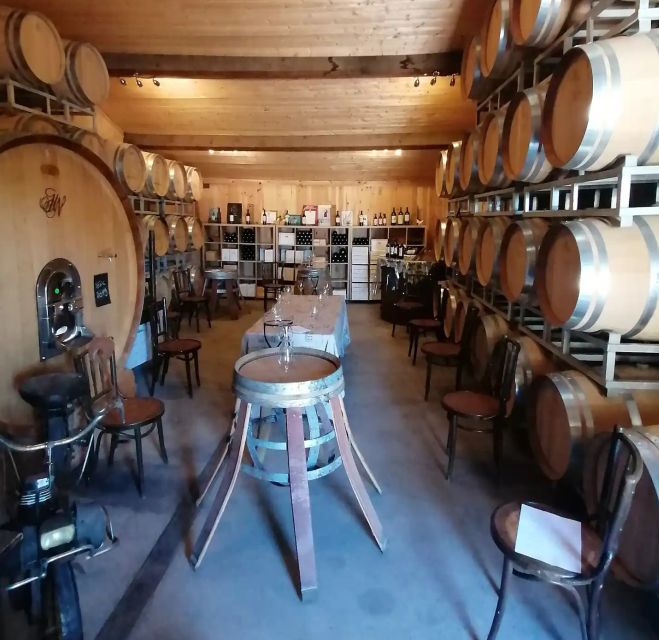
Next comes the barrel cellar, where you learn how the château ages its wines. You’ll see the methods used for aging and hear how the estate thinks about maturation.
Aging is one of those topics that can sound abstract until you see the physical space. Being in the barrel cellar makes it easier to understand why some wines taste rounder, with more depth and integration. It also helps you notice how oak aging (and the way it’s managed) can shape the final profile.
The barrel-room part is often what separates a casual tour from a genuinely informative one. It turns wine aging from a marketing phrase into something you can picture.
The guided tasting of four Saint-Émilion wines (with Grand Cru pours)
The tour ends with a guided tasting of four wines from the château. Two of those are from Grand Cru appellations, which is a nice bonus for a tour at this price point.
This tasting is more than just drinking and moving on. Your guide walks you through what you’re tasting and ties it back to what you saw outside. Even if you don’t have a trained palate, the structure helps you pay attention to differences between the wines—like how one might feel smoother while another leans more full-bodied.
A few small practical notes:
- Take your time with each pour. The tour is only 2 hours, so it can feel fast if you’re multitasking.
- Ask where each wine fits within Saint-Émilion’s style range. The guide can usually explain what to look for based on the estate’s approach.
- If you want to buy bottles, this is when you can browse the château’s collection and bring wine home. Purchases aren’t included, but the option is there.
What value you’re getting for $29
At $29 per person for a 2-hour, owner-led vineyard and cellar visit plus a four-wine tasting, this is strong value in the real world. You’re not paying only for the scenic walk; you’re paying for access to the vineyard blocks, production spaces, and multiple pours—including Grand Cru wines.
This kind of setup also tends to cost more when it’s offered by larger operators. Here, the small-group format and direct owner involvement help keep the experience personal without ballooning the price.
Time, logistics, and what to bring
The whole experience runs about 2 hours. Plan a relaxed morning or afternoon around it. Since food isn’t included, either eat before you go or plan to grab something after. A quick stop in Saint-Émilion village is an easy pairing, since you’re only about 3 km away from the town.
Where to meet
Meet your guide inside Château Haute-Nauve. There’s a car park near the large building with solar panels, under the purple Château Haute-Nauve sign. They recommend arriving by car, which usually makes timing smoother.
What to bring
Bring comfortable shoes for vineyard walking, and weather-appropriate clothing. Vineyard ground can be uneven, and cellars can feel cooler than outdoors.
Group size and languages
The tour is live-guided in French and English. It’s wheelchair accessible, and the group is limited to 10 participants, which keeps the tone friendly and question-friendly.
Who should book this tour (and who might skip it)
Book it if you want:
- A family-run estate experience rather than a mass-tour vibe
- A clear view of winemaking steps from vineyard to bottle
- A tasting that includes Grand Cru wines without turning the day into a long sit-down meal
- A guide who talks like a person (not a script), since the owners lead the tour
You might consider skipping if:
- You want a longer full-day itinerary with food included
- You don’t enjoy walking outdoors at all, even for a short stretch
- You’re specifically looking for a large-scale commercial production experience (this is intentionally smaller and more personal)
Should you book Château Haute-Nauve’s vineyard walk and tasting?
In my view, this is an easy yes for wine lovers who also want substance: vineyards you can actually walk, cellars where you can see what’s going on, and a guided tasting that ends the day on a high note. The $29 price plus four wines (including two Grand Cru pours) makes it one of the better value options in the Saint-Émilion area.
If you like authentic, human-scale travel—where the people who grow the grapes also explain the process—you’ll likely enjoy this one a lot. Just go in with comfortable shoes and a plan for food, and you’re set.
FAQ
How long is the Saint-Émilion Vineyard Walking Tour and Tasting?
It lasts about 2 hours.
How many people are in the group?
The tour is a small group and is limited to 10 participants.
Who guides the tour at Château Haute-Nauve?
The tour is guided by a member of the family, Marie-Anne (mother) or Florent (son).
Where do I meet the guide?
Meet your guide inside Château Haute-Nauve.
Is food included in the experience?
No, food is not included.
Can I buy wine during or after the tasting?
Yes, you can browse the estate’s collection and buy wine to take home. Purchases are not included.
What wines will I taste?
You’ll taste four wines from the château, including two with Grand Cru appellations.
What languages are offered?
The live tour guide offers French and English.
Is the tour wheelchair accessible?
Yes, the tour is wheelchair accessible.
Do I need my own transport?
Transport isn’t included, and the meeting point is recommended to be reached by car. There is a car park near the main building.