REVIEW · LISBON
Lisbon Fado History Cultural Walking Tour
Book on Viator →Operated by Blue Emotion Tours · Bookable on Viator
Lisbon’s fado story starts in street corners. This 3-hour walk takes you through Mouraria’s background and shows you how fado connects to Lisbon’s older life, not just the performance. You’ll finish at São Cristóvão, after stopping at Praca Martim Moniz and the Church area below it.
What I love most is that it doesn’t treat fado like a museum topic. You get the neighborhood context first, so the eventual show makes more emotional and historical sense. I also like the pacing and feel: it’s limited to a maximum of 6 travelers, so it’s easier to ask questions and actually talk.
One thing to consider: this tour runs in the evening (the listing shows Friday 7:00 PM–10:00 PM), and it’s built for moderate walking. If you’re hoping for a quick hit of major viewpoints only, the neighborhood storytelling approach may feel like more listening than sightseeing.
In This Review
- Key things to know before you go
- Mouraria to São Cristóvão: The fado trail you’ll actually remember
- Price and logistics: about $35 for three hours, plus two admissions
- Start at Praça do Rossio: where the story flow begins
- Praca Martim Moniz: Mouraria’s origins and the gentrification reality
- Church of São Cristóvão: where a mural and fado history meet
- Why this walk changes how you’ll hear fado later
- Small group tours in Lisbon: why a max of 6 matters
- Who should book this tour (and who might prefer something else)
- Should you book the Lisbon Fado History Cultural Walking Tour?
- FAQ
- How long is the Lisbon Fado History Cultural Walking Tour?
- Where do I meet the tour, and where does it end?
- Is a mobile ticket provided?
- What’s included in the tour price?
- What group size should I expect?
- When does the tour run?
- Is there free cancellation?
- FAQ
- Will this tour help me understand a fado show I see later?
Key things to know before you go

- Mouraria origins, explained on the ground in the exact streets tied to where fado grew.
- Gentrification gets addressed at Praca Martim Moniz, not tucked away in a history lecture.
- A major urban art mural appears right by the Church of São Cristóvão stop area.
- Small group size (up to 6) keeps the tour from feeling like a cattle line.
- Admission tickets are included for both main stops.
- You’ll walk away with better context for a fado night later in your trip.
Mouraria to São Cristóvão: The fado trail you’ll actually remember
This tour is for people who want the why behind fado, not just the where. Lisbon can feel like a postcard town until you meet the places where the city’s emotions were shaped—street by street, block by block. Here, you’re guided through the neighborhood background that makes the songs hit harder.
The tone is also part of the value. The description sells it as more than a walk: you’re meeting new people, hearing the stories in a way that connects to real life, and there’s even mention of enjoying dinner together. Even if you don’t plan to add extra meals, the social vibe matters because fado is emotional music, and the best explanations often come with conversation.
You do need to be comfortable with walking and listening. This is not a hop-on, hop-off style experience. It’s more like getting your bearings fast, then letting the streets teach you what you came for.
You can also read our reviews of more walking tours in Lisbon



Price and logistics: about $35 for three hours, plus two admissions
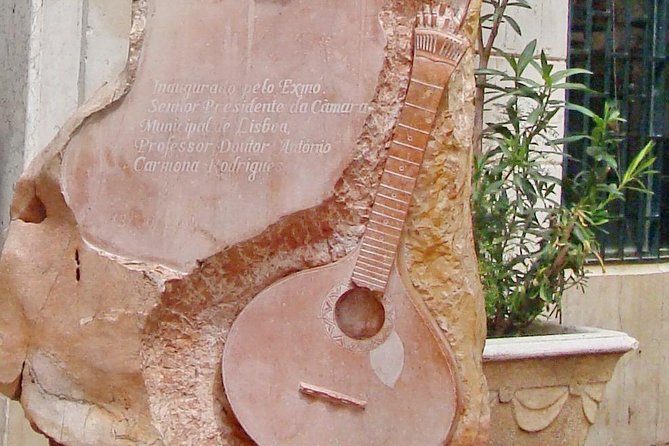
At $34.89 per person for about 3 hours, you’re paying a fair price for a small-group guided experience in central Lisbon. The big plus is that admission tickets are included for the stops at Praca Martim Moniz and the area connected to the Church of São Cristóvão.
Also, the tour uses a mobile ticket, which is one less thing to juggle once you’re already wandering the city. And since it’s noted as near public transportation, you can usually get there without a long detour—even if you’re arriving from elsewhere in Lisbon that day.
One more practical note: the maximum group size is 6, so you should show up on time. In a small group, late arrivals can throw off the rhythm, and the tour’s whole point is that it moves at a human pace.
Start at Praça do Rossio: where the story flow begins
The meeting point is Praça do Rossio, 1100-200 Lisboa, Portugal. Rossio is one of those Lisbon squares where you can orient yourself quickly—busy enough to be easy to find, but central enough to help you connect with the rest of your day. If you like walking with a plan, starting here makes sense.
Because the tour ends at R. São Cristóvão 28, 1100-177 Lisboa, Portugal, you can also think about how to build the rest of your evening. Finish near São Cristóvão, then you’re well-positioned to keep exploring that area or head to your next booking without crossing the entire city.
The tour runs in the evening (the listing shows Friday 7:00 PM–10:00 PM). That timing is smart for neighborhood tours. It’s when Lisbon’s streets start to feel like they belong to locals again—especially in older districts where the music’s atmosphere matters.
Praca Martim Moniz: Mouraria’s origins and the gentrification reality
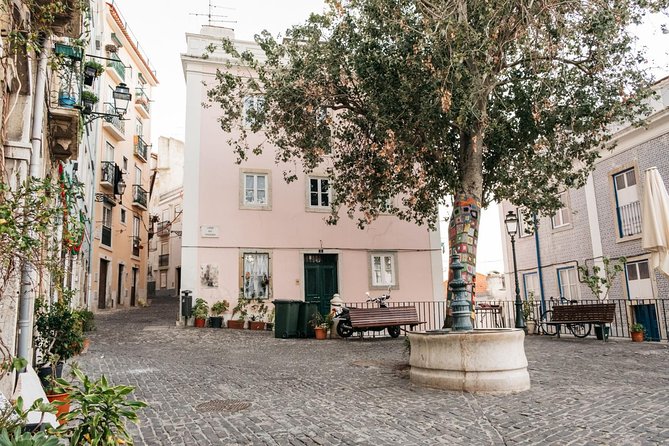
Your first stop is Praca Martim Moniz. This is where you’ll hear the origin story of the Mouraria neighborhood and also about the current gentrification problems affecting Lisbon.
I like this stop because it gives you a lens before you get poetic about fado. If you only learn the performance side, you miss the social pressure and change that shapes what people sing about. By talking through neighborhood origins and today’s tension, the tour helps you understand why fado isn’t just entertainment—it’s connected to place, identity, and hardship.
There’s also a very practical benefit to starting at a square: you can mentally reset. Squares help you “zoom out” and see how the neighborhood connects. After that, it becomes easier to appreciate the smaller streets and details later on.
One small consideration: you’ll spend about 15 minutes here. That’s not a long time, so come ready with curiosity rather than expecting a full classroom-style lecture. If you’re the type who wants to read every plaque slowly, you may need to do follow-up research after.
Church of São Cristóvão: where a mural and fado history meet

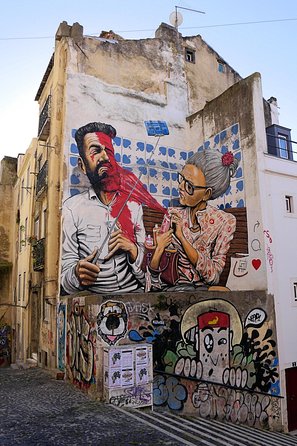
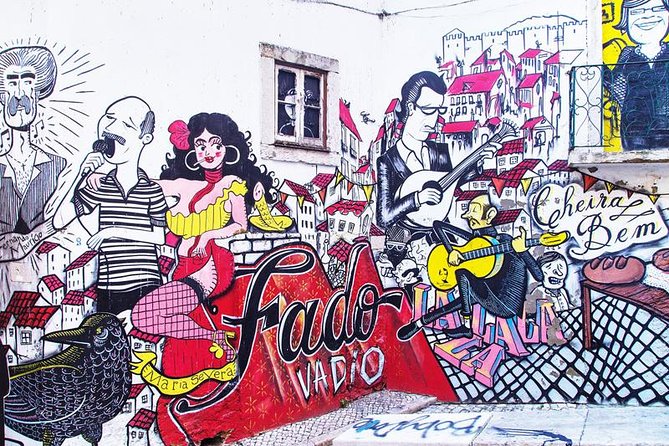
The next focus is the Church of São Cristovão area, with the tour noting that just below the church you’ll see one of the city’s most famous urban art murals. It’s also where you’ll get the history of fado.
This combination works. A mural is visual storytelling; fado is musical storytelling. Seeing street art in the same moment as the explanation of fado’s roots helps you connect two kinds of expression that Lisbon loves. It’s the kind of pairing that makes the tour feel less like a checklist and more like a conversation with the city.
You’re also given time here—about 10 minutes—so it’s a quick hit. In that short window, I’d treat it as a “wake-up moment.” You’re not meant to absorb everything like a book. You’re meant to leave with a clearer picture of how fado grew out of Lisbon’s neighborhoods.
Tip for your photos: keep your expectations flexible. Urban art and church-adjacent areas can change depending on light, angles, and where you’re standing. If you’re serious about photos, give yourself those extra seconds for framing.
You can also read our reviews of more historical tours in Lisbon





Why this walk changes how you’ll hear fado later
The description makes one promise clearly: understanding where and how fado was born helps you understand the show you’ll see later. That’s the heart of the tour’s value.
Here’s what that means in real terms. When you already know the neighborhood connections—Mouraria’s origins and the lived experience tied to fado—you stop thinking of fado as a separate art product. Instead, you can listen for social context, emotional tone, and the way a performance carries memory.
I like that this approach respects your future self. It’s like doing a “pre-read” before a film. You don’t have to become a fado expert overnight. You just need enough background to notice what you would otherwise miss.
If you plan to book a fado performance after this, try doing it the same evening or within a day. Your feelings will be fresher, and the details you picked up on the streets will still be close to the surface.
Small group tours in Lisbon: why a max of 6 matters
A lot of Lisbon walking tours feel crowded. A max of 6 travelers is a big deal because it changes the whole experience: questions get answered faster, people aren’t waiting for someone to catch up, and the guide can keep a steady rhythm without repeating themselves for long stretches.
It also changes how you move through older areas. Lisbon neighborhoods can be tight, uneven, and full of sudden turns. When the group is smaller, you get less “train-wait” and more real flow.
And since the tour is marked as having a moderate physical fitness level, this small-group setup can help. You’re still walking, but you’re not in a lineup where the slowest person dictates the pace for everyone.
Who should book this tour (and who might prefer something else)
This is a great fit if you want:
- an evening activity with a story-driven route through central Lisbon
- fado context that connects to neighborhoods, not just stage facts
- a quieter, personal-feeling group experience
It’s less ideal if you want:
- only famous landmarks and viewpoints with minimal walking
- a long, deep museum-style timeline
- a tour that feels purely visual, since you’ll spend real time listening and learning
Also, the description specifically says this neighborhood is hard to reach on your own. If you don’t want to play map games, this is one of those “let someone else do the thinking” moments that often makes a trip feel smoother.
Should you book the Lisbon Fado History Cultural Walking Tour?
Yes—if your goal is to understand Lisbon through fado’s roots. For roughly $35, you’re getting a small-group evening walk with admission tickets included at the two main stops, plus a narrative thread that’s designed to make your next fado show land better.
If you’re on the fence, decide based on your style. If you love neighborhood stories, social context, and the feeling of walking through time, you’ll likely enjoy this more than a standard sightseeing route. If you mainly want views and photos with less explanation, you may find the listening-heavy pace isn’t your thing.
One last practical check: bring comfortable shoes and be ready for a moderate walk. Once you do that, you’re set up for a genuinely meaningful evening in Lisbon—one where fado stops being a sound and starts being a place.
FAQ
How long is the Lisbon Fado History Cultural Walking Tour?
The tour is approximately 3 hours.
Where do I meet the tour, and where does it end?
You start at Praça do Rossio (Praça do Rossio, 1100-200 Lisboa, Portugal) and end at São Cristovão (R. São Cristóvão 28, 1100-177 Lisboa, Portugal).
Is a mobile ticket provided?
Yes, the tour uses a mobile ticket.
What’s included in the tour price?
Admission tickets are included for the stops at Praca Martim Moniz and the Church of São Cristóvão area.
What group size should I expect?
The tour has a maximum of 6 travelers.
When does the tour run?
The listed opening hours show Friday from 7:00 PM to 10:00 PM.
Is there free cancellation?
Yes. You can cancel up to 24 hours in advance for a full refund.
FAQ
Will this tour help me understand a fado show I see later?
Yes. The tour is designed to explain where and how fado was born so you’ll understand a fado performance later more clearly.