REVIEW · CHARLESTON
Small-Group Tour: Charleston Old Walled City Historical Walking Tour
Book on Viator →Operated by Charleston Old Walled City Tours · Bookable on Viator
Charleston tells its story on your feet. This 2-hour small-group walking tour threads together key landmarks—churchyards, Revolutionary-era sites, and big-picture Civil War views—so you leave with context, not just photos. I especially like the all-weather practicality and the way the route stays easy to follow on foot around the peninsula. One thing to consider: a few guests noted occasional audio/pace issues, so if you’re sensitive to hearing accents or fast speech, aim to stand where you can clearly follow your guide.
I love that every stop is built for listening as much as looking. You’ll hear narration at the graveyard, sidewalk, and garden, including details like slate tombstone inscriptions and the story behind the Russell House joggling board. I also like the mix of “why it matters” history—Revolutionary politics, the French Calvinist community, and the realities of the slave trade—kept in a single, walkable loop.
This is an active, walking-first outing with a cap of 15 travelers, so you get interaction without feeling crowded. The biggest drawback isn’t the walking—it’s that one short start glitch can ruin a tight schedule, so do yourself a favor and arrive a few minutes early at the meeting spot.
In This Review
- Key things I’d highlight before you go
- A 2-hour orientation that feels like a local walk
- Start at 108 Meeting St and get your bearings fast
- Circular Congregational Church: slate tombstones you can actually read
- Powder Magazine: how early Charleston stored gunpowder
- St. Philip’s Church: planters, politicians, and major founders
- French Huguenot Church: a living community in a Gothic setting
- Dock Street Theater and Four Corners of Law: culture and legal power
- Old Slave Mart Museum: the stop you shouldn’t skip
- Old Exchange & Provost Dungeon: Washington and revolutionary-era stakes
- St. Michael’s Church: resilience across two sieges
- Rainbow Row: pastel storefronts tied to Caribbean trade
- The Battery: winter-season party palaces and the Fort Sumter order
- Fort Sumter National Monument: the siege story from the seawall
- Nathaniel Russell House garden: horticulture, layout, and the joggling board
- Pace, group size, and how to get the most from the walk
- Weather-proof Charleston and what to wear
- Should you book this Charleston Old Walled City tour?
- FAQ
- How long is the Charleston Old Walled City Historical Walking Tour?
- What’s included in the tour?
- Is transportation provided?
- Where does the tour start?
- Do stops require paid admission?
- Is the tour offered in English, and is it accessible for kids?
Key things I’d highlight before you go
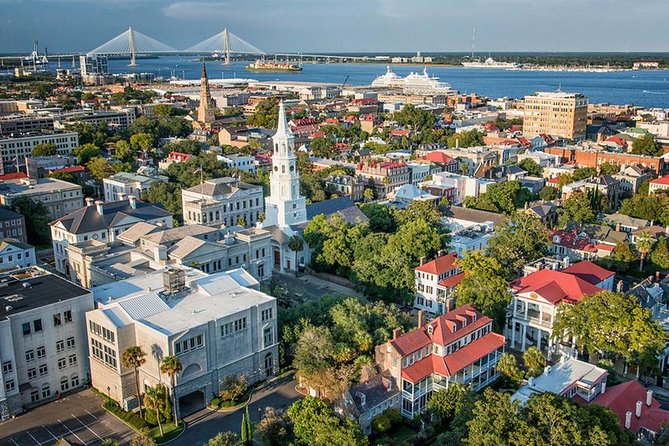
- 15-person cap means you can actually hear the details and ask questions.
- Mobile ticket keeps the start simple—no printed paperwork scramble.
- Graveyard narration at major churches turns tombstones into stories, not just scenery.
- Old Slave Mart Museum adds an essential, sobering stop you won’t get on a quick “pretty streets” walk.
- Fort Sumter views from the High Battery seawall give you a smart way to understand the siege.
- Nathaniel Russell House garden includes design talk and the joggling board story—without needing an indoor house ticket.
A 2-hour orientation that feels like a local walk
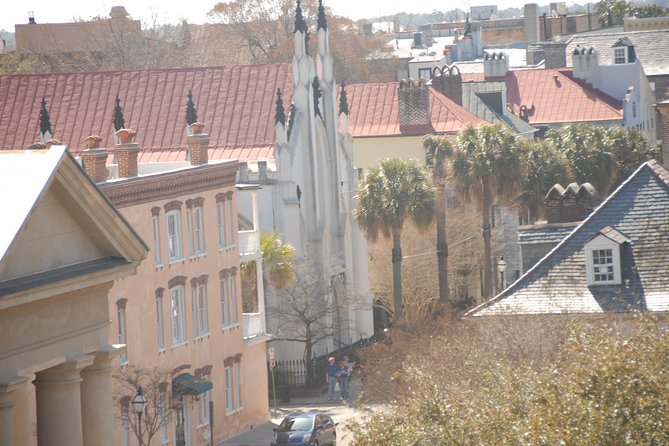
Charleston can be gorgeous on postcards, but it’s the kind of place where context makes a huge difference. This tour is built for that “first-day clarity” moment. In about two hours, you’ll cover a lot of ground around the Charleston peninsula with a pace that works for active walkers.
The promise here is simple: you see well-known landmarks, but you also get the background that explains why they’re important. That matters because Charleston’s buildings don’t sit in isolation—they connect to religion, politics, trade routes, and war. When your guide points those connections out, the whole city clicks into place.
And yes, Charleston is known for being very walkable. The route is described as hill-free, which helps a lot if you’re traveling without the time or energy for a marathon. Still, this is a walking tour, so bring comfortable shoes and expect frequent short stops.
You can also read our reviews of more walking tours in Charleston



Start at 108 Meeting St and get your bearings fast
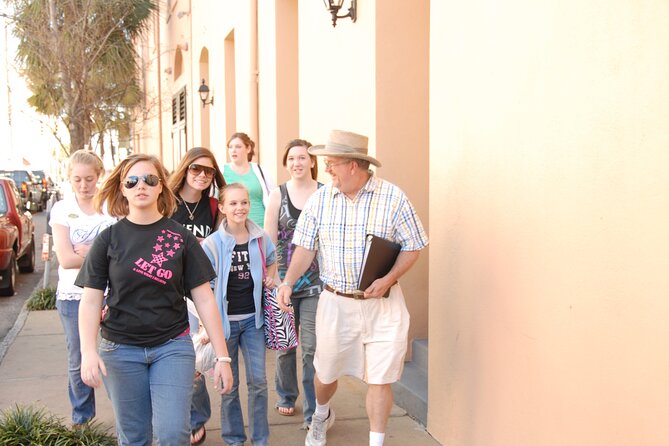
The tour starts at 108 Meeting St, Charleston, SC 29401. That address puts you right where a lot of the “old core” energy lives, so your first minutes are about orientation: what you’re looking at, why it matters, and how the story of Charleston is going to unfold.
Because the tour ends in a different location, you’re doing more of a real route than a back-and-forth stroll. That’s helpful if you’re planning a full day and want to continue exploring after the tour. Just plan to stay flexible with where you go next.
Also, it’s offered in English, and it uses a mobile ticket. So your main job is easy: show up, scan or present your ticket, and start listening.
Circular Congregational Church: slate tombstones you can actually read
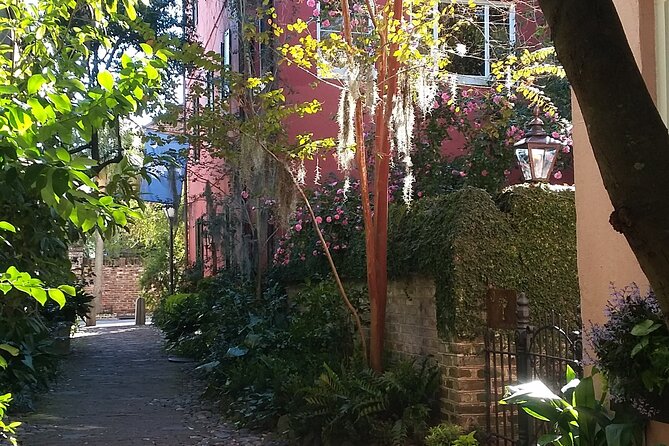
The walk opens at Circular Congregational Church. This congregation has worshipped on site since 1681, and the tour focuses on the graveyard narration early for a reason: Charleston’s history shows up on stone.
The most specific detail is the collection of clearly legible slate tombstones from the eighteenth century. It’s not just “old gravestones.” It’s the kind of legibility you hope for on a historic walk—so the inscriptions feel more immediate, and the dates and names help you understand who mattered locally and when.
Practical tip: graveyard stops are quieter and slower by nature. Dress for comfort and be ready for a short moment where the guide is telling stories while you look downward and around at the tombstones.
Powder Magazine: how early Charleston stored gunpowder
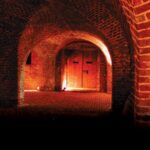
Next up is The Powder Magazine, described as a gunpowder storage facility built by 1713. The big takeaway is safety and siege mentality—this was a city preparing for trouble.
Your guide tells it as an endurance story: a city under constant siege, needing a facility that could store what it needed to defend itself. The tour also calls out a comparison point—this is the oldest surviving public structure between St Augustine and Williamsburg. That kind of “regional first” helps you see the site as part of a bigger American timeline, not just a standalone stop.
One downside to short stops like this: with only about a few minutes, you’ll get the key idea and the most striking detail, but you won’t have time to linger deeply. The good news is that the narration makes you notice things you’d otherwise walk past.
St. Philip’s Church: planters, politicians, and major founders

Then the tour moves to St. Philip’s Church. It’s presented as the oldest congregation in the Carolinas (1680), and the framing is direct: the church was the “Church of Planters and Politicians.”
What you’ll remember most here is the graveyard focus. Your guide points to national figures, including signers of both the Declaration of Independence and the Constitution, who rest in the graveyard. Even if you’re not a “tombstone person,” that’s the kind of detail that turns the churchyard into a political and national story hub.
If you’re traveling with someone who likes Revolutionary history, this is a strong stop. If you prefer lighter material, it’s still worth staying with the narration, because it connects Charleston’s elite role to the country’s formation.
You can also read our reviews of more city tours in Charleston

French Huguenot Church: a living community in a Gothic setting
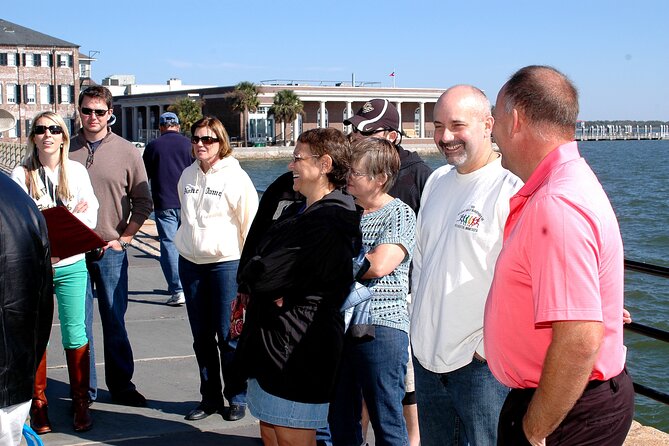
The tour then reaches French Huguenot Church, described as an elegant Gothic Revival church. The headliner here is the claim that it’s the only active French Calvinist congregation in North America, with worship on site since 1706.
This stop feels different in tone from the Revolutionary and siege-centered stops. You’re getting a sense of immigration, faith communities, and how Charleston became a home base for different European groups. It’s also a visual break—Gothic Revival tends to pull your eyes upward and makes the street feel cinematic even during a short stop.
Because the tour is limited-time, you won’t get a long look inside. But the exterior and the storytelling are set up to make you understand the church as a continuation of identity, not just architecture.
Dock Street Theater and Four Corners of Law: culture and legal power
Two quick stops follow that help you see Charleston beyond churches.
First is Dock Street Theater, described as an 18th century style playhouse built as a WPA project in 1937. The tour also ties it to an earlier cultural landmark: it’s built on the site of the first playhouse in British North America in 1736. So you’re looking at a site that’s been linked to performance for centuries, even as the building around it changed.
Then comes Four Corners of Law, an intersection dedicated to public use since 1680. The guide points out the quirky fame of the spot: Ripley’s Believe It or Not! calls it the only intersection worldwide where the four governing laws of mankind intersect. Even if you treat that claim with a grain of salt, it’s a fun way to make a legal-and-government story feel memorable.
These are short stops, so keep expectations realistic. You’re not touring a courtroom or a theater production—you’re collecting the meaning.
Old Slave Mart Museum: the stop you shouldn’t skip

From the lighter curiosities, the tour takes an important turn to Old Slave Mart Museum. This is described as the only surviving structure in Charleston used as a showroom for slave sales, now functioning as a museum.
The narration is focused on the sordid history of slavery in the South Carolina Lowcountry. This is the kind of stop that slows your brain down. It’s not just “another museum on a route.” It’s a confrontation with how commerce and human suffering were connected in everyday systems.
If you’re the type who prefers to compartmentalize history, this may feel heavy. But it’s also exactly why this tour is more than a scenic circuit. Without this stop, Charleston’s story can feel too clean.
Old Exchange & Provost Dungeon: Washington and revolutionary-era stakes
Then the tour moves to Old Exchange & Provost Dungeon, framed as a Revolutionary War museum and a site tied to the events that helped found the nation.
A specific detail your guide highlights: President Washington was entertained here four times in 1791. That’s the kind of grounded fact that makes the building more than a historic label. You can connect it to political authority and the early nation’s public life.
The “Provost Dungeon” part also matters. Even without a long deep-dive, the name signals incarceration and power. You’re hearing it as a place where control and conflict played out—again, not abstract history.
St. Michael’s Church: resilience across two sieges
Next is St. Michael’s Church, described as the oldest surviving church (1761) and one that endured major conflict. The tour notes that the church was targeted during the British siege in 1780 and the Federal siege from 1863–1865.
What makes this stop compelling is the time span. This wasn’t one war. It was war as a repeated pattern, with the same city living through multiple national turning points.
The graveyard detail returns: two signers of the Constitution are also at rest in the cemetery. That keeps the stop grounded in names and dates rather than just general “old and war-torn.”
Rainbow Row: pastel storefronts tied to Caribbean trade
Then you get a change of mood at Rainbow Row, a grouping of eighteenth-century commercial buildings painted in pastel colors.
The story here isn’t only aesthetic. Your guide ties the colors and the identity of the buildings to Charleston’s early connections to the Barbados, Antigua, and Nevis region. It’s a reminder that Charleston wasn’t isolated. Trade routes shaped wealth, architecture, and the look of the streets.
Rainbow Row is also an easy stop to enjoy even if you’re tired. You can pause for photos without feeling like you’re stepping out of the tour’s flow. The key is to still listen: the point isn’t just the paint. It’s why those buildings mattered.
The Battery: winter-season party palaces and the Fort Sumter order
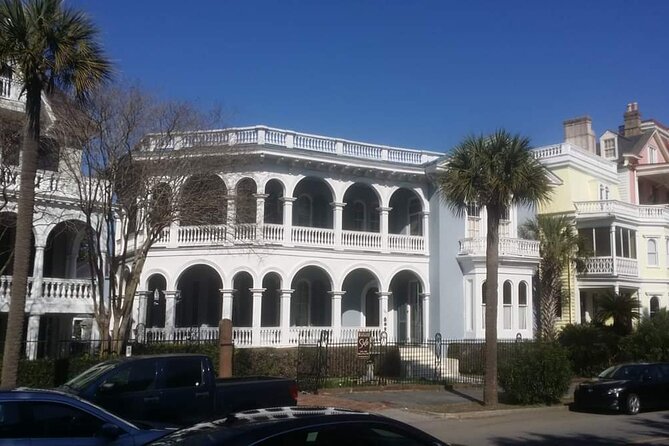
The tour heads to The Battery, described as a waterfront stretch with grand mansions. Many were built in the first half of the nineteenth century, framed as “party palaces” for the winter season.
What your guide connects this to is the start of the Civil War story: from one of those houses, General Pierre Beauregard gave orders to fire at Fort Sumter. That’s a powerful link between leisure-era architecture and national catastrophe.
This stop works best for people who enjoy seeing how one city layer overlaps with another. Charleston’s waterfront beauty becomes part of the military narrative, and that contrast sticks.
Fort Sumter National Monument: the siege story from the seawall
Now you get one of the biggest payoff moments: Fort Sumter National Monument viewed from the High Battery seawall.
The tour focuses on the siege and bombardment story—both Fort Sumter and Charleston’s civilian population. Then it adds the timeline: the fall of the city after 587 days. That number matters. It turns “the siege” from a quick headline into a sustained, grinding reality.
Even if you’ve read about Fort Sumter before, hearing it told with a Charleston viewpoint tends to land differently. The city is the backdrop here, not just the location on a map.
Nathaniel Russell House garden: horticulture, layout, and the joggling board
The final stop is the Nathaniel Russell House garden, built into a fuller tour of how Charleston properties were designed and lived in.
You’ll enter the garden at the Russell House (1808) to discuss horticulture and garden design, and how an eighteenth-century Charleston property was laid out. Your guide also shares the story of the joggling board, which is a memorable detail because it’s so specific and practical.
A useful note for expectations: this stop is garden narration, and the tour indicates no house admittance. That’s not a downgrade—it keeps the pacing tight and preserves the outdoor, walkable feel that the tour is built around.
If you like architecture or design, you’ll probably enjoy this as the lighter ending that still feels historically grounded.
Pace, group size, and how to get the most from the walk
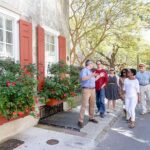
This tour caps at 15 travelers, which is a big deal in a city where many “old town” walks end up feeling like a conveyor belt. With a smaller group, your guide can keep track of questions and help you connect dots between stops.
The narration format is also built for short attention moments: graveyard narration where you look at tombstones, sidewalk narration where landmarks are close by, and garden narration for the final design stop. That variety keeps the route from feeling repetitive.
That said, there’s a practical risk you should know: some guests have said guides can be hard to understand or speak too fast at times. If that’s your personal sensitivity, position yourself so you can hear clearly—don’t end up stuck off to the side where you’re only catching fragments.
One other practical consideration: this is a walking schedule with many short stops, so being late at the start can throw off your entire experience. If you do this, show up early at 108 Meeting St so you’re not rushing into the first graveyard narration.
Weather-proof Charleston and what to wear
The tour operates in all weather conditions, so you should dress for what Charleston is doing that day. Bring a light layer if it’s chilly and plan for rain if the forecast looks questionable. Closed-toe, grippy shoes help because historic sidewalks can be uneven.
The good part about the hill-free format is that you won’t be fighting steep climbs on top of short museum stops. This tour is more about steady walking and listening than endurance hiking.
Should you book this Charleston Old Walled City tour?
Book it if you want a 2-hour orientation that mixes architecture, graveyard stories, and major national events without turning your day into a ticket-and-line marathon. It’s a strong choice for first-timers who want to understand why places matter—churchyards with names tied to the Declaration and Constitution, the French Huguenot story, the Fort Sumter siege viewed from the High Battery, and a crucial look at the slave trade site at Old Slave Mart Museum.
Pass or consider another option if you want long museum time, deep interior access, or a slow pace that lets you fully explore buildings on your own. This is a guided walk with stop-by-stop narration, so you’ll get the highlights and essential context—not a full standalone museum day.
If you like walking routes, small groups, and a guide who ties details together into one clear story, this is the kind of Charleston experience that helps you see the city like a local, not like a tourist map.
FAQ
How long is the Charleston Old Walled City Historical Walking Tour?
It’s approximately 2 hours.
What’s included in the tour?
The tour includes a local guide and covers all taxes, fees, and handling charges.
Is transportation provided?
No. Transportation to and from attractions isn’t included, and there’s no hotel pickup/drop-off.
Where does the tour start?
It starts at 108 Meeting St, Charleston, SC 29401, USA.
Do stops require paid admission?
The listed sites on the route show admission ticket free for the stops included.
Is the tour offered in English, and is it accessible for kids?
The tour is offered in English. Children must be accompanied by an adult, and the tour is designed so that most travelers can participate. Comfortable walking shoes are recommended.