REVIEW · FLORENCE
The Best of Florence Walking Tour in a Small Group
Book on Viator →Operated by All Around Florence · Bookable on Viator
Florence starts to make sense when you connect the buildings. This small-group walk threads the Medici story through the city, then lands you at the Duomo complex and the Arno’s most famous bridge. Two things I like a lot: the slow pace with a local guide who puts details into context, and the way you get dining and sightseeing recommendations built for your trip. The only real drawback is time: you see a lot, but most stops are brief and many interiors require separate tickets.
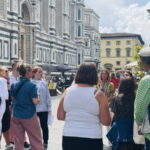
With a capped group size of 15, you’re not stuck craning your neck in a crowd. You’ll also get a whisper system (ear pieces), which is a big deal in Florence’s stone streets and busy squares. One more note for your planning: the tour is about 1 hour 45 minutes, so it’s perfect as an opener, not a replacement for a full museum day.
You begin near San Giovanni (at Caffè Scudieri Firenze, Piazza di San Giovanni 19R) and finish in the Ponte Vecchio area. If you’re coming on your first day, this route helps you understand where things are and why they matter. If you hate walking, consider it carefully, because this is an on-foot “best of” sprint through Florence’s core.
In This Review
- Key Highlights You’ll Feel Immediately
- Why This Florence Walk Works: Medici to Duomo in One Flow
- Small Group Size and Whisper System: The Comfort Factor
- San Lorenzo to the Laurentian Library: Florence’s Medici Roots
- Quick practical note
- Medici Chapels and Palazzo Medici Riccardi: Art as a Family Statement
- What to watch for while you’re walking
- Duomo Complex Without the Head-Scratching: Cathedral, Baptistery, Dome, Campanile
- A reality check on time
- Piazza della Signoria to Palazzo Vecchio: Where Florence Shows Its Power
- Uffizi Area and Ponte Vecchio: Renaissance Art Nearby, Daily Life in Motion
- Palazzo Pitti: The Medici Move from Control to Residence
- Tickets, Timing, and How to Use This Tour as Your First-Day Plan
- Price and Value: What $59.26 Buys You in Florence
- Who Should Book This Walk, and Who Might Skip It
- A Few Things to Expect on the Day
- Should You Book This Best-of Florence Walking Tour?
- FAQ
- How long is the Florence walking tour?
- What time does the tour start?
- Where do I meet the guide?
- Where does the tour end?
- How large is the group?
- What languages are offered?
- Are entrance tickets included?
- What’s the whisper system?
- Is cancellation free if plans change?
- What happens if the weather is bad?
- Are service animals allowed?
Key Highlights You’ll Feel Immediately
- Medici power in real places: San Lorenzo, the Laurentian Library, Medici Chapels, and Medici palaces in one storyline
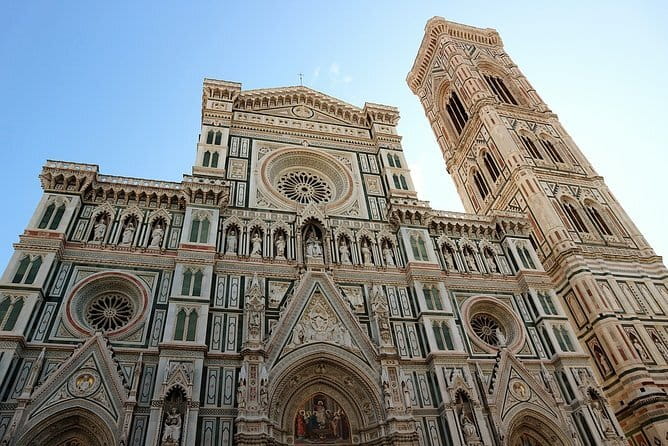
- Duomo complex without the confusion: you see the Cathedral area plus Baptistery, Giotto’s Campanile, and Brunelleschi’s dome from the outside
- Hear every word: included whisper system keeps the guide’s commentary clear
- Small group, capped at 15: more questions, less losing the guide in the crowd
- Built for your next steps: you’ll leave with concrete ideas for what to do and where to eat
Why This Florence Walk Works: Medici to Duomo in One Flow
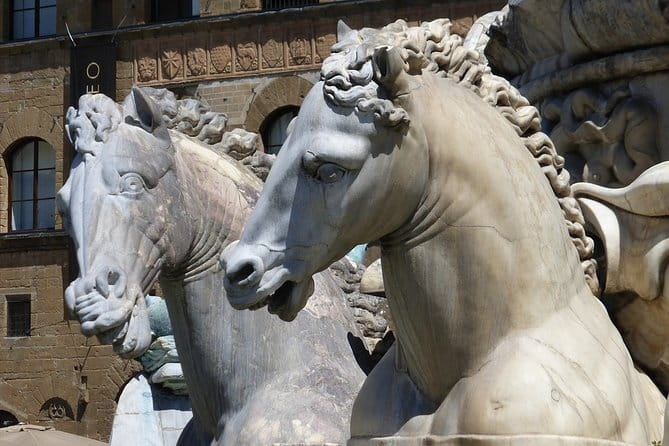
This tour is built like a guided storyline, not a random pile of famous stops. You start in the church and market district tied to the Medici family, then move forward through architecture that explains how Florence worked: politics, banking, and art all braided together.
You’ll get a “big picture” sense of Florence fast. And because the pace is slow enough to notice details, the landmarks feel less like postcards and more like a city with a past you can actually follow on foot.
You can also read our reviews of more walking tours in Florence
Small Group Size and Whisper System: The Comfort Factor
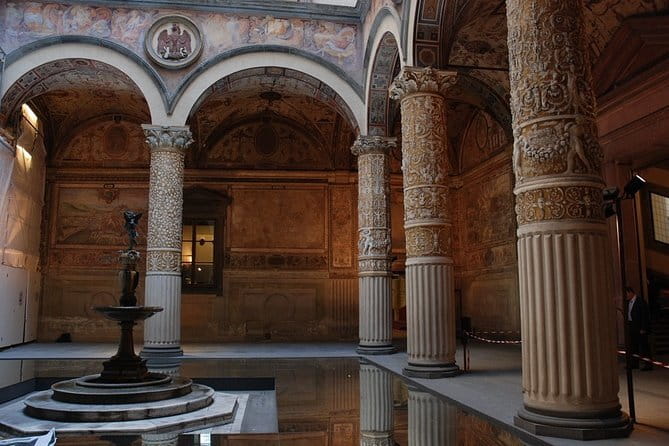
Florence is packed, even outside peak chaos. That makes the maximum group size of 15 a practical win: you can hear, you can ask questions, and you’re less likely to get separated at corners.
The included whisper system (ear pieces) matters more than most people expect. Between traffic noise, footsteps, and crowds at major squares, clear audio helps you keep up with the guide’s explanations instead of playing catch-up.
San Lorenzo to the Laurentian Library: Florence’s Medici Roots
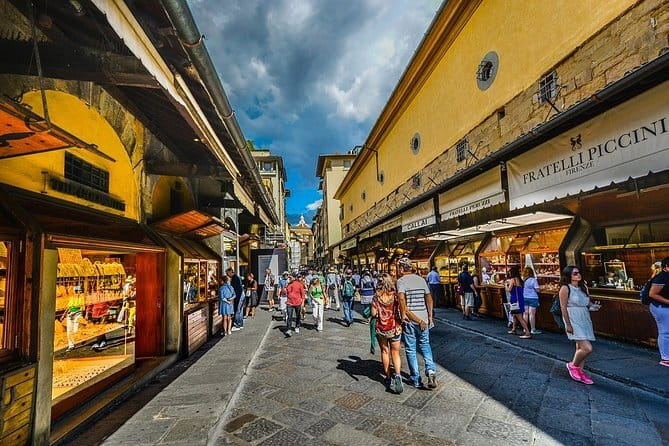
Stop one brings you to Basilica di San Lorenzo, one of the city’s largest churches and a key Medici burial site. The location itself is a hint about the Medici world: this is centered in Florence’s main market area, where religion, money, and daily life rubbed shoulders.
Next you move to the Biblioteca Medicea Laurenziana. This is where Florence’s intellectual ambitions show up in architecture. The library was built with Medici patronage connected to Pope Clement VII, and it’s especially famous for the design by Michelangelo, an example of Mannerism.
What’s useful here is how the guide frames it: the Medici weren’t just wealthy bankers. They wanted to be seen as leaders in a higher realm—church, ideas, and influence.
Quick practical note
Admission is not included for these stops, so if you want to go inside longer, plan to add time and handle tickets separately.
Medici Chapels and Palazzo Medici Riccardi: Art as a Family Statement
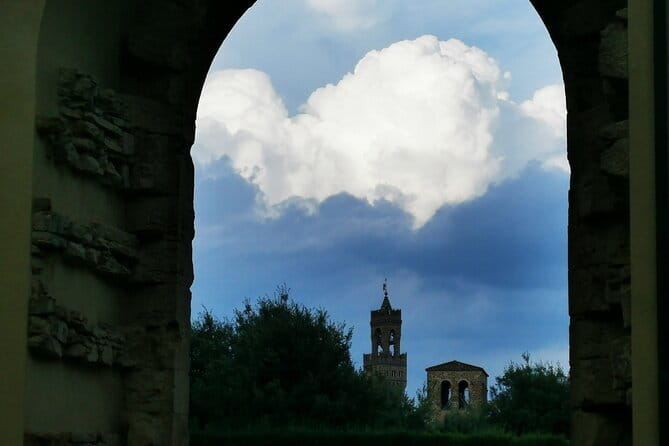
After learning the family’s base, you head toward Cappelle Medicee (Medici Chapels). These were built across the 16th and 17th centuries as an extension to Brunelleschi’s 15th-century church, with the goal of celebrating the Medici family and their role as patrons and Grand Dukes.
You’ll also hear about the Sagrestia Nuova (New Sacristy), designed by Michelangelo. Even in a short visit, this is the kind of place where Florence’s art stops feeling decorative and starts feeling strategic.
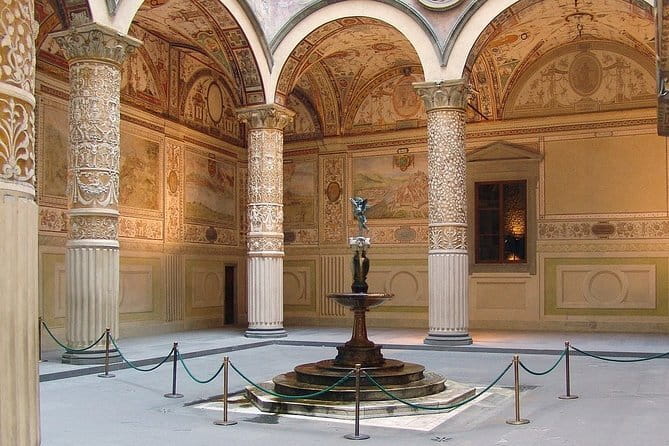
Then you step to the street-facing grandeur of Palazzo Medici Riccardi, commissioned for Cosimo de’ Medici and built from 1444 to 1484. This is where the Medici story shifts from sacred to civic power—how a family brands itself through space.

What to watch for while you’re walking
Even if you don’t enter every space, look at how the buildings announce status. Florence does that constantly: marble, scale, and placement are all part of the message.
Duomo Complex Without the Head-Scratching: Cathedral, Baptistery, Dome, Campanile
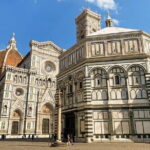
The heart of the route is the Duomo area, and you’ll get multiple quick looks at the Cathedral complex. The main Cathedral, Santa Maria del Fiore, was begun in 1296 in the Gothic style based on a design by Arnolfo di Cambio.
You’ll also see the Battistero di San Giovanni. It’s one of the oldest buildings in Florence, constructed between 1059 and 1128 in the Florentine Romanesque style. If you’ve ever wondered why the Duomo area feels layered, this is one reason: different eras stand side by side.
Then comes the visual wow: Cupola del Brunelleschi. The dome was the largest in the world for a long time and remains the largest brick dome ever constructed. When you look up, it helps to remember this wasn’t a small technical feat—it’s a flex in engineering form.
Next you’ll see Campanile di Giotto, Giotto’s tower next to the Cathedral and Baptistery. It’s known for sculptural decoration and polychrome marble, which makes it one of the most “readable” landmarks if you like details.
A reality check on time
Several Duomo-related stops are brief, and most of the main experience is exterior viewing here. Admission for some stops is marked as free, but the tour’s structure is about orientation and understanding, not a long, ticket-heavy deep dive.
Piazza della Signoria to Palazzo Vecchio: Where Florence Shows Its Power
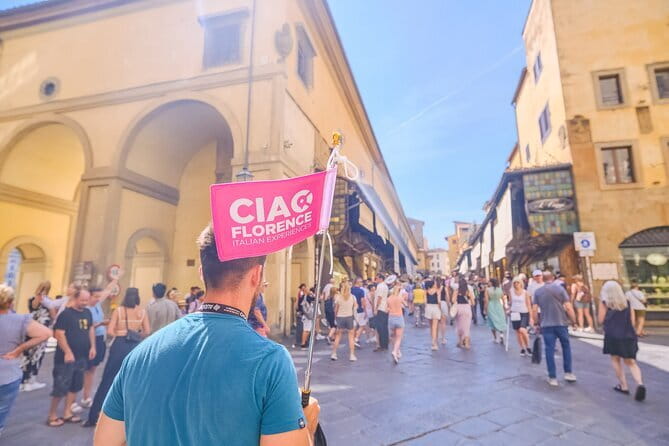
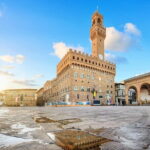
From the Duomo zone you move toward Piazza della Signoria, an L-shaped square in front of Palazzo Vecchio. This is a meeting place for locals and tourists and a gateway to the Uffizi area, so it’s where Florence’s “public life” is on display.
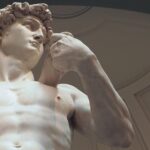
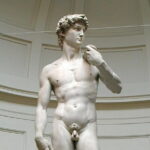
In the same area, you’ll stop at Palazzo Vecchio, the city hall. It’s described as a massive fortress-palace, and from the square you can take in its presence along with the statue context, including a copy of Michelangelo’s David and the statues on the adjacent Loggia dei Lanzi.
Even if you don’t go inside, you’ll benefit from the guide’s framing: the Medici story isn’t only about private family glory. It’s also about how power operates in public, with buildings acting like stage sets.
Uffizi Area and Ponte Vecchio: Renaissance Art Nearby, Daily Life in Motion
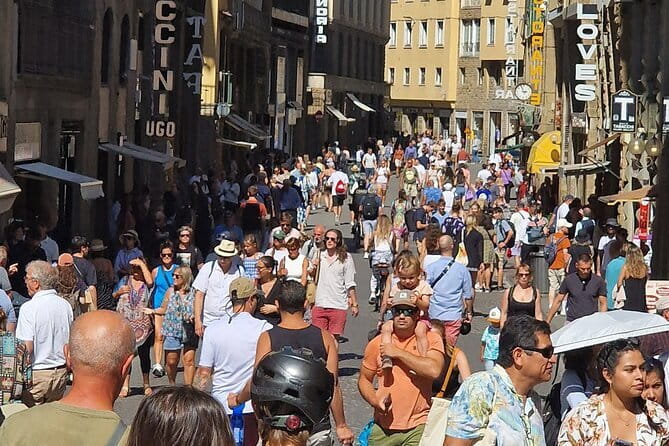
Next you’ll pass by the Gallerie degli Uffizi area. The Uffizi is one of Italy’s most important museums, famous for Italian Renaissance works and collections that are hard to summarize in a sentence. What you get on this tour is more about location and context than museum time, since admission is not included at this stop.
Then you hit Ponte Vecchio, the old bridge over the Arno. It’s medieval and is noted as the oldest bridge over the Arno in Florence. The big story is the shops along the bridge—once occupied by butchers, tanners, and farmers, and now associated with jewelers and art dealers.
This stop is useful because it changes the vibe. After churches, libraries, and palaces, Ponte Vecchio brings you back to daily commerce and street reality. It also gives you a clean ending point, since the tour finishes in this area.
Palazzo Pitti: The Medici Move from Control to Residence
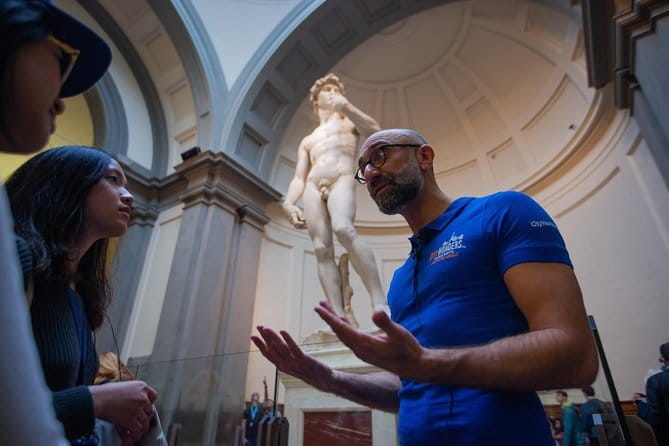
Your final major stop is Palazzo Pitti. The Medici bought it in 1549, and it became the chief residence of the ruling families of the Grand Duchy of Tuscany. Over time it grew into a major treasure house with accumulated artworks and luxury possessions.
Even with a short look, this is a powerful note to end on. The Medici begin as bankers and become cultural leaders, then end up controlling residence and collection on a grand scale. It’s a neat “chapter ending” to your walking storyline.
Tickets, Timing, and How to Use This Tour as Your First-Day Plan
Most stops are listed with admission not included, so treat the tour as an orientation and interpretation experience. You’ll see major architecture and understand what to look for, but if you want to go inside, you’ll need to plan extra time and tickets on your own.
The pacing also tells you what to do next. After a tour like this, I like to pick one follow-up: either a longer museum visit or a focused Duomo-area ticket plan. If you try to do everything the same day, you’ll feel rushed instead of informed.
Also note that Duomo-related viewing is marked as free at the Cathedral stop, while other major sights in your route may require paid entry if you want the full inside experience. That’s common in Florence, and it helps to know so you can decide what’s worth extra money for you.
Price and Value: What $59.26 Buys You in Florence
At $59.26 per person for about 1 hour 45 minutes, the value is in three areas. First, you’re paying for a licensed guide who can connect the Medici thread across multiple landmark types (church, library, chapels, palaces, public squares).
Second, you’re paying for comfort and clarity: whisper system plus a group cap of 15. Those two things save energy and reduce frustration, especially around Piazza della Signoria and the Duomo complex where noise and crowding can ruin the experience.
Third, you’re paying for trip utility. The tour is explicitly built to give recommendations of things to do and places to dine, so you leave with a practical short list instead of only photos.
Who Should Book This Walk, and Who Might Skip It
This tour is a great fit if you want a smart first pass through Florence’s core. It’s also ideal if you like architecture and want the “why” behind what you’re seeing, from Michelangelo-linked spaces to the Duomo complex landmarks.
It may be less satisfying if you’re looking for deep time in one place, like a long Uffizi session or a full interior visit of every major site. This is structured as “see + understand + orient,” not “linger all day.”
A Few Things to Expect on the Day
You’re starting at 12:15 pm, so plan for midday conditions. Florence can be hot and busy in the afternoon, and this tour is walking-focused, so bring water and wear shoes you trust.
The route ends around Ponte Vecchio, which is handy because you can keep wandering without having to re-position. And if you’re traveling with kids or want a guide to keep attention moving, the tour’s short stops help the energy stay up.
Should You Book This Best-of Florence Walking Tour?
If it’s your first time in Florence, I’d book it. You get a clear Medici storyline, smart positioning in the Duomo area, and a route that finishes where the city stays lively.
If you already know you want long museum time, do this tour early and then choose one or two paid add-ons afterward. This gives you context so your museum visit feels guided by meaning, not just a checklist.
If you hate crowds, choose this because the group cap is 15 and you’ll have a whisper system to keep your focus.
FAQ
How long is the Florence walking tour?
It’s listed as about 1 hour 45 minutes.
What time does the tour start?
The start time is 12:15 pm.
Where do I meet the guide?
You meet at Caffè Scudieri Firenze, Piazza di San Giovanni 19R, 50123 Firenze FI, Italy.
Where does the tour end?
It ends in the Ponte Vecchio area (the exact endpoint can vary slightly within the indicated area).
How large is the group?
The maximum group size is 15 travelers.
What languages are offered?
This tour is offered in English.
Are entrance tickets included?
Most admission tickets are not included. Some stops are marked as free to view (including the Cathedral stop, Piazza della Signoria, and Ponte Vecchio).
What’s the whisper system?
A whisper system is included, with ear-piece style audio so you can hear the licensed guide clearly while walking.
Is cancellation free if plans change?
Yes. You can cancel up to 24 hours in advance for a full refund.
What happens if the weather is bad?
The tour requires good weather. If it’s canceled due to poor weather, you’ll be offered a different date or a full refund.
Are service animals allowed?
Yes, service animals are allowed.