REVIEW · QUEBEC CITY
Walking Tour Through Quebec City’s History
Book on Viator →Operated by Cicerone Tours · Bookable on Viator
Old Quebec can feel like a movie set, but this walk explains how it got there. I especially like the small-group pace and the way a local guide in period costume turns street corners into stories you can actually picture. The big catch is the walking: you need moderate fitness for hills, cobblestones, and plenty of stairs.
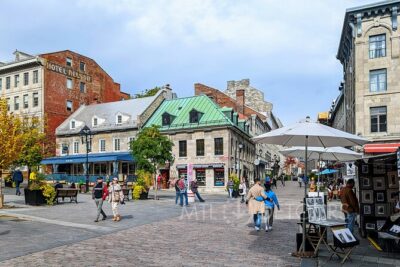
What I love most is that the tour hits the city’s key layers: first Samuel de Champlain’s founding ground at Place Royale, then the lower-town charm of Petit-Champlain, and finally the views that make Quebec City feel so dramatic. A name like Mark or Keven often comes up in glowing feedback for the way they answer questions and keep the pace moving.
The only real drawback to plan around is physical effort. One guide-to-guide detail from feedback is consistent: there are steeper descents and steps, so bring good shoes and expect some leg work.
Small-group format (max 20): easier questions, less crowd pressure, and time to hear the story
Period-costumed guides: history feels like people, not dates, with answers built into the route
City views that start the tour: Terrasse Dufferin sets the scene early with St. Lawrence River panoramas
Founding-to-fairytale route: Champlain’s Place Royale to Petit-Champlain in one smooth arc
Photo-friendly historic stops: Breakneck Steps and the lower-town lanes deliver the postcard angles
In This Review
- Where This Quebec City Walk Starts (Rue Sainte-Anne) and Ends at Place Royale
- Price and Value: Why $24.03 Can Make Sense in Old Quebec
- Terrasse Dufferin: The St. Lawrence View That Sets the Story in Motion
- Basilica of Notre-Dame de Québec and the Holy Door: Where Architecture Becomes a Time Machine
- Place Royale: Champlain’s Founding Square and the Oldest Stone Church Feeling
- Petit-Champlain: Fairytale Streets With Real Planning Behind Them
- Breakneck Steps (L’Escalier Casse-Cou): Your Legs, Your Photos, Your View
- What the Period-Costumed Guide Adds (And When It Might Not Be Your Style)
- Pacing, Fitness, and Comfort: How to Prepare for Quebec City Hills
- Who This Tour Is Best For
- Should You Book This Old Quebec History Walk?
- FAQ
- How long is the walking tour?
- What’s the price per person?
- Is the tour in English?
- How big is the group?
- Where do I meet the guide?
- Where does the tour end?
- Does it require good weather?
- Is it accessible for everyone?
- Can I get a refund if plans change?
Where This Quebec City Walk Starts (Rue Sainte-Anne) and Ends at Place Royale
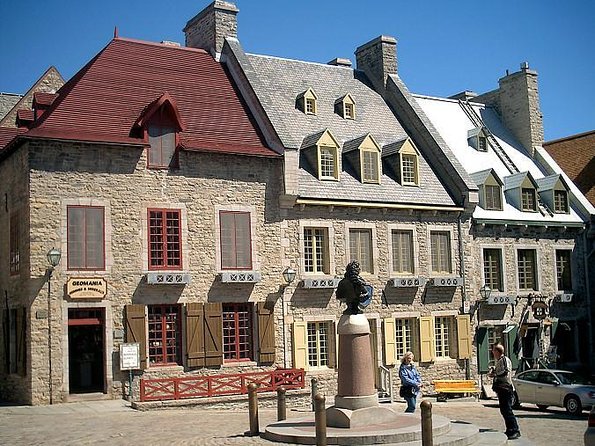
This is a straightforward, on-foot orientation tour. You’ll meet at 12 Rue Sainte-Anne, Québec and finish at Place Royale. The end point matters: Place Royale is one of the most useful bases for the rest of your day because it sits right in the heart of where Quebec City grew up around its founding moment.
If you like to plan your sightseeing like a map, this route is helpful. It guides you from a high viewpoint down toward the Old City streets you’ll want to keep exploring after the tour. And because it ends at Place Royale, you can naturally branch out to nearby streets, viewpoints, and churches without needing a separate travel plan.
One more practical point: this tour is in English, and it runs about two hours. That length is ideal for first-time visitors who want a solid overview without losing an entire afternoon.
Price and Value: Why $24.03 Can Make Sense in Old Quebec
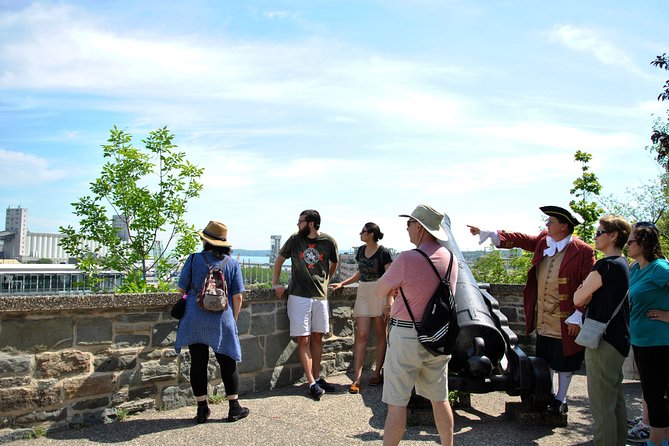
At $24.03 per person for roughly two hours, the value comes from what you’re paying for: a guide who can connect the dots between buildings, power, religion, and everyday life in Quebec City.
Yes, Old Quebec has sights you can see on your own. But what you tend to miss without help is why those places matter. Here, you get a guided story that ties together:
- the city’s strategic position on the St. Lawrence,
- French and British influence blending over time,
- and how religious and civic sites shaped daily life.
Also, this is a small group with a local guide, and the guide uses a period character approach. In practice, that means you don’t just stop at landmarks and move on. You’re likely to get context that helps you understand what you’re looking at while you’re looking at it.
If you’re the type of traveler who likes efficient learning (not a long lecture), this price feels reasonable because you’re buying clarity and pacing, not just a walk.
You can also read our reviews of more walking tours in Quebec City



Terrasse Dufferin: The St. Lawrence View That Sets the Story in Motion
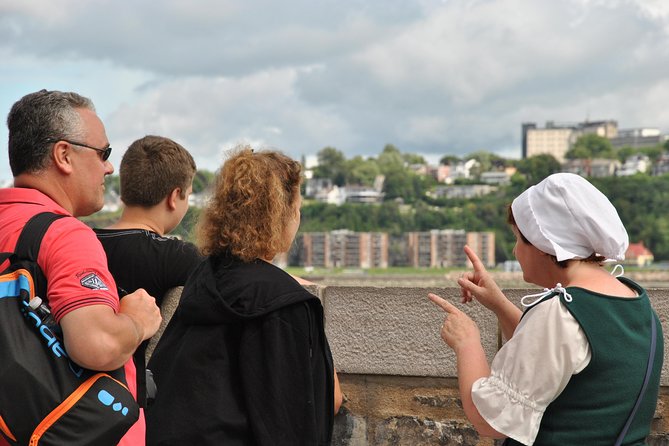
Your first major stop is Terrasse Dufferin, the long wooden walkway next to Château Frontenac. The setup is perfect: you start with a view, and then the guide can connect that view to the way Quebec City developed around the river.
What you’ll notice fast is how the St. Lawrence changes the mood of Quebec City. The river isn’t just scenery—it’s the reason the city mattered. From this terrace, you get a wide sense of the port area and the surrounding Old City layout, which makes the later walk feel more logical.
There’s also a comfort angle. Even though it’s still outdoor time, the terrace is a slower moment in the route, so it’s a good place to settle in, orient yourself, and get those early photos. The tour lists this stop at about 10 minutes, and you don’t feel rushed if you keep one eye on the guide’s story while still taking in the view.
Basilica of Notre-Dame de Québec and the Holy Door: Where Architecture Becomes a Time Machine
Next you’ll visit the Basilica of Notre-Dame de Québec area and see why this building is more than just a pretty interior. The description focuses on something you’ll feel immediately: continuity. The site has been in the same place since 1647, and the basilica functions like a historical anchor for a whole population.
This stop is your “religion, power, and memory” chapter. You’ll learn that important figures are connected here: four governors of New France, bishops of the diocese of Québec, and a funerary chapel tied to François de Laval. That kind of detail changes how you see a church. You’re no longer looking at decorations only; you’re seeing who shaped the colony and who left markers behind.
If you want a sensory payoff, this is it. The interior is described as having splendid decoration, and the tour format includes mentions of art and archives as part of the experience. There’s also a nod to the Holy Door, which adds a special layer because it connects the basilica to religious tradition and ceremonial meaning.
One note for planning: church interiors can be bright or dim depending on the light. If you’re taking photos, keep your camera ready but also give your eyes a minute to adjust once you step inside.
Place Royale: Champlain’s Founding Square and the Oldest Stone Church Feeling
Then the tour turns to Place Royale, a square tied directly to the founding story. It’s where Samuel de Champlain founded Quebec City in 1608, and it’s loaded with the kind of place-mat history that makes Old Quebec make sense.
This stop is a mixture of layers:
- French and British influences show up in the buildings,
- and the area includes the oldest stone church in North America (as described in the tour outline).
That matters because Place Royale doesn’t feel like a single-era monument. It feels like a living crossroads where styles and eras overlapped.
In terms of time, the tour allots about 15 minutes here. That’s usually enough to take in the square, understand the founding context, and get a sense of how to navigate the streets radiating from the area.
The value of Place Royale on a walking tour is simple: it gives your brain a starting point. Once you understand where the city began, you can make sense of why other districts developed in particular directions.
Petit-Champlain: Fairytale Streets With Real Planning Behind Them
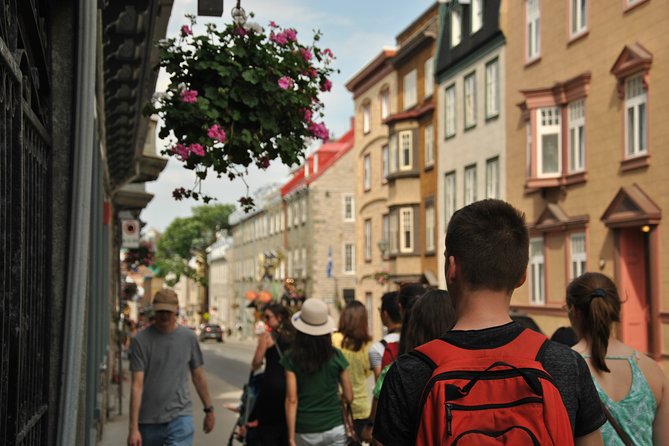
After Place Royale, you’ll move into Quartier Petit-Champlain, one of the most famous areas in Old Quebec. The tour frames this as a place where you can feel the founding era over 400 years later, and the vibe comes through in the street design and the way the lanes connect back to the main historic core.
This is the portion of the walk where you’ll probably slow down without even trying. The route highlights the charm of the district, including streets around Place Royale and the sensation that you’ve landed in a storybook setting.
The time allocation is around 45 minutes. That’s long enough to do two useful things:
1) follow the guide’s route and history points, and
2) still have time to look at shopfronts, street corners, and small architectural details that you’ll miss if you just zip through.
A practical tip: Petit-Champlain tends to be busier visually than it is physically exhausting. So keep your attention on the guide when they point out key facts, but don’t feel guilty if you step off the exact line for a minute to take photos or reread what you just learned.
You can also read our reviews of more city tours in Quebec City




Breakneck Steps (L’Escalier Casse-Cou): Your Legs, Your Photos, Your View

The route ends with a climb and/or descent moment at Breakneck Steps (L’Escalier Casse-Cou), described as the oldest outdoor staircase in Quebec City. The date given is the beginning of the French colony, which gives this stairway a surprising amount of history for something that looks like it was built for foot traffic and photos.
Here’s the deal: this is the stop most likely to separate comfortable walkers from walkers who underestimated the terrain. One feedback point is consistent with the general reality of Old Quebec: there are steep sections, stairs, and cobblestones.
But if you plan for it, the payoff is real. The staircase offers a viewpoint over rue du Petit-Champlain, which is one of the most photogenic streets in the area. Even if you’re not a serious photographer, the view helps you understand the vertical geography of Quebec City—how the upper areas look down to the lower streets.
Timing is short (about 5 minutes), which keeps it from becoming a slog. Still, if you’re at all unsure about your comfort level, wear shoes with real grip.
What the Period-Costumed Guide Adds (And When It Might Not Be Your Style)
This is not just a facts-and-map walking tour. The guide is dressed in period costume, and their job is to turn historical details into a story you can follow.
In feedback, guides like Mark, Keven, Ives, Guy, and Louise are praised for being entertaining and for answering questions. That question-friendly style is more than charming—it’s practical. It means if you’re curious about how a particular building functioned, or you want context about French and British influence, you can ask in the moment instead of searching later.
One more detail: some guides go more dramatic than others. If you prefer history presented in a straight lecture style, the character approach might feel like a performance. But if you like history told through people and places, it’s a big part of the reason this tour rates so highly.
Pacing, Fitness, and Comfort: How to Prepare for Quebec City Hills
Let’s be honest about the body part. The tour is around two hours with sections that include steep hills and many stairs. One reason this tour gets such a high rating is that the route planning works—by the end, you feel like you understand how the city is layered.
The reason some people struggle is simple: they didn’t expect the leg work. If you know you’re sensitive to stairs, or if your knees don’t love cobblestones, you should take that seriously.
How to prepare:
- Wear good walking shoes with grip.
- Bring water, especially in warmer months.
- Plan to go slow on stair segments so you can still enjoy the views.
Also, expect outdoor time. This experience notes it needs good weather. If Quebec City is wet or icy, the tour can be affected.
Who This Tour Is Best For
This walking tour is a great fit if you:
- want a fast way to orient yourself in Old Quebec,
- enjoy history with a story format,
- and like a route that includes both viewpoints and street-level details.
It’s also a strong choice for couples and families who want a guided structure, but still like the freedom to keep exploring at the end. Because it ends at Place Royale, you can easily continue on your own and build your afternoon around what you found most interesting.
If you’re a hardcore museum person, you might want additional time in specific buildings after the tour. This walk gives context; it doesn’t replace longer indoor visits.
Should You Book This Old Quebec History Walk?
I’d book it if you want your first day in Quebec City to feel grounded in what you’re seeing. For the money, you’re getting a guide who can connect the city’s founding story, religious landmarks, and lower-town charm into one route—and you’re doing it with a small group.
Skip it or choose your comfort level carefully if you don’t handle stairs and steep walking well. The route is historic and scenic, but it’s not a flat stroll.
If you’re ready for that trade-off, this is one of the most efficient ways to understand why Quebec City still feels like a place where centuries sit right on the street.
FAQ
How long is the walking tour?
It’s about 2 hours.
What’s the price per person?
The price is $24.03 per person.
Is the tour in English?
Yes, it’s offered in English.
How big is the group?
The group is capped at a maximum of 20 travelers.
Where do I meet the guide?
You’ll meet at 12 Rue Sainte-Anne, Québec, QC G1R 3X3, Canada.
Where does the tour end?
The tour ends at Place Royale (Royal PlacePlace Royale area in Québec, QC G1K).
Does it require good weather?
Yes. The experience requires good weather and may be changed or refunded if canceled due to poor weather.
Is it accessible for everyone?
It’s recommended for travelers with a moderate physical fitness level, since the route includes hills and stairs. Service animals are allowed.
Can I get a refund if plans change?
Yes. You can cancel for a full refund up to 24 hours before the start time.