REVIEW · SALZBURG
Salzburg 2.5-Hour Walking Tour: Mozart, Old Town & More
Book on GetYourGuide →Operated by MELODY Salzburg Tours&Travel · Bookable on GetYourGuide
Mozart, churches, and city views in one walk. I really like how this tour lines up Mozart landmarks with the city’s power-and-wealth stories, and I also like the way the guide brings churches to life, sometimes with a short musical performance. One thing to consider: you’ll be on uneven old streets and you may choose the extra Mönchsberg elevator fee for the final viewpoint.
You start at Schloss Mirabell (meet street-side, in front of the main entrance at Mirabellplatz 4) and cover a lot in 150 minutes without feeling rushed. The pace is built for walking, seeing, and asking questions, and the tour includes a professional guide plus an extra optional 30 minutes.
If you want Salzburg in “first-day order” and you like stories tied to real corners of town, this one makes sense. If you prefer totally silent sightseeing with zero church stops, you may find that part of the walk less your style.
In This Review
- Key highlights worth planning for
- Schloss Mirabell to Makartplatz: starting where Salzburg’s power meets Mozart
- Crossing Makartsteg toward Old Town: why the river moment matters
- Getreidegasse and Mozart’s Birthplace: the street that explains why Salzburg looks the way it does
- Church stops and the musical moments: seeing Salzburg’s faith side (and sometimes hearing it)
- Mönchsberg Hill panorama: the optional 30 minutes (and the €4 elevator choice)
- Price and value for a 150-minute Salzburg overview
- Who this walking tour suits best
- How to use the tour after it ends
- Before you go: small details that prevent big annoyances
- Should you book the Salzburg 2.5-Hour Walking Tour?
- FAQ
- Where is the meeting point for the Salzburg walking tour?
- How long is the tour?
- What languages are offered?
- What is included in the price?
- Are there extra costs during the tour?
- Does the tour include specific church visits?
- What should I bring?
- Can I bring luggage or a pet?
Key highlights worth planning for
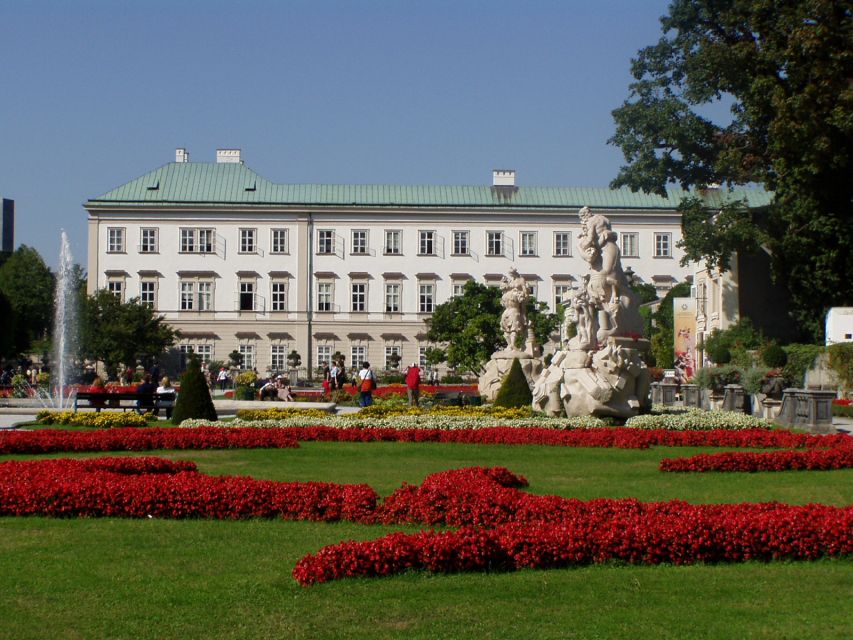
- Palace Mirabell’s surprising family drama: it was built under Prince Archbishop Wolf Dietrich von Reitenau for his mistress Salome Alt and their 15 children
- Mozart threaded through the route: Makartplatz brings you to the Mozart Residence area before you cross toward the Old Town
- Getreidegasse with wrought-iron trade signs: Salzburg’s most famous street for its ironwork and Mozart’s Birthplace
- Church stops that can include song: you may visit one or two churches, with guides sometimes performing a vocal piece such as Ave Maria
- A real “final photo” from Mönchsberg Hill: optional panoramic time, with an elevator fee if you want it
- Efficient entry style: the tour includes a separate-entrance approach that helps you avoid waiting
Schloss Mirabell to Makartplatz: starting where Salzburg’s power meets Mozart
This tour begins at Schloss Mirabell, which is a smart starting point because it immediately shows you Salzburg isn’t just pretty buildings. It’s a city that grew around courts, church power, and music.
At Mirabell, you’ll hear the Palace Mirabell story: it was built under the reign of Prince Archbishop Wolf Dietrich von Reitenau for his mistress, Salome Alt, and their 15 children. That’s not the kind of detail you get from a quick street photo. It gives you a lens for the rest of the day: you start seeing Salzburg’s architecture as “who had influence here, and how did they show it?”
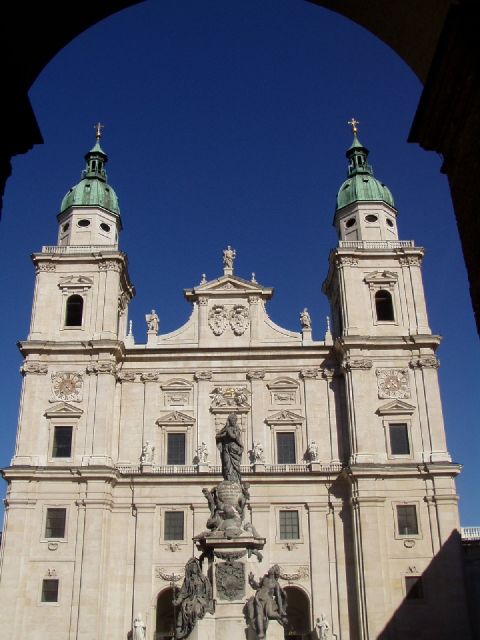
From there, you move to Makartplatz next to the palace, where you’ll see the Mozart Residence. Even if you know Mozart as a name, this stop helps you connect the person to a place, and it sets up everything you’ll see later in the Old Town.
One practical note: you’ll want comfortable shoes early, because this is a walking tour from the first minute. Salzburg’s center is compact, but the streets can be uneven, and you’ll be on your feet for the full 150 minutes.
You can also read our reviews of more walking tours in Salzburg

Crossing Makartsteg toward Old Town: why the river moment matters
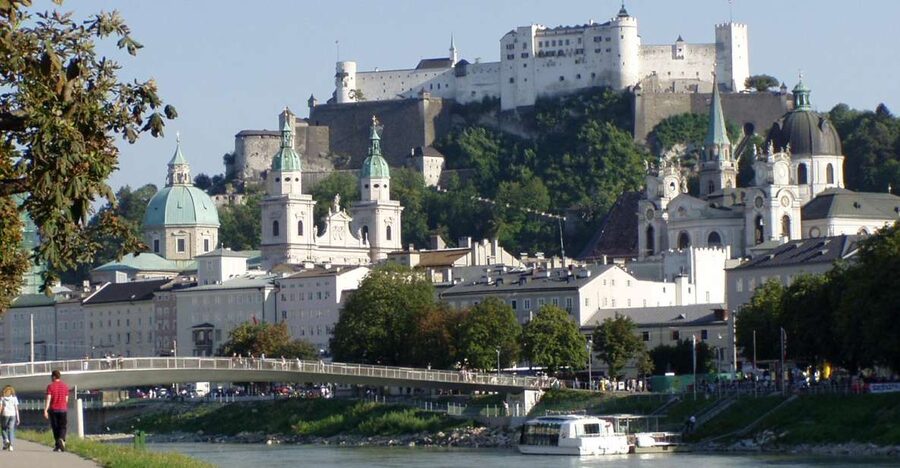
A key transition comes when you cross the bridge “Makartsteg” to reach the Old Town side. This isn’t just a shortcut. It helps you orient your brain.
On the river crossing, the city layout “clicks” in a way that makes the Old Town feel more navigable afterward. You get a sense of how New Town and Old Town relate, and you’ll likely spot the kind of building details you’ll want to search for later on your own.
Also, this bridge moment is where the tour’s storytelling becomes easier to follow. Once you’re on the Old Town side, the tour can focus on the most recognizable sights without constantly backtracking.
Getreidegasse and Mozart’s Birthplace: the street that explains why Salzburg looks the way it does
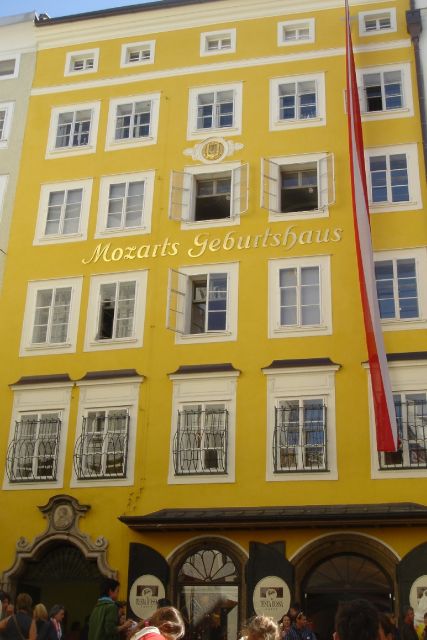
Now you hit Salzburg’s most famous street: Getreidegasse. This is one of those places where a “highlights tour” can either feel like a parade or like real discovery. The difference here is that you get context, not just names.
Getreidegasse is especially known for its wrought-iron trade signs. Those iron signs aren’t random decoration. They’re a clue to how commerce and craft were displayed on buildings in the old city—visible branding in an era before street numbers and websites.
And then there’s Mozart’s Birthplace. The tour’s approach makes that spot more than a plaque. You’ll learn how the street became a key line in Salzburg’s music identity, tied to the places you’re walking past right now.
As you stroll, you’ll also see historic buildings that span time periods—medieval apartments and churches built from the Middle Ages through baroque changes. That time jump can be confusing if you’re wandering alone. With a guide, you start noticing the different layers like a timeline in stone.
Church stops and the musical moments: seeing Salzburg’s faith side (and sometimes hearing it)
One of the biggest reasons people love this tour is what happens when you reach the churches. You’ll visit one or two Salzburg churches as part of the walking route, and that’s a major part of what turns the Old Town from scenery into story.
You’ll hear how churches fit into Salzburg’s power structure and daily life. And you may also catch something extra: multiple guides associated with this tour style have been noted for short vocal performances in church settings. In reviews, you’ll see references to moments like Ave Maria and other singing during the church stop.
Even if you don’t sing along, those musical moments change the mood of the building. It’s not about being a performer. It’s about experiencing why people once gathered in these places for both ceremony and sound.
Practical tip for church time: dress comfortably and plan for a quick pause. Church interiors can be cooler than the street. Bring a layer if you tend to run cold.
Mönchsberg Hill panorama: the optional 30 minutes (and the €4 elevator choice)
The tour wraps with a panoramic view from Mönchsberg Hill. This is a classic Salzburg payoff: you see why the city sits so beautifully in its setting, and you get the “map from above” effect.
You also get an optional extra 30 minutes. The tour includes it as free optional time, but there’s one additional cost to know about: there’s an elevator fee of €4 per person if you choose to use it for the hill access.
If you’re the type who values saving energy for better photos later, you might choose the elevator. If you’re happy with stairs and want the fresh air payoff without extra cost, you can keep it simple and walk up.
Either way, give yourself a few minutes to linger. Panoramas are where you’ll connect what you learned on the ground with what Salzburg looks like as a whole.
Price and value for a 150-minute Salzburg overview
The price is $53 per person for 150 minutes. On paper, that’s not “cheap.” But here’s the value math I’d use as a practical traveler:
- You’re paying for a professional guide to turn a small area of Salzburg into a clear story with names, dates, and connections. That’s the hard part to do alone without spending hours researching.
- You’re getting multiple key sights in one efficient route: Mirabell, Makartplatz, the bridge crossing, Getreidegasse, Mozart’s Birthplace area, churches, and a viewpoint.
- The tour also includes an additional 30 minutes optional at the end, which can stretch your experience without needing another ticketed activity.
This isn’t the right choice if you already know Salzburg well and want only specific targets. But it’s a strong fit if you’re visiting for the first time—or if you want to stop “guessing” and start understanding the city quickly.
Who this walking tour suits best
This tour fits best if you want a guided introduction with real context and you don’t mind some church time.
It’s especially good for:
- First-timers who want a tight overview and a sense of where everything sits
- People who like music and want Mozart tied to physical places, not just dates
- Travelers who enjoy story-based guiding—architecture, power, and culture all connected
- Anyone who values photo guidance and wants a route that makes viewpoints easier to reach
It may be less ideal if:
- You dislike churches or don’t want any religious stops
- You have very limited mobility and need step-free options (the tour includes hill time and old streets)
- You want long, slow wandering with no group structure
How to use the tour after it ends
A smart walking tour doesn’t just entertain you for 2.5 hours. It sets you up for the next 24 to 72 hours.
After this one, I’d do three things:
- Pick 2-3 sights from the walk that you want to see again at a different time of day.
- Use the names you heard to guide your self-guided exploring. When you know what a street sign or palace story connects to, walking becomes easier.
- Ask your guide what to do next while things are fresh in your head. The best guides can point you toward places that match what you actually like, not what every visitor defaults to.
This tour is also a good “orientation day” choice. Many visitors prefer to do it soon after arriving so the rest of Salzburg feels less like a maze.
Before you go: small details that prevent big annoyances
If you want the experience to feel smooth, plan for the basics.
Bring:
- Comfortable shoes
- A passport or ID card (a copy is accepted)
Know what’s not allowed:
- No luggage or large bags
- Pets aren’t allowed (assistance dogs are allowed)
If you’re traveling with a group, plan on keeping things light. That’s one reason walking tours like this stay enjoyable—everyone moves together at a good pace.
Should you book the Salzburg 2.5-Hour Walking Tour?
Book this tour if you want a guided, story-led introduction to Salzburg that hits Mozart landmarks, the key Old Town street Getreidegasse, church stops, and a viewpoint finish. The price makes sense for what you get: a pro guide, efficient sight coverage in 150 minutes, and an optional extra 30 minutes at the end.
Skip it if you only want one or two specific sights and you’d rather spend your time independently. Also skip if church interiors (or any extra hill effort) are a hard no for you.
One last thought: if you enjoy when a city’s music shows up in the place it belongs, this tour has a strong chance of giving you that moment—often with a vocal performance during the church portion.
FAQ
Where is the meeting point for the Salzburg walking tour?
You meet in front of the main entrance of Schloss Mirabell at Mirabellplatz 4, 5020 Salzburg, on the street-side. The tour notes that the exact location matters.
How long is the tour?
The duration is 150 minutes.
What languages are offered?
The tour is offered in English and German.
What is included in the price?
A professional guide is included, plus an additional 30 minutes that you can take as optional time.
Are there extra costs during the tour?
For Mönchsberg Hill, there is an optional elevator fee of €4 per person.
Does the tour include specific church visits?
Yes. The tour includes visiting one or two Salzburg churches.
What should I bring?
Bring comfortable shoes. You should also have a passport or ID card (a copy is accepted).
Can I bring luggage or a pet?
Luggage or large bags aren’t allowed. Pets aren’t allowed, but assistance dogs are permitted.