Verona can feel like a blur if you only see it from the main squares. This 2-hour walking tour is a smart way to get your bearings fast while still hitting the obvious stops like the Verona Arena and Basilica di Santa Anastasia. I also love that the guide doesn’t just read facts; they tailor the walk to your interests and sprinkle in lesser-known places that most people miss.
One thing to plan for: it’s a walking tour, so comfortable shoes matter. If you’re nursing sore knees or you hate stone streets, you may want to go slower or choose a different day plan.
In This Review
- Key things I’d plan around
- Piazza Bra to Verona Arena: the easiest way to start strong
- The medieval streets and city wall views: where Verona feels real
- Vicolo del Guasto and Porta Borsari: the value of stopping short
- Riva San Lorenzo and San Giovanni in Foro: old faith, in the middle of town
- Piazza delle Erbe: the main square that also teaches you how to look
- Piazza dei Signori: power, drama, and a crowd’s-eye view
- Basilica di Santa Anastasia: the big church stop you should not skip
- Casa di Romeo and Juliet’s balcony: the literary side, handled without the chaos
- Ponte Pietra to more Scaligero-era stops: views, names, and meaning
- Courtyard of the Old Market: the quieter finish that helps you wander smarter
- How much is $38 for 2 hours, and is it worth it?
- Guides matter: the difference between a walk and a story
- What it suits best (and what it doesn’t)
- Tips to get more out of every minute
- Should you book this Verona walking tour?
- FAQ
- How long is the Verona highlights and hidden gems walking tour?
- How much does the tour cost?
- Where do we meet for the tour?
- Are there private and group tour options?
- What languages is the live guide available in?
- Is the tour wheelchair accessible?
- Are entry tickets included?
- What should I bring?
- What is the cancellation policy?
Key things I’d plan around
- Flexible guide-led route feel: you can choose a private tour or a shared group tour.
- Big landmarks plus quieter lanes: you’ll cover major squares and lesser-known stops on foot.
- Local advice beyond the walk: your guide’s recommendations help you extend the experience later.
- Roman and medieval Verona in one loop: the Roman-era Verona Arena anchors the route, with older streets after.
- Right in the center to start: meeting at Piazza Bra keeps the tour from feeling like a long commute.
Piazza Bra to Verona Arena: the easiest way to start strong
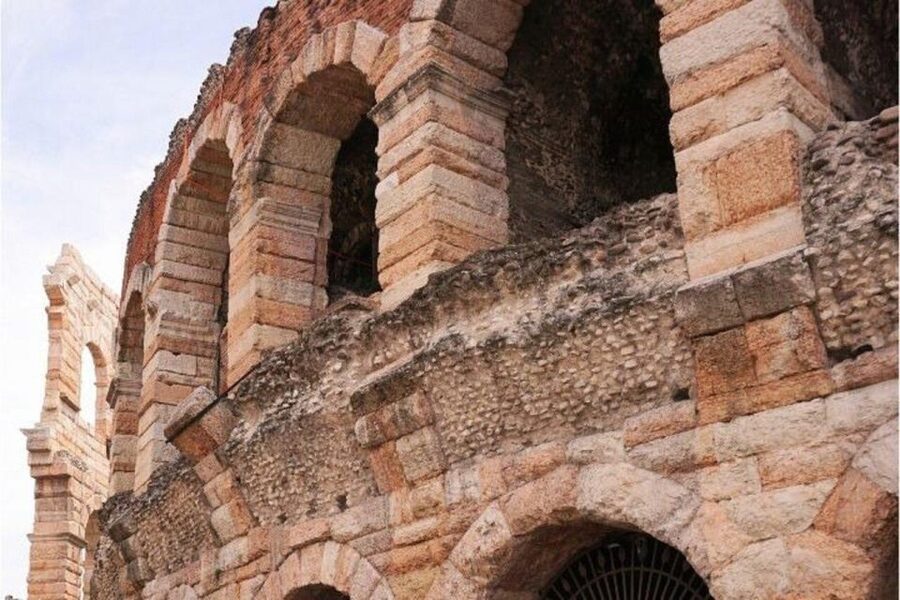
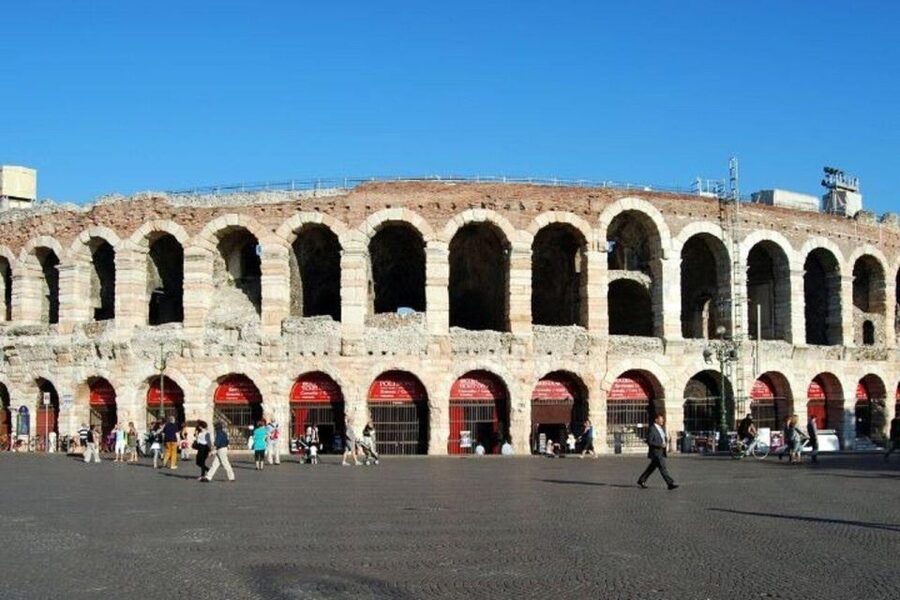
Most Verona walks start with a question: where am I, and where should I go next? This one starts in Piazza Bra, which is about as convenient a launchpad as you’ll find in the city center. You meet there, then the guide gets you oriented right away—how the old city is laid out, what to notice, and what’s worth your limited time.
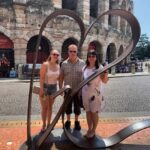
Then you head toward the Roman-era Verona Arena. Even if you’ve seen photos, it hits differently at street level. The guide’s job here is to help you read the building instead of just staring at it: why it matters, how it fits into the city’s timeline, and how the surrounding streets connect back to older Verona. It’s a great first “win” because it sets the tone for everything that follows—this isn’t a random stroll; it’s a guided storyline.
Practical note: the walk is only 2 hours, so early momentum matters. This itinerary makes sure you get the iconic anchor sights before you’re tired or distracted.
You can also read our reviews of more walking tours in Verona

The medieval streets and city wall views: where Verona feels real
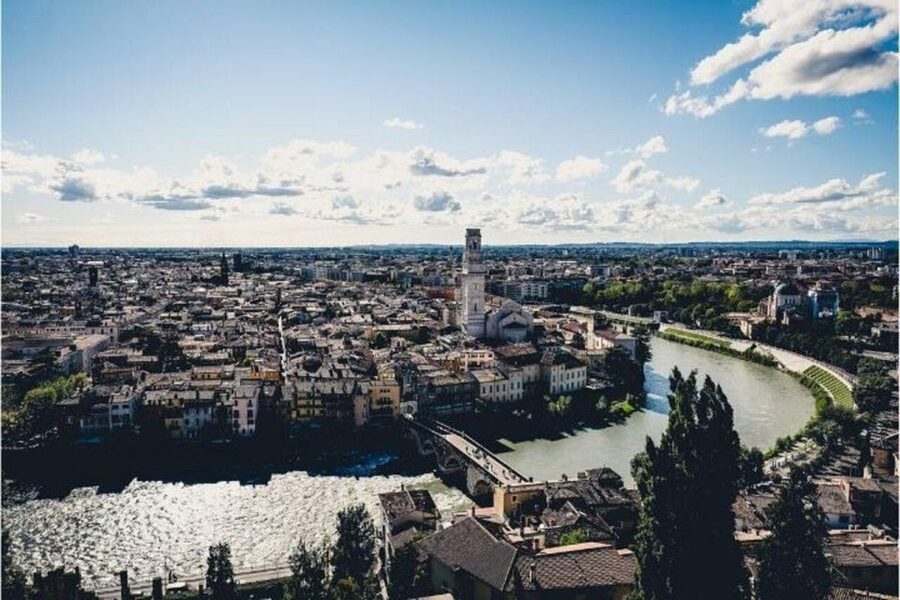
After the Arena, the tour moves through older lanes and city structure, including time along the medieval city wall to Corso, with stops like Porta Jovia along the way. The highlight here is the shift from landmark spectacle to street-level Verona. You get a sense of scale—how the city grew around walls and gates—and you’ll often see perspectives that don’t show up from the big squares alone.
This section also includes a scenic view over the river. That matters more than it sounds. Verona’s center is compact, and without a guide you can miss the quick “turn your head” moments that show you where the river sits and how neighborhoods connect. The guide helps you notice those in-between scenes, which is where the city’s personality lives.
Vicolo del Guasto and Porta Borsari: the value of stopping short
Then you hit a stop at Vicolo del Guasto, 21. That name alone tells you the vibe: this is the kind of alley stop you’d usually walk past on your way somewhere else. Here’s where the tour earns its “highlights and lesser-known” promise in a way that feels practical, not gimmicky. You’re not just checking boxes—you’re learning what to look for in the smaller spaces.
Next comes Porta Borsari. The tour doesn’t just say the name and move on. Your guide ties it into how Verona’s old defenses shaped movement through the city—how you could enter, exit, and travel before modern streets took over. Even if you’re not a hardcore history person, this kind of context turns a gate into a clue. It helps you understand why nearby streets feel the way they do.
Riva San Lorenzo and San Giovanni in Foro: old faith, in the middle of town
The itinerary includes Riva San Lorenzo and Chiesa di San Giovanni in Foro. These stops give you a break from the “tourist-squares only” rhythm. Churches and riverside areas in Verona tend to do two things well: they ground you in everyday local life and they show the city’s long continuity.
If you’re trying to understand a city quickly, these stops are useful because they show how Verona functions beyond landmarks. You see how the city’s rhythm is shaped by place—where people gather, where they pray, where they slow down. And because you’re on foot, you can feel the shift in atmosphere as you move from one area to another.
Piazza delle Erbe: the main square that also teaches you how to look
Now you step into Piazza delle Erbe, one of Verona’s key central squares. This is the kind of location where, on your own, you can either rush through or get lost in snapping photos.
With a guide, the square becomes a lesson. You learn what to look for—architectural cues, how the space is framed by the surrounding buildings, and why this plaza matters in the city’s layout. Your guide also helps you connect Piazza delle Erbe to the next square on the route, so you start seeing a pattern rather than isolated attractions.
If you like travel that makes you smarter while you’re walking, this part delivers. It’s one thing to stand in a famous square. It’s another to understand how it fits into the city’s larger structure.


Piazza dei Signori: power, drama, and a crowd’s-eye view
From Piazza delle Erbe, you move to Piazza dei Signori, Verona. If Piazza delle Erbe feels lively and market-linked, Piazza dei Signori feels more civic—where authority and public life played out.
Again, the value isn’t only the view. It’s how the guide explains what makes the place “work” as a square. You’ll understand how Verona used central plazas for gathering, display, and movement. And since the tour is only 2 hours, the guide’s storytelling keeps you from lingering too long in the wrong spots.
If you’re doing Verona for a day, this is the kind of square sequence that helps you pick your next wander afterward, because you’ll already know where the city’s activity centers are.
Basilica di Santa Anastasia: the big church stop you should not skip
The tour then visits Basilica di Santa Anastasia, described as the largest place of worship in the city, located in the heart of the old town. That’s a standout detail, because it frames the stop as more than just a pretty church.
This is where you’ll likely slow down. The basilica is a major landmark, but the guide helps you read it at a walking-tour pace. You learn what makes it important in Verona’s religious and architectural story—why it sits where it does and why it’s such a central point in the old town.
Practical tip: churches can mean more shade inside but sometimes cooler air, depending on the season. If you’re traveling in warm months, this stop can also be a welcome mental reset.
Casa di Romeo and Juliet’s balcony: the literary side, handled without the chaos
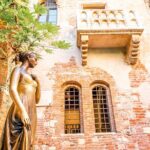
Yes, you’ll see Romeo’s House and Juliet’s balcony, including the detail that it inspired Shakespeare’s famous work. This stop is always popular, and the tour helps you experience it with a sense of order.
The real advantage of having a guide here is pacing and context. Instead of getting swept into the noise of the area, you get the background so the site feels connected to Verona rather than pasted on like a theme-park label. You’ll also get a clearer idea of what you want to revisit on your own later, if anything.
If you’re not a Shakespeare superfan, don’t worry. The guide’s explanations can bring you back to the core of Verona: it’s a real city with real streets, and the literature connection is part of that story—not the whole thing.
Ponte Pietra to more Scaligero-era stops: views, names, and meaning
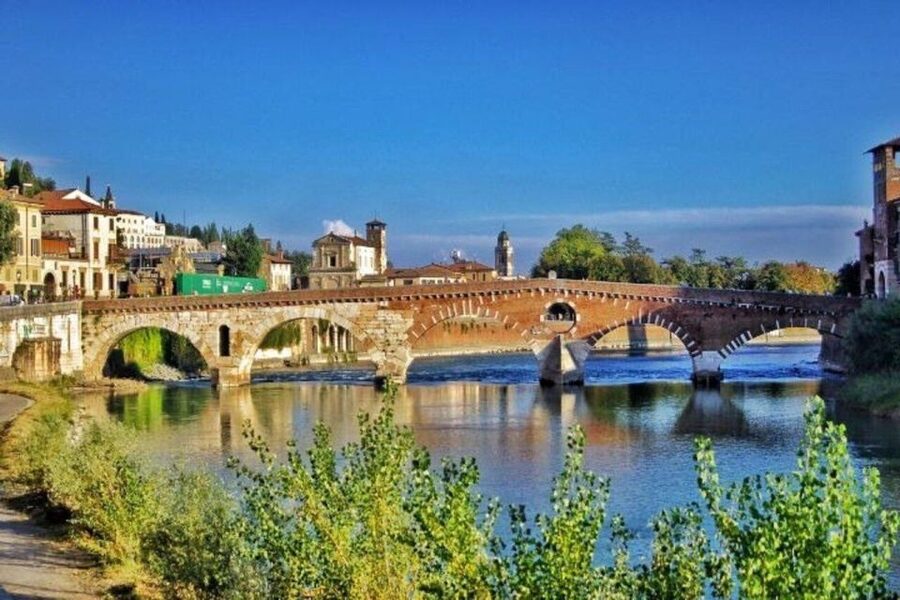
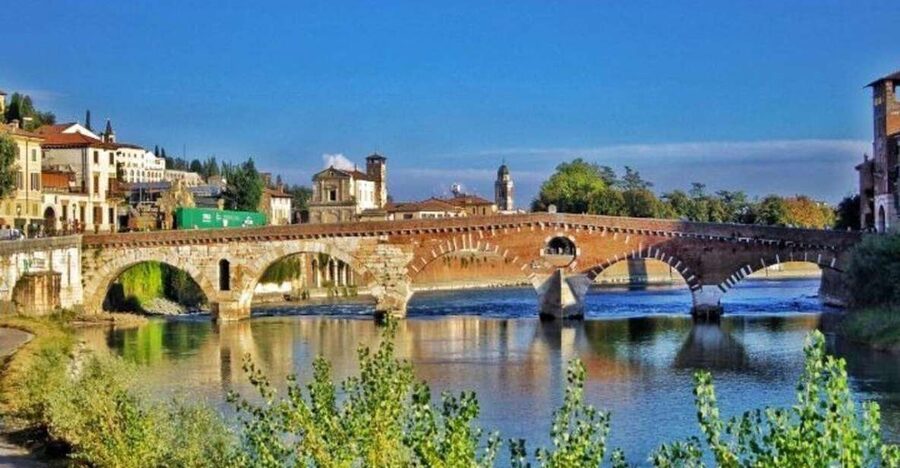
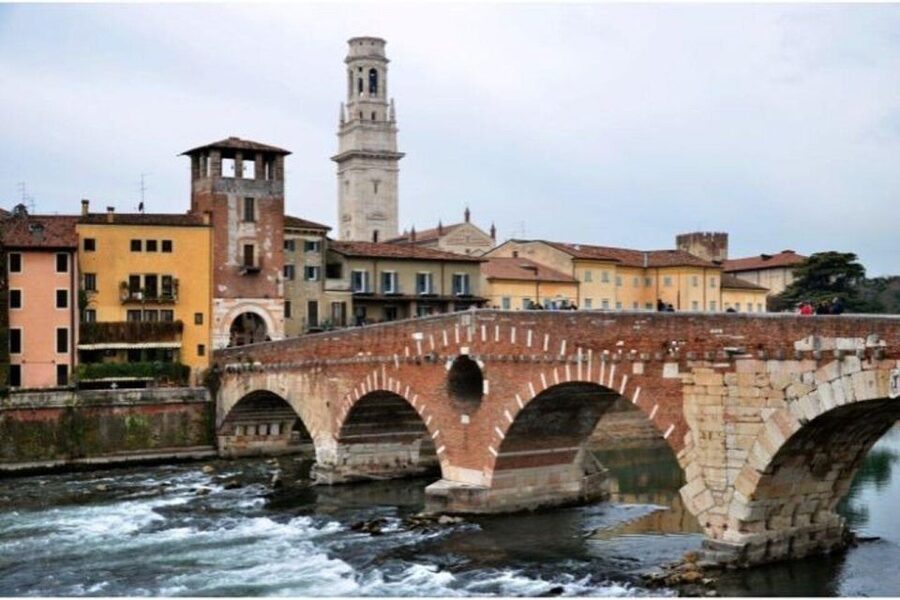
The itinerary includes Ponte Pietra. After you’ve taken in the major cultural stops, this is a shift toward “walk it off” sightseeing. Ponte Pietra is a named stop on the route, and that’s enough to know it matters within the city’s layout.
Then you reach Arche Scaligere. “Arche” signals tombs, and Scaligero points directly to the Scaliger family. Even without going deep into specifics (since the tour data here doesn’t list every detail), your guide’s job is to connect the site to Verona’s power history—who shaped the city and how their legacy still shows up in the streets and monuments around you.
This part of the walk tends to click for many people because it ties together what you’ve already seen: roman foundations, medieval defenses, civic squares, and the ruling families whose names you keep hearing around town.
Courtyard of the Old Market: the quieter finish that helps you wander smarter
The tour ends by visiting the Courtyard Of The Old Market. This is the kind of stop that’s easy to overlook on your own because it’s not always the headline attraction. That’s exactly why it works as a tour finisher. By the time you reach it, you’ve already covered the iconic hits and you’re ready to notice smaller spaces.
This is also where the guide’s “what to do next” advice becomes especially useful. When you know where the main activity hubs are, choosing a direction for dinner or a last-minute gelato stop gets easier. You’re not just leaving with photos. You’re leaving with a plan.
Drop-off is listed at Via Roma, 80 or Via Dietro Listone, 1 depending on the option. That’s handy because it can put you in the right zone for continuing your day without an awkward trek back across town.
How much is $38 for 2 hours, and is it worth it?
$38 for a 2-hour walking tour is a reasonable price for a city like Verona, where the big sights are close but not always easy to connect without context. The ticket price buys you two practical things:
1) A guided route that saves time. You cover major landmarks plus lesser-known stops in one focused loop.
2) Advice you can use immediately. Your guide doesn’t just run the tour; they share recommendations for what to do afterward.
If you’re traveling with limited time—one morning, one afternoon—this is the kind of value that feels real. You’re paying to turn scattered sights into a coherent overview, and that makes everything you do after feel smoother.
If you’re the type who hates group pacing or you already have a day fully mapped with your own research, you might question whether you need a guide. But if you want Verona to make sense fast, the price-to-time ratio is solid.
Guides matter: the difference between a walk and a story
A big reason this tour earns high marks is the human factor: the guides adjust to your pace and interests. I’ve seen this work beautifully with guides like Graziano, Sara, Elettra, Constanza, and Emanuela, who are described as personable and ready to answer questions. Whether you’re interested in history, architecture, or simply finding the best places to eat, the guide’s tone can shift the whole experience.
For example, one guide was praised for being flexible when plans changed because of a cancelled train, and for walking people directly toward a lunch reservation area. That’s not a small detail. It’s what turns a 2-hour tour into something that supports your real travel day, not just a calendar item.
And the best part: because the tour is only 2 hours, you usually get enough guidance to keep exploring without feeling tied to the group for half the day.
What it suits best (and what it doesn’t)
This tour is a great fit if you:
- Have only about half a day in Verona and want order, not random wandering.
- Want both the headline sights and quieter corners.
- Like learning from someone local so your self-guided time afterward is more confident.
It may be less ideal if you:
- Want a lot of time inside buildings or long museum-style stops (entry tickets aren’t included).
- Need a low-footprint plan. This is still a walking tour, even though it’s wheelchair accessible.
Tips to get more out of every minute
- Wear comfortable shoes. Verona’s streets can be hard on tired feet.
- Bring water and a light layer if you’re going in cooler months—church stops can feel different from sunny squares.
- If you have preferences—Roman sites, architecture, photos, food areas—tell your guide early. The tour is designed to adapt.
- If you want entry ticket upgrades (if any apply to sights you care about), plan that separately since entry tickets aren’t included.
Should you book this Verona walking tour?
If you want the smartest Verona overview in a short time, I think this is a book-worthy option. It covers major landmarks like the Verona Arena and Basilica di Santa Anastasia, then fills in the city’s texture with smaller stops and named squares like Piazza delle Erbe and Piazza dei Signori.
I’d especially recommend it if you enjoy guides who answer questions and give practical next-step advice. For $38 and 2 hours, you’re buying time saved, context gained, and a smoother plan for the rest of your day in Verona.
FAQ
How long is the Verona highlights and hidden gems walking tour?
It lasts 2 hours.
How much does the tour cost?
The price listed is $38 per person.
Where do we meet for the tour?
The meeting point may vary depending on the option booked, with starting location options listed at Via Roma, 80 and Via Dietro Listone, 1, and the tour meeting in the heart of the city at Piazza Bra.
Are there private and group tour options?
Yes. You can choose between a customizable private tour or a shared group tour.
What languages is the live guide available in?
The guide is available in English, French, Italian, and Spanish.
Is the tour wheelchair accessible?
Yes, it’s listed as wheelchair accessible.
Are entry tickets included?
No. Entry tickets are not included.
What should I bring?
Wear comfortable shoes.
What is the cancellation policy?
Free cancellation is available up to 24 hours in advance for a full refund.