REVIEW · BOSTON
Freedom Trail Walking Tour 250
Book on Viator →Operated by Tour of the Freedom Trail · Bookable on Viator
A foggy sidewalk can feel like 1775. This Freedom Trail walking tour pairs a costumed in-character guide with stop-by-stop stories that connect colonial Boston to the Revolution. You’ll cover about 1.2 miles (2 km) at an easy pace, with a guided narration built for real people, not history textbooks.
I especially like two things: the guide performance (I’ve seen guides named Ben, Elizabeth, Catherine, and Elaina praised for storytelling and energy), and the value of hitting major sites with mostly free admissions. One thing to consider: the tone can lean humorous and theatrical, so if you want strictly formal history, you’ll want to set expectations before you go.
In This Review
- Key things to know before you walk the Freedom Trail
- A short walk that turns Boston streets into a timeline
- Price and time: why $26 feels fair
- The guide factor: costume, humor, and why it works
- Start times, walking pace, and how to prepare
- Stop-by-stop: what you’ll see and why it’s worth your attention
- Massachusetts State House area: setting the political stage
- Park Street Church: where a famous song first took the stage
- Granary Burying Ground: where “Founding Fathers” stop being labels
- King’s Chapel: America’s first Anglican church
- Boston’s oldest English burial ground: another layer of early Boston
- Boston Latin School: America’s first public school
- Benjamin Franklin statue and alumni connection
- Old Corner Bookstore: printing, publishing, and the power of words
- Old South Meeting House: the Boston Tea Party happened here
- Oldest standing government building in Boston: power in stone
- Boston Massacre site: protest that turned into a battle cry
- Sam Adams tale: staying on the political pulse
- Faneuil Hall Marketplace: the iconic town-hall feel
- Paul Revere House area (built 1680): a residential side of revolution
- Who this tour fits best (and who might want a different option)
- Should you book this Freedom Trail walking tour?
- FAQ
- How long is the Freedom Trail Walking Tour 250?
- What does the tour cost?
- How much walking is involved?
- Are admissions included at the stops?
- Is the tour in English?
- Does it run in bad weather?
- Can I cancel and get a refund?
Key things to know before you walk the Freedom Trail
- In-character, costumed guide: stories are meant to sound like you stepped into colonial Boston.
- Quick-hit route: about 1.5 miles total, with short stops that keep the pace moving.
- Mostly free stops: many sites on the route are ticket-free, so you are not paying repeatedly.
- Good for all-weather walking: it runs in all weather conditions, so dress for wind, rain, or cold.
- Small-enough group: up to 50 people, but narrow cemetery areas can still feel tight.
A short walk that turns Boston streets into a timeline
The Freedom Trail can look like a bunch of red brick lines until a guide explains why those places mattered. On this tour, you get that connection fast. You start at the Massachusetts State House area and then move through the parts of Boston where religion, schooling, printing, and politics all rubbed shoulders.
This is the kind of walking tour that works even if you are not a hardcore history person. You get names, motives, and cause-and-effect. And because the guide is in character, the stories have a performance rhythm. In cold months, that matters more than you might think. One guide was praised for staying entertaining through winter weather, and I get it: when your hands are numb, you still need your brain hooked.
You also avoid the trap of trying to do everything on your own. The trail is short, but it’s easy to miss the meaning of what you are looking at. This route keeps you moving and keeps the story straight.
You can also read our reviews of more walking tours in Boston


Price and time: why $26 feels fair
For $26 per person, you’re buying three practical things: a professional guide, a structured route, and narration that ties multiple sites together. The tour runs about 1 hour 45 minutes, which is long enough to feel like Boston became a story, but short enough to fit into a busy day.
That time matters in Boston. The city is famous, which means sidewalks can get crowded. A guided route helps you use that limited time smartly. You’ll walk roughly 1.2 miles total, so you’re not signing up for a long hike.
Value is also boosted by the fact that many stops are free. Several locations on the route are listed as free admission, and you are not forced into paid museum tickets just to keep moving. The one notable exception is the Old South Meeting House, where admission is not included.
So yes, you’re paying money. But you’re paying for a human who can explain why these stops matter, not just what they look like.
The guide factor: costume, humor, and why it works

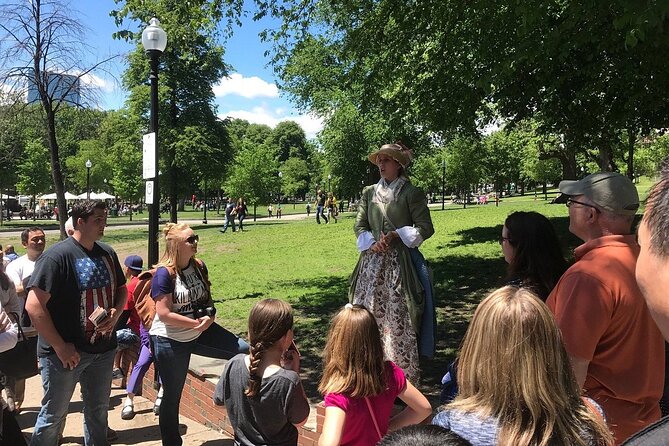
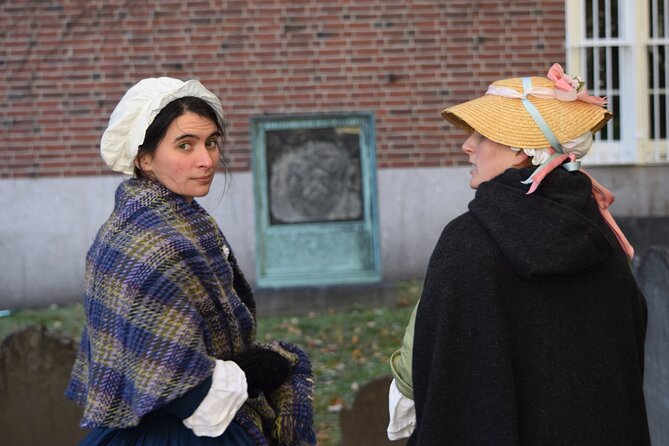
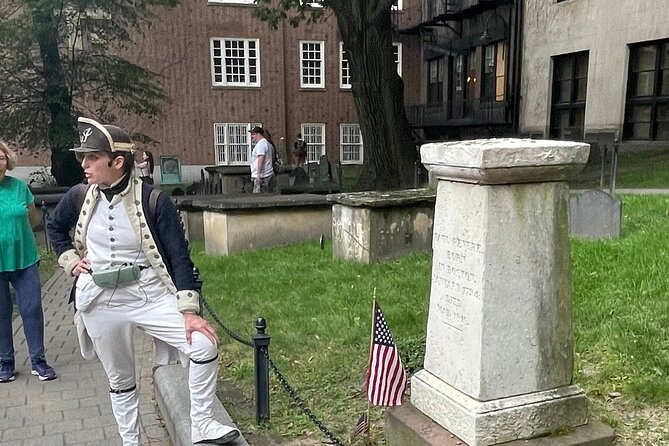
This tour’s selling point is not just the landmarks. It’s the guide acting as a voice from the past. Guides are described as dressed like people from the era, and that style shows up in how they deliver stories.
There are also recurring praise notes about delivery and crowd management: people said it was easy to hear, stories flowed, and the guide kept attention through pacing and humor. Some families mentioned the guide being especially good with kids, including a guide who kept young listeners engaged.
At the same time, a couple of reviews complained about history being too superficial or humor crossing the line. One person said the guide made too many jokes in the cemetery. Another felt certain name-style jokes were disrespectful.
Here’s the practical takeaway: if you’re the type who wants lecture-style history with zero jokes, this may not be your perfect match. But if you want a lively, story-driven walk that makes the Revolution feel human, you’ll likely enjoy the tone.
Start times, walking pace, and how to prepare
You can choose from a few start times, which makes planning easier if you’re juggling sightseeing in multiple neighborhoods. The tour is also designed so most travelers can participate. It’s not presented as a strenuous hike.
The best prep is simple:
- Wear shoes you can handle on city sidewalks and steps.
- Dress for the weather. The tour runs in all weather conditions, so you will feel rain, wind, or cold unless you plan for it.
- Expect tight quarters at cemetery-style stops. Even with a max of 50, those spaces compress the group.
One big benefit of the structure: there’s a clear order of stops, with short time on each. That keeps the route from dragging. Just don’t expect long question-and-answer pauses.
Stop-by-stop: what you’ll see and why it’s worth your attention
This tour moves through key anchors of Boston’s colonial and revolutionary era. Times at stops are generally short, so think of each one as a focused story beat.


Massachusetts State House area: setting the political stage
You begin at the Massachusetts State House. Even before you hear details, it helps frame the big theme: politics and power in Boston weren’t abstract. They were street-level, church-to-church, and block-to-block.
This first segment matters because it puts you in the right mindset for what comes next: religion, education, and printing all feed into politics here.
Park Street Church: where a famous song first took the stage
Park Street Church is your first major stop. It’s tied to a cultural milestone: My Country ’Tis of Thee was first performed here. That’s a smart way to start. Music turns ideas into memory, and Boston’s political identity shows up in that kind of cultural moment.
The time at this stop is short, so if you want photos, take them quickly and then move on. The guide’s story is doing the heavy lifting.
Granary Burying Ground: where “Founding Fathers” stop being labels
Granary Burying Ground is one of the most compelling parts of this route. It’s where you hear stories about important Founding Fathers at their final resting place.
This is also where the tour can feel the most crowded or concentrated. Cemeteries tend to have narrow pathways, and groups cluster for hearing. If you’re sensitive to tight spaces, bring patience here.
On the plus side, this is where you’re most likely to feel that history is personal. Names become people with choices, not just dates on a plaque.
King’s Chapel: America’s first Anglican church
Next is King’s Chapel, described as America’s first Anglican church. That detail sets up a fascinating point: colonial Boston had religious identities that shaped community life and social rules.
A short stop here means you’ll likely get the essentials and then move on. The value is in how the guide connects religion to later political conflict.
Boston’s oldest English burial ground: another layer of early Boston
After King’s Chapel, you visit Boston’s oldest English burial ground. This stop is brief, but it adds depth. You’re not just hearing about the Revolution; you’re walking through the early skeleton of English life in New England.
If you like atmosphere, slow down for a second after the guide moves on. Look around. Burial grounds are quiet and telling, even when the pace is fast.
Boston Latin School: America’s first public school
Boston Latin School is next, described as America’s first public school. This stop is more than a trivia hit. Education is one of those hidden drivers of political change—people learned how to argue, read, and think in ways that later shaped public life.
Again, short stop, so listen closely. The guide can make the building feel like a machine for producing thinkers.
Benjamin Franklin statue and alumni connection
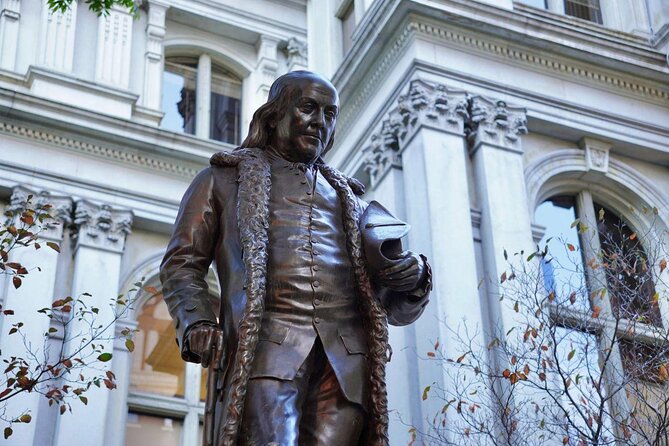
You’ll see a statue of Benjamin Franklin. The story connects Franklin to the Boston Latin School, and that alumni link makes a familiar founding figure feel more local and less mythic.
If you are traveling with kids or teens, this type of stop often clicks. Franklin is famous, and the guide’s tie-in helps it become a story you can place in Boston streets.
Old Corner Bookstore: printing, publishing, and the power of words
Old Corner Bookstore is where the tour highlights the publishing world, including the fact that the Midnight Ride of Paul Revere was published here. Even if you know the legend, the publishing link reminds you that Revolution ideas spread through media and print.
This stop is quick, but it’s a key pivot: you go from schools and churches to the circulation of stories that helped people move from belief to action.
Old South Meeting House: the Boston Tea Party happened here
Old South Meeting House is next, and it’s the stop tied to the Boston Tea Party. This is one of the emotionally charged places on the route.
Just know admission is not included. That means you may not get inside the same way you do with free stops. You’ll still hear the story, but your photos and observations might be more from where you’re standing than from inside exhibits.
Oldest standing government building in Boston: power in stone
You also visit the oldest standing government building in Boston. That phrasing matters because it’s not just a pretty facade. It’s a reminder that the institutions of government formed early and visibly here.
This stop can be a great reset point if the earlier segments felt packed. Stone and layout can make it easier to picture how meetings and decisions happened.
Boston Massacre site: protest that turned into a battle cry
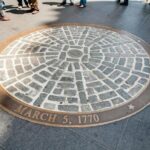
The Boston Massacre site is next. Here you hear about the massacre and the protest that became a rallying cry across the American Revolutionary War.
This is another spot where you’ll want to be ready to stand still and listen. If the group is large, hearing can be more challenging, especially if other tour groups are nearby. The good news: one of the common praises is that guides are easy to hear even in busy areas.
Sam Adams tale: staying on the political pulse
There’s also time to hear the tale of Sam Adams. For me, this is where the guide’s storytelling style really shows. You can’t just list events. You need motivations. Adams is an example of political energy that wasn’t accidental. It was built.
If you like understanding personalities behind events, this is the stop that will likely stick in your brain.
Faneuil Hall Marketplace: the iconic town-hall feel
Faneuil Hall Marketplace is labeled as the most iconic historical attraction in Boston. Even if you’ve seen it in photos, it feels different when you arrive during a narrated walk. The guide turns it into a sense of civic life—public space where ideas were argued in public.
This stop is short, so grab your skyline shots quickly and then focus on the story you’re hearing rather than getting stuck in browsing mode.
Paul Revere House area (built 1680): a residential side of revolution
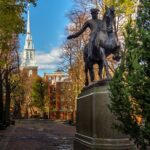
Finally, the tour mentions the Paul Revere House and notes it was built in 1680 and is the oldest residential building in Boston. That detail gives you a valuable shift. The Revolution wasn’t only meetings and speeches. It was families, homes, and ordinary rooms that became connected to extraordinary events.
Because the stop is brief, you’ll mostly absorb the idea, not linger. Still, ending on a home connects the cause-and-effect loop in a satisfying way: politics lives in people’s daily lives.
Who this tour fits best (and who might want a different option)
I think this tour is a strong match for:
- First-timers who want a clear introduction to Boston’s Revolutionary-era sites without planning every step.
- Families, since guides are praised for keeping kids engaged and the pace feels manageable.
- People who like stories more than museum-style reading.
It may be less ideal if you:
- Want strictly academic delivery with zero jokes.
- Prefer slower, deeper exploration at a few locations instead of covering many in a single walking stretch.
- Feel uncomfortable in tight spaces like cemetery paths.
The good news is the format is designed to balance movement and narration. When the guide hits their stride, the whole route feels like a single, connected story.
Should you book this Freedom Trail walking tour?
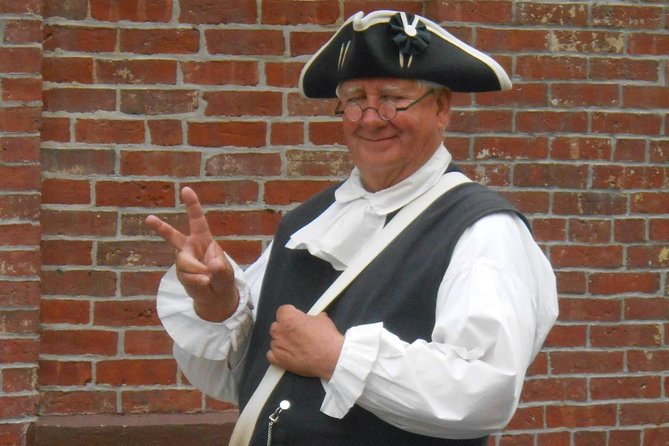
If you’re aiming for maximum meaning per minute, I’d book it. For $26 and about 1 hour 45 minutes, you get a professional guide, a structured route along major sites, and mostly free stops that keep you from nickel-and-diming your day.
My main decision point is your tolerance for theatrical storytelling. If you enjoy costumed guides and a bit of humor, this tour is an easy yes. If you prefer dry history, you might still learn a lot, but you’ll want to mentally prepare for the performance style.
Overall: it’s a smart way to get oriented fast on Boston’s Freedom Trail—and it leaves you ready to explore on your own afterward.
FAQ

How long is the Freedom Trail Walking Tour 250?
It runs about 1 hour 45 minutes (approx.).
What does the tour cost?
The price is $26.00 per person.
How much walking is involved?
The tour covers approximately 1.2 miles (two kilometers).
Are admissions included at the stops?
Most stops listed are free admission. Old South Meeting House has admission not included.
Is the tour in English?
Yes, it is offered in English.
Does it run in bad weather?
It operates in all weather conditions. If it’s canceled due to poor weather, you’ll be offered a different date or a full refund.
Can I cancel and get a refund?
Free cancellation is available. You can cancel up to 24 hours in advance for a full refund. If you cancel less than 24 hours before the start time, the amount paid is not refunded.