REVIEW · BOSTON
Boston’s Freedom Trail: A Revolutionary Walking Tour
Book on GetYourGuide →Operated by Boston History Company · Bookable on GetYourGuide
Boston tells its founding story on foot. This guided walk turns the Freedom Trail into a real, walkable timeline, with a live guide leading you to all 16 official sites in about 2.5 hours. I especially like how it hits big names like Paul Revere and John Hancock, then backs up and adds smaller, human stories about women, African Americans, and immigrant patriots who helped shape the American Revolution.
Two more things I like: you’ll pass major landmarks like Faneuil Hall and the USS Constitution, and you’ll actually stand where major events happened, including the Boston Massacre Site. One possible drawback to plan for: you’re not buying entry tickets on this tour, so you’ll still need to decide later if you want to go inside specific attractions (and you’ll be doing a lot of walking to cover all 16 stops).
In This Review
- Key things that make this Freedom Trail tour worth it
- Entering the Freedom Trail at The Embrace (and spotting your guide)
- The 2.5-hour route: what you see at each landmark
- Boston Common to Park Street Church: the city’s opening credits
- Granary Burying Ground and the Golden Dome: names you’ll recognize again
- From King’s Chapel to the Benjamin Franklin Statue and Old Corner Bookstore
- Old South Meeting House and the Old State House: where politics got explosive
- Boston Massacre Site and the steeple-with-lantern story at Old North Church
- Faneuil Hall: meetinghouse politics in action
- Paul Revere House and the story of action that stuck
- Copp’s Hill Burying Ground: ghosts with context
- USS Constitution and the walk toward Bunker Hill
- What you’ll learn about revolution, abolition, education, and immigration
- Guide style is the secret sauce (and why this one works)
- Price and what makes $31 feel fair
- Practical planning tips so your feet don’t file a complaint
- Who this tour is best for
- Should you book this Freedom Trail tour?
- FAQ
- How long is the Boston Freedom Trail walking tour?
- Where does the tour start?
- Does the tour include entry tickets to attractions?
- Which historic sites are covered?
- Is the tour wheelchair accessible?
- Is video recording allowed during the tour?
- What should I bring?
Key things that make this Freedom Trail tour worth it
- All 16 official stops in one outing, so you’re not piecing together your own route
- Old North Church’s lantern story and the Midnight Riders thread that helps it all make sense
- The who else angle: stories tied to women, African Americans, and immigrant patriots
- Strong guide energy in the best sessions, with named guides like Kenneth, Matthew, Charlie R, Alissa, Rob, Stuart, and more showing up in top-rated experiences
- You get Revolution “where it happened” moments, from the Boston Massacre Site to meeting-hall politics at Faneuil Hall
- You end where you started, so it’s easy to roll into dinner plans after
Entering the Freedom Trail at The Embrace (and spotting your guide)
Your tour starts just inside Boston Common at The Embrace statue, right by the visitor’s center at 139 Tremont Street. This matters more than it sounds: starting there keeps the day grounded. You get the lay of the land early, then the walk becomes a clean story instead of a random list of famous buildings.
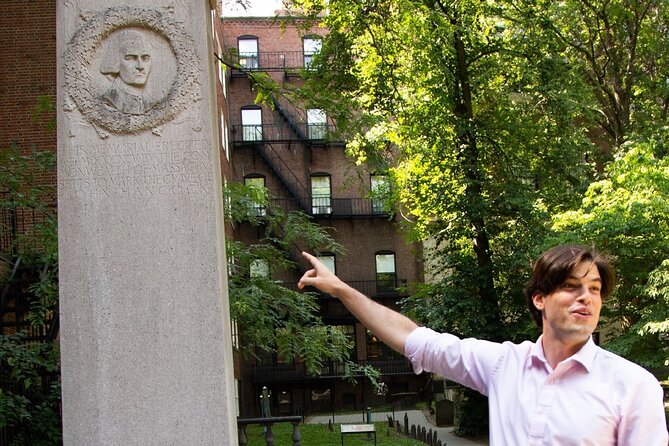
Also, your guide will not be in costume. They’ll carry a flag with Boston History Company’s name, which is a simple way to find them quickly—no scavenger hunt, no guessing games. If you arrive a few minutes early, you’ll have time to orient, use the restroom, and load up your phone for navigation (but keep your eyes up; the best parts come as you turn corners).
You can also read our reviews of more walking tours in Boston



The 2.5-hour route: what you see at each landmark
This is a walking tour that hits a lot of ground in a single sitting, designed for maximum “covered stops per hour.” The upside is obvious: you’ll see the full Freedom Trail set of 16 official sites in one go. The tradeoff is also real: you won’t have time for deep museum-style browsing or long indoor breaks.
Here’s how the route feels in blocks, and what each cluster gives you.
Boston Common to Park Street Church: the city’s opening credits
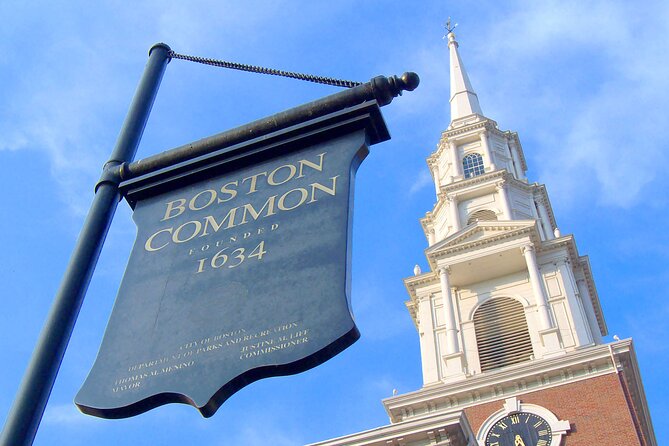
You start at The Embrace on Boston Common, then roll through the earliest sections that frame the Revolution. One of the first religious landmarks you pass is Park Street Church. It’s the kind of stop that can feel like it’s just there, unless the guide connects it to Boston’s “public meeting” culture—how politics, religion, and community life all mixed together in early days.
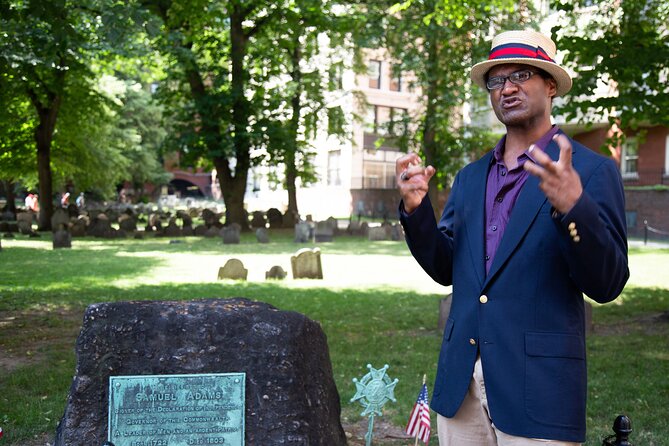
As you keep walking, you’ll reach Granary Burying Ground. This is one of the stops where the tour’s storytelling style really pays off. It’s where you can connect names you’ve heard in school to actual graves and the people they represent.
Granary Burying Ground and the Golden Dome: names you’ll recognize again
At Granary Burying Ground, you’re in the orbit of Revolutionary-era figures like John Hancock, Paul Revere, and Samuel Adams—the final resting places make these names feel less abstract. If you want to understand why Boston’s Revolution mattered, it helps to see the city treating those people like civic touchstones.
And then there’s the payoff viewpoint: you’ll witness the famous Golden Dome of the Massachusetts State House. This isn’t just a pretty skyline moment. When a guide ties it back to Boston’s shift from colony to nation, the dome becomes a visual shortcut for the big story: power moves, and Boston tries to keep defining what comes next.
From King’s Chapel to the Benjamin Franklin Statue and Old Corner Bookstore
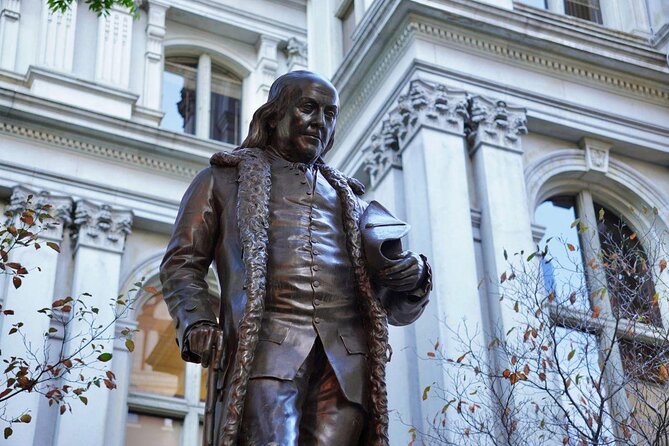
As you move deeper into the trail’s core, you’ll pass King’s Chapel and the Benjamin Franklin Statue. Franklin is a helpful bridge character because he wasn’t only politics—he was communication, ideas, and practical problem-solving. A good guide uses that to show you the Revolution wasn’t only about battles. It was also about arguments, networks, and new ways of thinking.
You’ll also see Old Corner Bookstore, a spot that reminds you Boston was a place where print and public debate mattered. Even if you can’t go inside on this tour (tickets aren’t included), it’s a strong “you are standing in the intellectual infrastructure” kind of moment.


Old South Meeting House and the Old State House: where politics got explosive
This is the area where Boston’s Revolution stops being a textbook and starts acting like a drama. You’ll visit Old South Meeting House and Old State House, both tied to the kind of talk that could turn into action fast.
And the guide won’t just list events—they connect them to the mood of the city. That’s where you start hearing about the Boston Tea Party and the Boston Massacre, and why those weren’t isolated incidents. They were sparks in a long fuse.
The big emphasis here is cause and effect. You’ll learn what pushed people to organize, what pushed them to fear, and what pushed them to act.
Boston Massacre Site and the steeple-with-lantern story at Old North Church
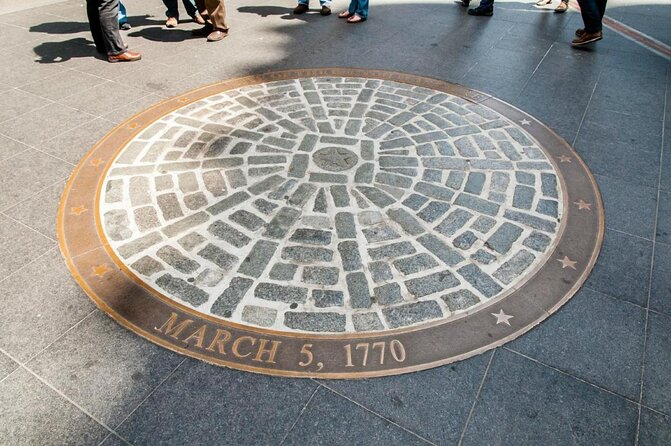
You’ll stand at the Boston Massacre Site, where the “Bloody Massacre occurred” is not just a line in a narrative. It’s a moment that changes how you read everything else on the trail. Once you understand what people felt, you don’t treat the Revolution like something that happened elsewhere.
Then comes one of the most iconic Freedom Trail stories: Old North Church. The tour includes the lantern angle—admire the steeple where the two lanterns were hung. Even if you already know the legend of the midnight message, a good guide helps you see the stakes: it wasn’t a clever stunt. It was a communications lifeline.
This is also where that “Midnight Riders” thread shows up, along with tales of rebels and the less-polished sides of city resistance. If you like history with human messiness—gangs, street politics, improvised courage—this is your sweet spot.
Faneuil Hall: meetinghouse politics in action
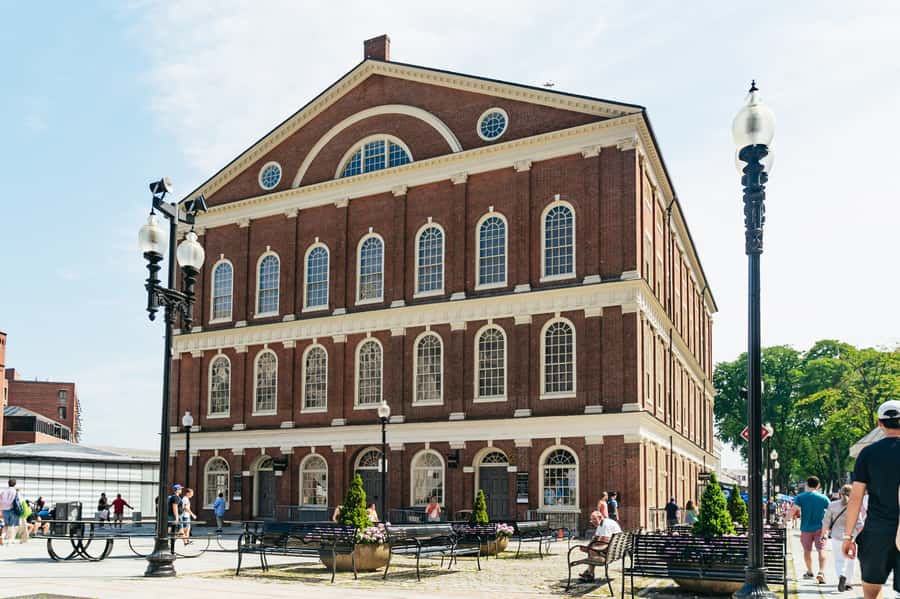
Next you’ll reach Faneuil Hall, one of Boston’s best-known political arenas. The Revolution’s loudest energy often sounds like speeches and crowd decisions. Faneuil Hall is perfect for that because it’s literally a place associated with public gathering and debate.
The tour ties this to the bigger Revolutionary pattern: organized talk turning into organized resistance.
Paul Revere House and the story of action that stuck
You’ll also visit the Paul Revere House area, which helps you separate the myth from the man by placing him inside Boston’s geography. Even if you’ve heard the famous ride, this stop can reframe it—helping you connect the ride to a larger network of people who helped make outcomes possible.
Copp’s Hill Burying Ground: ghosts with context
You’ll pass Copp’s Hill Burying Ground, another place where the ground itself does storytelling work. It’s a strong reminder that the Revolution’s actors were part of real communities, not just names that end up in monuments.
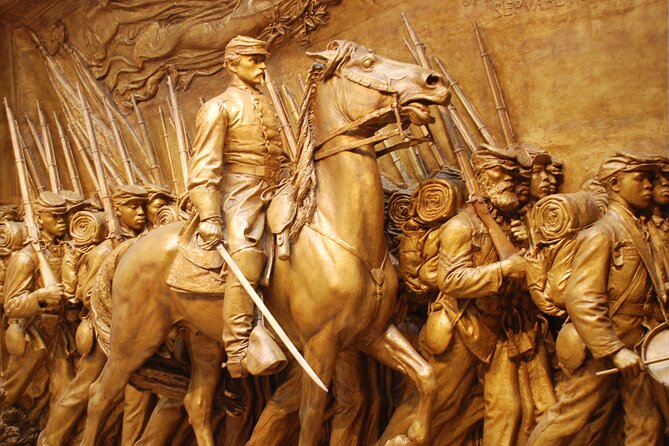
This is where I like the tour’s approach to “who gets remembered.” The themes include women, African Americans, and immigrant patriots and pioneers, so you’re not stuck only in the orbit of the most famous male names.
USS Constitution and the walk toward Bunker Hill
The tour heads past USS Constitution, Boston’s famous ship tied to early American naval ambition. It’s a good contrast after so many landmarks that are buildings and meeting places. Here, you get a sense of the tools a new nation needed, not just the arguments it made.
Then you reach Bunker Hill Monument. You likely won’t treat this as an “inside experience” stop on a walking tour like this, but it’s still a major visual and emotional end note for the day. Seeing the monument near the trail’s closing moments helps the whole route click into place: the Revolution wasn’t one event—it was a chain of decisions and risks.
What you’ll learn about revolution, abolition, education, and immigration
This tour doesn’t only cover famous battles. You’ll learn how Boston played roles in areas that shaped the country over time—abolition, American education, and immigration—as well as the Revolution’s loud events.
That makes the Freedom Trail feel less like a collection of monuments and more like a living civic story. When the guide connects “then” to “later,” you start seeing why Boston became a pioneer in those movements, not just a stage for famous men.
And you’ll hear lesser-known stories too, including accounts tied to women and African Americans and immigrant patriots. That matters because it broadens the Revolution beyond one narrow script.
Guide style is the secret sauce (and why this one works)
This kind of tour rises or falls with the guide. Here, the strongest signal is consistency: the top-rated sessions talk about guides who package history with humor and clear storytelling.
Names that show up again and again in the most praised experiences include Rob, Kenneth, Charlie R, Matthew, Alissa, Stuart, and Malcom. There’s also mention that guides keep things engaging even in larger groups, and that the tour doesn’t feel scripted. You get a sense of questions answered on the fly, plus room for conversation about history and where to eat or what to do next.
A practical note: one review points out fast English in one instance, so if your English is still building, you may want to choose the best-timed session or ask your guide to slow down if needed.
And yes, expect some cheap dad jokes. The trail is heavy material—laughter is part of how the day stays bearable.
Price and what makes $31 feel fair
At $31 per person for a 2.5-hour guided walk of all 16 official Freedom Trail sites, the value comes from three things:
1) Time savings. Doing all 16 stops on your own takes planning, routing, and backtracking. Here, you’re walked straight through the full sequence.
2) Story support. The landmarks are well-known, but the connections can be missing if you’re self-guiding. The guide ties together events like the Boston Tea Party and Boston Massacre Site moments so you don’t just see buildings—you understand why.
3) No ticket friction. Entry tickets aren’t included, so you avoid paying for things you might not even want. You can decide later which places you want to go inside.
The one thing to keep in mind is exactly that: some stops are attractions that may have entry fees if you want more time there. This tour is built for coverage, not deep indoor time.
Practical planning tips so your feet don’t file a complaint
You’re walking. So prep like it’s real walking, not “strolling.”
Bring:
- Comfortable shoes
- Water
- Comfortable clothes for Boston weather changes
Plan your day so you’re not trying to squeeze in a long museum afternoon right afterward. After 2.5 hours and 16 stops, you’ll be ready for food and a seat.
Also note: video recording isn’t allowed. You can still take photos, but keep the focus on being present.
One more pacing tip: if you have a lower tolerance for stairs or uneven sidewalks, you should take the tour’s suitability seriously. The tour lists wheelchair accessibility, but it also says it’s not suitable for people with mobility impairments, so your best bet is to gauge whether you can comfortably handle a long historic walking route.
Who this tour is best for
This tour is ideal if:
- It’s your first time in Boston and you want the Freedom Trail done in one clean sweep
- You want a guide to connect big events (like the Boston Tea Party and Boston Massacre) to the locations where they happened
- You like history that includes multiple perspectives, not only the loudest famous names
- You enjoy conversational tour formats where questions are welcome and humor shows up
If you prefer slow museum time, you might want to treat this as the “orientation and story” visit, then pick a couple stops to return to later for entry and more time.
Should you book this Freedom Trail tour?

I’d book it if you want one guided hit that covers the full Freedom Trail set of 16 sites without turning your day into route-planning math. The price is reasonable for a 2.5-hour guided walkthrough, and the biggest proof is the guide impact—sessions led by people like Kenneth, Charlie R, Rob, Matthew, Alissa, Stuart, and Malcom get praised for making the history click fast.
Skip it (or plan differently) if you need lots of indoor time, or if you know you’ll struggle with a lot of walking. Also, if you’re hoping for ticketed access inside attractions, know that you’ll need to handle those separately.
FAQ
How long is the Boston Freedom Trail walking tour?
The tour duration is 2.5 hours.
Where does the tour start?
You meet your guide at The Embrace statue on Boston Common, right next to the visitor’s center, at 139 Tremont Street.
Does the tour include entry tickets to attractions?
No. The tour includes a live guide and a walking tour, but entry tickets are not included.
Which historic sites are covered?
The tour covers all 16 official Freedom Trail sites, including Park Street Church, Granary Burying Ground, King’s Chapel, the Benjamin Franklin Statue, the Old Corner Bookstore, the Old South Meeting House, the Old State House, the Boston Massacre Site, Faneuil Hall, the Paul Revere House, the Old North Church, Copp’s Hill Burying Ground, the USS Constitution, and Bunker Hill Monument.
Is the tour wheelchair accessible?
Wheelchair accessibility is listed as available for this activity.
Is video recording allowed during the tour?
No. Video recording is not allowed.
What should I bring?
Bring comfortable shoes and water, and wear comfortable clothes.