REVIEW · BOSTON
Boston Freedom Trail Walking Tour with Costumed Guide
Book on Viator →Operated by The Salem Night Ghost Tour · Bookable on Viator
Follow the Revolution in costume and good pace. This Freedom Trail walk is a tight costumed guide experience that threads together the most important downtown sights, from the State House area toward the North End, ending near Paul Revere Mall.
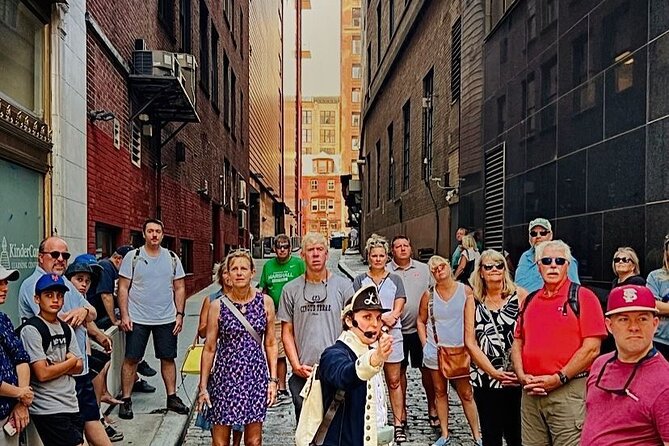
I like how the guide uses character and humor to make big events feel close-up. I also like the route length: you get a lot of stops without the full slog across Boston, so it stays friendly even if you’re not hunting every museum.
One drawback to consider is sound and crowding. If your group is large, it can be harder to hear unless you stay closer to the front.
In This Review
- Key highlights to look for
- What This Freedom Trail Tour Really Gives You
- Getting Oriented at Paul Revere Mall
- Massachusetts State House: The Gold Dome and the Power Story
- Park Street Church: Where a National Song First Landed
- Granary Burying Ground: Where the Stories Get Heavy
- Boston Latin School: America’s First Public School
- The Old South Meeting House: Boston Tea Party at the Actual Setting
- Old State House: The Boston Massacre Story in Place
- Samuel Adams Statue and the Paul Revere Bell Threads
- Paul Revere House: Best Experience Without Waiting for Tickets
- Finishing at Paul Revere Mall: Wrap Up Near Food and Strolling
- How Long Should You Plan For, and How Hard Is It
- Price Value: Why $26 Can Be a Smart Buy
- The Costumed Guide Effect: What You’ll Likely Remember
- A Realistic Watch-Out: When the Group Gets Big
- Who Should Book This Freedom Trail Walk
- Should You Book It?
- FAQ
- How much does the Boston Freedom Trail walking tour cost?
- How long is the tour?
- What route does the tour cover?
- Is the tour guided by a costumed guide?
- Where do I meet for the tour?
- Are admission tickets included for the stops?
- Does the tour run in bad weather?
- Is the walking tour difficult?
- How large is the group?
- What is the cancellation policy?
Key highlights to look for

- Costumed interpretation that keeps the pace light without turning the day into a costume party
- A concentrated loop of major sites that fits an easy afternoon plan
- Granary Burying Ground time is longer than you expect, and it’s a major story stop
- Memorable Revolutionary details like the Boston Tea Party setting and Paul Revere Bell
- Ending in the North End/Faneuil Hall area so you can roll straight into food and strolling
What This Freedom Trail Tour Really Gives You
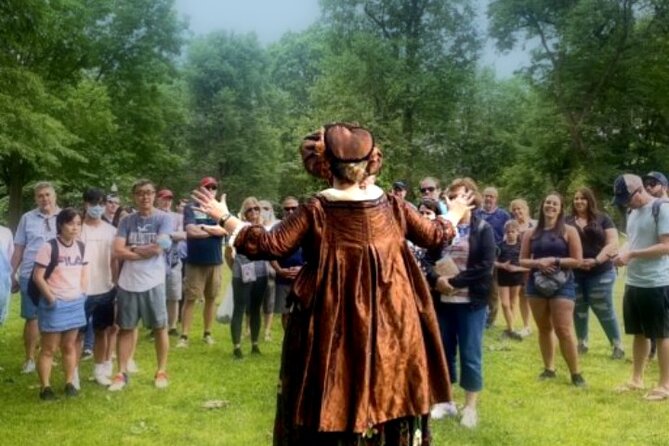
This is a Freedom Trail tour designed for people who want the highlights without a half-day march. The route is about 1.2 miles and runs around 1 hour 45 minutes (give or take, depending on how the guide manages time and how long you linger at certain stops). You’re moving through a dense stretch of sites that shaped Boston’s role in the Revolution, then finishing in a convenient area for more exploring.
The costumed guide part matters more than it sounds. When the guide chooses a period name and stays in character, you tend to remember the facts because they’re wrapped in scenes. It’s not only theater either. The best moments are the ones where a guide connects the buildings to the politics and people behind them.
The other practical win is that this tour is set up to work with real schedules. You get different departure times, and the start is near public transit. You also get a mobile ticket, so you’re not wasting time hunting for printouts.
You can also read our reviews of more walking tours in Boston



Getting Oriented at Paul Revere Mall
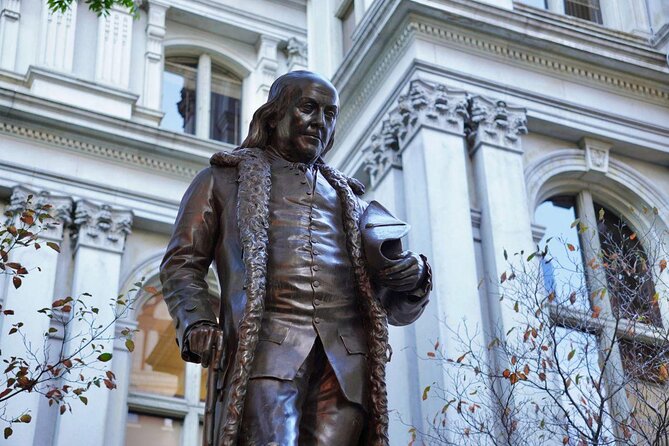
The tour starts and ends at Paul Revere Mall (same meeting spot listed for both). That’s a smart base if you plan to keep going afterward, since you’re right in the downtown-to-North-End corridor where you can find food and more walking routes fast.
Before you leave, I’d plan on arriving a bit early and locating your exact pickup point. The tour is near transit, but “near” still means you should confirm where you line up. It’s also the kind of walk where staying on time helps you enjoy each stop rather than sprinting between them.
Also, expect weather to matter. It runs in all weather conditions, so dress for wind and cold if you’re visiting in fall or winter. One recurring theme from the experience is that the shade can make it feel colder than you expect, so bring a layer you’ll actually keep on.
Massachusetts State House: The Gold Dome and the Power Story
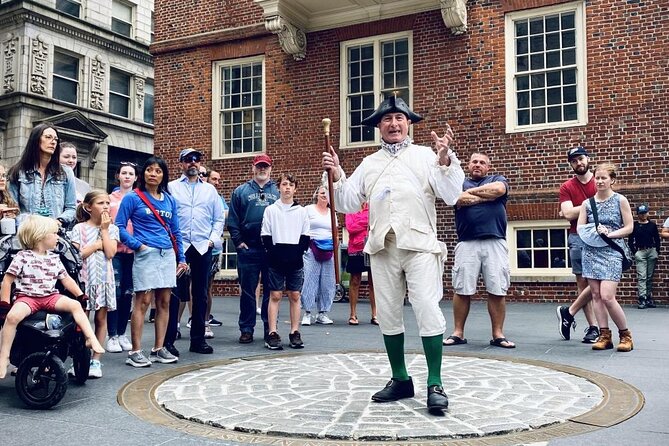
Stop one is the Massachusetts State House (the New State House), with the tour focused on what it represents and why it matters. You’ll see the gold-domed building built in 1798, and the guide connects it to the push-and-pull of Colonial America and the lead-up to the Revolution.
This is a great start because it sets the frame: you’re not just “seeing old buildings.” You’re learning how governments and ideas were built, argued over, and defended. It’s also a quick stop, designed to get you into the rhythm of listening.
If you like photo ops, this is one of the easier moments to capture the building before you’re moving again and the crowd thickens.
Park Street Church: Where a National Song First Landed
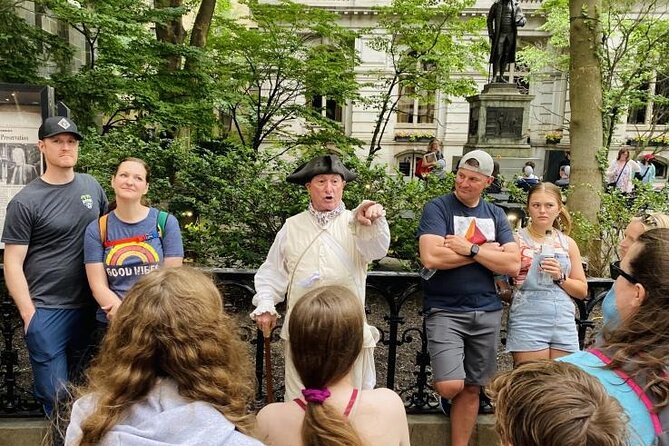
Next up is Park Street Church, one of the most iconic landmarks on the Freedom Trail stretch. Here, the guide highlights the site’s history right near the front steps, and you’ll also hear an Independence Day detail: the first performance of America (My Country ’Tis of Thee) took place in 1831.
I like this stop because it adds a cultural layer. Revolutionary history isn’t only battles and ships. It’s also speeches, symbols, and shared identity. If your group wants moments that feel human and emotional, this is where you get them.
It’s also a “stand and listen” stop. Keep your ears open, but don’t expect lots of time to roam around.
Granary Burying Ground: Where the Stories Get Heavy
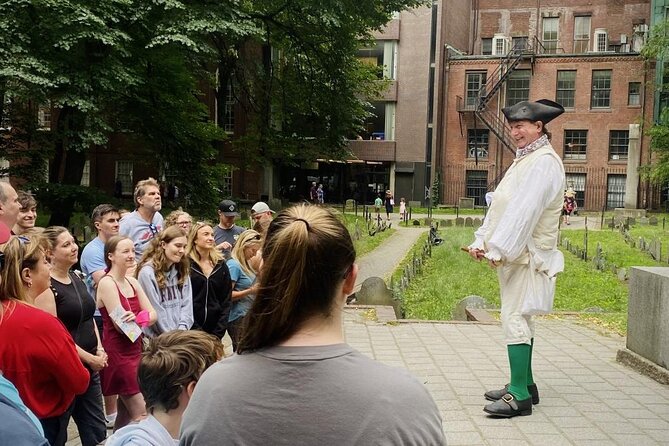
Then you hit Granary Burying Ground, and this is the stop where the tour slows down. It’s the resting place of major names like Sam Adams, John Hancock, and Paul Revere, plus others tied to the Declaration of Independence and the Boston Massacre victims. Expect a longer visit here, with up to about 45 minutes mentioned.
This cemetery stop is the heart of the tour’s emotional weight. Reading names on a marker is one thing. Hearing how the people connect to events is another. It’s also a rare chance to see how Boston remembered its revolutionaries, not just how they acted during it.
A consideration: if you’re on a tight schedule or you’d rather keep moving, you might feel the time here. The most common time-management complaint is that the Granary stop can run long and affect what you reach near the end. If you’re the type who prefers a brisk pace, you’ll want to stay focused on the markers the guide points out so you don’t lose time wandering.
If you’re traveling with kids, this can be a make-or-break moment too. The guide’s humor and pacing are a big factor. In the experiences I saw highlighted, guides like Katherine and David Stokle were praised for keeping families engaged, even in heavier settings.


Boston Latin School: America’s First Public School
Next comes Boston Latin School, framed as America’s first public school. You’ll see the Ben Franklin statue here, and the guide also connects alumni like Benjamin Franklin and Samuel Adams to the larger Revolutionary-era story.
This stop works well if you want the Revolution to feel like it had a pipeline. People often think of history as sudden explosions. School and education show the slower engine behind leadership and debate.
It’s usually a short stop, so look at it as a “signal” stop. The main value is the connection between learning, writing, and civic life.
The Old South Meeting House: Boston Tea Party at the Actual Setting

Then you’ll reach the Old South Meeting House, with the guide focusing on the Boston Tea Party. You’ll also hear about the Paul Revere Bell outside this area, and you’ll get the sense of how location and crowd energy helped turn politics into a spark.
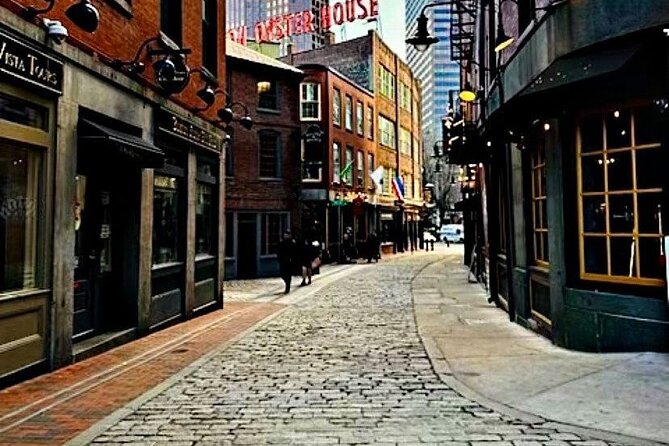
If you only know the Tea Party from a paragraph in a book, this stop helps it click. You can physically sense the narrow streets and the kinds of gatherings that made it possible to mobilize quickly. It’s also a good pause where the tour shifts into “story mode.”
One tip: if you’re big on photos, this is another good moment to slow down for a second while the group is stopped.
Old State House: The Boston Massacre Story in Place
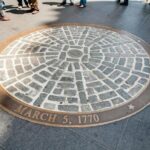
At the Old State House, you’ll hear the story of the Boston Massacre. This is where the guide turns the timeline into something you can picture: tension, intimidation, and sudden fallout.
This stop is valuable because you’re not relying on imagination. The building and the surrounding street context help you understand why the event mattered. It’s also a solid listening stop if you like cause-and-effect history rather than just names and dates.
Expect the time to be a bit longer than a quick photo stop, since the guide has enough room to tell the story without feeling rushed.
Samuel Adams Statue and the Paul Revere Bell Threads
As you continue, you’ll stop for a view and explanation tied to the Samuel Adams statue. The tour includes a detail about the statue being “inaccurate,” with the guide sharing why that matters.
This is a smart kind of stop because it teaches you to notice how public memory is shaped. Statues are not neutral. They’re part of what a city chooses to emphasize, and the guide uses that to set up a bigger theme for the walk.
Paul Revere House: Best Experience Without Waiting for Tickets
You’ll also get a stop outside the Paul Revere House. In this tour format, admission is not included, so you’re mostly learning from outside context rather than doing an indoor visit.
This is actually a plus for many people. You keep the day moving, and you still get the story anchored to the place. If you want a deeper indoor look, you can always schedule that separately afterward.
Finishing at Paul Revere Mall: Wrap Up Near Food and Strolling
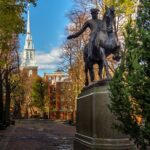
The tour ends at Paul Revere Mall. That finish location is practical because it puts you close to options for coffee, snacks, and a next round of walking. It also helps you connect the Freedom Trail story to where you can physically linger and keep exploring.
If you’re pairing this with other Boston plans, this ending spot makes it easier. You’re not stuck farther out in the suburbs with a long transit back.
How Long Should You Plan For, and How Hard Is It
On paper, the tour is about 1 hour 45 minutes, but I’d plan your afternoon as “around that, plus weather and group pacing.” One example mentioned it ran longer than expected (over two hours in some cases). That’s not a red flag. It often means the guide was letting people take in the stops rather than rushing everything.
In terms of effort, the tour is designed for most travelers. Comfortable walking shoes are recommended, and you should expect a normal city walk. There are very limited stairs mentioned in the experience details, and the route is not described as strenuous.
Price Value: Why $26 Can Be a Smart Buy
At $26 per person, this tour sits in a reasonable range for a guided walk that covers multiple major sites in one go. The value isn’t only the guide. It’s the time efficiency. You’re paying to have someone connect the dots between buildings, events, and people, while you’re walking anyway.
Also, many stops are marked free in the tour details, which helps you avoid extra costs at each site. The ones flagged as admission not included are the Samuel Adams statue and the Paul Revere House stop, but the tour still gives you the context outside those points.
If you’re the type who enjoys hearing stories in real place rather than reading plaques alone, this price can feel like a good deal. If you prefer total independence and don’t care about narration, then it might feel less worth it.
The Costumed Guide Effect: What You’ll Likely Remember
The strongest praise across experiences centers on the guide’s performance and storytelling. People consistently highlight that the guide stays engaging, mixes humor with facts, and keeps a large mixed-age group listening. Names that come up include Katherine, Elaina, David Stokle, Neil McGarry, Jeremiah Poope, and guides using period-style roles like Ben or John Hancock.
That character work can do two things for you:
- It makes the Revolutionary timeline easier to hold in your head.
- It keeps the tour from feeling like a march through stone and dates.
There’s also a practical benefit. When you hear where to look and what to notice, you spend less time wandering. That matters at places like Granary, where otherwise you could drift into random reading.
A Realistic Watch-Out: When the Group Gets Big
The main caution is the “front-to-back hearing” issue. One experience described a huge group where you had to be near the guide to catch everything. Even with a great guide, city streets and crowds add noise.
So here’s my advice: if you care about hearing every detail, position yourself near the guide early. If you’re okay with a general overview, you can relax a bit and enjoy the scenery.
The other watch-out is time balance. Granary can take a lot of minutes. If the guide runs long here, you might feel it later. Still, the tour is designed to cover the big story stops, so it’s not like you’ll miss the entire experience.
Who Should Book This Freedom Trail Walk
This is a strong match if you want:
- a guided Freedom Trail experience that doesn’t eat your entire day
- humor and character to make Revolutionary events stick
- a route that’s easy to tie into food and the rest of your Boston plan
It’s also good for mixed groups, including families and people of different interests, because it offers story variety: government, music, major figures, education, protests, and dramatic events like the Boston Massacre.
If you want museum-level inside access to buildings, this might feel limited since some places are viewed from outside and admission is not included at certain stops. Still, you can always add indoor time separately later.
Should You Book It?
Yes, if you want the Freedom Trail’s biggest moments in a guided, fast-moving format. At $26, the guide’s storytelling and the density of stops make it an efficient use of time, especially for a first visit to Boston.
I’d say skip it only if you hate group walks, you need lots of quiet, or you’re hoping to go inside every stop. If you stay near the front and dress for wind and shade, this tour can turn a self-guided trail into a story you remember.
FAQ
How much does the Boston Freedom Trail walking tour cost?
It costs $26.00 per person.
How long is the tour?
The duration is about 1 hour 45 minutes (approx.).
What route does the tour cover?
It follows a Freedom Trail route of about 1.2 miles covering major sites from the Boston Common area toward the Faneuil Hall area and ending near Paul Revere Mall.
Is the tour guided by a costumed guide?
Yes. The tour is led by a costumed guide and runs in English.
Where do I meet for the tour?
The meeting point is Paul Revere Mall, Boston, MA 02113, and the end point is also listed as Paul Revere Mall.
Are admission tickets included for the stops?
Many stops are marked free, but admission is not included for the Statue of Samuel Adams and Paul Revere House.
Does the tour run in bad weather?
The tour operates in all weather conditions and you should dress appropriately. If it is canceled due to poor weather, you’ll be offered a different date or a full refund.
Is the walking tour difficult?
Most travelers can participate, and comfortable walking shoes are recommended.
How large is the group?
The maximum group size is 50 travelers.
What is the cancellation policy?
You can cancel for a full refund up to 24 hours before the experience start time. If you cancel less than 24 hours before, the amount paid is not refunded.