REVIEW · SPLIT
Walking Tour of Split with a ‘Magister’ of History
Book on Viator →Operated by DiocleSpot Tours · Bookable on Viator
History in Split has walls you can touch. This Walking Tour of Split with a Magister of History is a focused, mostly-outside walk that connects Roman power, Christian reuse, and later city life—so the stones actually make sense.
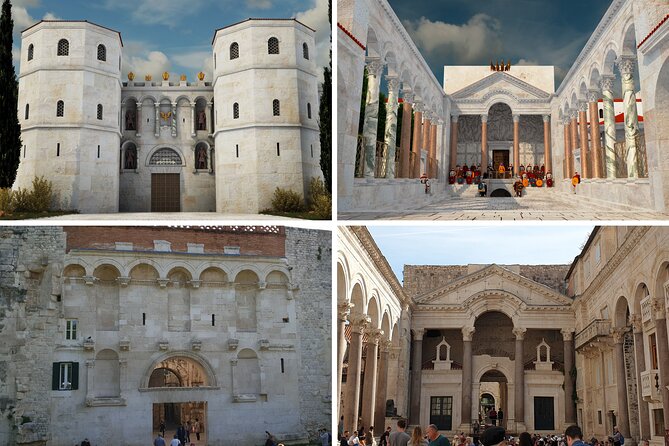
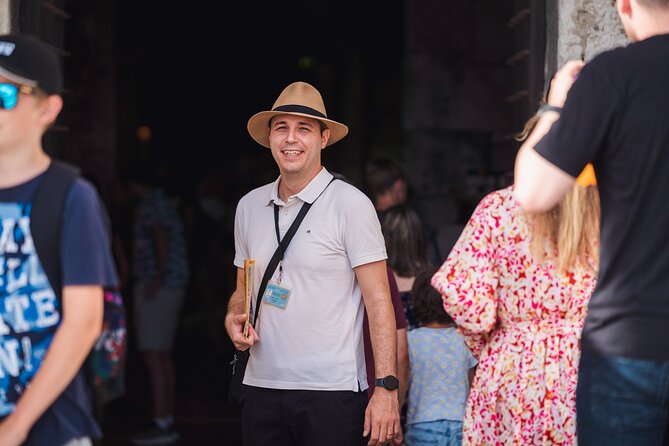
I love the way Toni Šare turns corners into explanations, not facts recited at you. I also love the included 3D reconstructions, which help you picture what Diocletian’s Palace looked like when it was whole and functioning.
One consideration: you won’t enter churches or paid sites, so this is best if you’re happy learning from the outside and from courtyards rather than buying additional tickets.
In This Review
- Key things to know before you go
- Why Diocletian’s Palace feels different with a local historian
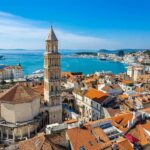
- Starting at Porta Aenea and Riva Harbor: the view that sets the stage
- Peristyle of Diocletian’s Palace: seeing the square you keep hearing about
- Cathedral of Saint Domnius and the Roman-to-Christian conversion
- Temple of Jupiter: why the outside can still teach you
- Eastern (Silver) Gate and the “in-between” moments of the palace
- Grgur Ninski statue: language and culture, not just stone
- Vestibulum of Diocletian’s Palace: the private residence effect
- Golden Gate and the northern wall: Roman defense reused by medieval Split
- Renaissance palace courtyard and Venetian history without the museum shuffle
- Game of Thrones filming locations and the fun add-on choice
- Price and timing: is $34.83 worth 1 hour 40–1 hour 50?
- What you don’t do: no paid-site entry, and why that can be a feature
- Tips for getting the most out of Toni Šare’s walk
- Should you book this Split walking tour with Toni Šare?
- FAQ
- How long is the Walking Tour of Split with a Magister of History?
- What does it cost?
- Where does the tour start and where does it end?
- Is the tour offered in English?
- Does the tour include admission to museums or paid sites?
- What’s included in the tour experience?
- How big is the group?
- Are group discounts available?
- What if the weather is bad?
- Is there free cancellation?
Key things to know before you go
- Small-group pacing (max 18) keeps questions easy and the walk feel human.
- Toni Šare’s 3D reconstructions make vanished details feel visible.
- Diocletian’s Palace gates first, then the meaning of it all gives you a clear timeline as you walk.
- Plenty of famous stops without ticket stress since the tour avoids museum entry.
- Game of Thrones filming locations can be included if your group wants that detour.
Why Diocletian’s Palace feels different with a local historian
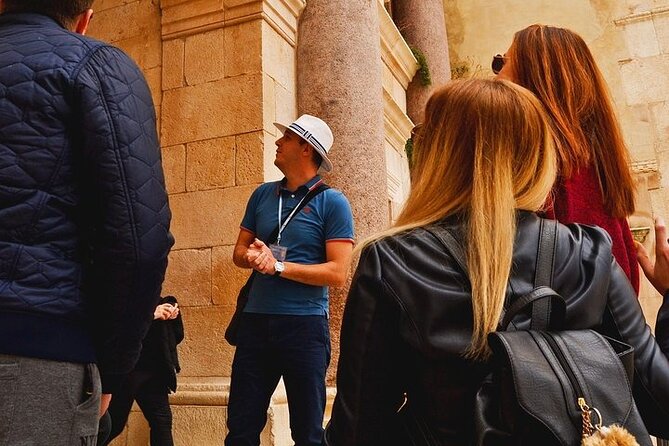
Split can be a “wow, look at that” kind of place. This tour adds the missing second step: why it looks like that. You’re not just seeing Roman walls and medieval squares—you’re learning how those parts were reused, altered, and defended over centuries.
A big reason it works is Toni’s teaching style. You get a route that moves forward in time, but also slows down for details you’d usually walk past. The plan is built around key vantage points—harbor, peristyle, gates, and main civic squares—so you’re always oriented.
And since it’s only about 1 hour 40 minutes to 1 hour 50 minutes, it’s a strong choice for your first days in town. You’ll leave with a mental map that makes later wandering far less confusing.
You can also read our reviews of more walking tours in Split

Starting at Porta Aenea and Riva Harbor: the view that sets the stage
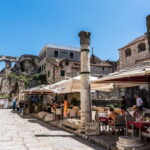
You meet at Brass Gate (Porta Aenea) on Obala Hrvatskog narodnog preporoda, then start your story at Riva Harbor. This isn’t just a pretty opening. The harbor works like a preface.
Toni uses this spot to introduce what you’ll later see inside Diocletian’s Palace. He also points out the southern wall of the palace as it’s framed from outside—so you understand the building as part of the city’s daily life, not a fenced-off ruin.
One practical plus: starting at this kind of central, well-known place makes it easier to find your guide and settle in. And because the first stop is short, you quickly get into the rhythm of the tour.
Peristyle of Diocletian’s Palace: seeing the square you keep hearing about
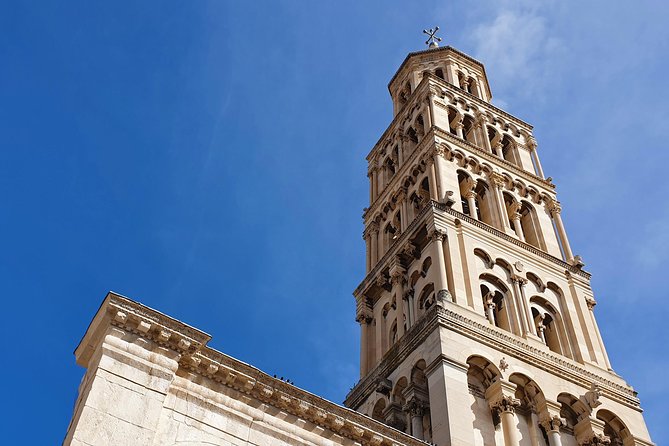
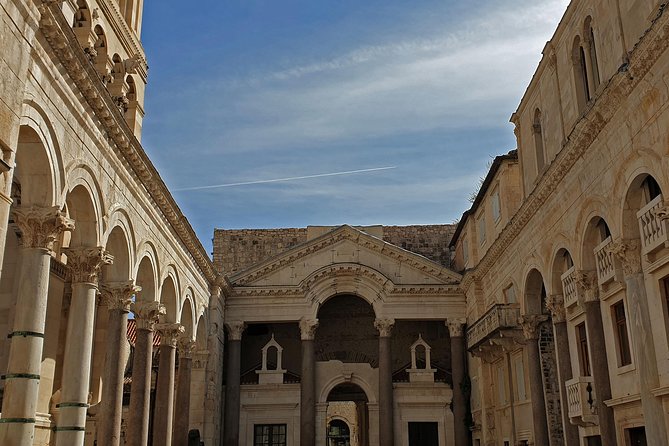
Next comes the Peristyle, the palace’s central square and one of today’s key city rooms. This is where Roman city design stops feeling abstract.
You’ll look at the kind of structures that still look surprisingly intact, and you’ll get help with visualizing the original decoration through Toni’s 3D reconstructions. Those reconstructions matter because Split’s architecture is layered. From street level, it can be hard to tell what’s Roman-original versus what came later.
Instead of guessing, you get a framework for reading the stones. Even if you’ve seen photos of Diocletian’s Palace before, the peristyle is one of those places where your understanding usually clicks once someone points out the right features.
Cathedral of Saint Domnius and the Roman-to-Christian conversion
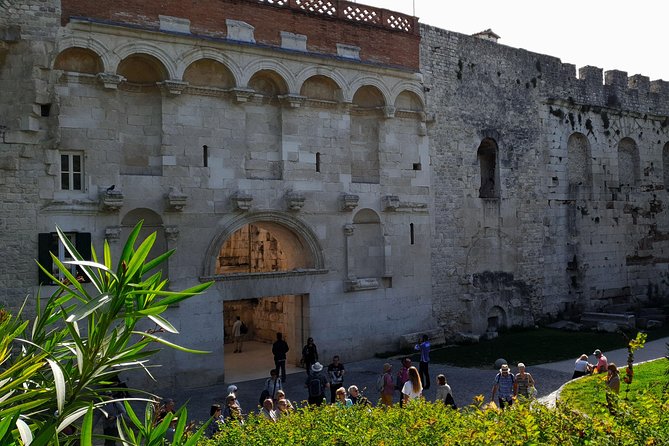
From the peristyle, you head to the Cathedral of Saint Domnius, tied to Diocletian’s mausoleum. This is one of the best-preserved Roman structures in Split and it’s still in use today.
You won’t go inside, but you will get the explanation you’d want before you ever stand here on your own: how the structure was originally a grave space, and then how Christians transformed it into a cathedral. Toni also covers the bell tower and the changes that made the building work for a new religious world.
The outside-only approach is a good match for this tour. It keeps the pace moving while still giving you the big interpretive story. If you later want the extra detail of an interior visit, you’ll know what to look for and why.
Temple of Jupiter: why the outside can still teach you
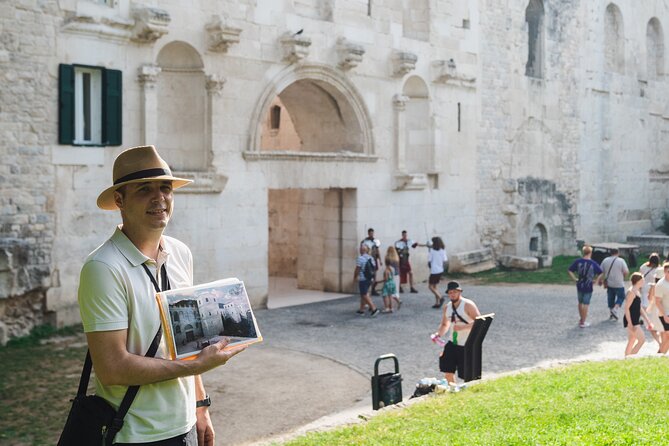
Then you look at the Temple of Jupiter, one of the better-preserved late-Roman temples. Again, you don’t enter. The value is in what Toni shows from outside.
This stop has a fun angle: he points out anomalies and mistakes Romans made during construction. That turns the temple into more than a postcard. It becomes a case study in how ancient building projects really worked—plans, pressure, and imperfect execution included.
If you like history that’s grounded in practical details, this part tends to land well. You’re not just admiring; you’re learning to spot evidence.
You can also read our reviews of more historical tours in Split
Eastern (Silver) Gate and the “in-between” moments of the palace
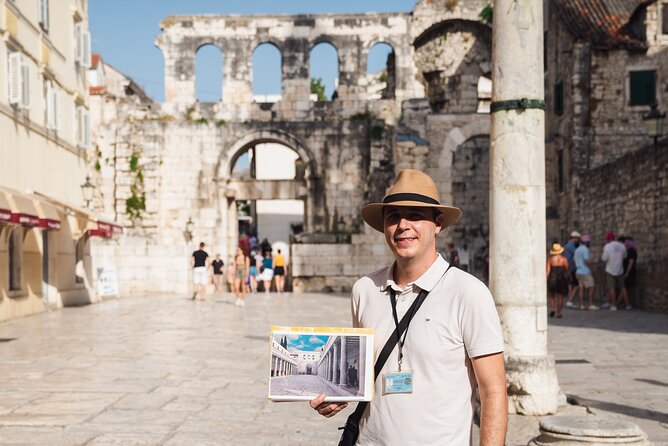
At the Eastern (Silver) Gate, you get a classic Split trio-in-one view: the Cathedral (Diocletian’s mausoleum) on one side, the Silver Gate on the other, and the palace’s spatial logic unfolding around you.
Toni also highlights what’s underneath: beneath your feet, you can see the only preserved part of the original road. That detail is easy to miss on your own because it’s not the flashy centerpiece. But it’s exactly the kind of small clue that makes the whole palace feel connected to real movement—people and carts moving through a functioning complex.
This stop is brief, but it’s the sort of “one-minute fact” that sticks and helps you understand what you’re looking at later when you’re walking without a guide.
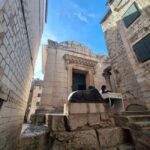
Grgur Ninski statue: language and culture, not just stone
The tour includes a quick stop at the Grgur Ninski statue, one of Split’s most recognizable landmarks. Toni uses it to explain what the statue represents and what it meant for Croatian language and early medieval culture.
This is a smart balance point. After Roman engineering and Christian transformation, you get a cultural anchor that feels more local and more immediate. It reminds you that Split’s identity didn’t freeze in antiquity—it kept evolving.
Even if you’re not a museum person, this kind of stop keeps the walk from turning into a single-era lecture.
Vestibulum of Diocletian’s Palace: the private residence effect
Next is the Vestibulum, an ancient entrance tied to Diocletian’s private residence. From here, Toni takes you around the remains of the emperor’s personal space.
This is another place where the 3D reconstructions help. Palace architecture can feel like a maze unless someone gives you the “who lived where and why” context. You’re looking at traces, and Toni helps you translate those traces into how the space likely functioned.
You also get a calmer sense of scale—less about public spectacle and more about how power lived behind the walls.
Golden Gate and the northern wall: Roman defense reused by medieval Split
One of the most memorable parts is the Golden Gate, the main entrance to Diocletian’s Palace. Toni points out that it’s the most preserved of the palace entrances and also the most decorated and visually memorable.
From this viewpoint, you can see the northern wall and understand something important: medieval Split still used Roman-made structures for defense. At the same time, you can see where later builders removed what they didn’t need.
It’s a powerful way to see architecture as a living system—adapted to new needs instead of treated like a museum exhibit.
Renaissance palace courtyard and Venetian history without the museum shuffle
You also stop near the City Museum of Split, located inside a preserved Renaissance noble palace. You don’t enter the museum itself. Instead, you’ll see the courtyard, which is still enough to understand the Renaissance setting.
Toni connects this to Venetian history, explaining how these kinds of palaces appeared when Venetian influence shaped local life. It’s a nice reminder that Split didn’t just “continue” after Rome—it changed partners, styles, and civic priorities.
If you’re trying to keep time for your own wandering, the “courtyard only” approach is a win. It keeps the tour moving while still giving you the change-of-era story you came for.
Game of Thrones filming locations and the fun add-on choice
Split is full of filming lore, and this tour can include it. If your group is interested, Toni shows Game of Thrones filming locations in Split and the walk can include passing by a fan shop.
The key is that this doesn’t replace the historical content. It’s more like a side lens. If you came for the story of the city first, you’ll still get that. If you came with TV in your head, it can make the places feel instantly recognizable.
Price and timing: is $34.83 worth 1 hour 40–1 hour 50?
At $34.83 per person for roughly 1 hour 40 minutes to 1 hour 50 minutes, the value depends on what you want from your first day in Split.
This price makes sense if:
- You want a guided map of Diocletian’s Palace and the old town connections
- You like context that helps you understand what you’re seeing later
- You’d rather spend your time learning than standing in lines for museum entrances
It may feel less aligned if your main goal is to stack paid ticket experiences. Since the tour explicitly avoids museum entry, it’s more of a storytelling walk than a ticket pass.
The good news: the duration is short enough that you can easily layer this with self-guided visits after you’ve got your bearings.
What you don’t do: no paid-site entry, and why that can be a feature
You won’t enter the Cathedral or the Temple of Jupiter. You also don’t go into museums. The tour focuses on outdoor viewing, courtyards, and guided explanation.
That trade-off can be a drawback if you want interiors and ticketed rooms. But for many travelers it’s actually the point: it keeps the experience flexible, reduces decision fatigue, and leaves you with energy to explore on your own afterward.
Also, if you’re traveling during a hot season, an evening departure can help with comfort. One of the standout details from real experiences of this tour is that people often choose later times to make the walking easier.
Tips for getting the most out of Toni Šare’s walk
- Go in ready to look up, not just ahead. The palace story is told through walls, gates, and exact angles.
- Use the 3D reconstructions as your mental cheat sheet. When you later wander alone, you’ll recognize which parts are Roman-original and which are later reuse.
- Ask questions at the stops, especially during the Roman-to-Christian and construction-mistake moments. Those are where Toni’s explanations tend to open up.
- If you have a specific interest—language history, Roman engineering, or filming locations—tell Toni. The tour can flex with group interest.
And because the group max is 18, you’re less likely to feel trapped in a crowded shuffle. You can actually hear the story.
Should you book this Split walking tour with Toni Šare?
If you want a strong first introduction to Split that explains the stones and connects Roman, medieval, and Renaissance layers, I think you should book it. Toni Šare is a local who teaches with energy, and the included 3D reconstructions are the kind of help that makes ruins feel whole in your head.
Skip it if your priority is museum interiors and paid-site access. This isn’t that tour. It’s a history walk built for context, not ticket collecting.
If you’re on a time budget, traveling in a busy season, or simply want your old-town wandering to make sense fast, this is one of the most practical ways to start.
FAQ
How long is the Walking Tour of Split with a Magister of History?
It runs about 1 hour 40 minutes to 1 hour 50 minutes.
What does it cost?
The price is $34.83 per person.
Where does the tour start and where does it end?
It starts at Brass Gate (Porta Aenea) on Obala Hrvatskog narodnog preporoda 22, Split. It ends at Narodni trg, Split, which is the main square also called Piazza square (Pjaca).
Is the tour offered in English?
Yes, it is offered in English.
Does the tour include admission to museums or paid sites?
No. The tour does not include entering any museums or paid sites. Some stops specifically note that admission tickets are not included.
What’s included in the tour experience?
Your guide is Toni Šare, and the tour includes demonstrations of some sites using 3D reconstructions.
How big is the group?
The maximum group size is 18 travelers.
Are group discounts available?
Yes, group discounts are available.
What if the weather is bad?
The tour requires good weather. If it’s canceled due to poor weather, you’ll be offered a different date or a full refund.
Is there free cancellation?
Yes. Free cancellation is available up to 24 hours in advance for a full refund.