REVIEW · BOSTON
The Full Revolutionary Story Epic Small Group Boston Walking Tour
Book on Viator →Operated by The Revolutionary Story Tour · Bookable on Viator
Revolutionary Boston, told like a movie. This small-group walk strings together the American Revolution with real locations, plus detours that show how modern Boston grew out of the same streets.
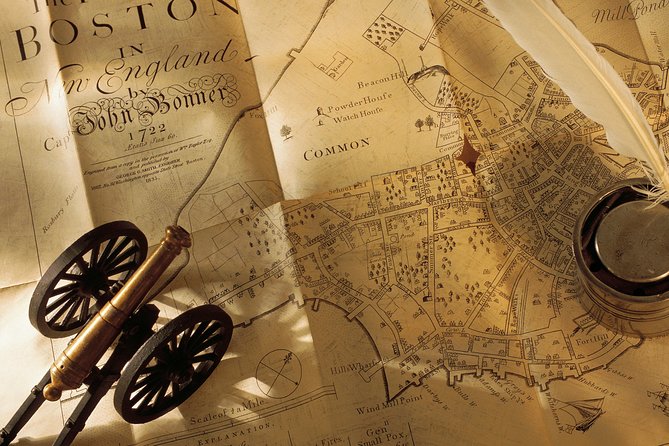
I especially love the way the route follows the Revolution’s timeline instead of marching you along the Freedom Trail in strict geography. And I like that the guides use story tools and visuals—some guides in recent groups have used things like Lego-style figures for battles (for example, Bunker Hill) and interactive maps/cards to keep details from turning into mush.
One drawback: plan for a lot of outdoor walking. If you’re not steady on your feet or you don’t handle cold/wind well, you’ll feel it more than on a short, stop-and-go tour.
In This Review
- Key things to know before you go
- Why this Boston Revolution walk beats a straight Freedom Trail route
- Starting at City Hall Plaza: the photo moment and the first early-history twist
- Following the Revolution in order: Freedom Trail, Brimstone Corner, and Granary Burying Ground
- Old City Hall to Old State House: politics you can see in the buildings
- From the publishing world to tea-party momentum: Old South, Post Office Square, and more
- Greenways, parks, and the Revolution’s neighborhood feel: tying Downtown to the North End
- Old North Church, Bunker Hill, and the harbor finale you can feel in your bones
- Guide style, props, and why the story stays clear on a long walk
- Price and what $55 buys you in real terms
- Who should book this Boston Revolution walk (and who should think twice)
- Should you book the Full Revolutionary Story Epic Small Group Boston Walking Tour?
- FAQ
- Where does the tour start and where does it end?
- How long is the walking tour?
- What does the tour cost?
- Is this tour limited to the Freedom Trail?
- Are museum entries included?
- How big is the group?
- Is the tour suitable for children?
- What’s the tour like in terms of walking?
- What happens if the weather is poor?
- Is there a refund if I change my mind?
Key things to know before you go
- Freedom Trail, in chronological order so events make sense, not just locations.
- Detours off the Trail to places tied to the Revolution’s buildup and aftermath.
- Small group size (max 15) for better pacing and real Q&A.
- Guide storytelling with visuals like maps and model props used on the route.
- Finish in the North End and along the harbor for big views and easy food plans.
Why this Boston Revolution walk beats a straight Freedom Trail route
Boston’s Freedom Trail is famous for a reason—but the usual approach can feel like a highlight reel. This tour is built around the story happening in the right order, so you don’t just learn names. You learn why each moment mattered, and what came next.
The big win is that the walk doesn’t treat the Trail like a conveyor belt. You’ll hit core Freedom Trail landmarks, then veer to other sites tied to speeches, printing, politics, and everyday people. That extra context helps you understand modern Boston too, not only colonial Boston.
And because it’s capped at 15 people, the guide can keep the flow readable. You’re not lost in a crowd, and you can ask follow-ups without shouting over six other groups.
You can also read our reviews of more walking tours in Boston
Starting at City Hall Plaza: the photo moment and the first early-history twist
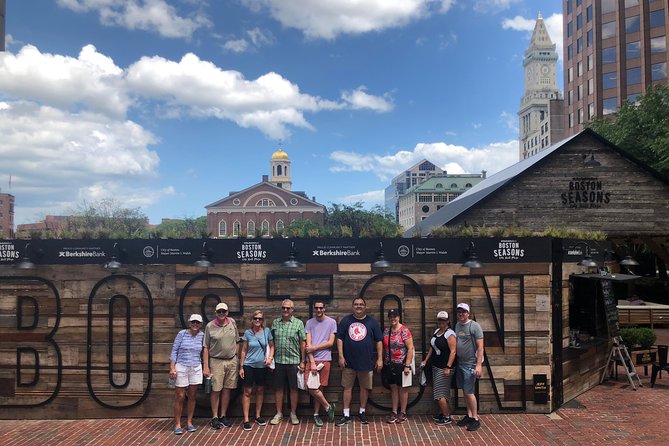
The tour begins at City Hall Plaza, right in the center of downtown and across from Faneuil Hall. You meet between Five Iron Golf and City Hall, with your guide in front of the seasonal beer garden and next to a large Boston sign—perfect for a quick start photo with the Faneuil Hall skyline behind you.
Before the Revolution proper, you go to King’s Chapel Burying Ground. This stop is a strong palate-cleanser because it shifts the story to the first people settling Massachusetts Bay. If you only think of Boston as Puritan-freezing-on-a-snowy-walkways history, this helps you reset the baseline.
Next you pass the first Anglican church in Boston. That religious and political detail matters later, because different communities had different loyalties and priorities. Even a short stop here pays off when the tour turns toward dissent and protest.
Following the Revolution in order: Freedom Trail, Brimstone Corner, and Granary Burying Ground
At this point, you start doing what most tours don’t: you follow the timeline. The route uses the Freedom Trail as a backbone, but it weaves around it so you encounter events in sequence rather than by geography alone.
You’ll also pause for stops that aren’t strictly the classic brick line. One example is Brimstone Corner, associated with fiery sermons and political turning points—like William Lloyd Garrison’s first public address against slavery in July 1829. It’s a reminder that Boston’s reform energy didn’t vanish after the founding era.
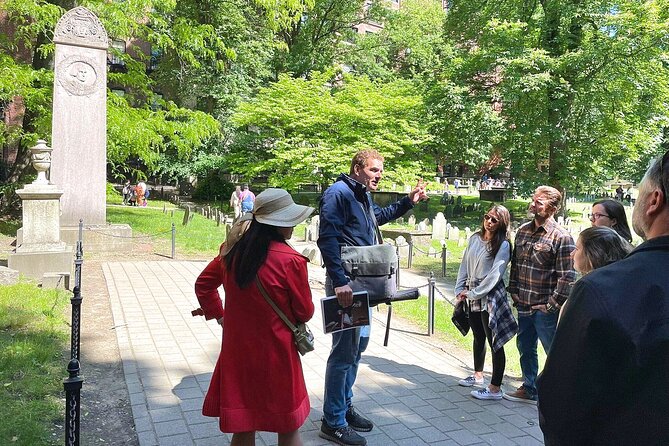
Then you reach Granary Burying Ground, where you get the Sons of Liberty angle with real names tied to their graves. This is where Paul Revere, John Hancock, and Sam Adams enter the story as more than textbook entries. You also get a better sense of what kind of people led resistance and how reputations formed in a small city.
Even the pacing here is thoughtful. You get enough time to look around, absorb who’s buried where, and connect it to what comes next—without feeling rushed the way some “fast” tours can feel.
Old City Hall to Old State House: politics you can see in the buildings
From Granary Burying Ground, you move into the heart of Boston’s government era. Old City Hall and Old State House both come with architecture you can’t ignore, even if you’re not a building-nerd.
Old City Hall becomes a discussion about obstacles to democracy—how hard it was to do the “right” thing when authority and rights were constantly colliding. It’s not just a photo stop; it’s a human-story stop, with the political tension explained in plain language.
At the Statue of Benjamin Franklin, the tour connects Franklin’s legacy to education. You’ll hear about America’s first public school and his most famous pupil—another example of how the guide ties Revolution-era ideas to longer-term institutions.
Old State House follows as the nerve center of Massachusetts politics. You’ll learn about the power struggle between British authority and American rights here, with the building used as a physical reminder that these arguments were happening right in front of people living their daily lives.
Then the tour steps into Boston Massacre site territory, where the tension escalates. You’ll get the angle of soldiers, citizens, loyalists, and patriot leaders—so the event doesn’t come off as a one-sided “patriots good, redcoats bad” simplification.
From the publishing world to tea-party momentum: Old South, Post Office Square, and more

After the Massacre narrative, you pass the former publishing house tied to major literary figures such as Ralph Waldo Emerson and Henry Wadsworth Longfellow, plus Nathaniel Hawthorne and others. This stop helps explain how ideas moved through print, and how Boston’s intellectual culture blended into political action.
Then you arrive at Old South Meeting House. This is one of the tour’s major engines: the Boston Tea Party starts here. You’ll hear why that event became a point of no return, and how it pushed the colonies from angry protest into something far more committed.
Next comes Post Office Square. This stop is valuable because it refuses to treat the past like a museum piece. The guide links the road to revolution to what’s happening in the center of downtown, showing how modern Boston grew up around the same historic foundation.
From there, you reach Faneuil Hall Marketplace, which the tour frames as the cradle of liberty. You’ll get the sense that public meetings and protests were practice runs for revolution—where a disagreement could turn into organized action.
There’s also Quincy Market. You’ll have a built-in break time here for pacing and snacks. The tour also calls out the obvious: Quincy Market gets touristy fast, so I’d use the time for a breather and a quick bite, not for deep sightseeing.


Greenways, parks, and the Revolution’s neighborhood feel: tying Downtown to the North End
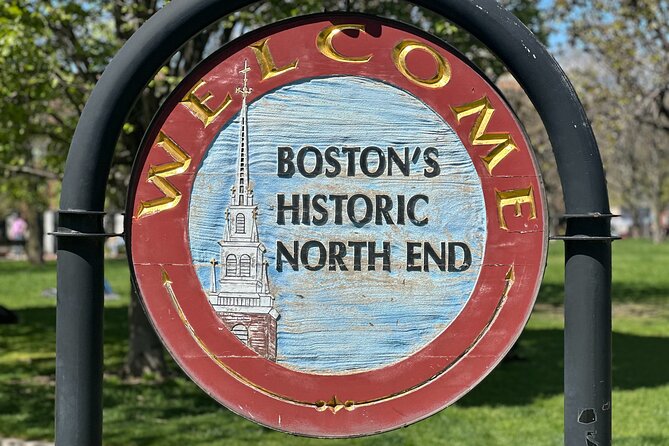
Once you leave the busiest downtown streets, the tour shifts into softer city moments that still fit the story. You’ll walk past Rose Fitzgerald Kennedy Greenway, a long public garden running through downtown, then North Square Park, described as the oldest residential square in America.
These stops matter because Revolution history didn’t happen only at grand political buildings. It happened in neighborhoods, meeting spaces, and small-scale everyday life. When you see the parks and squares between major landmarks, the whole timeline feels less like a sequence of unrelated monuments.
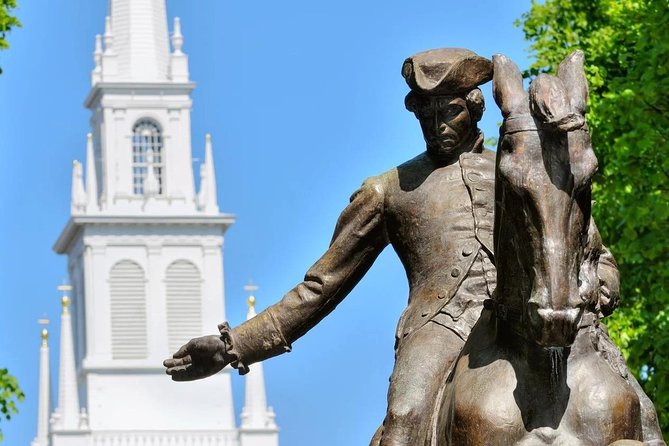
Then you hit the Paul Revere House, tucked into one of Boston’s oldest and most charming squares. This stop is a reality check: Paul Revere isn’t just a ride and a silhouette. You’ll hear why the man behind the legend was more complex than the simplified version.
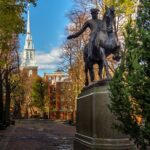
There’s also a Paul Revere statue photo opportunity—short, but useful because it gives you a fixed image to hang the story on while the next stops move quickly.
Old North Church, Bunker Hill, and the harbor finale you can feel in your bones
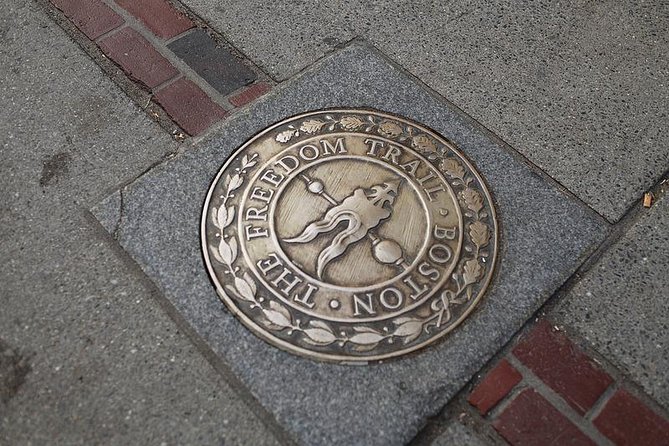
The climax starts at Old North Church and Historic Site. Here the tour walks you through the midnight ride, including the famous signal phrase one if by land, two if by sea. You’ll also connect that to what’s called the shot heard round the world, then to the chaotic fighting at Lexington and Concord.
From there, the tour gives you outside views connected to burial history—no long internal detour, but strong sightlines toward Charlestown and Boston Harbor from across the street.
Then it’s Bunker Hill Monument. The guide presents the battle of Bunker Hill as a full recreation, using visual aids. In some groups, that storytelling includes props such as Lego-style elements to make the battlefield feel less abstract. It’s a stop where the narration ramps up and the “why” clicks hard.
The tour also looks toward the harbor and the USS Constitution area (often nicknamed Old Ironsides). The ship itself isn’t part of the American Revolution story, but you’ll get an overview and, more importantly, practical tips for seeing it from the best side—so you can plan your own follow-up if you want.
Finally, you finish in the North End, in what’s described as Little Italy. This is where the tour shifts tone from founding-era seriousness to lived-in city energy—Italian food, seafood, pizza, cannoli. Then you close with a harbor stroll along the Harbor Walk and around Christopher Columbus Park, finishing at Lewis Wharf.
Lewis Wharf is a smart ending point: it has public restrooms, and it’s close to the Aquarium T-stop and within a short walk back to the start area. It’s also a good “I can eat now” moment without needing a taxi.
Guide style, props, and why the story stays clear on a long walk
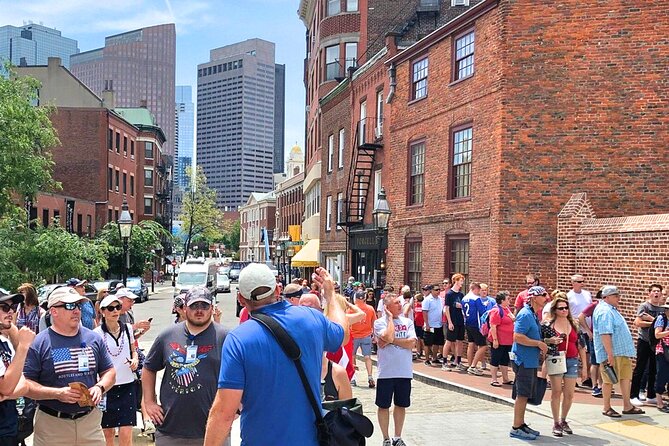
A lot of history tours overload you with dates. The best ones handle pacing and storytelling the way a good teacher does: build a mental model, then add detail.
This tour does that by using narrative order and visual supports. In recent tours, guides have used items like maps and interactive cards, and they’ve leaned on props (including Lego-style visuals for battles) to show how events unfolded. That approach helps if you’re the type who learns better by seeing a pattern than by collecting facts.
It also helps that the guides coming through have strong academic backgrounds. Examples from recent groups include Tyler, described as having a master’s in American history and experience as a curriculum coordinator; Chris, described as trained and certified; and Mike, described as a historian with advanced degrees. You can feel that preparation in how the guide answers questions and corrects myths without making it feel like a lecture.
Expect a scholar tone too. The tour is not about costumes or staged reenactments. The focus stays on helping you understand what happened and why people acted the way they did.
Price and what $55 buys you in real terms
At $55 per person for about 3 to 3.5 hours, this isn’t priced like a quick city stroll. What you’re paying for is (1) a small group cap (max 15), (2) a guide who links sites into a cause-and-effect story, and (3) a route that mixes major landmarks with lesser-visited context.
It’s also a walking tour, so you’re not paying for transportation. And while many historic locations are free to view from outside, the tour still builds in time at places like Faneuil Hall and Quincy Market for entry breaks.
For value, the key is this: you don’t leave with a pile of disconnected “cool stops.” You leave with a timeline you can repeat, plus a better sense of how downtown Boston and the North End still reflect those founding-era choices.
Who should book this Boston Revolution walk (and who should think twice)
This is a great fit if you:
- Want a story-first Revolution tour, not a checklist.
- Like asking questions and getting context instead of just hearing names.
- Enjoy walking through neighborhoods and parks, not only major monuments.
- Have even a little curiosity about how modern Boston sits on top of older conflicts.
Think twice if:
- You get worn down by long outdoor walking, especially in cold or windy weather.
- You want a mostly indoor experience or minimal walking.
- You’re bringing very young kids who need a fully kid-focused version of the events. The tour is described as appropriate for all ages, but not a kids-only presentation.
Should you book the Full Revolutionary Story Epic Small Group Boston Walking Tour?
Yes—if you want Boston’s Revolution told in order, with real context and strong guide energy, this is one of the better ways to spend a half day in the city. The small group format, visual storytelling tools, and finish at the North End and harbor make it feel complete.
I’d book it especially early in your trip. Get this orientation first, then you can return on your own to whichever stops you want to see longer—Old North, Bunker Hill, the North End squares, or the harbor waterfront.
If you know you’ll struggle with a longer walk or you’re visiting when weather could get rough, plan for layers and solid shoes.
FAQ
Where does the tour start and where does it end?
It starts at City Hall Plaza in downtown Boston, meeting near the City Hall sign area (between Five Iron Golf and City Hall). It ends at Lewis Wharf in the North End area.
How long is the walking tour?
The tour runs about 3 hours to 3 hours 30 minutes.
What does the tour cost?
The price is $55.00 per person.
Is this tour limited to the Freedom Trail?
No. While it includes Freedom Trail stops, it also veers off to other historical sites and adds modern Boston context.
Are museum entries included?
Museum entry is not included in general, except for built-in stops at Faneuil Hall and Quincy Market.
How big is the group?
The tour has a maximum of 15 travelers.
Is the tour suitable for children?
Children must be accompanied by an adult. It is appropriate for all ages, but it is not described as a kids version of the events.
What’s the tour like in terms of walking?
It’s a walking tour with a moderate fitness level requirement, and it’s mostly outdoors.
What happens if the weather is poor?
This experience requires good weather. If it’s canceled due to poor weather, you’ll be offered a different date or a full refund.
Is there a refund if I change my mind?
Yes. You can cancel up to 24 hours in advance for a full refund.