REVIEW · SALEM
Best Salem Witch Trials Historical Walking Tour
Book on Viator →Operated by Salem Historical Tours, LLC · Bookable on Viator
Salem walks are never just sightseeing. This 90-minute tour stitches together the 1692 witch trials with real locations and plainspoken stories, so the downtown sights actually mean something. I like that it’s walkable and focused, not a long bus ride that dumps you in a crowd.
What I like most: you get close to the places you’d otherwise skim—like the Salem Witch Trials Memorial and the building people point to as the Witch House. The guide also does the harder work of connecting dots between courtrooms, jails, and the people caught in the machinery of accusation.
One thing to consider: Salem is partly gone. You’ll spend time standing at spots where structures once stood, and some parts of the tragedy (like the hangings) are farther out than this route covers on foot.
In This Review
- Key things to know before you go
- Meeting at 8 Central St and how this tour really moves
- The Salem Witch Trials Memorial: reading the names and the meaning
- Rockafellas and the First Church: the place where Salem’s power gathered
- Joshua Ward House (Merchant Hotel): George Corwin and the machinery of arrest
- The Witch House: the one surviving structure you can’t skip
- Courts, jails, and where the case got decided on the street
- YMCA, Lyceum Hall, the Dungeon Museum, and an intentional dose of irony
- Price and pacing: why $30 feels fair for 90 minutes
- Who should book this, and who should plan something else
- Should you book the Best Salem Witch Trials Historical Walking Tour?
- FAQ
- FAQ
- How long is the Salem Witch Trials Historical Walking Tour?
- What time does the tour depart?
- Where do I meet the guide?
- How much does it cost?
- Do I need to pay for museum or attraction admissions during the tour?
- Are there restrooms available during the tour?
Key things to know before you go
- Starts easy downtown at 8 Central St: you check in and meet your guide with a recognizable sign.
- Most stops are street-level: you learn at key corners because many original buildings no longer exist.
- The Witch House is the centerpiece: it’s the only remaining structure directly tied to the 1692 trials.
- You’ll hear specific names tied to arrests and power, including George Corwin and judge Jonathan Corwin.
- Jails and the court process get real context: including a look at how confinement worked and who was targeted.
- Tour pace depends on walking and weather: it runs in all weather, and you should dress for standing and walking.
Meeting at 8 Central St and how this tour really moves
You’ll meet your guide at the Salem Historical Tours Office at 8 Central Street, Salem, MA 01970. Plan to arrive about 15 minutes early so you’re not rushing, especially if you’re arriving during a busy Salem window. The tour departures are 10 am, 1 pm, and 4 pm, and it’s set up so you can still do other Salem plans afterward.
This is a compact route: about one mile total over 90 minutes, with frequent stops built in so the stories land. That matters because witch trials Salem can feel like a blur if you’re wandering on your own. Here, the guide keeps you oriented: where you are, what happened nearby, and why the site matters today.
Group size is capped at 40 travelers, which usually helps with question time and keeping the pace humane. Still, it’s a walking tour, not a sit-down lecture—so wear shoes you’d actually wear for a city sidewalk slog. Salem has narrow, uneven sidewalks with bricks, cobblestones, and some stairs, and it can get extra crowded during big events and in October.
No worries about missing this because of weather. It operates in all weather, which is a big deal in coastal New England. You’ll want a jacket you can move in, and if it’s wet, shoes with grip.
You can also read our reviews of more walking tours in Salem

The Salem Witch Trials Memorial: reading the names and the meaning
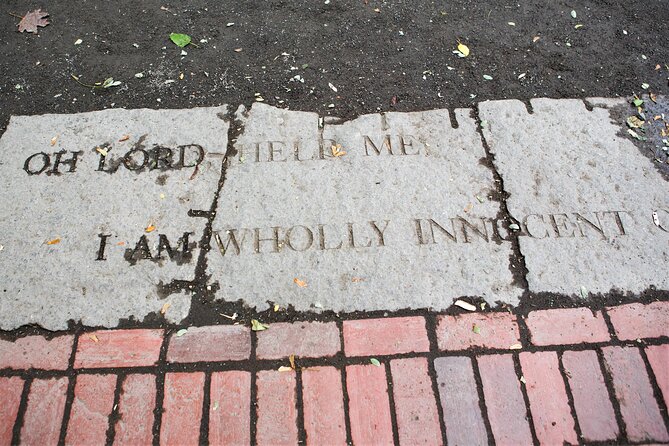
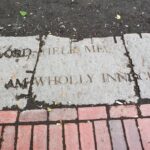
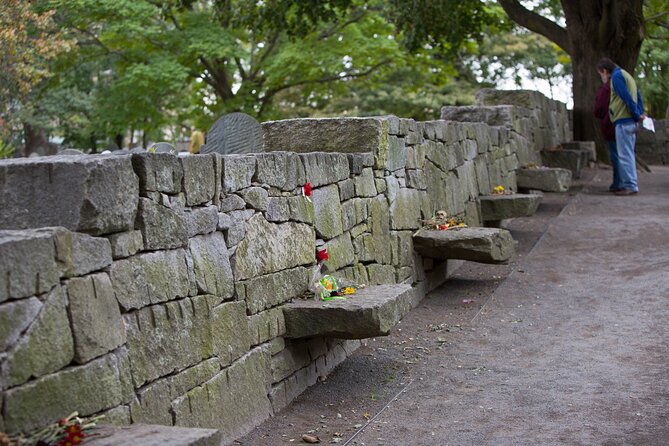
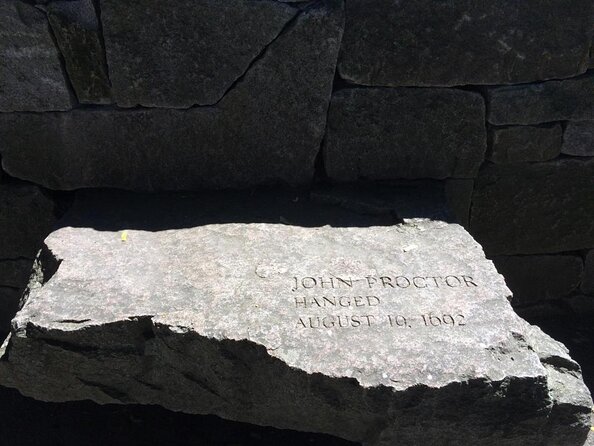
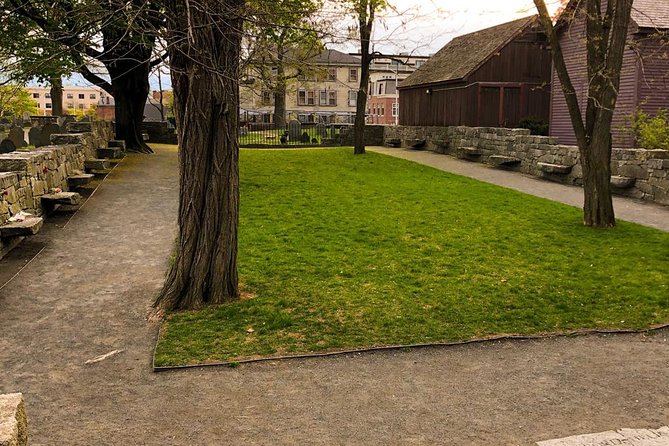
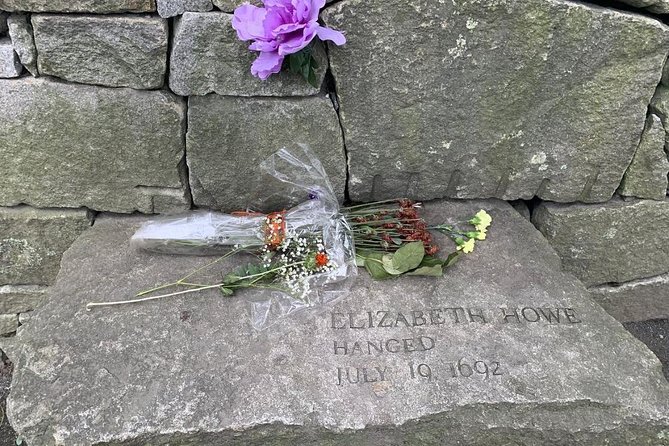
The memorial stop is where the tour slows down in a good way. The Salem Witch Trials Memorial is a bench-style monument dedicated in 1992, built in remembrance of the 20 innocent victims of the 1692 Salem witchcraft trials.
Each bench is laid out with names plus how the person died and the date. The effect is immediate. You stop being in tourist mode and start seeing the scale as individuals—not just a headline. Your guide also explains the symbolism behind the memorial design, which helps you understand why it exists in Salem’s modern downtown, not tucked away in a museum corner.
A small tip: take a minute and pick one bench to read fully. If you try to race through all of them, it turns into background noise. If you choose one name and listen closely, the stories tend to stick better as you move on.
Rockafellas and the First Church: the place where Salem’s power gathered
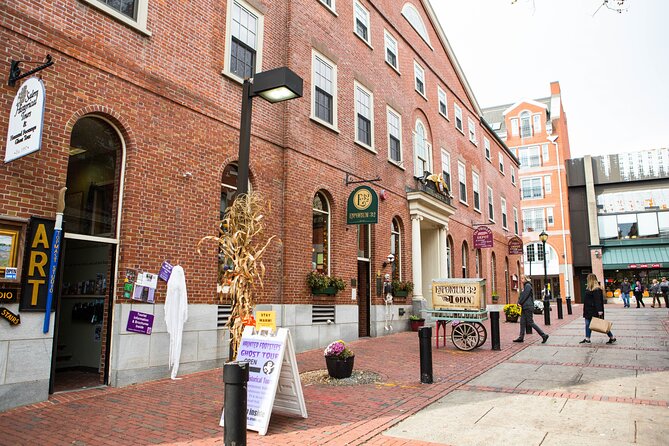
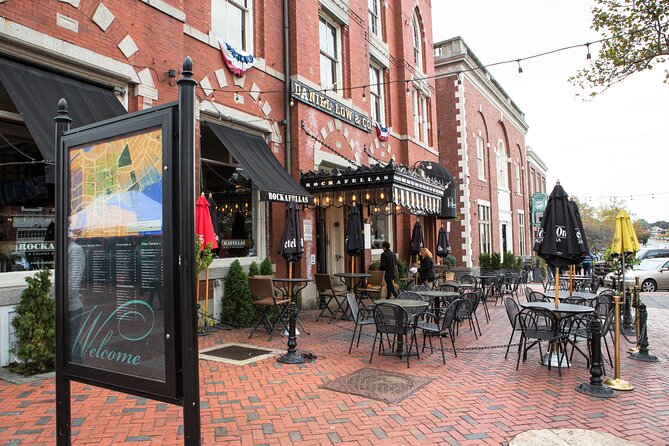
Next you head to Rockafellas Restaurant, in the Daniel Low and Co. building. Today it’s a common stop for lunch and a quick Salem bite, but the site matters because it was the location of the First Church of Salem and the city meeting house in 1692.
This is a key Salem lesson: religion and civic decisions weren’t separate things. When a community gathers in one central place, rumors can travel fast and authority can move quickly. Standing here, you can imagine the town’s heartbeat in a way that feels harder to do from a distance.
You’ll also get context on the trials and why accusations spread. The guide’s job is to turn what sounds like a strange local legend into an understandable human event: fear, power, and how quickly a community can turn.
Drawback to expect: this portion can feel more like a storytelling stop than a photo stop. The building is still here, but what you’re really visiting is the historical role it played.
Joshua Ward House (Merchant Hotel): George Corwin and the machinery of arrest
Then comes a strong hit of darker detail: the Joshua Ward House, now the Merchant Hotel. This is tied to George Corwin, who was the High Sheriff of Essex County in 1692.
Corwin’s role is described in specific terms. He signed arrest and execution warrants for the accused. The tour also shares the uglier realities: that he took people’s personal property, and that he was caught torturing a few people in his home.
Hearing this at the actual site changes the feeling. You’re not just learning a fact; you’re hearing about a system that acted through people in positions of authority. The tour helps you see how legal process, local power, and cruelty can share the same address.
If you’re someone who likes courtroom-level clarity, pay attention here. The guide connects how warrants and enforcement shaped what happened next, and why Salem’s tragedy didn’t run on magic alone.
The Witch House: the one surviving structure you can’t skip
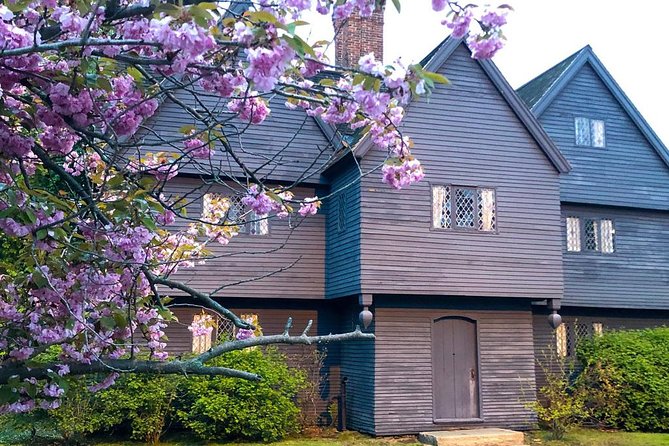
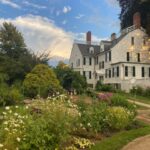
After Corwin’s story, the tour spotlights the most important physical landmark on the route: the Witch House at Salem. It’s described as the only remaining Salem structure with direct ties to the 1692 witch trials.
The Witch House is tied to Judge Jonathan Corwin, who met with Judge Hathorne at the house to discuss who could be a witch. The house dates back to the 1660s, which means you’re standing somewhere that survived long after most trial-era buildings didn’t.
This is the stop you’ll probably remember after the rest of downtown gets blended together. Everything else is a location where events happened or where key officials operated. Here, the building still exists, which makes the stories feel less like history floating in the air and more like history you’re literally looking at.
Practical tip: because it’s a physical landmark, you may want to take a little extra time forming questions for your guide. This is a good moment to ask for clarity about how accusations moved from talk to court to punishment.
You can also read our reviews of more historical tours in Salem
Courts, jails, and where the case got decided on the street
The tour spends real time on the systems behind the hysteria. One of the most intense stops is at the Salem Masonic Building (Essex Lodge), tied to the Witchcraft Court also called the court of Oyer and Terminer. The court was located in the middle of Washington Street in front of the present Masonic building, and many trials were held there, with additional trials in January 1693.
You’ll hear about decisions that didn’t follow ordinary fairness. One example shared on the tour is that a jury declared someone innocent, and the judges nullified that decision. Whether you already know the broad story or not, this kind of detail is what makes the era feel chillingly real.
Next you visit 50 St Peter St, where the Witchcraft Jail once stood. The original jail structure is gone now, but the tour uses the location to talk about how trials-related detention worked across the wider Boston area. You’ll hear names of people jailed there, including Giles Corey, who was crushed during interrogation. Some prisoners died in jail, and the tour frames this as part of the larger coercion behind accusations.
This part of the walk is one of the strongest reasons to book a guide. If you read about the Salem witch trials later, the names can blur. If you hear them placed into a route like this, they stick.
YMCA, Lyceum Hall, the Dungeon Museum, and an intentional dose of irony
The route also covers how Salem’s hysteria showed up in everyday places, not just in court.
At the Salem YMCA on Sewall Street, the tour explains that the street was named for judge Stephen Sewall of the Witchcraft Court. You’ll hear about Betty Parris, a nine-year-old who was moved there in July 1692. Her father, Rev. Parris, and Betty’s cousin are part of the story about how the hysteria got rolling.
Then comes Turner’s Seafood at Lyceum Hall. The tour connects the land to Bridget Bishop and her husband Edward. Bridget Bishop is highlighted as the first woman executed in 1692, and the guide shares how quickly her arrest led to trial and execution—it took eight days from those events to the end.
After that, there’s a stop at the Witch Dungeon Museum. This one isn’t tied directly to the 1692 witch trials, but it helps you understand the punishment environment. The tour describes small jail cells around the size of a phone booth or closet, plus the idea that prisoners had to pay for their own jail time. There’s also a photo-op element in pillories, sometimes called stocks.
Finally, there’s a very different moment: the Bewitched Statue of Elizabeth Montgomery. You take a photo with Samantha Stevens, a fun pop-culture counterpoint. The guide also tells you whose land the statue sits on and connects it to the fact that parts of the show were shot in Salem. It’s ironic on purpose, and it gives your brain a breather after the heavier court and jail stops.
Price and pacing: why $30 feels fair for 90 minutes
The price is $30.00 per person for about 90 minutes. That’s a good deal if you compare it to two things: (1) buying multiple tickets on your own, and (2) paying for time with someone who can connect sites that don’t look linked from street level.
Here, the money mostly buys interpretation. Many stops don’t require paid access—like the memorial and several outdoor location points—so you’re not paying just to walk into a building. But a few locations are marked as admission not included, which likely means you’d pay separately if you want museum-style interiors or extra activities at those stops.
The pace is brisk but not sprinting. The tour’s length is short enough that you can still cover more Salem after. The practical catch: you need to be able to walk and stand. If you’re hoping for wheel-through history with minimal standing, this isn’t built for that.
Also, manage expectations about seeing everything. Several structures from 1692 are gone, and even when the guide points to key places, the modern street scene can feel like a mismatch. That’s not a problem with the guide; it’s just what happens when centuries pass.
Who should book this, and who should plan something else
I think this tour is a great fit for people who want Salem that feels grounded in real locations. If you’re visiting with a teen, it can work surprisingly well because it’s fast, story-driven, and you’re walking between points instead of sitting through a long talk. The one-mile route also makes it easier to combine with the rest of your day.
The best match: first-time Salem visitors, history nerds, and anyone who hates doing research but loves facts. This tour gives you names—Corwin, Hathorne, Sewall, Bridget Bishop, Betty Parris, Giles Corey—plus the way the justice system functioned and where it happened geographically in downtown.
Possible mismatch: if you mainly want the big spectacle parts like the hangings, you should know this route is limited. One guide explanation shared with guests is that the hangings were over a mile away, near a Walgreens, and the tour doesn’t cover that area because it would require a much longer walk. You can still go on your own, but this guided route focuses on downtown access and places you can reach on foot comfortably.
Also, Salem in October gets crowded fast. Crowds can slow the group and make the walking feel longer. If you’re sensitive to crowds or mobility limits, you’ll want to think hard about whether a street-level walking tour is right for your body.
Should you book the Best Salem Witch Trials Historical Walking Tour?
If you want a solid, focused way to understand Salem’s 1692 witch trials without turning your day into a research project, I’d book it. The Witch House stop and the memorial alone make the guide-led format worthwhile, and the route builds a story you can actually follow: arrests, court decisions, confinement, and the town’s role in spreading fear.
Skip it only if you need a route that includes every single trial location in the widest possible radius. This one is built to be doable in about 90 minutes and walk a short distance, so it prioritizes the downtown nodes that you can connect into a coherent picture.
FAQ
FAQ
How long is the Salem Witch Trials Historical Walking Tour?
The tour runs about 90 minutes (approximately).
What time does the tour depart?
Tours depart at 10 am, 1 pm, and 4 pm. Plan to arrive 15 minutes early.
Where do I meet the guide?
Check in at the Salem Historical Tours Office at 8 Central Street, Salem, MA 01970.
How much does it cost?
The price is $30.00 per person.
Do I need to pay for museum or attraction admissions during the tour?
Some stops are marked as admission ticket not included, so you may need to purchase tickets separately if you want to go inside or use those spaces. Many other stops are free and based on viewing and storytelling.
Are there restrooms available during the tour?
There are no public restrooms listed as part of the experience.