REVIEW · BUDAPEST
Budapest Night Walking Tour with Danube River Cruise
Book on Viator →Operated by Absolute Tours · Bookable on Viator
Budapest looks unreal after dark. On this small-group Budapest night walk with an evening Danube cruise, I love the illuminated sights you get to enjoy with less daytime chaos, and I love how your guide connects architecture and Hungarian stories as you pass each landmark. The main thing to consider is the walking: expect continuous walking for up to 2 hours, so plan for solid night steps in the dark.
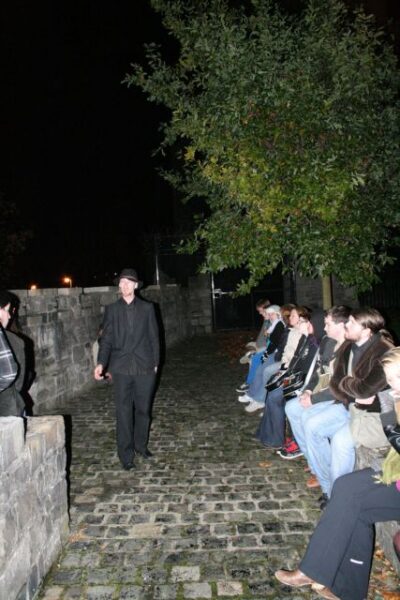
You also get a licensed English-speaking guide and a max of 10 people, which makes it easier to ask questions and stop for photos without feeling rushed. Guides such as Petra and Lujz are specifically called out for being friendly, organized, and good at turning big landmarks into human stories you’ll remember tomorrow.
In This Review
- Key things I’d mark on your map
- Why a night walk beats a daytime checklist
- Small-group pace: great for photos, not for speed-walkers
- Hungarian State Opera House: the start with composers, not just selfies
- Andrássy Avenue to Szent István Basilica: where the 19th century becomes visible
- Szabadság tér and the Soviet Memorial: Cold War symbolism at night
- Parliament Building photos: politics you can actually talk about
- Szechenyi Chain Bridge and Korzo: the best views come with good timing
- Little Princess Statue finish: why ending here feels smart
- The Danube River cruise (Legenda): the payoff, plus a few seat tips
- What you should know before you sit down
- Price and value: why $94.13 can make sense
- Who should book this tour
- Getting the most out of it (without overthinking)
- Should you book the Budapest Night Walking Tour with Danube Cruise?
- FAQ
- FAQ
- How long is the Budapest Night Walking Tour with Danube River Cruise?
- Is the Danube river cruise included?
- How much walking should I expect?
- What language is the tour offered in?
- Does the tour include entering churches or buildings?
- Is food included?
- How big is the group?
- Where does the tour start and end?
- What happens if the Danube can’t run cruises?
- Is the tour run in all weather?
Key things I’d mark on your map
- Small group (max 10) means the pace stays comfortable for questions and photos
- Best-lit route focuses on the Opera area, Andrássy Avenue, and Pest’s riverfront views
- History you can walk through: kings, Cold War symbolism, and who Attila the Hun really was
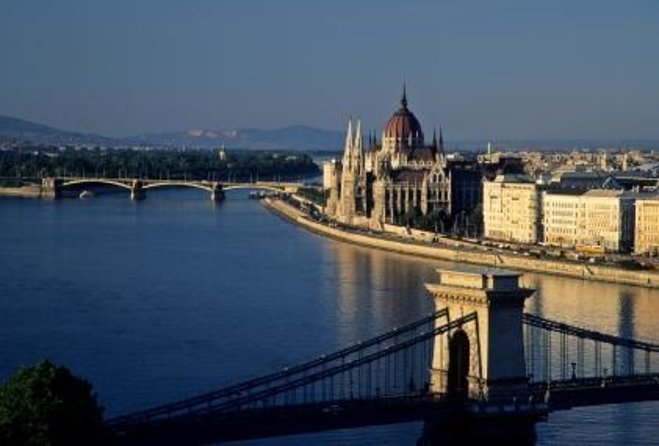
- Szechenyi Chain Bridge panorama gives you classic night views over the Castle District
- Danube cruise with a welcome drink (Legendа Cruises) is the perfect payoff after the walk
Why a night walk beats a daytime checklist
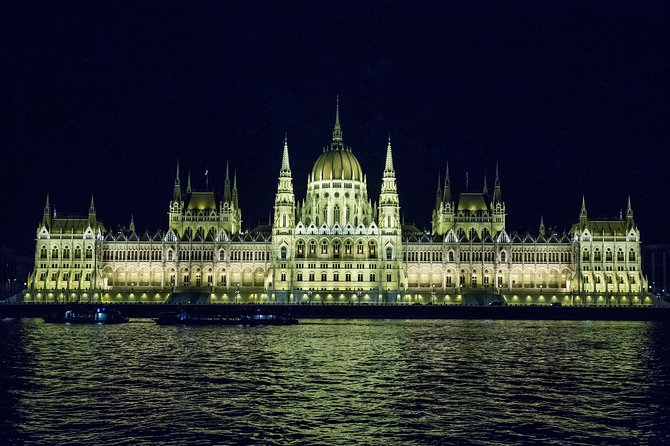
Budapest at night is a different city. Instead of trying to see everything at once in daylight, this format helps you experience the vibe: glowing stone, moving reflections on the river, and big monuments that feel more dramatic when the lights do the talking.
What makes this tour work is that it’s not only sightseeing for the sake of photos. Your guide builds context as you go. You’ll hear stories about notable Hungarians and the architecture around you, plus the political and historical symbols you might otherwise miss. That is the real value: you’re walking past the headlines, then the guide gives you the background so the lights mean something.
And since it’s English-language guided time, you don’t have to play guessing games. For first-time visitors, that saves a lot of effort and frustration.
You can also read our reviews of more walking tours in Budapest

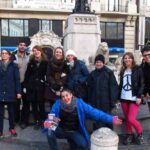
Small-group pace: great for photos, not for speed-walkers
This is a night tour, and it moves on foot. The tour data sets the expectation clearly: you should plan for continuous walking for up to 2 hours. In practice, that means you’ll want comfy shoes more than fancy shoes.
Because the group is limited to 10, the pacing is generally described as slow enough to appreciate the lights. People also note that guides are thoughtful about keeping the group together. Still, Budapest’s night sidewalks and the riverfront areas can get crowded, so if you’re someone who hates tight spaces, keep your expectations realistic during the busier segments.
A small group also means you can ask simple questions. If you see something you don’t understand, you’re more likely to get a real answer instead of a quick pointer.
Hungarian State Opera House: the start with composers, not just selfies
You begin at the Hungarian State Opera House on Andrássy út. Even though you won’t be going inside, the building’s outside is a strong starting point. This stop is about the history of the place and the Hungarian composers connected to it.
Why I like starting here: it frames the rest of the night. After you learn what you’re looking at, the rest of the route becomes easier to read. The guide turns the streets into a story, and the Opera House gives you a cultural anchor before you shift toward government buildings and river views.
If you’re a photo person, try to arrive ready to stand still for a moment. The best shots usually come when you’re not rushing and your camera can handle the low light.
Andrássy Avenue to Szent István Basilica: where the 19th century becomes visible
Next, the route moves along Andrássy Avenue. This segment focuses on the history of the 19th century—useful because it explains why the architecture feels so deliberate and city-defining.
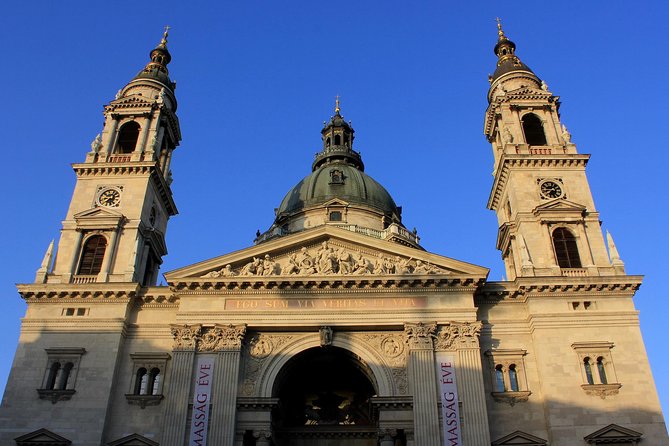
From there, you stop near Szent István Bazilika. You won’t enter, but you’ll learn about Hungary’s kings and the state founder St Stephen. That matters because Hungary’s major monuments often reference national identity. If you know the name behind the stone, the basilica becomes more than a big silhouette against the night sky.
A practical note: from the outside, churches can look similar in photos, especially in the dark. Your guide’s context helps you sort what you’re seeing as you go, so you don’t end up with a folder full of pretty but confusing buildings.
Szabadság tér and the Soviet Memorial: Cold War symbolism at night
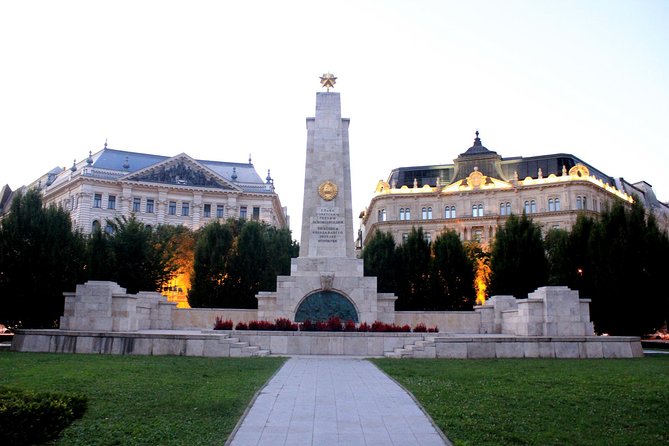
One of the most interesting stops is Szabadság tér, at the Soviet Memorial. This is the portion where the tour gets less postcard and more meaning.
You’ll learn about communist times and what life was like under Big Brother. It’s a heavy theme, but it’s also one of the reasons Budapest feels so layered. The city doesn’t just show off. It remembers.
If you’re sensitive to political history, give yourself a minute here. The best tours don’t sugarcoat the past, and this one seems designed to make that history understandable without getting preachy.



Parliament Building photos: politics you can actually talk about
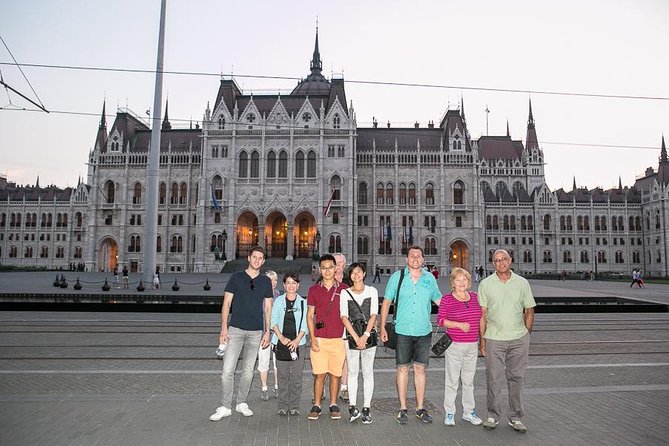
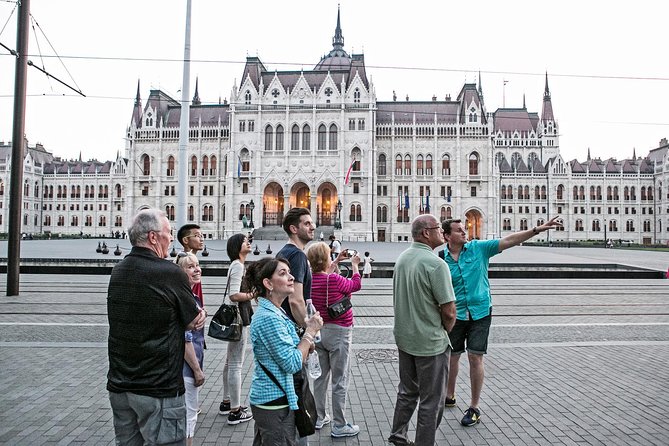
The Hungarian Parliament Building is a star at night, and the tour makes a point of stopping so you can see it illuminated. Here, you also get a look at the current state and politics—so you’re not just admiring a big building, you’re learning how that national story connects to the city itself.
From a value standpoint, this stop matters for two reasons:
1) It helps you interpret what you’re seeing in the moment.
2) It sets up your river cruise afterward, so the Parliament’s role in the wider city looks bigger and clearer.
If you care about photos, this is a good place to slow down and get your camera ready. Night shots of Parliament can be stunning, but they take patience.
Szechenyi Chain Bridge and Korzo: the best views come with good timing
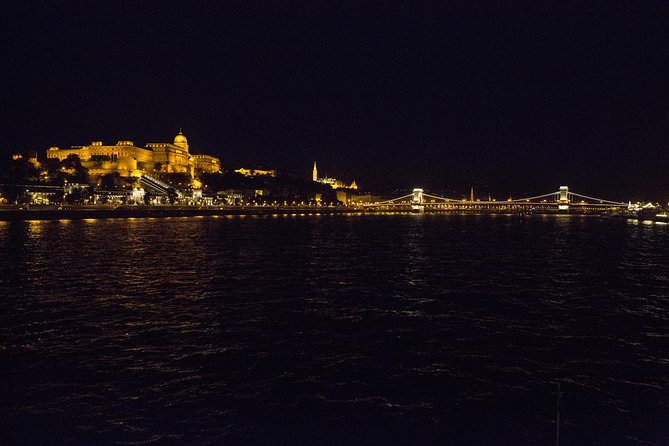
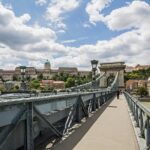
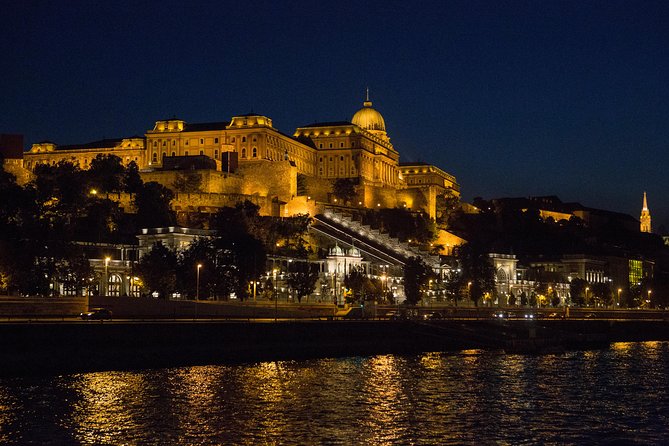
The Szechenyi Lánchíd (Chain Bridge) stop is quick, but it’s designed for impact. This is described as Budapest’s oldest bridge, and you’re treated to a panorama over the Buda Castle District.
Even a short stop can be worth it if your guide positions you well. Bridges are tricky for photos because you’re dealing with angles and reflections. A guided stop helps you pick a better viewpoint than you might on your own.
Then you walk along Korzo, the Danube embankment (Dunakorzo). This is where you get views across the water toward Gellért Hill and the Buda Castle. This stretch is practical sightseeing: flat ground, good sightlines, and a clear sense of how the city sits on both sides of the Danube.
Little Princess Statue finish: why ending here feels smart
The walking portion ends at the Little Princess Statue. The name is memorable, and the location works well because it’s right where you naturally want to be before or after the boat portion.
If you’re continuing to the Danube cruise, this ending gives you a clean handoff. If you skip the cruise option, it still leaves you close to the riverfront, where Budapest is easiest to keep exploring on your own.
The Danube River cruise (Legenda): the payoff, plus a few seat tips
If you choose the Walk and Cruise version, you rest your legs with a one-hour Danube boat ride. This part includes a drink, and it’s operated by Legenda Cruises. The guide handles walking guests through the check-in process, so you’re not scrambling for tickets.
The cruise is where Budapest really “clicks.” From the water, you see the illuminated buildings in a new way: not just fronts and façades, but reflections and rhythm along the river.
What you should know before you sit down
- You might experience more or less viewing depending on where other boats are at the same time.
- The audio narration on board may not always feel perfectly matched to your exact position along the river.
- If you want the best photo angles, you’ll likely want to get on early. Some seat areas can be more obstructed than others.
Also remember that the Danube is real life, not a movie set. The tour information notes that shipping bans due to floods or ice may affect the boat ride. It’s not something you can plan around on the day, but it’s worth knowing that the river can shut down.
Price and value: why $94.13 can make sense
At around $94.13 per person for a ~3-hour experience, you’re paying for three things in one package:
1) A licensed English-speaking guide for the full walking segment
2) A structured route focused on major illuminated sights
3) A one-hour cruise ticket (with a drink) from Legenda Cruises
If you were to build this yourself, you’d still need a guide for the history and symbol reading, plus time to coordinate transport and timing. This tour bundles that together and keeps you from spending your first night figuring out where the best viewpoints are.
Is it a bargain? It depends on what you want. If your goal is simply to walk and take random photos, you can do it on your own. But if you want the night to come with context—kings, communist symbolism, and why specific buildings matter—this is priced like a guided experience with a built-in river payoff.
Who should book this tour
This one fits best if you:
- are seeing Budapest for the first time and want a guided orientation
- love architecture and enjoy learning the meaning behind landmarks
- want night photos without spending hours planning routes and viewpoints
- prefer small groups and a slower, more conversational pace
It may not be the best fit if you:
- hate walking for extended stretches at night
- need frequent long bathroom breaks (the structure is walking-first, cruise-second)
- are extremely sensitive to crowded river areas and limited viewing from certain boat seating positions
Getting the most out of it (without overthinking)
Here’s how to make your night smoother:
- Wear shoes you trust. You’ll walk continuously for up to 2 hours.
- Bring a warm layer. Night temps can be cool, especially if you end up standing still for photos at bridges and embankments.
- Be ready for weather. The tour runs in all weather conditions, so dress appropriately.
- If rain is possible, consider a compact umbrella or rain jacket.
- Keep an eye on the time for the boat check-in. The guide will help with it, but if you move slowly on the walking side, you’ll still feel rushed at the pier.
If you’re also doing other Budapest sights the next day, this tour helps you understand what those landmarks represent. It’s a strong first-night investment.
Should you book the Budapest Night Walking Tour with Danube Cruise?
Yes, if you want Budapest’s lights with real context. The best part is the pairing: a focused guided walk that explains the city’s symbols and architecture, followed by a one-hour Danube cruise with a drink that turns those same landmarks into a night-scene you’ll remember.
Book it especially if you’re comfortable with night walking and you want a small-group experience that doesn’t feel like a stampede. If you know you dislike crowds on boats or you’re worried about seating/view angles, pick your cruise priorities carefully and try to get on early for better photo spots.
FAQ
FAQ
How long is the Budapest Night Walking Tour with Danube River Cruise?
It runs about 3 hours.
Is the Danube river cruise included?
The Walk and Cruise option includes an hour boat ride on the Danube, and it includes a drink.
How much walking should I expect?
Expect continuous walking for up to 2 hours.
What language is the tour offered in?
The tour is offered in English with a licensed English-speaking guide.
Does the tour include entering churches or buildings?
No. The tour does not include interior visits to churches or buildings.
Is food included?
Food is not included.
How big is the group?
The tour has a maximum of 10 travelers.
Where does the tour start and end?
It starts at the Hungarian State Opera House (Andrássy út 22, 1061) and ends at the Legenda City Cruises pier (Jane Haining rkp. 7, 1052).
What happens if the Danube can’t run cruises?
Shipping bans due to floods or ice on the Danube may affect the boat ride.
Is the tour run in all weather?
Yes, it runs in all weather conditions, so you should dress appropriately for the night.