REVIEW · BUDAPEST
Budapest Castle District Walking Tour
Book on Viator →Operated by Triptobudapest.hu - Free Budapest Walking Tours · Bookable on Viator
Old walls. Big views. And stories that connect it all.
This is a tight, 2-hour walk through the Castle District, guided by a fully licensed local who can explain what you’re looking at (and why it mattered). I like that you get a practical route plus time to ask questions, not just a quick highlight loop. I also like the mix of famous spots and lesser-seen corners, from Matthias Church to the Hospital in the Rock. One watch-out: the route includes uphill walking and lots of steps, so plan for cold days or heat, and bring water.
In This Review
- Castle District in Two Hours: What You Really Get
- A few practical must-knows
- Key Points to Know Before You Go
- Starting at Batthyány tér: Easy Meet-Up, Smart First Move
- Batthyány Square to Buda Castle Hill: How the District Pieces Fit
- Matthias Church (Outside): 800 Years in Context
- Fisherman’s Bastion: Views, Disney-Connection, and a Crowds Reality Check
- Medieval Jewish Prayer House: Baroque Neighbors and Daily Life
- National Archives, WWII Scars, and Gül Baba’s Pilgrimage Thread
- Hospital in the Rock: Underground Defense and the Huszar Factor
- Buda Castle: Power Symbols, Rebuilds, and Who Holds Office
- Prince Eugene of Savoy Statue: The Pest Panorama Finish
- What Makes This Tour Such Good Value for the Price
- Pace, Steps, and Weather: The Real-Decider Stuff
- Who This Tour Fits Best (And Who Might Want a Different Plan)
- Should You Book It? My Decision Rule
- FAQ
- How long is the Budapest Castle District walking tour?
- What language is the tour offered in?
- Where do I meet the guide?
- Where does the tour end?
- Do I enter Matthias Church during the tour?
- Is there a lot of walking and stairs?
- Is this tour wheelchair accessible?
- Is there an admission fee for the stops?
- Are service animals allowed?
- What should I do if the weather is bad?
Castle District in Two Hours: What You Really Get
Think of this tour as your fast track to understanding how Buda Castle Hill became the city’s most dramatic stage. You’ll cover major landmarks on foot, but the real value is the guided context: wars, occupations, different communities, and how the same few streets and buildings got reinvented over centuries. The group stays small (up to 30), and the pace is built around short stops plus quick photo moments.
A few practical must-knows
- Duration is about 2 hours.
- It’s in English.
- You’re issued a mobile ticket.
- Most stops are “look + learn” with no paid admissions required for the sites listed on the route.
You can also read our reviews of more walking tours in Budapest



Key Points to Know Before You Go
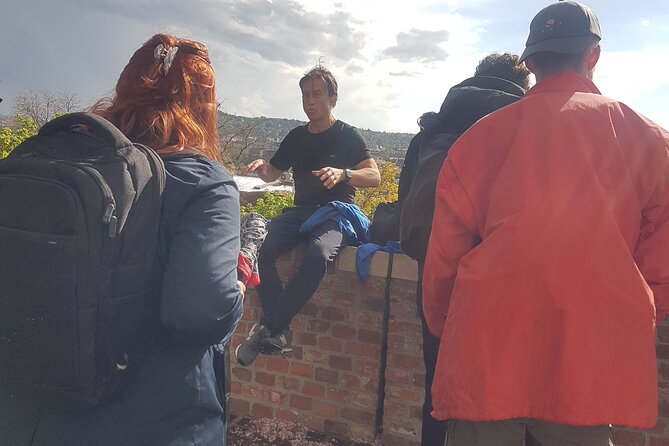
- Local-licensed guidance: you meet your guide right at the metro exit and get the route explained clearly at the start
- Iconic stops without church entry pressure: Matthias Church is a history lesson from the outside
- Viewpoints built into the walk: terraces and Castle Hill overlooks are part of the flow
- WWII and underground stories included: you’ll hit WWII damage and the Hospital in the Rock bunker museum
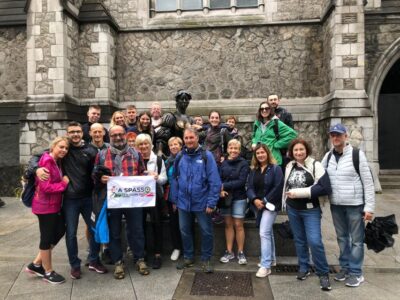
- Small-group energy: up to 30 people, with frequent chances to ask questions
- Crowds can spike at Fisherman’s Bastion: that area is popular, so expect congestion on busy days
Starting at Batthyány tér: Easy Meet-Up, Smart First Move
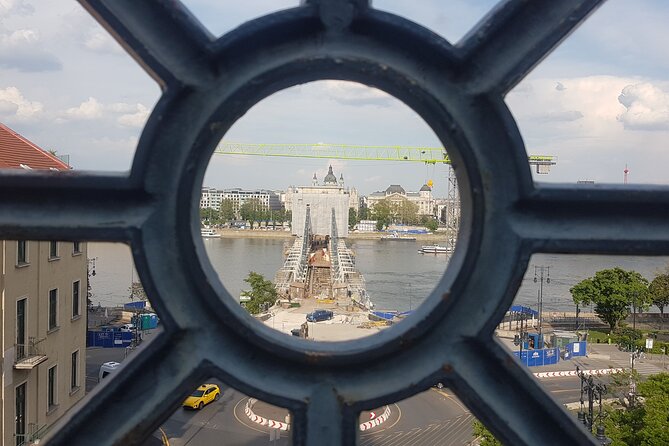
Your tour starts at Batthyány tér 1, 1011 Hungary, at the metro exit. The practical benefit here is huge: you don’t have to hunt for a sign in a parking lot or try to match a face in a crowd. Your fully licensed local guide meets you at the exit in the park and lays out what you’ll see across Castle District.
This first moment matters. Castle Hill can feel like a maze once you’re already walking. Starting with direction lets you spend your energy on the sights instead of getting lost. Also, it’s a gentle way to begin—first a “here’s the story of this area” context, then the specific landmarks.
If you want photos early, aim to be ready when the group starts moving. The early part sets your mental map for the entire route.
Batthyány Square to Buda Castle Hill: How the District Pieces Fit

From Batthyány Square, you’re essentially being walked into the “set” where Budapest’s biggest power symbols live. Your guide introduces Buda Castle District as a cluster—not just one building. You’ll hear how it connects the Royal Palace, Matthias Church, Fisherman’s Bastion, and other important buildings, plus urban public art mini monuments, look-out terraces, and an underground cave system.
What I like about this approach is that it prevents the “checklist tourism” feeling. You’re not only thinking, That’s a church. That’s a viewpoint. You’re learning how the district operates as a layered space: above ground, through courtyards and terraces, and below ground with its defense and hidden passages.
This is also a good time to ask basic questions. People often arrive with the same two concerns: Why did this look change so much? And who lived here? Your guide can start answering those early, so the later stops land harder.
Matthias Church (Outside): 800 Years in Context
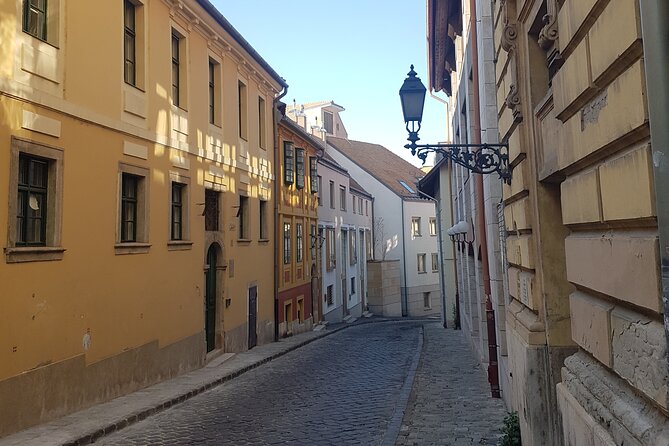
At Matthias Church, you’re there for the story, not the ticket line. The tour focuses on the area’s 800-year history, shaped by wars and occupations. The guide talks about everyday life in the district and how German, Jewish, and Hungarian communities fit into the picture.
A key detail: you do not enter the church. That’s not a drawback—it’s a time saver. You still get the historical grounding, and you avoid the pressure of squeezing in an interior visit when the whole district already runs on stairs and steep lanes.
If you’re the type who likes architecture, you’ll also enjoy this stop visually. The context gives your eyes something to look for: how style changes can reflect power shifts, and how places of worship tie into political eras.






Fisherman’s Bastion: Views, Disney-Connection, and a Crowds Reality Check
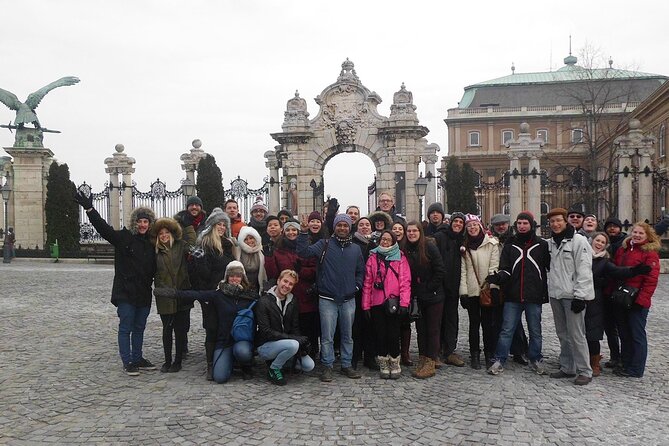
Next up is Fisherman’s Bastion—the spot with the “postcard” panorama. Your guide explains the connection between Walt Disney and the Bastion, and you’ll learn small details like the differences between a cross with one, two, or three strips. You’ll also get pointers on how to enjoy a free view from Castle Hill.
Here’s the one consideration you should plan for: Fisherman’s Bastion can be incredibly crowded. Even with a good guide, that area is popular. If you’re sensitive to shoulder-to-shoulder foot traffic, go in knowing you might only get a few minutes for photos before the group moves again.
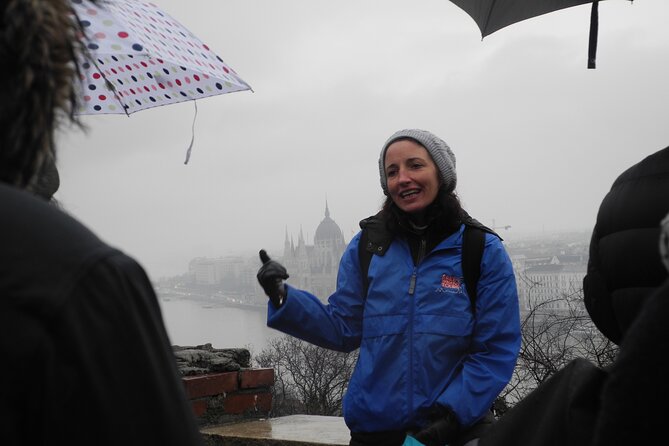
Still, the payoff is real. This stop is where the district’s geography clicks: you see how Buda and Pest relate across the Danube. And when your guide points out specific landmarks, the view becomes a map.
A trick that helps: take your first photos quickly, then hang back half a minute. You’ll often get a clearer shot while the crowd surges forward.
Medieval Jewish Prayer House: Baroque Neighbors and Daily Life
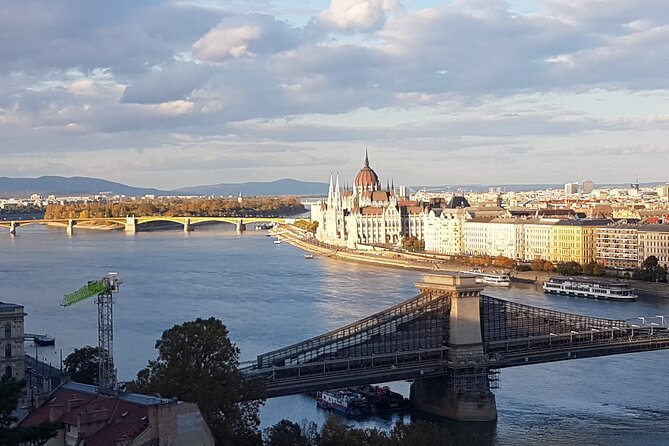
At the Medieval Jewish Prayer House, the tour shifts from grand panoramas to neighborhood texture. You’ll learn about the prayer house and see the beautiful baroque residential buildings around it.
This is one of those stops that changes how you feel about the district. Castle Hill can look like a museum from far away. Up close, this stop reminds you it was also lived-in—religious life, streets, houses, and the daily rhythm behind political history.
If you care about culture and community history (not only wars), make sure you keep your attention here. The guide’s explanations are the difference between seeing buildings and understanding why they’re still important today.
National Archives, WWII Scars, and Gül Baba’s Pilgrimage Thread
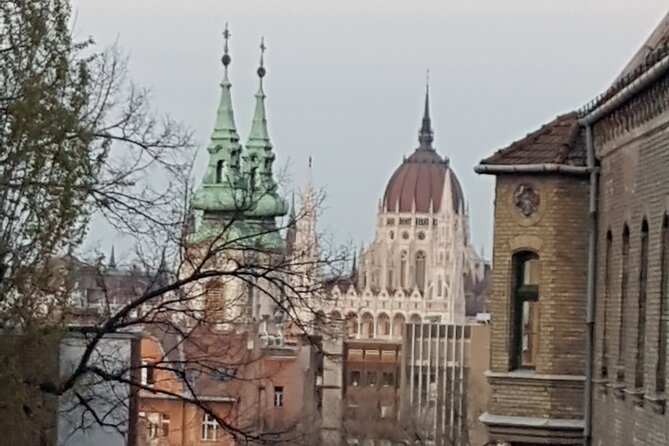
Next is the National Archives of Hungary, a stop that anchors the tour in the most destructive parts of the 20th century. You’ll see what WWII did to the area and hear where a Nazi stronghold was located. You’ll also get where the rich lived, plus a surprising cultural link: the tour includes the Muslim site of pilgrimage for Gül Baba, an Ottoman Turkish monk and soldier.
This stop is valuable because it prevents “old-world only” thinking. The Castle District didn’t stop evolving. It was damaged, rebuilt, and reinterpreted in modern memory. That makes the earlier medieval and royal stories feel less like separate chapters and more like one long timeline.
Also, it’s a good checkpoint for your legs. You’ll get a short walking reset, then move on into something even more underground.
Hospital in the Rock: Underground Defense and the Huszar Factor
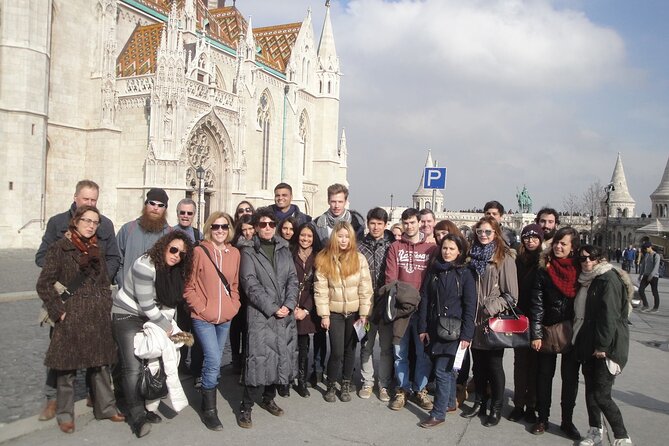
The Hospital in the Rock Nuclear Bunker Museum is where the tour gets dramatic. Your guide explains life in the underground Castle Hill labyrinths and the system’s role in defense over the centuries.
You’ll also see the funniest public statues in Budapest (as your guide frames them on this route) and learn about the womanizer light cavalry fighters called huszar. That mix—serious defense history plus playful, memorable details—is a big reason people rate this tour so highly. It makes you remember facts because the guide attaches them to vivid, human details.
What to expect practically: the stop works best if you keep your expectations flexible. This is not just a museum lecture. You’re learning how the underground space shaped what happened on the surface.
If you’ve been visiting churches and palaces all day, this stop balances the tone fast.
Buda Castle: Power Symbols, Rebuilds, and Who Holds Office
At Buda Castle, you’ll see the massive building that once served as the residence of Hungarian kings. You’ll also hear how it was rebuilt many times due to war destructions.
Your guide connects myth and identity too. You’ll hear about a mythical bird of the Hungarians, and you’ll learn where the president and prime minister’s offices are located. That last part matters for understanding how the district still functions as Hungary’s political center.
You might feel that this stop gets the most famous attention everywhere else you go—but guided context makes it more than a façade photo. Instead of only seeing a “big castle,” you’re seeing a structure rebuilt through eras of conflict and state change.
If your timing works out, this is also a great moment to grab water. Some guides actively point out that there are bathrooms at Buda Castle and you can refill water bottles there.
Prince Eugene of Savoy Statue: The Pest Panorama Finish
The tour ends at the Statue of Prince Eugene of Savoy in 1013 Hungary. From the terrace, you get a panorama of the Pest side of the Danube.
This last stop also includes a fun element. If you’re lucky, your guide tests your knowledge with tricky questions about Castle Hill landmarks and life of the Hungarians. Even if you’re not into quizzes, it’s a clever way to make sure the story sticks.
Then you finish with practical information and time to answer remaining questions. That question time is genuinely helpful if you’re planning a next stop—like where to go for views, museums, or an easy dinner afterward.
What Makes This Tour Such Good Value for the Price
The listed price is $3.62 per person, with a booking fee included. The booking fee is directed toward administration and does not contribute to the guide’s earnings. That means your guide’s real compensation comes from your donation/tip at the end, and your tour runs because that community support exists.
From a value standpoint, you’re paying for three things that add up fast in Budapest: access to a local perspective, a tight walking route that prevents dead-end wandering, and a sequence of stops that cover both famous sights and story-driven side locations.
Also, the free admission notes for the listed stops mean you’re not juggling extra tickets mid-walk. In a city where attractions often have separate fees, this keeps your day predictable and easier to plan around.
In short: at this price point, you’re buying direction, pacing, and context. Then you decide what you want to do with extra time afterward.
Pace, Steps, and Weather: The Real-Decider Stuff
This tour is built for a moderate fitness level. It includes a 10-minute uphill walk and many steps. That’s not a warning you should ignore. If you hate stairs, plan alternative sightseeing for the rest of your day and choose comfortable shoes.
Cold can make the stairs slippery. Hot weather can feel brutal in the Castle District, especially around Fisherman’s Bastion when crowds pile in.
The good news: multiple guides in this program are clearly practiced at pacing and rest moments. People often mention guides stopping so the uphill climb feels manageable, and even finding shade when possible. One small but smart tip: bring water even if you think you might not need it. Castle Hill walking can sneak up on you.
Who This Tour Fits Best (And Who Might Want a Different Plan)
You’ll love this tour if you want:
- A first-time orientation to the Buda side
- A guide who explains how history connects across sites
- A mix of famous viewpoints and off-the-main-path detail
- A short time window (about 2 hours) that still feels full
You might want to rethink it if:
- You can’t handle stairs or uphill segments
- You’re hoping for long free time inside major sites (this route focuses on outside learning)
- You really dislike crowds, because Fisherman’s Bastion can get packed
Should You Book It? My Decision Rule
Book it if you want a guided walk that helps you understand Castle District fast. The pairing of big monuments with WWII-era context and underground defense stories is a strong combination, and the small-group nature keeps it human.
I’d skip it if stairs are a deal-breaker or if you prefer slow, unstructured wandering. This is not that kind of tour. It’s a guided route designed to keep moving, so you get the story without spending half a day logistics-ing your way around.
FAQ
How long is the Budapest Castle District walking tour?
It’s approximately 2 hours.
What language is the tour offered in?
The tour is offered in English.
Where do I meet the guide?
Meeting point is Budapest, Batthyány tér 1, 1011 Hungary, at the metro exit in the park.
Where does the tour end?
It ends at the Statue of Prince Eugene of Savoy, Budapest, 1013 Hungary.
Do I enter Matthias Church during the tour?
No. You learn about Matthias Church, but you do not enter the church.
Is there a lot of walking and stairs?
Yes. The tour includes uphill walking and you should be prepared for steps, with specific mention of a 10-minute uphill walk.
Is this tour wheelchair accessible?
The provided details do not list wheelchair accessibility, and it’s clearly a step-focused walk.
Is there an admission fee for the stops?
The stops on the route are listed as admission ticket free.
Are service animals allowed?
Yes, service animals are allowed.
What should I do if the weather is bad?
The experience requires good weather. If canceled due to poor weather, you’ll be offered a different date or a full refund.
If you tell me your travel month and whether you want more views or more museums afterward, I can suggest a smart follow-on plan for the rest of your day on the Buda side.