REVIEW · SORRENTO
Sorrento: Night time Walking Tour & Limoncello Tasting
Book on GetYourGuide →Operated by M.a.UrbanTrekking&More · Bookable on GetYourGuide
Sorrento looks different after dark. This small-group night walk strings together the seaside port, the cliff-side views, and the old-town streets in a way that helps you understand the place fast.
I love how the tour ties landmarks to stories, not just photos. You’ll get a sense of Sorrento’s timeline from the Church of San Francesco area, then you’ll hear how locals built their lives around lemons, sea work, and even inlay craft.
One thing to consider: it’s not a flat stroll. You’ll cover about 4 km with steep, slippery sections and a climb of roughly 100 steps up from Marina Grande, so it’s not for everyone.
In This Review
- Key Things To Know Before You Go
- Sorrento After Dark: Why This Night Walk Feels Smart
- Meeting Point Details: Find the Guide in One Try
- Starting at San Francesco: Where the City Timeline Begins
- Villa Comunale Sea Views: A Calm Pause Before the Port
- Marina Grande at Night: Iconic Port Life You Can Feel
- The Climb Back Up: 100 Steps and Why It’s Worth It
- Sorrento’s Historic Center: Lemons, Inlay Craft, and Alley Stories
- Sedil Dominova: The 14th-Century Civic Heart
- The Limoncello Tasting Break: What You Actually Get
- Price and Value: Why $28 Can Work Here
- Guide Style and Small-Group Energy (Mario, Silvio, and Friends)
- Night Conditions: Rain, Steps, and Street Noise
- Who Should Book This Tour (and Who Should Skip It)
- What to Bring: Simple Stuff That Makes It Easier
- Should You Book the Sorrento Night Walking Tour and Limoncello Tasting?
- FAQ
- How long is the night walking tour in Sorrento?
- Where do I meet the guide?
- Is the tour mostly walking or mostly tasting?
- What is included in the limoncello tasting?
- How difficult is the route?
- Is it suitable for everyone?
Key Things To Know Before You Go
- Night pacing that helps you get oriented fast, especially if you arrive late
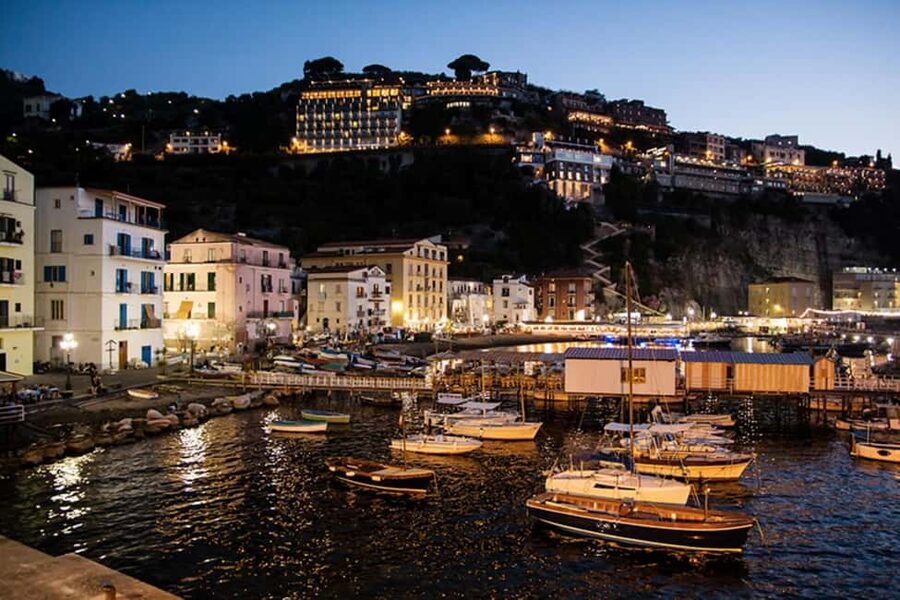
- Marina Grande at night for iconic port views without daytime crowds
- Sedil Dominova explained as a real piece of 14th-century civic life
- Sorrento lemon and inlay craft stories that go beyond surface-level sightseeing
- A short tasting break, not a full-on tasting tour
- Small group size (max 10, sometimes up to 15) keeps the walk lively and manageable
Sorrento After Dark: Why This Night Walk Feels Smart
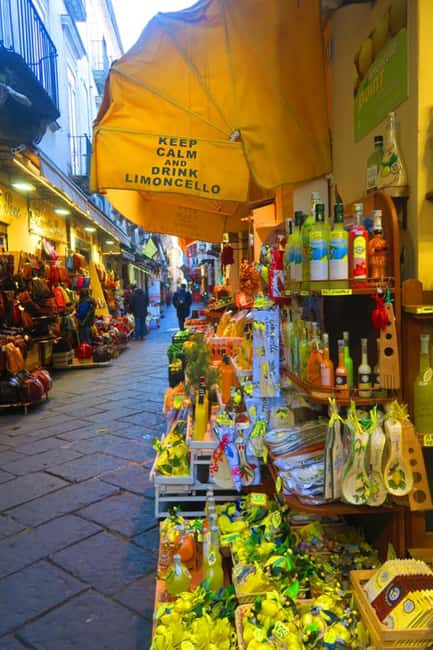
If you only have a day in Sorrento, the night is often when the town loosens up. Shop lights glow, the streets feel more human, and you can slow down without racing against daytime tours. This is designed for that exact moment: a guided walk after dinner that gives you bearings and context.
The best part is the structure. You start with the religious and historical anchor of the town, move down toward the sea village, then climb back up through the old center where the most famous sights live. It ends on a square in the historic core, which helps you keep the momentum going for your next meal.
And because the group is small, it doesn’t feel like a conveyor belt. You can ask questions, and the guide can adjust the flow if something changes on the street.
You can also read our reviews of more walking tours in Sorrento



Meeting Point Details: Find the Guide in One Try

You meet at Square Francesco Saverio Gargiulo No 8. The spot is right in front of the entrance of the Church of San Francesco, outside the Villa Comunale gates. You’ll know you’re in the right place because the guide wears a red hat.
Plan to arrive early, not just on time. The tour leaves about five minutes after they check everyone is there, and they ask you to be present about ten minutes before the start. If you show up late, there’s a real chance you won’t be able to join.
Practical tip: when you arrive, don’t stop for long with your phone out. Look around for the red hat, then get ready to walk.
Starting at San Francesco: Where the City Timeline Begins
The first chunk of the tour is an orientation moment. Your guide gives you the historical framework so later stops make sense. It’s the kind of setup that turns a set of buildings into a story you can follow.
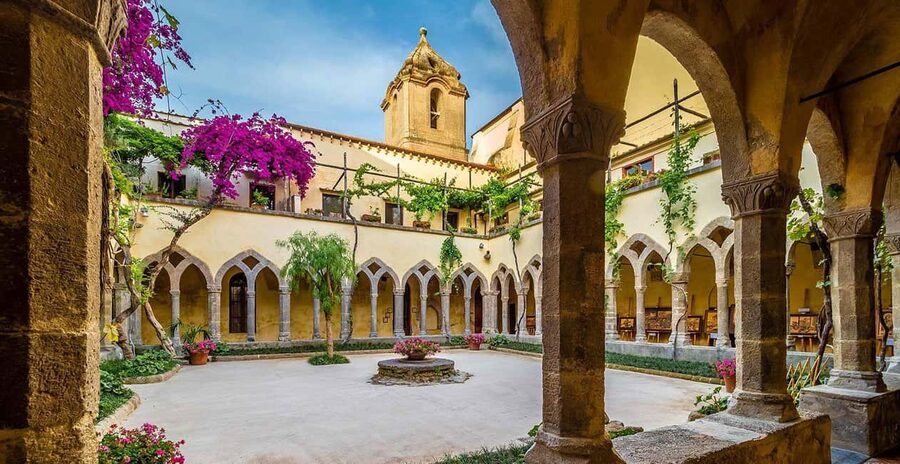
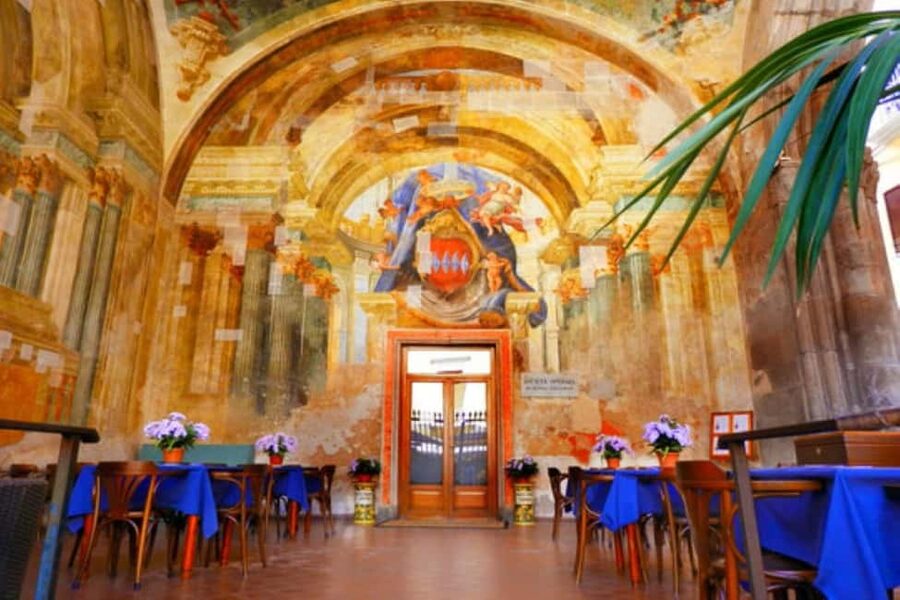
If the site is open, you’ll also get to visit the 14th-century Cloister of San Francesco. Even when you can’t enter, the area still works as a baseline: this is where you start to see Sorrento’s mix of faith, civic life, and old-town architecture.
This is a good start point for newcomers. You’re not thrown into random streets first. Instead, you learn how to read the town as you go.
Villa Comunale Sea Views: A Calm Pause Before the Port

Next comes the Villa Comunale area. This is one of the places where Sorrento does the sea-view thing without needing a viewpoint ticket. You get that classic overlook feeling, the kind that makes you understand why people keep returning to this coast.
The guide keeps it practical, too. Rather than treating it like a scenery stop only, they connect what you’re seeing with how the town developed. You’ll also learn what to look for as you move toward the port.
One small note: the route includes steep and sometimes slippery sections. So even at scenic overlooks, keep your eyes on your footing.
Marina Grande at Night: Iconic Port Life You Can Feel

Then you head down to Marina Grande, Sorrento’s seaside village and one of the most recognizable places in town. At night, the fishing-port atmosphere is different than in daylight. Streets feel calmer, the waterline looks sharper, and it’s easier to take photos without constantly weaving around daytime tour groups.
This stop is built for both viewing and understanding. You’ll get a quick guided look, then you’ll have time to soak in the scene and grab pictures.
Most importantly, you’re there because it’s part of the real Sorrento identity: the sea isn’t background. It’s the reason the town is shaped the way it is.
You can also read our reviews of more food & drink experiences in Sorrento
The Climb Back Up: 100 Steps and Why It’s Worth It
Here’s the part you should mentally prepare for. The route includes about 100 steps climbing from Marina Grande back to the historic center, and there’s no elevator. That climb can feel longer at night, especially on uneven paving.
But this is also the reason the tour works. The effort filters the experience into something meaningful. You earn the view and the old streets, and you arrive into the center already warmed up and oriented.
If rain is in the forecast, bring a raincoat and expect slick surfaces. Comfortable shoes are not optional here, and the tour is not designed for people with mobility limitations.
Sorrento’s Historic Center: Lemons, Inlay Craft, and Alley Stories
Back in the center, the tone shifts from views to culture. This is where you start hearing how Sorrento became known not only for sea trade, but also for the objects and crafts tied to local life.
Two big themes show up:
- Sorrento lemons and how the fruit connects to local food culture
- The master inlayers’ techniques (Sorrento’s famous inlay tradition)
That combination matters. It’s easy to think Sorrento is just postcards and beaches. But once you hear how lemons and craft traditions are part of the town’s identity, you see the streets in a different way.
You’ll also get guided movement through narrow alleys, which helps you understand the layout without getting stuck in the wrong loop.
Sedil Dominova: The 14th-Century Civic Heart

One of the standout historical stops is Sedil Dominova, an ancient 14th-century city parliament. This isn’t treated like a random stone monument. Your guide explains what it was for and why it mattered.
Standing there at night adds to the effect. The square and surrounding streets feel tighter, and the building reads more like a lived-in civic space rather than an optional photo spot.
This is the kind of stop that makes the whole tour feel worth it. You’re not just walking from scenic point to scenic point. You’re learning how people organized themselves in a real place.
The Limoncello Tasting Break: What You Actually Get
The tasting is the fun finale, but it’s also worth understanding the format. This is not a long, sit-down tasting tour. The limoncello tasting is a short break offered by a partner shop so you can understand the organoleptic qualities of the drink and get the chance to buy local products.
What you’ll typically taste includes:
- Limoncello
- Lemon cream
- Pistachio cream (alcoholic)
- Chocolate items
- Lemon biscuits
You may also have the option, depending on how it’s arranged, to taste other typical local items like olive oil and other types of liqueurs on request, and it’s described as free of charge.
A quick reality check: if you’re hoping the night revolves around tasting quantities and comparisons, this won’t match that expectation. Think of it as a guided flavor moment inside a walking tour.
Price and Value: Why $28 Can Work Here
At $28 per person for about 1.5 hours, the value depends on what you want from your trip. If your goal is to see Sorrento’s main threads with context, it’s a fair deal. You’re paying for an expert-led route plus the included tasting break.
It also includes things that help right away:
- Travel tips for restaurants, bars, and pizzerias in the area
- Entrance to the activities included in the program
- The structured walk, including the climb and the key historical stops
Since the tasting is only a portion of the tour, the cost isn’t inflated by turning it into a full tasting event. You’re essentially buying a guided orientation walk plus a well-timed local flavor stop.
Guide Style and Small-Group Energy (Mario, Silvio, and Friends)
One big reason the reviews have such a consistent feel is the guides. Names like Mario and Silvio come up for a reason: they’re engaging storytellers who connect history to what you’re looking at right now.
In practice, that means:
- the talk doesn’t feel like a lecture
- the lemon and limoncello information is explained in a way that sticks
- the walk doesn’t feel like it’s only about where to stand for pictures
You’ll also notice the group size stays small. It’s capped at 10 participants, with a possibility it can run up to 15 if some people don’t join. Either way, it’s set up to keep the tour moving without giant crowds.
Night Conditions: Rain, Steps, and Street Noise
This tour is built for the evening, which means the conditions matter.
- If it rains, you’ll want an umbrella or raincoat and shoes that grip.
- There’s a sensitivity to delays: if you arrive more than 15 minutes late, you might not be able to join.
- The walk includes steep and slippery sections, so go slowly on the climb and watch your step in the dark.
Also, Sorrento nights can be lively. Street sound is part of the experience, so if you’re sensitive to noise, bring the mindset that it’s still a real city at night, not a library.
One more helpful detail: the route can shift based on weather, strikes, closures, or seasonal timing. When that happens, the guide selects other sites so you still get a complete tour in the planned time window.
Who Should Book This Tour (and Who Should Skip It)
I think this tour is a great fit if you:
- want to get oriented fast on your first night
- enjoy history and local craft stories, not just scenery
- like the idea of a short flavor break without turning the whole evening into a tasting session
- want a group experience small enough to feel personal
I’d skip it if you have mobility challenges, since it’s not suitable for people with mobility impairments and includes lots of steps. It’s also noted as not suitable for people with heart problems, people over 80, and babies under 1.
Diet is another factor. It’s not suitable for vegans, and it’s not suitable for people with lactose intolerance. If you’re lactose sensitive or vegan, plan ahead before booking.
What to Bring: Simple Stuff That Makes It Easier
Bring comfortable shoes. That’s the non-negotiable item.
If rain is possible, pack a raincoat or umbrella. The tour can handle weather changes, but slick steps are still slick steps.
And wear clothes you’re happy moving in for about 1.5 hours at night. You’ll be walking roughly 4 km, with a serious climb component.
Should You Book the Sorrento Night Walking Tour and Limoncello Tasting?
If you’re spending a few nights in Sorrento and want to understand it beyond the main strip, I’d book this. The blend of Marina Grande, a historic-center walk, and Sedil Dominova gives you a fast, coherent picture of the town. Add in the lemon-focused flavor break and the inlay craft stories, and you’re getting more than a simple stroll.
But if you want lots of time sitting and sampling, or if steps are a deal-breaker for you, pick another option. This is a walking tour first, with tasting as a short bonus.
FAQ
How long is the night walking tour in Sorrento?
It lasts about 1.5 hours.
Where do I meet the guide?
You meet at Square Francesco Saverio Gargiulo No 8 in Sorrento, in front of the Church of San Francesco (outside the Villa Comunale). The guide wears a red hat.
Is the tour mostly walking or mostly tasting?
Mostly walking. The tasting is a short break at the end of the walk, so it’s not a tour that is mainly focused on tasting.
What is included in the limoncello tasting?
The tasting includes limoncello, lemon cream, pistachio cream (alcoholic), chocolates, and lemon biscuits. Other typical local products may be available on request.
How difficult is the route?
The route is about 4 km with steep and slippery sections. The tour includes climbing about 100 steps from Marina Grande to the historical center and there is no elevator.
Is it suitable for everyone?
It is not suitable for people with mobility impairments or heart problems, people over 80, babies under 1, vegans, or people with lactose intolerance.