REVIEW · BUDAPEST
Budapest: City Center Walking Tour
Book on GetYourGuide →Operated by Tourist Angel · Bookable on GetYourGuide
Budapest can feel huge at first. This 2-hour Pest walking tour helps you find your bearings fast, without the stress of tourist-bus crowds. I love the way it mixes classic sights (especially St Stephen’s Basilica) with human-scale city-center streets. I also like that the route ends around the Hungarian Parliament area, where the architecture and history both hit hard.
One thing to consider: this is a rain-or-shine walk, and you’re on foot the whole time. If weather is rough or you need extra time for slower walking, plan accordingly.
In This Review
- Key takeaways before you start
- Why this Pest-side walk beats the tourist bus shuffle
- Marcius 15 Square to St Stephen’s Basilica: the architecture hitting you in the face (in a good way)
- Duna Corso promenade: where the river makes the city feel bigger
- Pesti Vigadó, Vorosmarty Square, and the café history detour you’ll actually enjoy
- Elizabeth Park and Budapest Eye: a slow-down moment in a busy city
- Mr Safe, Liberty Square, and the hard lessons you can’t skip
- Parliament Square views and the Shoes on the Danube Bank option
- Price and what you actually get for about $14
- Weather, timing, and pace: how to plan like a pro
- Who this tour suits best (and who might want a different plan)
- Should you book Budapest: City Center Walking Tour?
- FAQ
- How long is the Budapest City Center Walking Tour?
- Where does the tour start?
- What’s the price?
- Is there an entrance fee included?
- What language is the tour guide?
- Does it run in bad weather?
- Can I get a refund if my plans change?
- Is it wheelchair accessible?
- Is there hotel pickup included?
Key takeaways before you start
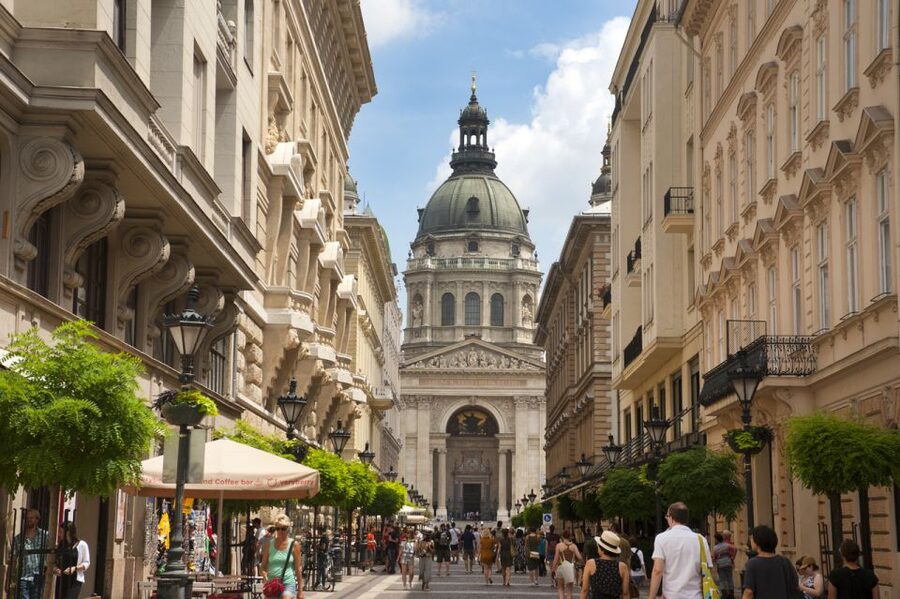
- Start at Marcius 15 Square for a dramatic first impression, with the Gothic Medieval cathedral of the Great Blessed Lady setting the tone.
- Get Danube views from Duna Corso and spot bridges and the Castle of Buda across the river.
- Stop for iconic city-center landmarks like Pesti Vigadó and Vorosmarty Square, where history meets everyday Budapest.
- Elizabeth Park is a real breather with Budapest Eye, the largest Ferris wheel in Europe.
- Liberty Square and Kossuth Square add the heavy context: Nazi occupation, Communist oppression, and the 1956 revolution.
- Finish with options by the river so you can extend the experience at your own pace, including the Shoes on the Danube Bank.
Why this Pest-side walk beats the tourist bus shuffle
If you only do bus tours, you miss the city’s rhythm. This walk keeps you in the middle of things—pedestrian streets, promenades, and squares where locals actually move. You’ll get the big-picture story of Pest while also seeing the details that make Budapest feel specific, not generic.
Another win: you’re with a live English guide. Guides here are consistently praised for making the group feel welcome and for keeping questions flowing. Names you may run into include Lena, Bea, Monica, Dominik/Dominic, Monika, Kristof, Sara, Ursula, and Katalin—and the common thread is simple: lots of information, delivered in a way that sticks.
The pacing is generally relaxed for a 2-hour city intro, and the route leans toward photo-friendly stops—without turning the whole thing into a slideshow. Also, since it’s a small-group format, you’re less likely to feel like a ticket number.
You can also read our reviews of more walking tours in Budapest



Marcius 15 Square to St Stephen’s Basilica: the architecture hitting you in the face (in a good way)
You kick off in Marcius 15 Square, a strong “welcome to Budapest” start. From there, you’ll admire the Gothic Medieval cathedral of the Great Blessed Lady. Gothic can sound like a buzzword, but on the street it’s different: you see shape, lines, and scale in a way photos can’t match.
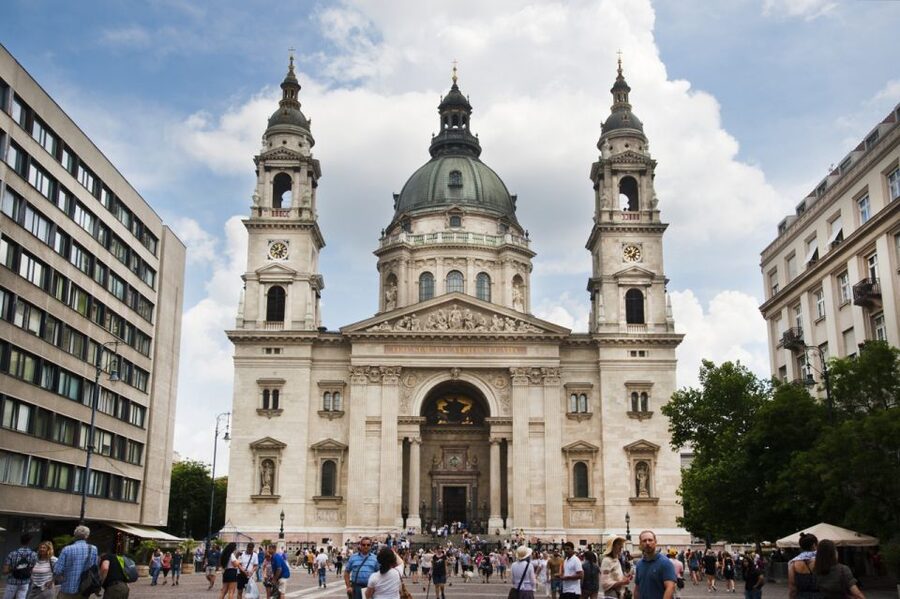
Then comes the centerpiece moment: St Stephen’s Basilica. The tour focuses on what makes it so memorable—the monumental dome and the colonnade. Even if you’re not a church-history person, this is the kind of building that makes you stop walking. The dome gives you a natural landmark, and the colonnade helps you understand how the space frames the square-life around it.
Practical note: you’ll want to wear shoes you trust. This tour is about walking between key views, not about standing in one spot for long.
Duna Corso promenade: where the river makes the city feel bigger
After the basilica area, you move toward the Duna Corso river promenade. This is one of the smartest parts of the route because it gives you water + bridges + sightlines. You’ll look out over the Danube, take in the bridges, and see the Castle of Buda on the opposite side.
That castle view does more than look good. It helps you mentally map the city. When you later move around Budapest on your own, you’ll recognize how Pest and Buda relate—where the “uphill” energy starts, where the big viewpoints sit, and why the river is the city’s main stage.
One tip from the vibe of the guide feedback: when the guide points out what you’re looking at—like which bridges connect what—you’ll start spotting patterns instead of just admiring scenery.
Pesti Vigadó, Vorosmarty Square, and the café history detour you’ll actually enjoy
Next, the tour threads through familiar city-center landmarks without getting stuck in crowds. You’ll pass Pesti Vigadó, often described as a striking dance palace. It’s the kind of building that feels theatrical even from the sidewalk.
Then you’ll reach Vorosmarty Square, where you’ll see the historical Gerbeaud Cafe. Even if you don’t go inside (entrance fees aren’t included), it’s worth the stop. It anchors the story of Budapest’s 19th-century elegance and gives you a real-world reference point for where people once gathered—and where they still do.
This is also where good guiding pays off. Many guides on this route are praised for sharing practical recommendations, not just facts. Some have suggested authentic places to eat and dessert spots that feel local rather than tourist-y. If you like having a short list of follow-up ideas for later, this segment helps you build one.
Elizabeth Park and Budapest Eye: a slow-down moment in a busy city
A walking tour can either feel like constant motion or like smart pacing. Here, Elizabeth Park and Budapest Eye bring a calmer change of tempo. You’ll pass through the park area and see Budapest Eye, noted as the largest Ferris wheel in Europe.
The Ferris wheel itself is a landmark you can use later—an easy “point in the city” reference when you’re figuring out how to get around. And the park setting makes the walk feel less like “checkpoint travel” and more like a real stroll through central Budapest.
If it’s rainy, this is also where you’ll appreciate having small-group movement. You can keep your footing and stay with the guide without losing the route.






Mr Safe, Liberty Square, and the hard lessons you can’t skip
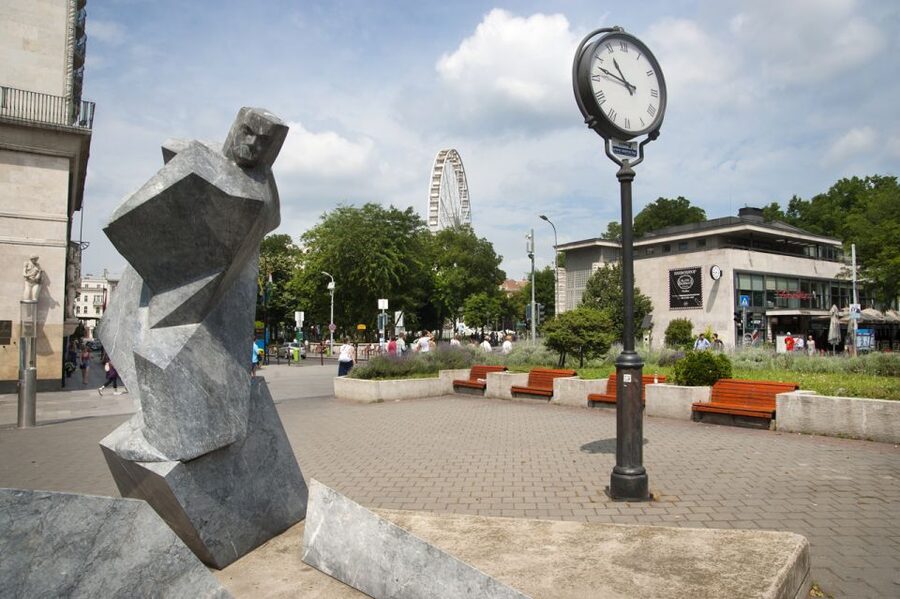
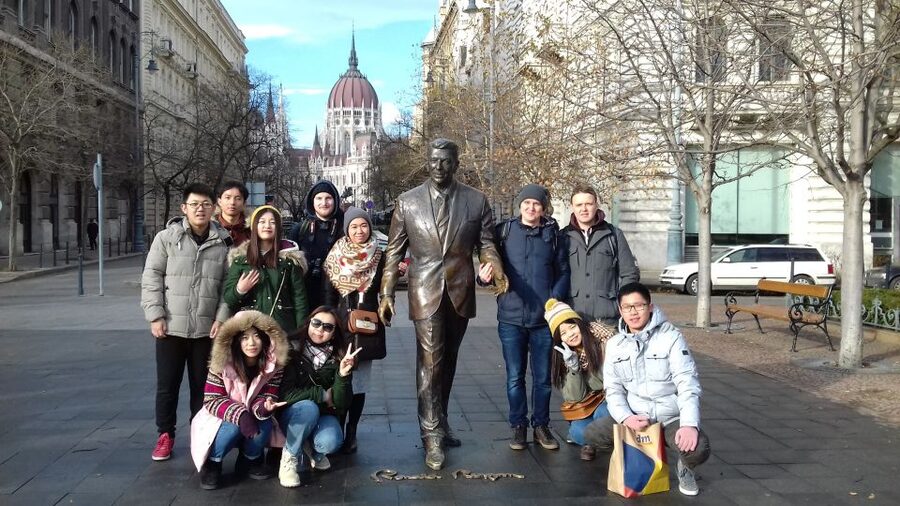
Then the tour takes a more reflective turn—starting with a light, fun moment: you’ll see the cute statue of Mr. Safe, the kind of stop that makes people smile. It’s small, but it matters. After major architectural moments, a playful detail keeps you human and resets your attention.
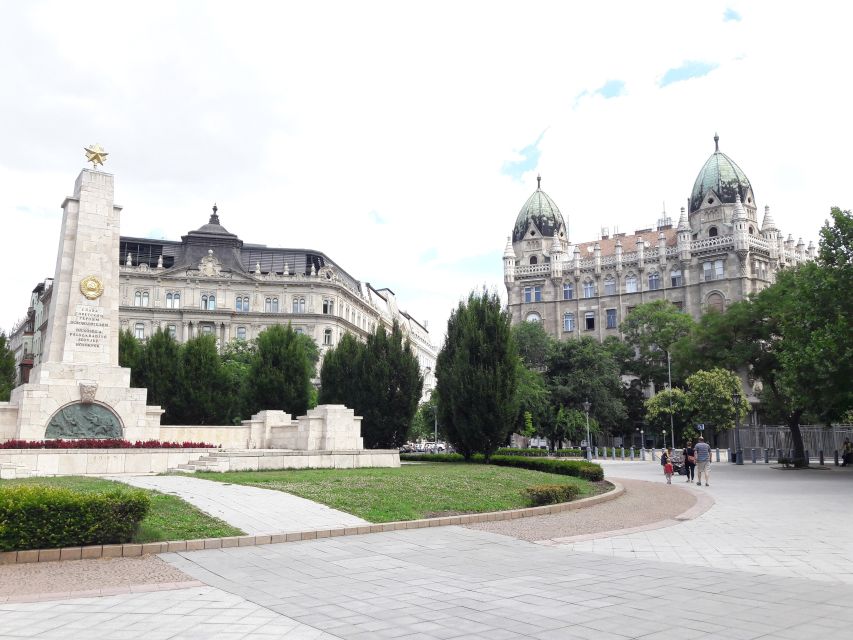
Next is Liberty Square, and the mood changes. You’ll learn about Budapest’s traumatic past as a center of Nazi occupation and Communist oppression. This part isn’t vague. It’s framed as real-world history that shaped daily life and the city’s politics.
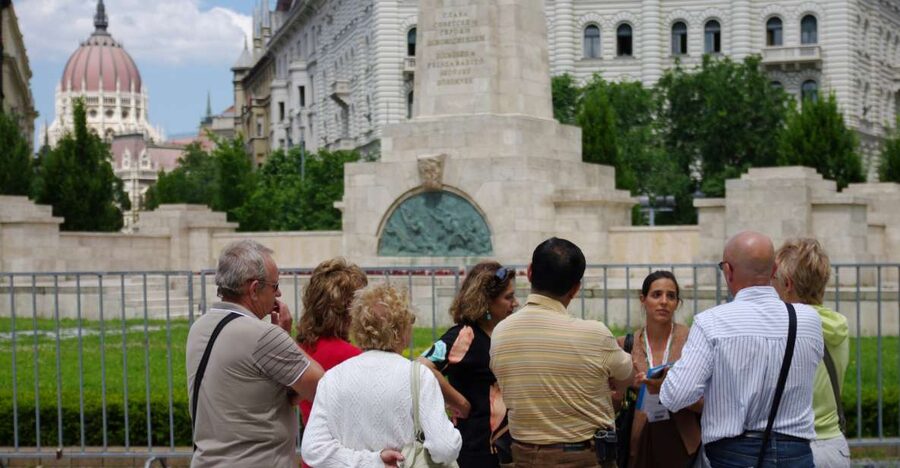
After that, you reach the final big-hammer history stop area: Kossuth Square and the Hungarian Parliament building. The tour focuses on stories tied to dictatorship and the 1956 revolution. For me (and for most visitors), this is the moment where the city stops being “pretty buildings” and starts being a lived story.
You don’t need to be an expert to get it. The guide’s job here is to connect the stones to the people—and the feedback shows guides do that through clear explanation and the kind of storytelling that makes you feel grounded rather than overwhelmed.
Parliament Square views and the Shoes on the Danube Bank option
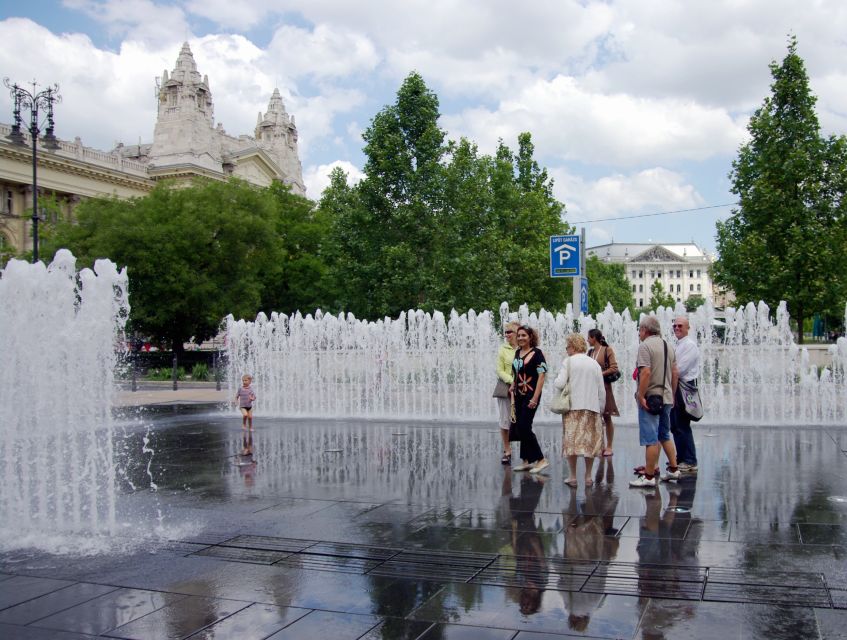
The route finishes around Kossuth Square, with the Parliament building and the surrounding sights as your final visual anchor. From there, you can extend your walk near the river.
One poignant option is the Shoes on the Danube Bank monument. It’s exactly the kind of stop that works well after Liberty and the revolution stories—because you’re primed to feel the weight of the historical context, not just memorize dates.
If you’d rather keep things lighter after the emotional segments, a simple stroll along the banks of the river is a good move. You’ll see Budapest in a more personal way: slower, quieter, and more “your tempo.”
Price and what you actually get for about $14
At $14 per person for a 2-hour walk, this is strong value for a few reasons.
First, you’re not paying for entry fees. Entrance costs aren’t included, so your money goes to the guide and the structure of the experience: where to walk, what to look at, and how to connect the dots.
Second, guides on this tour are repeatedly praised for being engaging and helpful—often for answering questions on the spot and sharing useful local direction. That matters because Pest’s sights are close together but not always easy to interpret if you’re wandering alone.
Third, the small-group format helps you get attention without turning the experience into a crowded scramble. Some groups have been noted as larger than you’d expect (one group of about 16 was mentioned), so if you want maximum quiet, aim for a smaller slot or go at a calmer time of day.
Weather, timing, and pace: how to plan like a pro
This tour runs rain or shine, so come ready. If it’s wet, keep your pace gentle and give yourself buffer time for slippery patches.
The tour is designed for about 2 hours, but it can run long if the group has lots of questions or if the guide is keeping everyone engaged. When that happens, it’s usually not wasted time—it’s more explanation at stops where it counts. Still, if you have a tight dinner reservation, plan your next commitment with a bit of breathing room.
Also, because it’s a city-center walk, expect a steady rhythm of short segments plus photo moments. The payoff is that you’ll end with a mental map of Pest rather than a pile of isolated photos.
Who this tour suits best (and who might want a different plan)
This is ideal for you if:
- It’s your first day in Budapest and you want a guided orientation through Pest
- You like history that’s explained clearly, not just displayed in front of you
- You want key landmarks grouped into one walk, including Basilica and Parliament
- You appreciate a guide who can mix facts with personality (including humor and occasional musical surprises mentioned by guests)
You might consider a different option if:
- You strongly prefer indoor attractions or very short walks
- You need long pauses or slow pacing beyond what a typical 2-hour route allows (some feedback mentions pacing adjustments for wheelchair users)
Should you book Budapest: City Center Walking Tour?
Yes—if you want a smart introduction to Pest that combines big architecture, river views, and the real historical story behind the squares. The price is low enough that you’re not taking a risky leap, and the guide-driven format makes a difference in how the city “clicks” for you.
Book it early in your trip. You’ll leave with landmarks you can navigate by and a clearer sense of what you want to see again on your own—especially around the Danube.
FAQ
How long is the Budapest City Center Walking Tour?
It lasts 2 hours.
Where does the tour start?
The meeting point may vary depending on the option booked, but the tour begins in central Pest around the sights listed (including Marcius 15 Square).
What’s the price?
The price is listed as $14 per person.
Is there an entrance fee included?
No. Entrance fees are not included.
What language is the tour guide?
The tour offers a live English guide.
Does it run in bad weather?
Yes, it takes place rain or shine.
Can I get a refund if my plans change?
There is free cancellation up to 24 hours in advance for a full refund.
Is it wheelchair accessible?
Yes, the tour is listed as wheelchair accessible.
Is there hotel pickup included?
No. Hotel pickup and drop-off are not included.