REVIEW · BUDAPEST
Budapest Historical Sightseeing – Free Walking Tour
Book on Viator →Operated by Perfect European Tours - Budapest FREE Walking Tours. · Bookable on Viator
Budapest tells its story by foot. This budget-friendly walking tour strings together Communist-era landmarks, WWII memory, and everyday Budapest street life into one easy orientation route.
I love the big-picture context it gives you for your first days in town.
I also love how the tour balances major sights with specific local stories. When the guide is Peter, Victoria, or Elizabeth (names that come up again and again), you get clear explanations, quick humor, and just enough direction to keep you moving confidently.
One possible drawback: it’s about 3 miles of walking, and a lot of it is outdoors, so cold weather and cobblestones can be a real factor.
In This Review
- Key things that make this tour worth your time
- Entering Budapest’s story at Kálvin tér, not in a museum line
- National Museum gardens: turul bird symbolism and the 1948 uprising
- Kálvin Square and Unger’s House: Calvin’s name, and a style-mix building
- Elizabeth Square and the Astoria pass-by: Budapest’s eye and a glamorous era
- The Jewish Quarter walk: community, ghetto history, and today’s streets
- St. Stephen’s Basilica outside: the king behind the name
- Liberty Square to Parliament: Communist memorials and a neo-Gothic “big moment”
- Castle views without climbing: Fisherman’s Bastion, Matthias Church, and river history
- Chain Bridge and the Shoes on the Danube: two reminders of a city’s memory
- Price, pacing, and what to bring for a cold-walk day
- Who should book this walk, and who might skip it
- Should you book Budapest Historical Sightseeing – Free Walking Tour?
- FAQ
- What is the duration of the Budapest Historical Sightseeing walking tour?
- How much does the tour cost?
- Where do I meet the guide, and where does the tour end?
- How do I find the right guide at the start?
- Is the tour fully in English?
- Are any attractions or buildings included with tickets?
- Does the tour include food or drinks?
- Are bathrooms available during the tour, and is there a fee?
- What happens if the weather is bad?
- Is this walking tour suitable if I use a mobility aid or have limited walking ability?
Key things that make this tour worth your time
- Tip-based value with a very small entry cost, built for budget travelers
- First-timer orientation across major Pest landmarks and Danube viewpoints
- Outdoor, close-up storytelling at photo stops like Parliament and the Shoes on the Danube Bank
- Strong guide delivery you’ll hear about through names like Peter, Victoria, Elizabeth, George, and Sabi
- A route that links eras from medieval castle views to Communist memorials and Holocaust remembrance
Entering Budapest’s story at Kálvin tér, not in a museum line
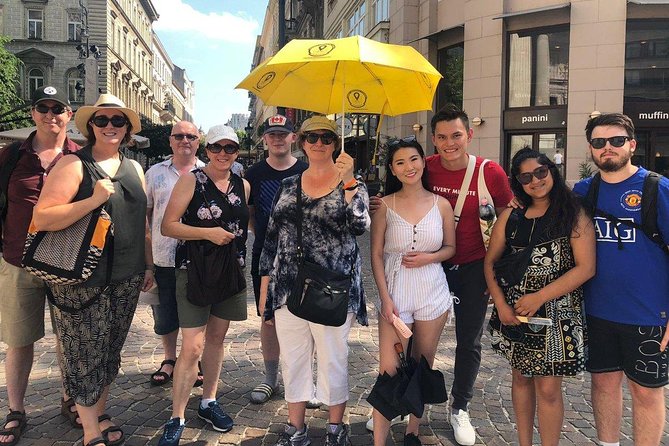
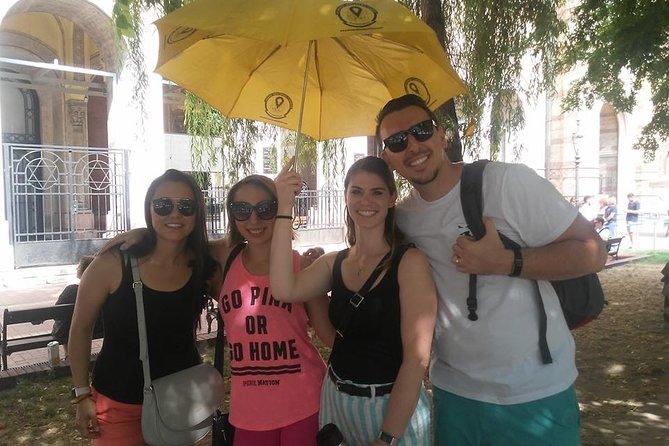
Most Budapest walking tours start with a big sight. This one starts with the practical thing you need first: bearings. You meet at Kálvin tér 12–13, near OTP Bank, and guides are dressed in yellow, so it’s easy to spot the right group before the day begins.
The finish point is equally helpful. You end at Lánchíd, the Chain Bridge area, with an easy walk back into the center or quick connections onward. That means you’re not stuck at the far edge of town wondering where to go next.
And because this is small group by design (maximum 50 people), it still feels manageable. You’ll be close enough to hear the guide at most stops—though it’s still a walking tour, so you’ll want to stand where the guide is speaking rather than wandering off.
You can also read our reviews of more walking tours in Budapest


National Museum gardens: turul bird symbolism and the 1948 uprising
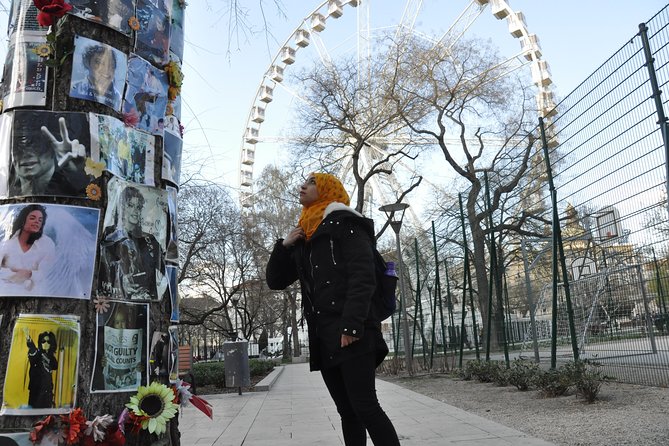
The tour begins with a stop at the Hungarian National Museum gardens. From here, you get a quick hit of symbolism and story: the statue of the mythical turul bird is a hook that helps you understand how Hungarian identity shows up in public art.
The guide also connects this area to collections and to the museum’s founder. Then the discussion shifts to the political timeline, including the 1948 uprising—a reminder that Budapest’s history is not just dates. It’s streets, buildings, and choices made by real people.
From this same starting stretch, you’ll hear about the “secrets” of District VIII (the VIII district)—once known for grand palaces. Even if you don’t tour inside today, the tour gives you enough context to notice what changed and why, which is the best kind of “background reading” while you’re still fresh and walking.
Practical note: this stop is described as about 10 minutes and outside, so it works even if your feet are still waking up.
Kálvin Square and Unger’s House: Calvin’s name, and a style-mix building
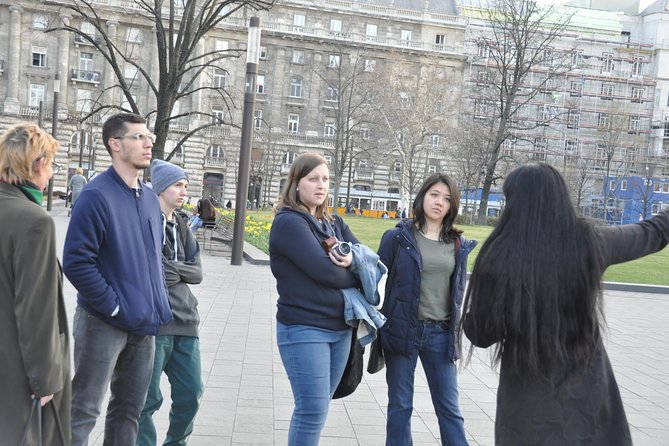
Next you’re at Kalvin Square (Kalvin ter). The square is named for French Protestant Reformer John Calvin—but the tour’s value is how it uses that name to point you toward what’s around you: the layout, places to sit, and how the area works day to day.
It’s also a good pause. You get a short regrouping moment before the tour turns more architectural.
Then comes Unger’s House, in the courtyard of a creation by architect Miklós Ybl. This is the kind of stop that feels like bonus education. You don’t just see a building; you learn how it blends multiple styles—Byzantine, Gothic, Moorish, Renaissance, and Romantic elements—into one striking work.
Even if architecture isn’t your main hobby, this kind of explanation helps you spot why Budapest looks the way it does. You’ll start seeing the “why” behind the shapes, not just the shapes.
Elizabeth Square and the Astoria pass-by: Budapest’s eye and a glamorous era
At Elizabeth Square, you’ll look toward the Budapest Eye and hear the square’s story plus where some of the city’s best bars and nightlife spots are located. This is the part I like for travelers who want more than photos. The tour doesn’t stop at history; it helps you steer your evenings too.
From there, you pass Danubius Hotel Astoria, described as a French Empire-style grand building. You’ll learn that it carried a cosmopolitan reputation and drew international stars and film attention—film history that makes the building feel less like a landmark and more like a stage.
These two stops are quick, but they do a useful job: they show you that Budapest’s “past” isn’t sealed behind glass. It lives on in places people still gather.
The Jewish Quarter walk: community, ghetto history, and today’s streets

One of the most important parts of the route is the walk through the Jewish Quarter. Here, the tour shifts from monument stories to community stories and the way a neighborhood changes under pressure.
You’ll hear the arc: a home to a vibrant Jewish community, then the horrific transformation into a ghetto during WWII, and finally the more recent re-emergence of the area as a place for artists, students, and independent businesses. The tour frames this as a layered place, not a single timeline.
What I find most practical about this portion is that you’ll finish the walk with a sense of where you are and how to move through the area after the tour ends. You’ll have names of streets and a mental map of why certain blocks feel like they do, including independent shops, designers, and bars.
Also, this part matters because it’s not only “dark history.” It gives you a way to see memory in the same city where people shop, study, and hang out.
You can also read our reviews of more historical tours in Budapest


St. Stephen’s Basilica outside: the king behind the name
Next you’ll stop at St. Stephen’s Basilica (Szent István Bazilika). The tour keeps it outside-focused and explains why it’s named after Hungary’s first king. Even from the exterior, the building is visually loud, so the context helps you understand the name before you get overwhelmed by the architecture.
Entry into the basilica isn’t included. The tour lists an admission ticket as not included, so if you want to go inside, you’ll need to plan for that separately. For most people, though, the exterior explanation is the point of the walking route.
This stop also functions like a breather before you move toward the Communist-era landmarks and the biggest city views.
Liberty Square to Parliament: Communist memorials and a neo-Gothic “big moment”
At Szabadság tér (Liberty Square), you’ll spend time looking at the communist memorial. This is one of those stops where standing still for a few minutes is worth it. You’re forced to slow down and read the monument rather than just photograph it.
Then the route moves toward the Stock Exchange Palace. It’s described as the largest privately owned historic landmark in Budapest, with 50,000 m² of space. Admission isn’t included, but even if you don’t enter, the tour’s framing makes it feel connected to what Budapest has been—an economic and political hub, not just a tourist city.
Next you’ll pass the Ronald Reagan statue and the scene around Parliament: Reagan is shown walking away and happy, while a Bush statue stands waiting. It’s a small storytelling moment, but it helps you understand how Budapest uses public art to mark international symbolism.
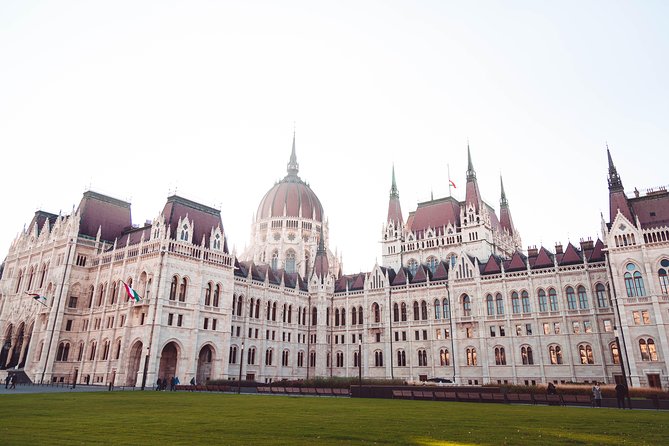
Finally, you reach Hungarian Parliament Building. The tour focuses on the outside, describing the building’s electric/neo-gothic look and the view over the Danube. Even if you’ve seen Parliament photos before, this is the kind of viewpoint where your brain finally matches the picture to the real scale.
The tour also points out other important buildings on the square, including a Chocolate Museum, a former Ministry of Justice, and an Agricultural Museum—useful if you want to add one or two targeted stops later.
If you’re the kind of traveler who likes structure, this section is a strong “you are here” moment. You end up better oriented for the rest of the day.
Castle views without climbing: Fisherman’s Bastion, Matthias Church, and river history
After Parliament, you cross into the castle-side atmosphere, from the Pest side. The tour heads to Fisherman’s Bastion, where you’ll see the castle complex and learn the area’s history from this viewpoint.
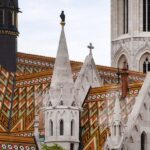
You’ll also spot St. Maytas Church (Matthias Church) in the distance with its colored tiled roof. You’ll catch the Hungarian National Palace from afar too, all from the Pest side so you don’t have to scramble through extra terrain.
The tour also references what you can see across the water: St. Margit Island and Gellért Hill from afar, plus their history. This is a clever trick. You get the panoramic storytelling without turning your walking day into a hike.
This segment is shorter, but it helps you understand why people come to this side of the river even when they’re not going inside.
Chain Bridge and the Shoes on the Danube: two reminders of a city’s memory
At Szechenyi Lanchid (Chain Bridge), you’ll see the bridge and learn its history, including reconstruction. Chain Bridge is one of those places where the photo is easy, but the meaning is better when someone explains why it looks the way it does and what it took to restore it.
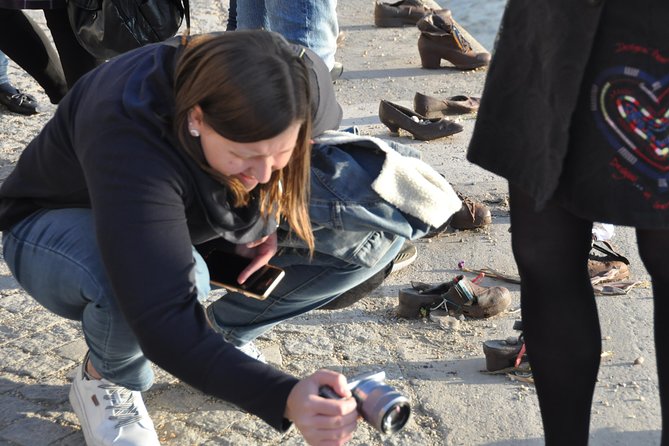
Then you reach the Shoes on the Danube Bank monument. This is the most emotionally heavy stop on the route: 60 pairs of shoes, dedicated to Holocaust victims who were lined up and shot on the banks.
It’s simple. That’s the point. And the short time you spend here is usually enough to make the moment land, especially if you let yourself actually look rather than speed-scrolling.
By the time you finish near the bridge area, you’ll feel like you’ve touched both sides of Budapest: the grand-symbol buildings and the hard human memory.
Price, pacing, and what to bring for a cold-walk day
The price is listed as $3.63 per person, but this tour works like most “free walking tours”: you’re paying a small reservation amount, and the guide earns through tips. For the amount of ground covered and the amount of story packed into it, it’s excellent value—especially if you’re doing Budapest on a tight budget.
Duration is about 2 hours 30 minutes. That time includes stop-and-explain moments, plus a short break. Expect a short pause around the middle for coffee or tea and the bathroom, but there’s no food or drinks served. Bring cash or plan for payments at the spots you’ll use.
Toilets are not included, and you may pay 100–500 HUF. That small detail matters more than you’d think on a multi-hour walk.
What to bring:
- Water (you’ll want it)
- Sunscreen even in cooler months
- Warm layers, because this tour is outdoors much of the time
- A light umbrella if the forecast looks shaky
Cobblestones are part of the experience in Budapest. Comfortable shoes are non-negotiable. Reviews specifically call out that you should wear shoes made for walking on rough surfaces.
Also, the tour doesn’t carry luggage or equipment. If you’ve got a big bag, plan for it before you join. Keep it light so you’re not negotiating space every few minutes.
Who should book this walk, and who might skip it
This tour is best for:
- First-time Budapest visitors who want quick orientation across major Pest sights
- Travelers who like history but also want practical guidance afterward
- Budget-minded people who still want a structured route rather than wandering randomly
You’ll enjoy it most as an adult or with kids over 12. Younger children are welcome, but this is still a lot of walking and outdoor time.
Skip or consider a different option if:
- You can’t comfortably walk about 3 miles
- You hate standing outdoors in winter weather
- You want a low-effort day with minimal stops and maximum seats
One more practical thing: the tour is English-speaking, and it does not offer a hearing induction loop.
Pets note: dogs are not permitted, though guide dogs are allowed with official papers. Service animals are allowed.
Should you book Budapest Historical Sightseeing – Free Walking Tour?
If you want a smart first-day route that connects Communist-era memorials, Jewish Quarter history, and Danube landmarks into one coherent walk, I think this is a strong pick. The small price plus the high-rated guide delivery makes it a good deal, especially when you value context over “just photo stops.”
Book it early in your trip if you can. That way, the map you build on the walk helps you make better choices afterward, from where to roam to what to prioritize next.
If you’re booking for a group that wants a quieter experience, or you’re sensitive to crowds and sound, consider a private alternative instead of relying on a free-style group day.
FAQ
What is the duration of the Budapest Historical Sightseeing walking tour?
The tour is listed at about 2 hours 30 minutes.
How much does the tour cost?
The price is $3.63 per person, with the guide relying on tips.
Where do I meet the guide, and where does the tour end?
You start at OTP Bank Budapest, Kálvin tér 12–13, 1085, and the tour ends at Id. Antall József rkp. 1, 1052, near Lánchíd (the Chain Bridge).
How do I find the right guide at the start?
Guides are dressed in yellow, and you meet at Kálvin tér 12–13.
Is the tour fully in English?
Yes. The tour is offered in English.
Are any attractions or buildings included with tickets?
Some listed sights are not included for admission, including St. Stephen’s Basilica, Stock Exchange Palace, and the Hungarian Parliament Building. Other stops are described as admission ticket free.
Does the tour include food or drinks?
No. There’s a short break where you can buy drinks, and there’s no food served on the tour.
Are bathrooms available during the tour, and is there a fee?
A short break is included for toilets and drinks, but public toilets have a fee listed as 100–500 HUF.
What happens if the weather is bad?
The experience requires good weather. If it’s canceled due to poor weather, you’ll be offered another date or a full refund.
Is this walking tour suitable if I use a mobility aid or have limited walking ability?
It is not recommended for travelers unable to walk about 3 miles. The route includes outdoor walking and cobblestones.