REVIEW · CATANIA
Syracuse, Ortigia and Noto walking tour from Catania
Book on Viator →Operated by EtnaTribe · Bookable on Viator
Three Sicilian cities, one smooth day. This is a focused walking day that strings together Syracuse’s ancient core, Ortigia’s lively island center, and Noto’s baroque skyline—with hotel pickup from Catania and a small group pace.
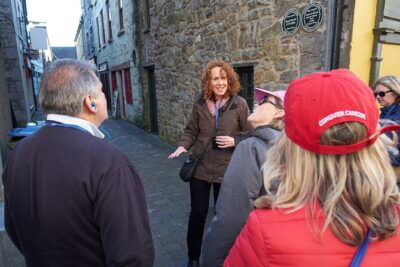
What I like most is the calm timing and the way guides turn long, name-heavy ruins into something you can actually picture. Groups led by guides like Salvatore and Lory are praised for keeping things organized and never feeling rushed, while still leaving room to wander and take photos.
One thing to consider: this is still a full day of walking, mostly outdoors. If you have mobility limits, you may find the pace and uneven ground in the archaeological areas challenging.
In This Review
- Key points
- Syracuse, Ortigia, and Noto in One Day: Why This Route Works
- Price and Logistics: What You’re Actually Paying For
- Getting Picked Up in Catania Without Wasting Morning Time
- Parco Archeologico della Neapolis: Greek, Roman, and Quarry Dreams in One Walk
- A balanced caution
- Fonte Aretusa and the Ortigia Cathedral Area: Where Syracuse Feels Alive
- Mercato di Ortigia: A Small Stop That Often Becomes the Fun Part
- Practical takeaway
- Noto’s Baroque Glow: Architecture-First, Street-Walk Second
- Time to breathe
- Guides Make or Break the Day: Salvatore, Nando, Enzo, and Lory
- Comfort and Timing: How to Survive an 8-Hour Walking Day
- Is the $129.45 Worth It? The Value Math for Tickets and Time
- Should You Book This Syracuse, Ortigia, and Noto Tour?
- FAQ
- What time does the tour start?
- How long is the tour?
- Is pickup from Catania included?
- What’s included in the price?
- What ticket or admission costs do I need to plan for?
- How many people are in the group?
- Is there free cancellation?
Key points
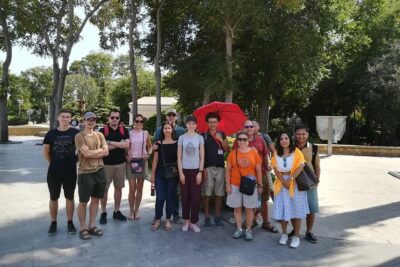
- Small group size (max 8) helps you move smoothly and ask questions.
- Neapolis entrance ticket is included so you spend time sightseeing, not ticket-hunting.
- Ortigia is where the day breathes: short walks, views, and a market stop.
- Noto is all about light and details—especially for baroque façades in afternoon sun.
- Hotel pickup and return shuttle make the Catania connection easy.
- You get both guided moments and free time to set your own pace at key stops.
Syracuse, Ortigia, and Noto in One Day: Why This Route Works
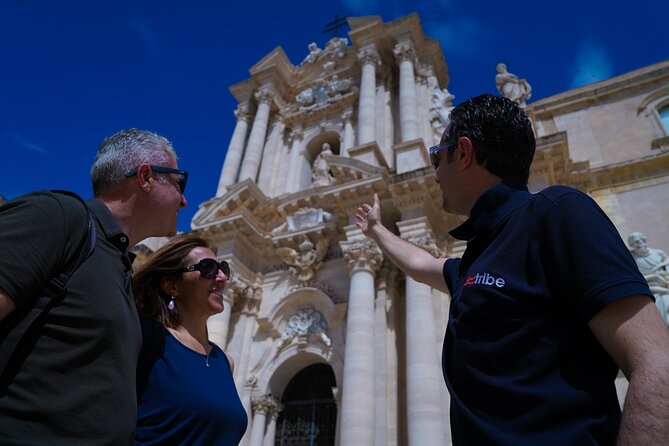
Syracuse, Ortigia, and Noto don’t just sit on a map—they tell a story across centuries. You start with the Greek-Roman brain of Syracuse in the Neapolis archaeological area. Then you switch to Ortigia, the older island heart where you’ll feel the city’s daily rhythm. Finally, you end in Noto, where baroque architecture looks almost painted, especially when the sun hits the stone.
The big win here is the sequencing. Most visitors to eastern Sicily bounce between cities without much context. This plan gives you structure: ruins first, street life second, then architecture and church façades as the payoff.
You can also read our reviews of more walking tours in Catania



Price and Logistics: What You’re Actually Paying For
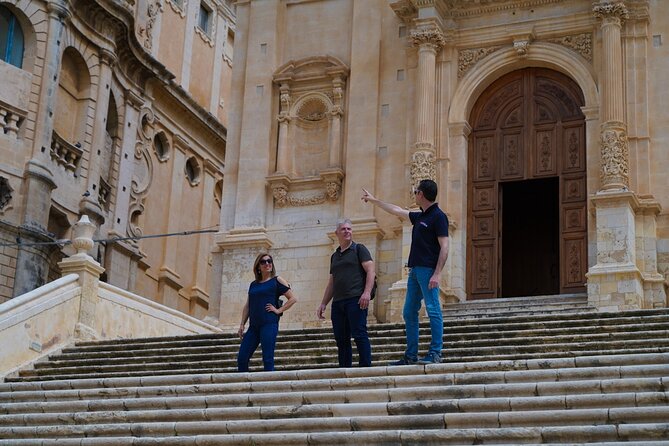
At $129.45 per person for about 8 hours, you’re not just paying for transportation. You’re buying three practical things that add up fast on your own:
- Round-trip shuttle from your Catania hotel area
- A multilingual guide
- Entry ticket to the Archeological Park of Neapolis
When you include the time you save (no scrambling for buses, no re-planning), the price starts to look reasonable for a one-day format. Also, the tour runs with a maximum of 8 travelers, which is unusual for a day trip this packed.
A helpful detail: confirmation comes at booking, and there’s a mobile ticket. That’s one less thing to manage on a busy morning.
Getting Picked Up in Catania Without Wasting Morning Time
The day begins at 8:45 am, with hotel pickup and drop-off in Catania. That matters because, in Sicily, the “how do I get there” problem can swallow half a day if you’re doing everything independently.
One practical tip from the overall day pattern: plan to be ready a little early. A few guests have mentioned the pickup location details can change, so it’s worth double-checking the message you receive close to departure. Even if the guide is on point, the timing only works if everyone is where they’re supposed to be.
Parco Archeologico della Neapolis: Greek, Roman, and Quarry Dreams in One Walk
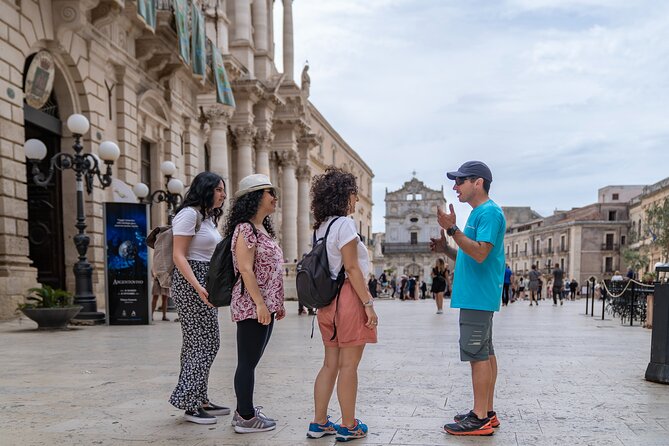
Neapolis is the heavy hitter, and it’s also the part where your guide’s storytelling matters most. You get 1 hour inside the archaeological park area, but that hour usually feels like more because you’re seeing multiple sites back-to-back.
Here’s what you can expect to cover during that Neapolis block:
- The Grotta del Cordari area
- The Ara di Ierone (the grand altar area linked to ancient rituals)
- The Latomie (quarries that became famous historical spaces)
- The Necropolis
- The Roman amphitheater
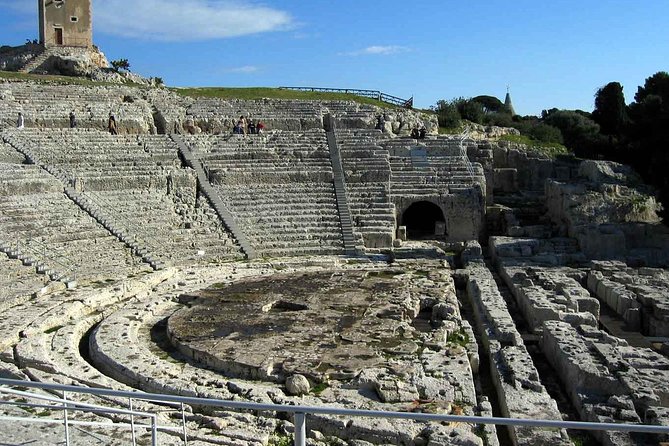
- The Ear of Dionysius (Orecchio di Dionisio)
- A look at the theater area and additional cave spaces within the complex
Even if you’re not a trivia machine, you’ll appreciate the “see it, then understand it” pacing. The Ear of Dionysius is the kind of place where a short explanation makes a big difference. Same for the quarries (Latomie): without context, they can look like just rocks; with context, you understand why people cared.
A balanced caution
This park is large and spread out, and guests have noted a range of guide involvement inside the park area—at times more hands-on in certain zones, with more freedom in others. You’ll still get the structure and timing. Just be ready to do some “walk + look + learn from what you’re told” rather than expecting one continuous guided narration at every step.
Fonte Aretusa and the Ortigia Cathedral Area: Where Syracuse Feels Alive
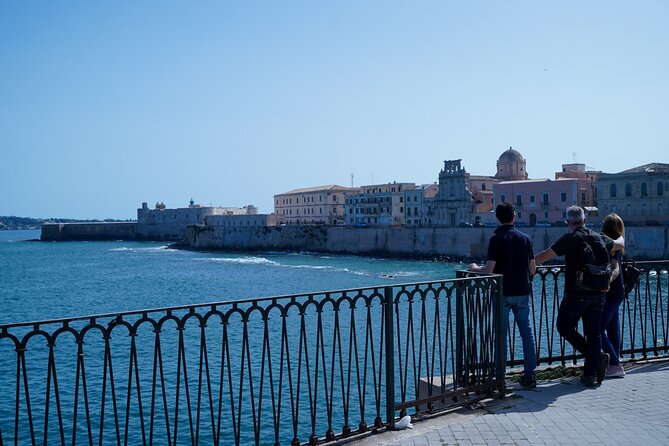
After the long ancient stretch, you get a palate cleanser: Fonte Aretusa. It’s a short stop (about 10 minutes) and doesn’t require paid admission. It’s the kind of place where the best value is simply looking carefully—this is Syracuse at street level, not museum mode.
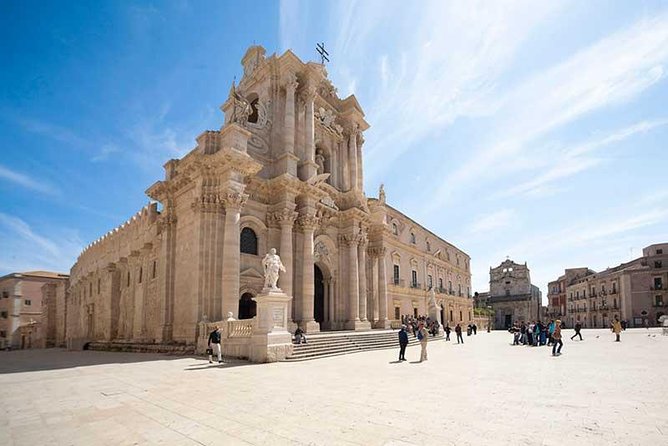
Then you move into Ortigia, with time at the Syracuse Cathedral area (admission included) for about 15 minutes. Ortigia is compact, but it’s never boring. The streets tighten, you catch sea views, and the mix of history and everyday life starts to show.
Your day also includes stops that connect you to the island’s central geometry—places like Piazza Duomo (about 10 minutes) where you can pause, take photos, and get your bearings.
If you like architecture, you’ll notice that Ortigia’s main points feel close enough to stitch together visually. It’s the opposite of the “jump from bus to bus” feeling.
Mercato di Ortigia: A Small Stop That Often Becomes the Fun Part
You get a 15-minute visit to Mercato di Ortigia. With only a short window, this is not the kind of market stop where you shop for an hour. But it can be a great way to break up the day and taste the local vibe without spending your whole trip inside stalls.
This is also where a good guide can turn browsing into an experience. Guests have praised guides who point you toward what to try and how to read what’s on display—so you’re not just wandering, you’re sampling with purpose.
Practical takeaway
Even if you skip buying anything, walk slowly once. Markets like this reward attention. Look at the layout, the mix of produce and prepared foods, and the way people move through. It’s an easy way to feel “in the city,” not just “at sights.”
Noto’s Baroque Glow: Architecture-First, Street-Walk Second
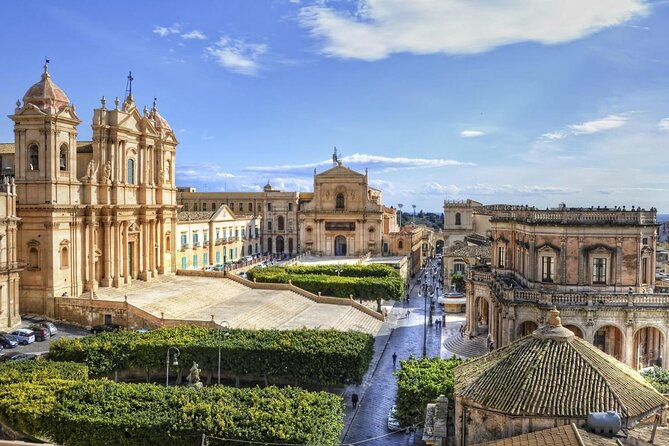
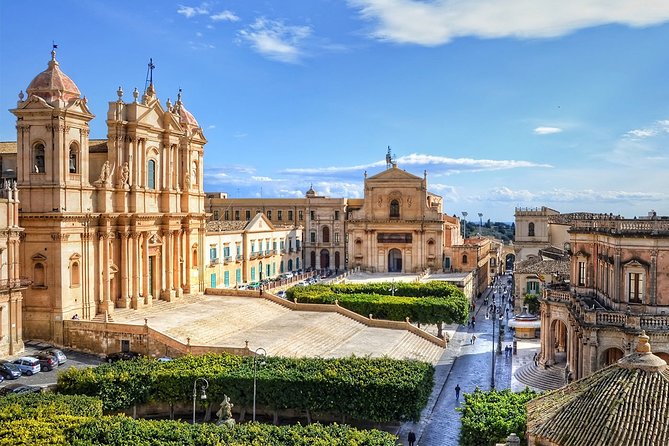
Noto is the grand finale, and it’s built for daylight. You’ll spend multiple stops in Noto, including time at Tempio di Apollo (about 15 minutes, free) and Cattedrale di San Nicolò (about 15 minutes, free). You’ll also have additional time in town to see the baroque façades up close.
What makes Noto work as a day-trip ending is the way the details show themselves as you slow down. The façades and church shapes feel theatrical from far away, but up close they’re about repetition: sculpted lines, layered stonework, and a lot of visual “depth.”
Guests have often described Noto as the highlight, especially when the sun hits the city in the afternoon. That fits the route: you arrive after Syracuse and Ortigia, so by the time you’re in Noto, you’re ready to absorb something beautiful without feeling museum-tired.
Time to breathe
Many days like this can feel like a sprint. The best versions of this itinerary include photo time and moments where you can wander without a constant crowd-herding feeling. If your group is small, that’s even easier.
Guides Make or Break the Day: Salvatore, Nando, Enzo, and Lory
This is where the tour really earns its high rating. The difference between a decent day trip and a great one often comes down to the guide’s ability to:
- keep the group together without rushing,
- explain what you’re seeing in plain language,
- and manage the handoffs between guided time and free time.
Multiple guides have been mentioned positively—Salvatore, Enzo, Nando, and Lory/Lori—and the common thread is communication and organization. Guests also appreciated guides who give clear directions for how to explore on your own once you’re there.
One small “real life” note: some people wished for a bit more engagement during the archaeological park portion, while others felt Ortigia had the most guided walking. That’s not automatically a problem, but it helps set expectations. You may get your deepest guide contact early in the day and more independence later, especially if your group is multilingual.
Also, keep in mind that if your group includes multiple languages, some time can turn into translation. It doesn’t ruin the day, but it can affect how much you hear during every stop.
Comfort and Timing: How to Survive an 8-Hour Walking Day
Even if the day is well organized, you’re still moving on foot between sites. This tour is not recommended for travelers with walking problems, and that’s fair. Uneven ground at archaeological sites is part of the experience.
So I’d pack like you’re doing a long guided hike, not a casual city stroll:
- comfortable shoes with grip
- sunscreen and sunglasses
- a water bottle
- a small hat if you burn fast
There’s also a small accessibility-in-the-real-world note from one guest: a step stool would have helped with entering/exiting a vehicle. It’s not a dealbreaker, but it’s worth being prepared if you’re tall, short, or have trouble climbing steps.
For lunch: the day is full and stops are timed. If you’re picky about lunch timing, don’t assume you’ll land on a perfect long sit-down meal. Instead, think of this as “snack-friendly and sights-first,” with Ortigia offering a market pause.
Is the $129.45 Worth It? The Value Math for Tickets and Time
Let’s talk value in a way that matters on the ground.
If you self-plan, you’d have to solve all of this:
- getting from Catania to Syracuse and back,
- finding transportation between Ortigia and Syracuse stops,
- paying for entry to the Archaeological Park of Neapolis (included here),
- and figuring out how to make sense of sites like the Ear of Dionysius and Latomie.
This tour gives you transport and park entry, then layers in guiding so you spend your time looking at the right things. For many people, that’s the value: you’re buying fewer decisions and more understanding.
The small group size (max 8) is another value driver. In larger buses, you can spend half your time waiting and the other half confused. Here, the plan is tighter, so you get a smoother flow.
Should You Book This Syracuse, Ortigia, and Noto Tour?
Book it if you want a structured, high-contrast day: ancient ruins, island streets, and baroque architecture, all without the stress of driving and route planning. It’s especially worth it if you appreciate guided context for major ancient sites and you want to end in Noto with enough time to really look.
Skip it or choose a gentler option if:
- you have mobility concerns (the day involves lots of walking),
- you prefer slow travel with long stops and no schedule pressure,
- or you want maximum guide time inside the archaeological park at every step.
If you do book, I’d aim for good shoes, a water bottle, and a flexible lunch attitude. The payoff comes from how the day ties together: Neapolis sets the ancient stage, Ortigia gives you Syracuse’s daily soul, and Noto lets the architecture finish the story in bright afternoon light.
FAQ
What time does the tour start?
The tour starts at 8:45 am.
How long is the tour?
It lasts about 8 hours.
Is pickup from Catania included?
Yes. Pickup and drop-off are offered at your hotel in Catania.
What’s included in the price?
The price includes the return shuttle, a multilingual guide, entrance ticket to the Archeological Park of Neapolis in Syracuse, and an infant price with a baby seat included.
What ticket or admission costs do I need to plan for?
The Neapolis archaeological park entrance ticket is included. Other stops listed include free admission (like Fonte Aretusa and several Ortigia and Noto points), and the Syracuse Cathedral has an admission ticket included.
How many people are in the group?
This tour has a maximum of 8 travelers.
Is there free cancellation?
Yes. You can cancel up to 24 hours in advance for a full refund.