Vienna’s best stories fit inside a brisk walk. This small-group route helps you string together the big sights fast, from Maria-Theresien-Platz and Ringstrasse to Hofburg power-halls and ending at St. Stephen’s Cathedral.
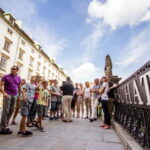
I love how small the group is (15 people max), so questions don’t get lost. I also like the added audio devices, which means you can actually hear the guide instead of playing guess-the-sentence over street noise.
One thing to consider: this is a mostly outside-the-buildings tour, and it does not send you into museum interiors.
In This Review
- Key things I’d zero in on
- Why this 2.5-hour historic-center walk works in Vienna
- Getting oriented at Maria-Theresien-Platz and Empress Maria Theresa’s Vienna
- Ringstrasse: the UNESCO boulevard where medieval walls got replaced
- Burgtor and the Hofburg: power, palace life, and the stories behind the walls
- Heroes Square, St. Michael’s Church, and government buildings you’ll remember
- Burgtheater, Volksgarten, and the Vienna of writers, composers, and playhouses
- Beethoven’s Pasqualatihaus, Lise Meitner at the University, and Vienna’s street-level intellect
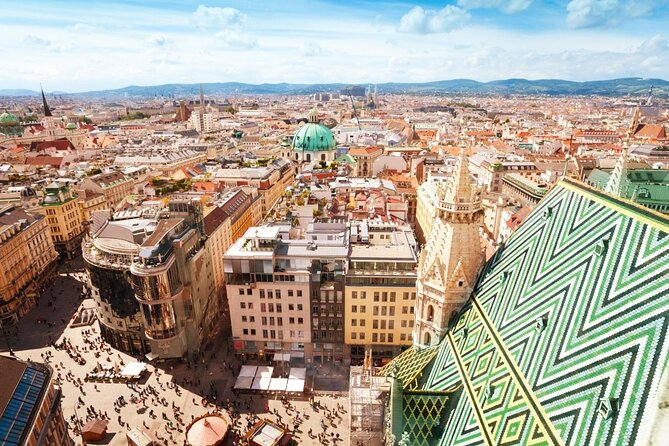
- Freyung, Graben-Kohlmarkt, and ending at Stephansplatz with St. Stephen’s Cathedral
- Price, pace, and what to wear for a 15-stop day
- Should you book this Vienna Historic Center walking tour?
- FAQ
- How long is the Vienna Historic Center small-group walking tour?
- Where does the tour start and where does it end?
- Is the tour offered in English?
- How large is the group?
- Do you enter museums or major attractions inside?
- What sights are included on the route?
- Is this tour suitable if I have walking difficulties?
- What happens if the weather is bad or I need to cancel?
Key things I’d zero in on
- 15-person cap keeps the guide’s attention tight and questions welcome
- Audio devices make even busy squares feel readable
- Ringstrasse + UNESCO context helps you understand why the grand boulevard exists
- Hofburg stop-time focuses on how the Habsburgs shaped modern Austria
- St. Stephen’s Cathedral finish gives you a clear next step for your own exploring
- Mostly exterior route means less queueing, more street-level atmosphere
Why this 2.5-hour historic-center walk works in Vienna
Vienna can feel like a museum that runs on sidewalks. The trick is getting the map in your head early, without spending your whole day hunting down what matters. This tour is built for that first-day job: you cover the headline landmarks around the historic center, with stories that connect the architecture to real people and real power shifts.
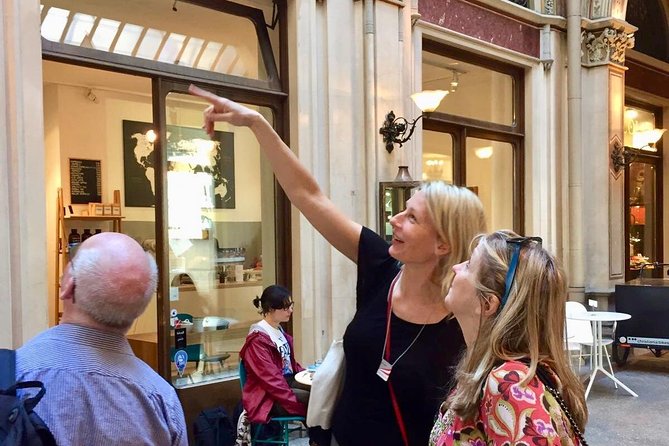
The small size matters. With a cap of 15, you’re not just standing behind strangers and hoping to hear. Your guide can slow down when a question comes up—especially around Hofburg, parliament, and the court-history connections Vienna loves to foreshadow in its buildings.
The second reason I like it: it’s not a “see everything” sprint. It’s a short, structured line through the core sights, designed to end where you’ll want to linger on your own. In practice, that means you walk in the morning feeling like you have a plan, then you finish near Stephansplatz with options for dinner, cafés, and a second look at the cathedral.
You can also read our reviews of more walking tours in Vienna
Getting oriented at Maria-Theresien-Platz and Empress Maria Theresa’s Vienna
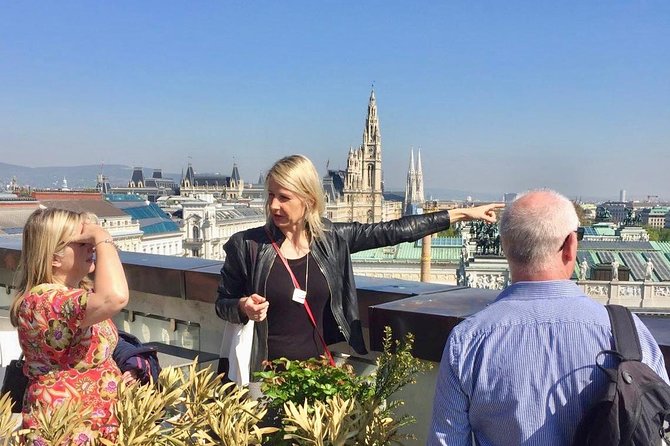
Most tours in Vienna start in one of two modes: either you hop from museum to museum, or you get lost in grand streets without understanding what you’re looking at. This one begins at Maria-Theresien-Platz, a big public square where the city’s “imperial show” is easy to read.
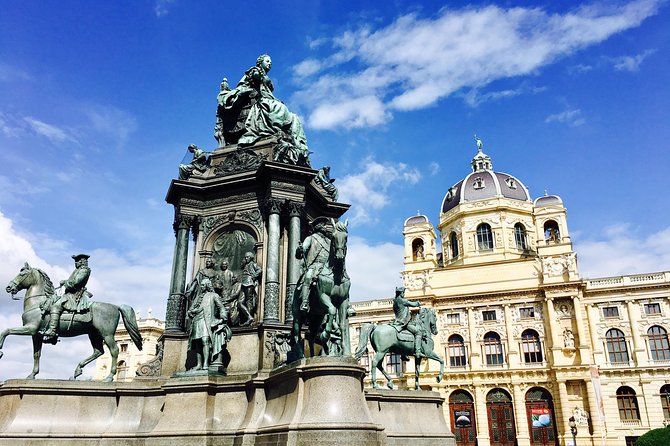
Directly across the square, you’ll face the twin stars of the museum complex—the Natural History Museum and the Art History Museum—opposite each other like Vienna planned the view. It’s also where the massive statue of Empress Maria Theresa sets the tone. Even if you never enter the museums, you learn what the square is meant to represent: a center of authority, culture, and prestige.
From there, you move to Maria Theresia Denkmal, where the monument extends the idea beyond a single figure. The statue includes other elements, including W. A. Mozart, which is a good Vienna reminder: the city’s power story doesn’t live only in politics. It also lives in music, art patronage, and the people the empire celebrated.
This section is great value if you’re short on time. You’re getting landmark context in minutes, not hours.
Ringstrasse: the UNESCO boulevard where medieval walls got replaced
Then the tour shifts into one of Vienna’s biggest “why is it built like that?” answers: Ringstrasse. This grand circular boulevard replaced medieval fortifications in the second half of the 19th century. That’s not just trivia. It explains why the streets feel so wide, so ceremonial, and so full of big-building facades.
The guide’s commentary helps you read the architecture styles as a timeline. You’ll notice elements of Classical, Gothic, Renaissance, and Baroque—not as random decoration, but as a curated statement about what Vienna wanted to project.
Ringstrasse also links to major civic buildings. On your walk you pass the neo-Gothic Town Hall and the Austrian Parliament Building, both of which reinforce the idea that Vienna wanted its new city layout to look like a modern capital. You’ll also get the sense that UNESCO is seeing this as more than pretty scenery—it’s part of Vienna’s World Heritage Site designation connected to this historic urban planning.
A practical plus: Ringstrasse sections are wide enough that the group stays together, even when you hit crowded junctions. If you’re someone who gets stressed in busy city centers, this routing choice helps.
Burgtor and the Hofburg: power, palace life, and the stories behind the walls
From Ringstrasse, you’re led toward Burgtor, a neoclassical gate built after the Napoleonic wars. A gate is a small object compared to a palace, but it does an important job: it marks the boundary between the public boulevard and the imperial compound. You feel the shift instantly.
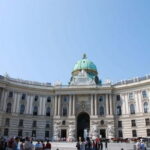
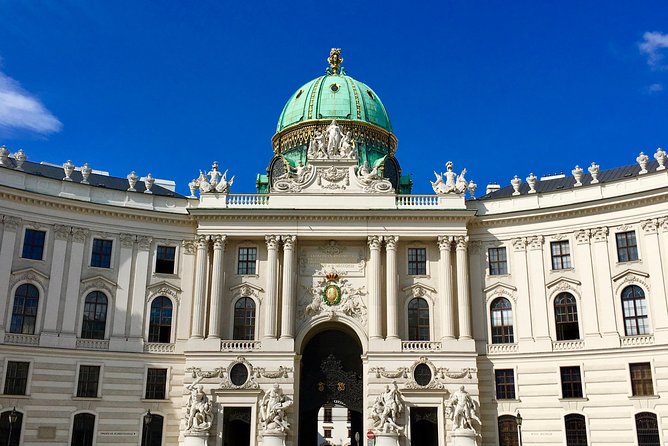
Next comes the Hofburg zone, the former imperial palace of the Habsburgs and the center of power in historic Vienna. The tour spends real time here—about 20 minutes at one of the key Hofburg stops—which is exactly what you want. Hofburg is huge, and without a guide it’s easy to see doors and courtyards and still miss what they mean.
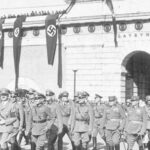
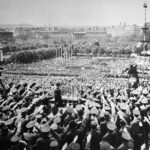
You also get specific historical connections pointed out. For example, the New Castle area is tied to dramatic 20th-century history. The guide notes that Adolf Hitler proclaimed the Anschluss of Austria from a balcony connected to this complex. That kind of moment can be heavy, but it’s also part of why Hofburg matters: Vienna’s story doesn’t stay in the 1700s.
Even though the tour doesn’t plan museum-entry time, you still learn what the complex holds—like museums in the New Castle and the World Museum, Imperial Armoury, and the National Library—so when you see the buildings later on your own, you understand what you’re looking at.
One more angle I appreciate: the route highlights modern Austria’s connection to the palace. You don’t just hear about empires and court rumors; you also get the idea that these spaces kept getting reused and reinterpreted.
Heroes Square, St. Michael’s Church, and government buildings you’ll remember
After Hofburg, the walking energy changes slightly. You reach Heldenplatz (Heroes Square), a large open green area connected to the city after older bastions were demolished during the Napoleonic wars. The openness is helpful after all the palace density. It also lets the guide talk about how public space and imperial power used to blend.
Then you step into a more human-scale Vienna with a church stop: St. Michael’s Church, dating back to 1220. This is one of the ways the tour adds variety without breaking the pace. Churches in old centers aren’t just old. They often hold atmosphere—quiet, height, and craft—that you don’t get from grand boulevards alone.
From there, you’re back into civic Vienna with stops around political spaces, including the Office of the Federal Chancellor of Austria and the Rathaus (City Hall). The City Hall is neo-Gothic, and it’s the kind of building you’ll see again and again in photos of Vienna government and public life. Seeing it on foot helps you understand scale and placement.
This section works especially well if you like history that isn’t only kings and battles. Vienna’s government architecture is its own kind of story.
You can also read our reviews of more historical tours in Vienna
Burgtheater, Volksgarten, and the Vienna of writers, composers, and playhouses
Next you move into cultural landmarks. Burgtheater comes up as one of the best-known theaters in the world, and this is a stop where the guide’s context helps you look at the exterior as more than a backdrop. Even without entering, you pick up why people associate Vienna with performance and classical arts.
Then comes Volksgarten, where the scenery shifts toward parks and small monuments. At the center stands the Theseus Temple, described as a small replica of the Hephaisteion from Athens, designed to show off classical references in a Vienna setting. It’s the kind of detail that makes a walking tour feel worth it, because it gives you something to spot later even when your feet are tired.
The park area also gets linked to music culture—through the Cortisches coffee house in Volksgarten, known for being a popular place where Johann Strauss used to play waltzes. Even if you don’t stop for a drink at that exact spot, the takeaway is useful: Vienna’s music identity isn’t stored in concert halls only. It shows up in everyday social spaces.
Beethoven’s Pasqualatihaus, Lise Meitner at the University, and Vienna’s street-level intellect
The tour keeps moving through big names, but in a street-friendly way. You’ll reach Beethoven Pasqualatihaus, a former residence of Ludwig van Beethoven on the ramp of former town fortifications. You’re not touring the apartment, but the placement matters. The guide’s explanation connects music to the city’s physical evolution.
After that, you pass by the Palais Ferstel, which originally housed the Austro-Hungarian National Bank and the Stock Exchange. That’s another good “Vienna puzzle piece.” It shows the city wasn’t only art and court. It was finance, trade, and systems that helped run a major empire.
Then you stop at Universität Wien, where the guide points out stories tied to thinkers like Sigmund Freud and Lise Meitner. You get a clear sense of why Vienna has a reputation for ideas: it’s not just artistic heritage, it’s also academic and scientific influence.
This is also where the tour notes that some weekday schedules can include other indoor locations, like areas of a palace, the university, or even a café. That’s the one upside if you’re hoping for a little variety beyond exteriors—still without committing to museum interiors.
Freyung, Graben-Kohlmarkt, and ending at Stephansplatz with St. Stephen’s Cathedral
As you near the end, the walk gets more “Vienna stroll” than “lecture through monuments.” You hit Freyung, one of the oldest squares in the city center, with an intimate feel. It’s the kind of space where you can breathe and let your brain catch up.
Then you enter Graben and Kohlmarkt, described as Vienna’s most elegant pedestrian street. This is where the city switches from imperial grandeur to shopping and street life. It’s also an easy place to break your pace if you need a quick rest.
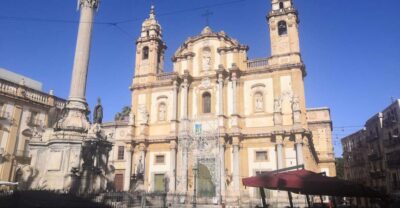
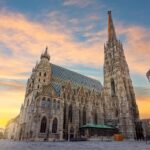
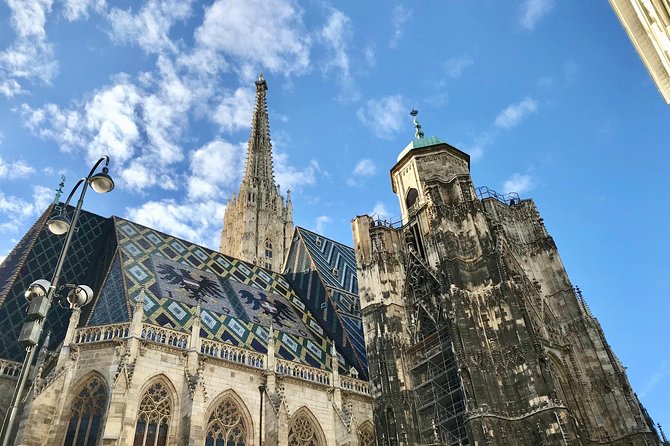
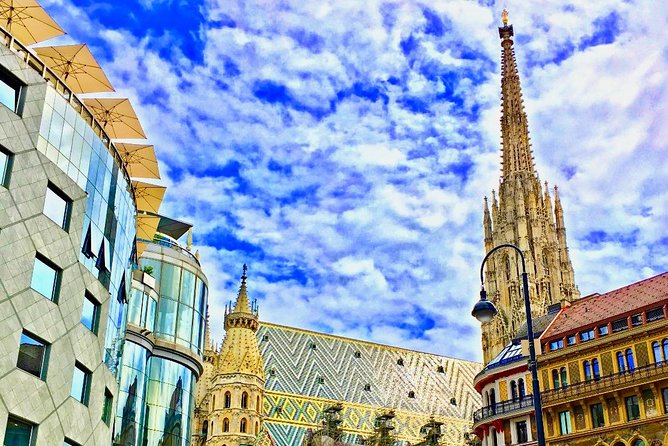
Finally, you reach Stephansplatz, the heart and soul of the center, and the walking tour culminates at St. Stephen’s Cathedral. That finish spot is smart. It puts you in the right place to linger, take photos, and explore more on your own.
One last practical note: the tour is timed so you end at the cathedral, not hours later. If you want to use your remaining time for a longer look at the cathedral area, this setup makes it easy.
Price, pace, and what to wear for a 15-stop day
At $72.56 per person for about 2 hours 30 minutes, this is priced like an orientation tour, not a museum-ticket package. And that’s the point. You’re paying for a guide who can connect what you see—Ringstrasse, Hofburg, government buildings, churches, and cultural landmarks—into a coherent story you can carry around for the rest of your trip.
It’s also offered in English, uses a mobile ticket, and comes with audio devices. Those details help you get value even if the day is noisy or crowded.
The pace can feel brisk because you’ll have lots of short stops—many around a few minutes—stacking across central Vienna. Expect to walk a lot. If your physical range is limited, plan carefully. The tour calls for moderate physical fitness and says it’s not recommended for people with walking disorders.
What to wear: comfortable walking shoes. Vienna streets look flat on postcards. They’re not always flat underfoot.
Should you book this Vienna Historic Center walking tour?
I’d book it if you’re doing Vienna for the first time, or if you want a strong start day that helps you decide what to do next. It’s especially worth it when you want to understand the city’s big themes quickly: empire power (Hofburg), the planned modern city (Ringstrasse), religion and older roots (St. Michael’s), and the cultural Vienna identity (Burgtheater, Volksgarten, Beethoven and more).
Skip it if your main goal is entering museums or spending long time inside major attractions. This walk is built to keep you outside, in motion, learning from street-level context.
If you want a tour that keeps things tight, small, and practical—this one does.
FAQ
How long is the Vienna Historic Center small-group walking tour?
It runs for about 2 hours 30 minutes.
Where does the tour start and where does it end?
It starts at Maria-Theresien-Platz and ends at Stephansplatz, near St. Stephen’s Cathedral.
Is the tour offered in English?
Yes, it’s offered in English.
How large is the group?
The group is capped at a maximum of 15 travelers.
Do you enter museums or major attractions inside?
No. The tour does not visit the inside of any museums. Depending on the weekday, you may visit some indoor locations such as palaces, the university, or a café.
What sights are included on the route?
You’ll see major landmarks around central Vienna, including Maria-Theresien-Platz, Ringstrasse, Hofburg, Heroes Square, St. Michael’s Church, Rathaus, Burgtheater, Volksgarten, Beethoven Pasqualatihaus, the University of Vienna, Graben and Kohlmarkt, and St. Stephen’s Cathedral at the end.
Is this tour suitable if I have walking difficulties?
The tour is not recommended for travelers with walking disorders. It requires moderate physical fitness.
What happens if the weather is bad or I need to cancel?
There is free cancellation up to 24 hours in advance for a full refund. If it’s canceled due to poor weather, you’ll be offered a different date or a full refund.