Vienna hides stories in plain stone. You’ll get a Stubentor city-wall start and end with secret rooftop views, plus plenty of time for questions with your own guide. I love how the route mixes big landmarks with side-street details, so you understand the city instead of just checking boxes.
One thing to plan for: this is a walking tour with a moderate fitness level. Reviews and the tour’s own guidance point to significant walking (often around 8,000 steps), plus you’ll encounter stairs and uneven spots.
In This Review
- Key Highlights Worth Clearing Your Calendar For
- Why This Private Walk Works So Well
- Stubentor: Starting With Vienna’s Eastern Gate and Its Walls
- The Jesuit Church: When Architecture Becomes a Language
- Schönlaterngasse Stories: Basilisk Mural, Schnitzel Since 1905, and a Music Room
- St. Stephen’s Cathedral: Outside Details Plus Time to Look Inside
- Judenplatz and the Holocaust Memorial: A Square With Real Weight
- Café Central, Ferstel Passage, and Vienna’s Political Myth-Bending
- Palais Daun-Kinsky: A Palace With Names You Can Trace
- Rathausplatz, Café Landtmann, Freud, and That Rooftop View
- Value: What You’re Paying For at This Price Point
- Pace and Planning Tips (So You Don’t Feel Rushed)
- Who This Tour Suits Best
- Should You Book This Private Hidden Vienna Walk?
- FAQ
- How long is the private hidden Vienna walk?
- How many people are in the group?
- Is pickup available in Vienna?
- What language is the tour offered in?
- Do I need to buy tickets for the sights on the route?
- Is there a mobile ticket?
- Can I cancel for free?
Key Highlights Worth Clearing Your Calendar For
- City walls at Stubentor: start at Vienna’s eastern gate to set the scale of the old fortifications
- Jesuit Church architecture decoded: learn how design ideas show up in decoration and layout
- Schönlaterngasse storytelling: the basilisk legend mural plus the schnitzel tradition that dates back to 1905
- Judenplatz and the Holocaust Memorial: a heavy, atmospheric stop with context you can actually follow
- Music and the Teutonic Order connection: a Sala Terrena stop tied to life in the Deutschordenshaus
- Freud’s Café Landtmann and rooftop views: finish with perspective, not just landmarks
Why This Private Walk Works So Well
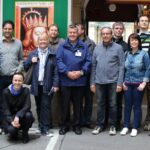
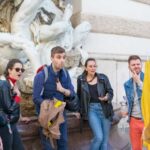
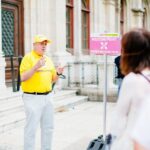
This isn’t a “stand and point” tour. It’s built for a slow-burn understanding of Vienna: you move, you look closely, and then your guide helps you read what you’re seeing. Because it’s private (up to 10 people), you can ask follow-ups and steer the pacing a bit.
I also like the ambition of the mix: religious architecture, civic memory at Judenplatz, the Cathedral’s details, and then quick stops that connect Vienna to European figures like Mozart and Beethoven. And if you end up with a guide like Walter, Brigitte, Sabine, or Hannes (names that show up in recent experiences), you’ll likely get that friendly, on-the-ground tone—fun when it can be, serious when it needs to be.
You can also read our reviews of more walking tours in Vienna

Stubentor: Starting With Vienna’s Eastern Gate and Its Walls
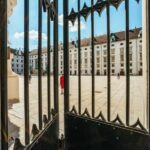
Your tour kicks off at Stubentor, one of Vienna’s eastern gates. This is a smart way to begin, because it anchors your brain: you see the defensive mindset of an old city before you start wandering through the beautiful parts.
Here’s what makes this stop click: your guide doesn’t just say walls existed. You learn why they mattered—how massive fortifications shape streets, neighborhoods, and the way a city grows. Even if you already know Vienna has history, starting with the fortifications gives the rest of the walking a clearer sense of direction.
The Jesuit Church: When Architecture Becomes a Language
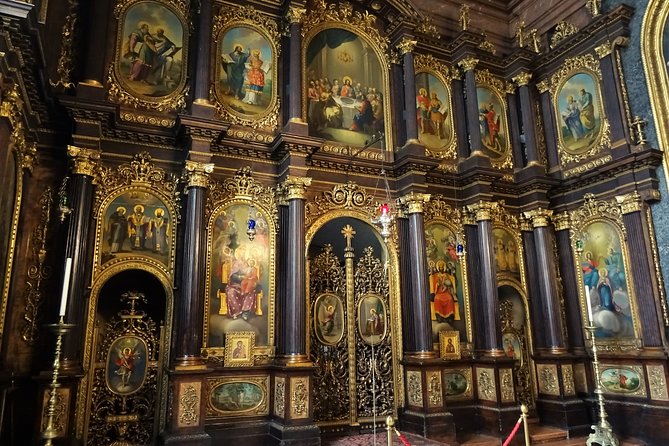
Next comes the Church of the Jesuits. The best part isn’t just noticing ornate design. It’s learning how the church’s spiritual ideas show up in architecture and decoration—so you know what you’re looking at instead of guessing.
Most tours rush through churches because they assume you’ll just admire the exterior. This one aims for comprehension. You get a short, focused look that helps you “read” the building, including what the design is trying to communicate.
Possible drawback: churches can be visually busy, so if you’re easily overwhelmed by detail, tell your guide early. You can ask for the simple version first, then go deeper once your eyes adjust.
Schönlaterngasse Stories: Basilisk Mural, Schnitzel Since 1905, and a Music Room
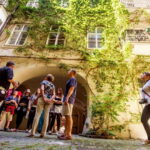
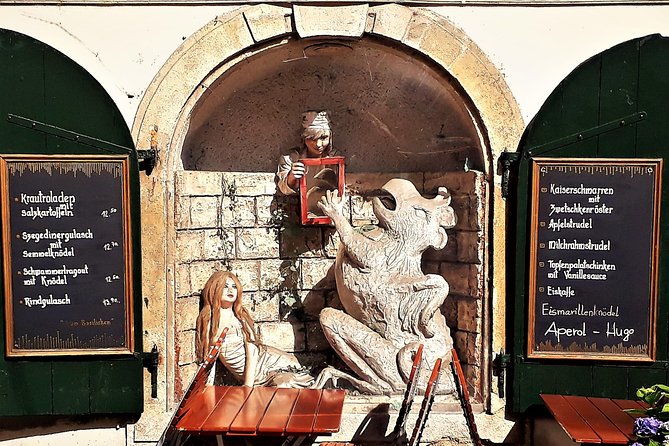
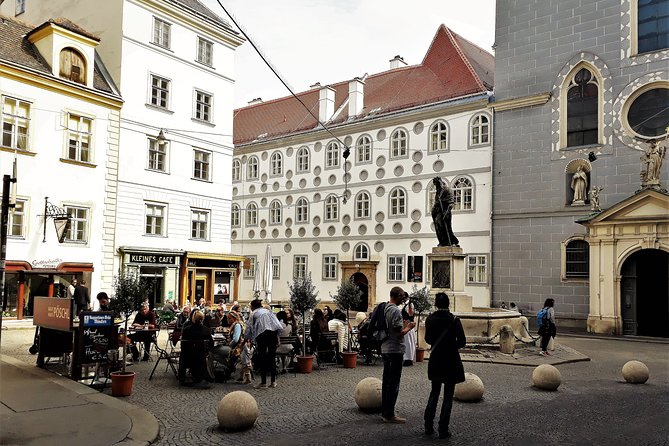
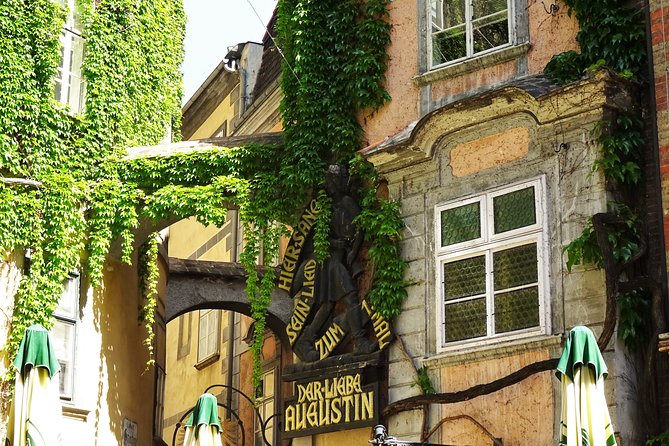
Then you head into a stretch where Vienna gets wonderfully specific. On Schönlaterngasse, you’ll hear the legend of the Vienna basilisk shown in a mural. It’s the kind of story that sounds like folklore until you realize how much cities use myth to explain their identity.
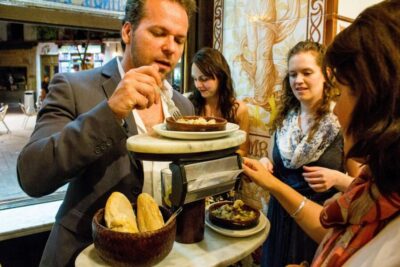
Right nearby, you also visit the area famous for schnitzel since 1905. Even if you don’t eat during the tour, this context is useful. It tells you the tradition isn’t a recent food trend—it’s part of Vienna’s everyday culture.
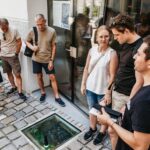
After that, you stop at Sala Terrena im Deutschordenshaus. This is where the tone shifts from street legend to lived history. You’ll connect the space to the “Teutonic Order” house and what played there while someone lived in the house back in 1781.
A heads-up: this section is short on time but strong on meaning. If you want more than a quick stop, ask your guide what you can trade—extra minutes here might mean less time at the Cathedral or Judenplatz.
St. Stephen’s Cathedral: Outside Details Plus Time to Look Inside
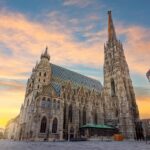
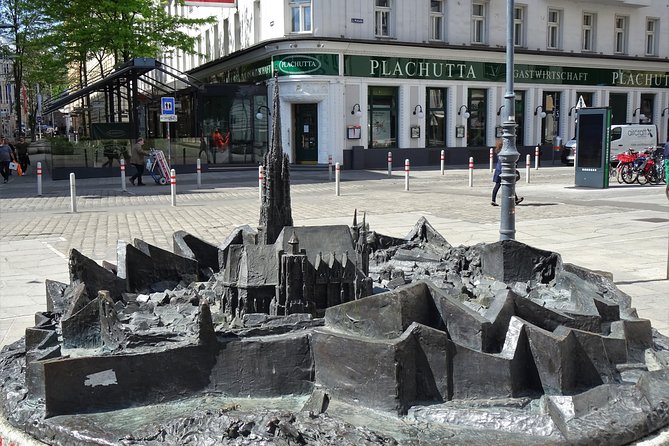
You’ll reach St. Stephen’s Cathedral with a plan: understand key outside details and then find time for a look inside. The Cathedral is famous, but the value here is that you’ll know what to aim your eyes at first, which makes the interior visit feel less random.
One practical note: St. Stephen’s is a busy site, and time is tight on a 3-hour schedule. Your guide will help you prioritize, so you don’t spend your visit hunting for the “best parts” alone.
If your ideal experience is slow and seated (not just standing and walking), I’d bring that up right at the start. A recent experience on this kind of tour shows what happens when a group’s pace doesn’t match the tour’s plan: you can end up leaving feeling rushed.
You can also read our reviews of more private tours in Vienna


Judenplatz and the Holocaust Memorial: A Square With Real Weight
Judenplatz is one of the most atmospheric areas on the route. You’ll visit the Holocaust Memorial embedded in a neighborhood square that carries a long timeline—about seven hundred years, as the tour frames it.
This is a stop where your guide’s role matters more than usual. The memorial’s power comes through when you understand what it represents and why it sits where it does. You don’t just “see” it; you grasp it.
If you’re traveling with teens or curious adults, this is one of the best parts to ask questions. Guides often bring in context about Vienna’s shifting role in Europe, and this square is where that perspective lands in a human way.
Café Central, Ferstel Passage, and Vienna’s Political Myth-Bending

Next, you pass by Café Central and the Ferstel Passage area. The tour connects the setting to the bigger European story—specifically the idea that certain historical rival figures didn’t become friends.
That line might sound like trivia, but it’s really a teaching tool: Vienna became a magnet for ideas and power struggles, and cafés and passages were part of the scene. You’ll walk away with a sense of why this city keeps showing up in European history books, not just architecture guides.
If you want to turn this into a longer experience after the tour, save time for your own wander through the passageways nearby. It’s the kind of place where you can keep learning just by slowing down for a few minutes.
Palais Daun-Kinsky: A Palace With Names You Can Trace
Then you’ll visit Palais Daun-Kinsky and learn how it was commissioned and built. The tour frames it through its designer and its timeline, including construction starting in 1713 under Johann Lucas von Hildebrandt.
You’ll also hear a name that makes the palace feel personal: Prince Józef Poniatowski, born there on 7 May 1763. That birth detail matters because it turns a façade into a lived place—Vienna’s elite world wasn’t abstract; it happened inside specific rooms and dates.
This stop is short, but it’s a good one if you like “how did it happen?” history rather than dates-only facts.
Rathausplatz, Café Landtmann, Freud, and That Rooftop View
As you move toward Rathausplatz, you’ll connect Vienna to culture in a very everyday way. Near the square is Café Landtmann, known here as Freud’s favorite. It’s a reminder that thinkers didn’t only exist in libraries; they met, talked, and processed ideas over coffee.
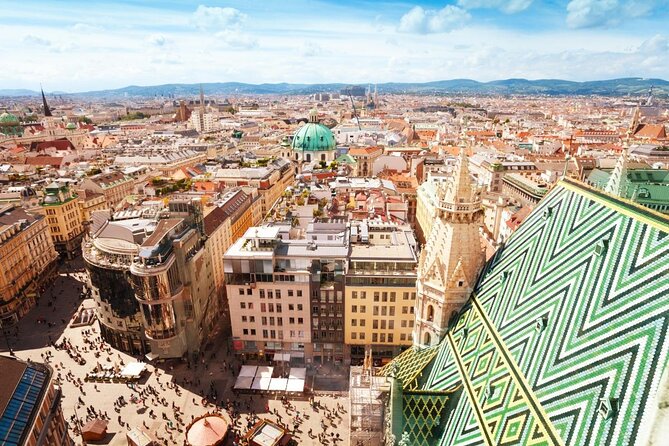
And then comes the highlight that most people remember: you head up to a secret rooftop for views. The rooftop idea is doing more than offering photos—it gives you a sense of scale and layout. Vienna’s center can feel like a maze until you get above it.
If the weather is clear, you’ll understand why rooftop views become a key part of the experience. If it’s gloomy, ask your guide for the “what to notice” checklist anyway—roof views are still useful even when the light isn’t perfect.
Value: What You’re Paying For at This Price Point
At $344.80 per group (up to 10) for about 3 hours, the value depends on who’s in your party. If you have 2–4 people, it’s a paid “private guide per person” experience. If you can group with friends, you’re stretching the cost across more people, and the per-person value improves fast.
You’re paying for more than walking. You’re paying for interpretation at every stop—architecture meaning, cultural connections, and the ability to ask why the city looks the way it does. That’s why this tour works especially well for first-timers who want orientation, and for repeat visitors who want angles they wouldn’t find alone.
Based on experiences with guides like Walter and Brigitte, you also tend to get helpful planning ideas for after the walk. That’s not just friendly; it can save time in a city where “where do I go next?” is the real struggle.
Pace and Planning Tips (So You Don’t Feel Rushed)
This tour is built around short stop windows, and the walking adds up. The operator’s own framing includes a moderate fitness level, and one response in the feedback history points to an average of around 8,000 steps.
My practical advice:
- Wear real walking shoes with grip.
- If you need slower pacing or more seating, tell your guide in the first few minutes.
- If you’re choosing between morning and afternoon departures, pick the part of the day when you’re least likely to be energy-crunched.
The only recurring caution in the feedback is mismatch: when the tour’s pace doesn’t fit the group’s mobility needs, the experience can turn stressful instead of enjoyable. Clear expectations upfront protect everyone.
Who This Tour Suits Best
This works best for you if you want structure without feeling trapped. You’ll enjoy it if you like:
- Architecture and meaning, not just sightseeing
- A guided route that avoids the most obvious crowd patterns
- A mix of monuments and storytelling
- A guide who can answer lots of questions
It may be less ideal if you can’t do sustained walking or stair-heavy transitions. Even when the guide is flexible, a 3-hour walking format has limits.
Should You Book This Private Hidden Vienna Walk?
Yes, you should—if you’re comfortable walking for a few hours and you want Vienna explained through its quieter corners. The standout strengths are the guided detail (city walls, Cathedral focus, Judenplatz context) and the payoff of views from that secret rooftop.
If you’re traveling with mobility constraints, I’d be extra strict about choosing the right kind of tour format. And if you’re not sure which itinerary version fits your needs, ask questions before you commit—one mismatch in pace or expectations can spoil an otherwise great day.
FAQ
How long is the private hidden Vienna walk?
It runs for about 3 hours.
How many people are in the group?
It’s a private tour, and pricing is listed per group for up to 10 people.
Is pickup available in Vienna?
Pickup is offered. You can also arrange to meet at another location in Vienna.
What language is the tour offered in?
The tour is offered in English.
Do I need to buy tickets for the sights on the route?
The tour information lists the stops with admission ticket free.
Is there a mobile ticket?
Yes, a mobile ticket is included.
Can I cancel for free?
Free cancellation is available up to 24 hours in advance for a full refund.