REVIEW · VIENNA
Introducing Vienna Walking Tour: The Capital of the Habsburgs
Book on Viator →Operated by Viennatour - Herbert Stojaspal · Bookable on Viator
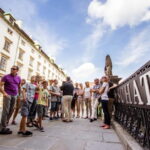
Two hours, and Vienna starts making sense. This Vienna Walking Tour of the Habsburgs strings together major landmarks in the center, with a certified guide telling the stories behind each turn and finishing at a Lindt chocolate shop.
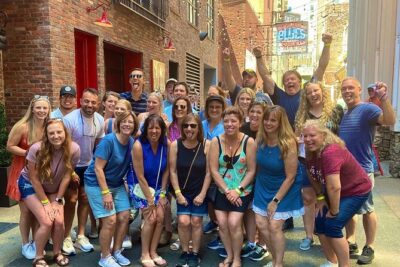
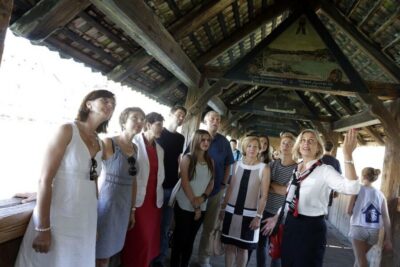
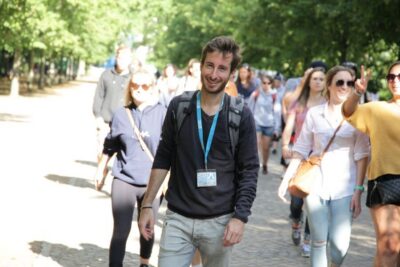
I love the small group size (max 15) because it keeps the pace human and the Q&A actually works. I also like the tight orientation around the biggest sights, so you can plan the rest of your Vienna days with less guessing.
One possible drawback: it’s very history-and-facts driven, and it may feel like a lot for younger kids who want playtime breaks on the sidewalk.
In This Review
- Key highlights you’ll feel fast
- Why This 2-Hour Habsburg Walk Is a Great First Day
- Start at Michaelerplatz: St. Michael’s Church and Roman Ruins
- White Stallions and Hofburg: The Power Center Since the 12th Century
- Heldenplatz to Austria’s Government System
- Holy Lance and the Holy Roman Empire Crown: Vienna’s Court Legends
- Joseph’s Square and Maria Theresia’s Rule
- Albert and Maria Christina at the Albertina Drawing Collections
- Monument Against War and Fascism, then Opera on a Budget
- St. Stephen’s Cathedral Finish and Lindt at Stephansplatz
- Price and Value: Is $35.07 Fair for This Tour?
- Who This Tour Fits Best (and Who Should Skip It)
- Should You Book Introducing Vienna Walking Tour?
- FAQ
- How long is the Vienna Walking Tour of the Habsburgs?
- What’s the tour price?
- How many people are in the group?
- Where do I meet, and where does it end?
- Is the tour offered in English?
- Are food and drinks included?
- Does the tour run in bad weather?
- What’s the best subway stop to use?
Key highlights you’ll feel fast
- Max 15 travelers for better attention and easier conversation as you walk
- Certified guide who turns landmark photos into real context
- Habsburg-to-modern storyline from imperial courts to war memory
- Court relic legends like the Holy Lance and Holy Roman Empire crown
- Practical opera tip about getting cheap tickets from about 3 euros
- Ends at St. Stephen’s area with an easy sweet stop at Lindt
Why This 2-Hour Habsburg Walk Is a Great First Day
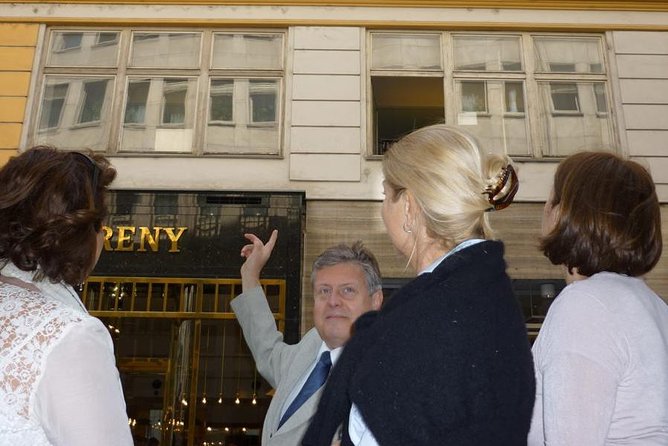
Vienna can feel like a set of beautiful buildings that don’t connect—until you get a guide who can connect them. This tour does that in about two hours, moving through the imperial core and stopping at places tied to the Habsburgs, Austrian governance, and the city’s later 20th-century memory.
I especially like that it’s designed as an orientation walk. You’re not just ticking off sights; you’re learning how Vienna’s power centers worked, how the city got its famous names, and why a few big stories still matter in public spaces today.
The ending is also smart. You finish near St. Stephen’s Cathedral in the city center, then step straight into a very tourist-friendly zone that makes it easy to keep exploring on your own.
You can also read our reviews of more walking tours in Vienna

Start at Michaelerplatz: St. Michael’s Church and Roman Ruins
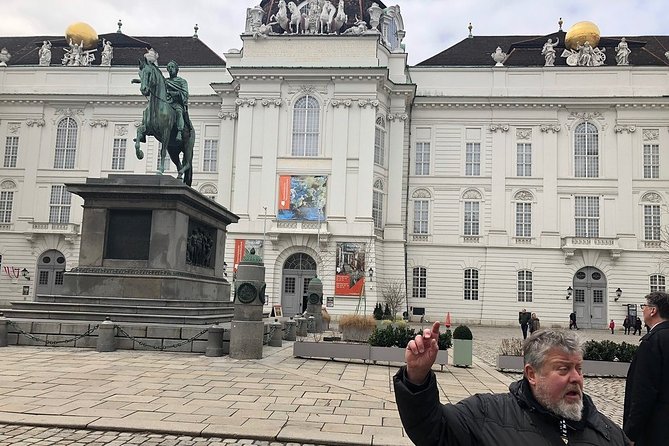
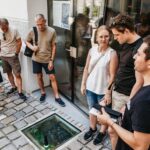
You begin at Michaelerplatz 3, in the core of Vienna. The first stop is St. Michael’s church, plus nearby Roman and medieval ruins. That opening matters more than you might think, because it reframes the whole day: Vienna wasn’t born as an empire palace fantasy. It grew on top of earlier layers—Roman, medieval, and then imperial.
This first segment is a good warm-up for the rest of the walk. You get a sense for how the city stacks time on time, so later explanations about the Habsburg residence feel less like random dates and more like a timeline you can picture.
Practical tip: wear shoes you can move in comfortably. Even though the walk is in the center, you’re outside for the duration, and early-day wind can make March mornings feel sharp.
White Stallions and Hofburg: The Power Center Since the 12th Century
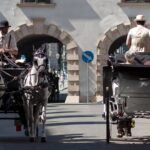
From there, you get detailed info about the white stallions, right as you move into the Hofburg orbit. This is one of those stops that adds texture. It’s not just architecture and dates; it’s court display, tradition, and the kind of ceremonial symbolism that helped project power in Vienna.
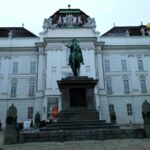
Then comes the big anchor: the Hofburg Imperial Palace area, described as the Habsburg residence dating back to the 12th century. Even if you’ve seen postcard photos of the Hofburg, a guide’s job here is to show you how the complex works as a seat of rule—why it’s where it is, and how it links to the broader civic and symbolic life of Vienna.
If you care about the Habsburgs, this is the heart of the tour. If you’re less into dynasties, it’s still useful because it explains how Vienna became Vienna—court life, politics, and public space feeding each other for centuries.
Heldenplatz to Austria’s Government System
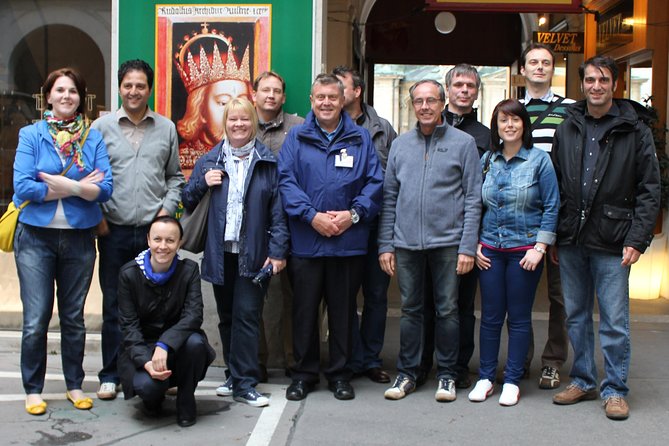
Next up is Hero Square, also known as Heldenplatz, where the guide explains why the area got that name. This stop is doing double work: it’s a storytelling anchor and a navigation tool.
You’ll also learn about the Austrian government system here. That combination is valuable because it connects the imperial look of the square to the modern reality living inside the same city fabric. Vienna loves continuity in style. The trick is knowing what changed—and what stayed.
This is a good moment to ask questions, because the group is small and the route is close enough that your guide can point, compare, and explain without rushing you away.
Holy Lance and the Holy Roman Empire Crown: Vienna’s Court Legends
A standout part of the walk is how the guide handles Europe’s bigger religious and political narratives, including unbelievable items like the Holy Lance—said to be the lance used when Jesus was pierced—and the crown of the Holy Roman Empire.
Even if you’re skeptical about relic claims, the point of this stop isn’t to force belief. It’s to understand why courts, churches, and states used symbols to legitimize themselves. In Vienna, those symbols didn’t stay locked in books. They shaped reputations, ceremonies, and political storytelling.
This stop also makes your later sightseeing easier. Once you learn how Vienna frames these stories, you’ll start spotting references to them in buildings, institutions, and the tone of local public history.
If you like history that connects religion, politics, and art all at once, you’ll probably enjoy this section most.
Joseph’s Square and Maria Theresia’s Rule
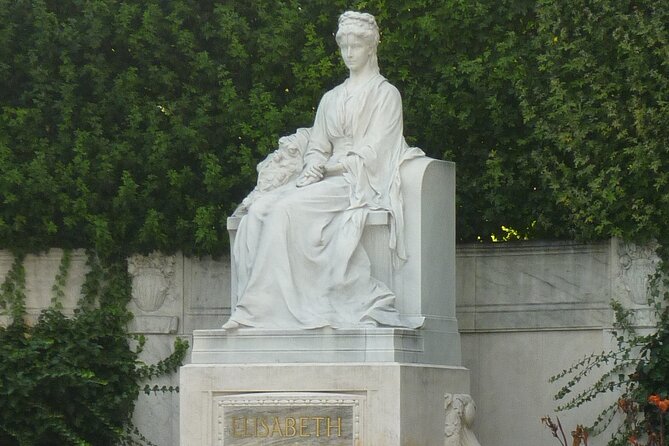
Then you move to Joseph’s Square, with lessons tied to Maria Theresia’s reign. This section is all about seeing leadership as a system—not just a person. The guide’s job is to translate what she changed and what her era valued, using the setting around the square to make the explanation feel real.
I like this stop because it gives the tour some emotional balance. After palace power and legendary relic stories, you get a more human scale: how a reign influenced life, culture, and governance in ways that still echo.
It’s also a strong photo zone if the weather behaves. The square area helps you slow down, look around, and connect what you’re hearing to what you see.
Albert and Maria Christina at the Albertina Drawing Collections
The tour then points to the residence of Albert and Maria Christina, which today is home to the Albertina and is described as hosting the largest drawing collections worldwide.
This matters even if you don’t plan to visit the museum right away. You’ll better understand what you’re seeing when you’re near it later—why Vienna keeps art close to power, and how collecting and display were part of the city’s status system.
If you’re the type who likes museums but doesn’t want to spend a whole day choosing between them, this stop helps you decide. You’ll walk away with a clearer sense of what kind of art experience the Albertina offers, even without entering.
One practical note: you can’t expect long stops for photos at every location during a tight two-hour schedule. If you want detailed shots, plan to return to your favorite spots after the tour.
Monument Against War and Fascism, then Opera on a Budget
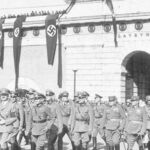
The route doesn’t stay in imperial glamour. You’ll reach the Monument Against War and Fascism, designed to remember victims of all war, including the Nazi rule of Austria. This is a heavy stop, and it changes the mood of the walk in a good way.
From there, the tour shifts to a very practical Vienna tip: in the city you can find daily changes at the opera, and the cheapest tickets are around 3 euros. This is the kind of information that saves you time and stress later, because Vienna’s arts scene can feel confusing if you arrive without a plan.
I like that the guide includes this, because it turns the tour into a bridge between history and how you actually spend your evenings.
St. Stephen’s Cathedral Finish and Lindt at Stephansplatz
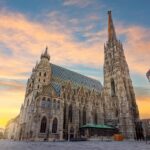
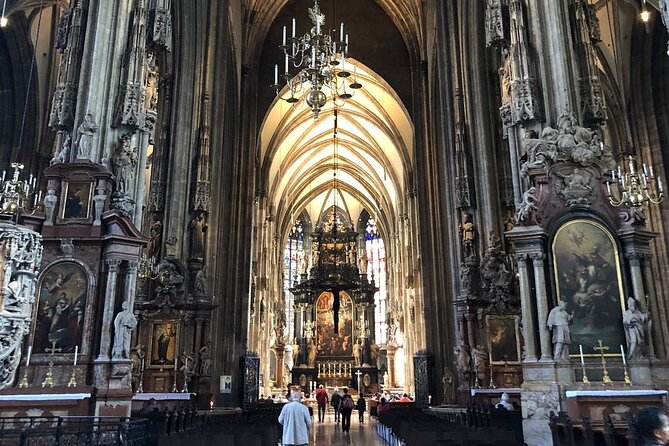
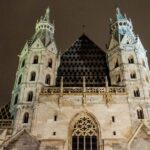
You end in Vienna’s center by St. Stephen’s Cathedral, right near Stephansplatz. That’s a smart finishing point because it’s an easy place to branch out. You can stay with the cathedral atmosphere, keep walking the lanes nearby, or pair it with other sights you’re interested in.
And yes, the tour ends at Lindt Chocolate Boutique Stephansplatz 8A. It’s not just a gimmick. It’s a clean way to wrap up the walk at a central landmark where you don’t have to hunt for a sweet reward afterward.
This final stretch is also helpful if you want momentum after the tour. Two hours of guided history can make you hungry—mentally and physically—and ending in a central, well-known spot keeps you from losing the thread.
Price and Value: Is $35.07 Fair for This Tour?
At about $35.07 per person for roughly two hours, you’re paying for four things: a certified guide, a tight route through top central sights, a small-group format (max 15), and a walkthrough that blends architecture with story.
Is it expensive for Vienna? Not really—especially because the included guide time is the core product. You’re not just buying entry tickets. You’re buying someone’s city knowledge and the ability to connect the dots between Hofburg, Heldenplatz, wartime memory, and the cathedral area.
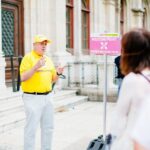
What makes the price feel fair is pacing and attention. Reviews highlight guides like Herbert as friendly, funny, and able to answer questions in detail. One review even noted that Herbert used pictures of historical views to show how the city evolved, which is exactly the kind of extra teaching tool that makes a two-hour tour feel longer (in a good way).
One thing to keep in mind: food and drinks aren’t included. If you want to snack, budget for it separately.
Who This Tour Fits Best (and Who Should Skip It)
This works best if you want a first-day foundation. The whole route is built around helping you get your bearings fast, and the stops line up with the kinds of sights people return to later—Hofburg, the square areas, St. Stephen’s Cathedral.
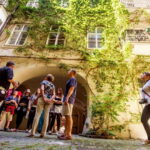
It also fits couples, friends, and solo travelers who like chatting with a guide in a smaller group. The max 15 limit helps a lot, especially if you tend to ask questions.
Skip it if you want a relaxed stroll with lots of free time, or if your kids are very young and need frequent breaks. The tour is not recommended for younger children, and the focus on imperial history may feel like too much for some families.
Also, check the tour language on your ticket. One negative experience described a surprise language change after booking, so confirming the language before you go is smart.
Should You Book Introducing Vienna Walking Tour?
I think this is an easy yes if you’re planning a short Vienna trip and you want a guide to stitch the city together. The small-group format, the center-route design, and the ending near St. Stephen’s Cathedral make it useful beyond the tour itself.
Book it if you like Habsburg-era stories, court symbolism, and learning why Vienna’s landmarks got their roles. You’ll also pick up practical tips like the opera’s cheap-tickets angle.
I’d hesitate only if you hate history-heavy tours, want long photo breaks, or you’re traveling with very young kids who need constant downtime. If that sounds like you, you might prefer a lighter sightseeing walk instead.
FAQ
How long is the Vienna Walking Tour of the Habsburgs?
It’s about 2 hours.
What’s the tour price?
The price is $35.07 per person.
How many people are in the group?
The tour has a maximum of 15 travelers.
Where do I meet, and where does it end?
Start: Michaelerplatz 3, 1010 Wien. End: Lindt Chocolate Boutique, Stephansplatz 8A, 1010 Wien.
Is the tour offered in English?
The tour is offered in English. Your confirmation/ticket will show the language for the day.
Are food and drinks included?
No. Food and drinks aren’t included.
Does the tour run in bad weather?
Yes, it operates in all weather conditions.
What’s the best subway stop to use?
It’s near public transportation, and the closest subway line is U1/U4 Station Stephansplatz (exit Stephansplatz).