REVIEW · VIENNA
Vienna at First Glance a Private Walking Tour for First Timers
Book on Viator →Operated by SCHINDL Local Services & Day Tours · Bookable on Viator
Vienna gets simpler fast. This private, first-timer walking tour strings together the biggest city landmarks in a tight few hours, so you leave with a mental map and real context. Two things I especially like: doorstep hotel pickup (or Handelskai 265) so you start without stress, and the focus on learning how to move around using Vienna’s public transit.
The one thing to keep in mind is that this is mainly an outside walking route with about 3 hours of steady pace, so you’ll want at least moderate walking comfort.
In This Review
- Key highlights at a glance
- The best kind of first-day Vienna route: short, focused, and private
- Doorstep pickup and the easy start you’ll be grateful for
- What you’ll see on the walk: Belvedere Hill to the heart of Stephansdom
- Stop 1: Upper Belvedere Palace views and the skyline story from Belvedere Hill
- Stop 2: Ringstrasse ride-by energy and the imperial Golden Mile
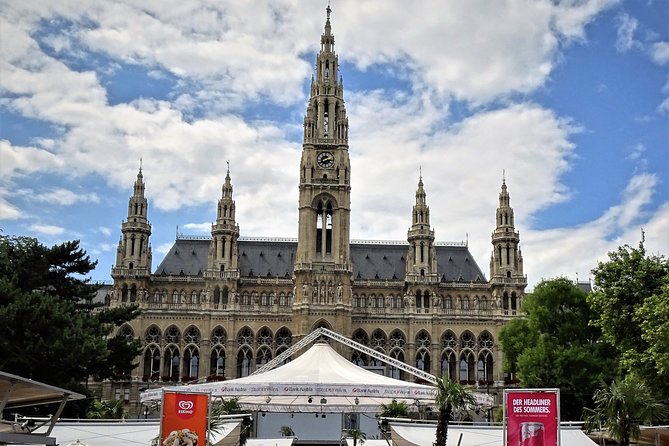
- Stop 3: Rathausplatz and City Hall’s big square presence
- Stop 4: Osterreichisches Parlament and 19th-century historicism
- Stop 5: Volksgarten and Theseus Temple in a classic garden layout
- Stop 6: Heldenplatz, equestrian statues, and the 1938 balcony site
- Stop 7: Hofburg and the long stretch of Habsburg rule
- Stop 8: Goldenes Quartier and the Schwarze Kameel meet-up spot
- Stop 9: Graben and Kohlmarkt, plus the Plague Column symbolism
- Stop 10: Stephansdom exterior, how to read stone, and then you explore inside
- The public transport angle: you’ll come away more independent
- How the tour’s pace and guidance feel in real life
- Price and value: what $344.67 per group actually buys you
- Who this tour is best for (and who might want something else)
- Should you book Vienna at First Glance?
Key highlights at a glance
- Doorstep pickup from your hotel or vacation home keeps the morning (or afternoon) smooth
- A top-sights route in about 3 hours, designed for first timers without museum marathons
- Public transport confidence so you can keep exploring after you part ways with your guide
- Iconic Vienna views and squares, from Belvedere Hill to Stephansdom
- Free admission stops for multiple exterior-focused landmarks
- Guide-led storytelling, from imperial eras to Art Nouveau context
The best kind of first-day Vienna route: short, focused, and private
If Vienna is your first big European city, it can feel like the streets have way too many eras piled on top of each other. This tour’s strength is that it doesn’t try to cover everything. Instead, it gives you a short, organized run through the city’s most recognizable “chapters” so you understand what you’re looking at when you return on your own.
Because it’s private, your group sets the feel. In real life that matters: kids need quick stops, adults want photo breaks, and history buffs tend to ask extra questions. You’re not stuck with a one-size-fits-all group that moves faster than your attention.
You can also read our reviews of more walking tours in Vienna


Doorstep pickup and the easy start you’ll be grateful for
Meeting-point stress is a real thing in Vienna. Hotels are big, streets rename themselves, and you can lose 30 minutes before you even start sightseeing. With this tour, you meet the guide at your hotel doorstep (or at the city pier: Handelskai 265). That one detail changes the whole experience: you begin sightseeing immediately, not with a navigation problem.
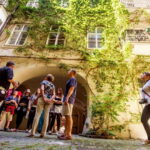
It’s also a practical size: up to 10 people per group. A small private group means your guide can keep the walk moving without turning every stop into a long queue line, and it’s easier to manage the pace around your group’s comfort level.
What you’ll see on the walk: Belvedere Hill to the heart of Stephansdom
This is a half-day morning or afternoon format, built around exterior views and major squares. The “win” is that you get the big picture quickly, and you get to choose what to do next once you know where things are.
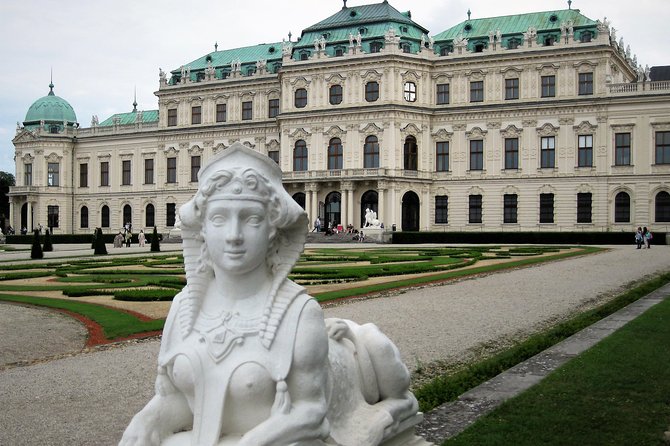
Stop 1: Upper Belvedere Palace views and the skyline story from Belvedere Hill
You start with one of Vienna’s most famous looks: the panorama from Belvedere Hill. You’re not just taking pretty photos here. You’re also getting the story of how this Baroque ensemble helped shape Vienna’s skyline and visual identity.
What I like about this start is the perspective. Belvedere gives you a skyline moment early, which makes the rest of the walk easier to understand. Later, when you’re looking at imperial buildings along grand streets, you’ll remember what the city looks like from higher ground.
One consideration: this is a view-first start. If you want a deep museum interior at the palace, you’ll likely be better with a longer palace-specific visit afterward. This tour is designed to keep moving.
Stop 2: Ringstrasse ride-by energy and the imperial Golden Mile
Next comes Ringstrasse, Vienna’s famous grand boulevard. You’ll glide past landmarks that most first-time visitors recognize right away: the Vienna State Opera, the Museum Quarter, Parliament, and more.
Ringstrasse is where Vienna shows off its “imperial architecture on parade” attitude. You get the vibe of the “Golden Mile” without losing the plot. It’s also a natural place for context, including how the city’s identity shifted across eras, up through Art Nouveau ideas that emerged later.
A small practical point: since this portion is more ride-by and scenic, you’ll feel less like you’re marching and more like you’re sightseeing with variety.
You can also read our reviews of more private tours in Vienna

Stop 3: Rathausplatz and City Hall’s big square presence
Rathausplatz is the kind of place that makes you look up without trying. Around you are City Hall, the University, Burgtheater, and Café Landtmann. In other words, it’s a square with both government gravitas and daily-life energy.
Seasonal details can make this stop extra fun. In summer, the area can tie into events like the Film & Food Festival. In winter, it’s associated with Vienna’s largest Christmas Market.
The drawback? Squares are open and wind can be a factor. If you’re traveling in colder months, dress like you expect weather to change its mind.
Stop 4: Osterreichisches Parlament and 19th-century historicism
Parliament is short and striking. You get a quick look at a major 19th-century historicism statement—exactly the kind of architecture that helps explain Vienna’s fascination with history on stone.
This stop works well because it’s not asking you to stand around. It’s a “see it, understand why it matters, move on” moment.
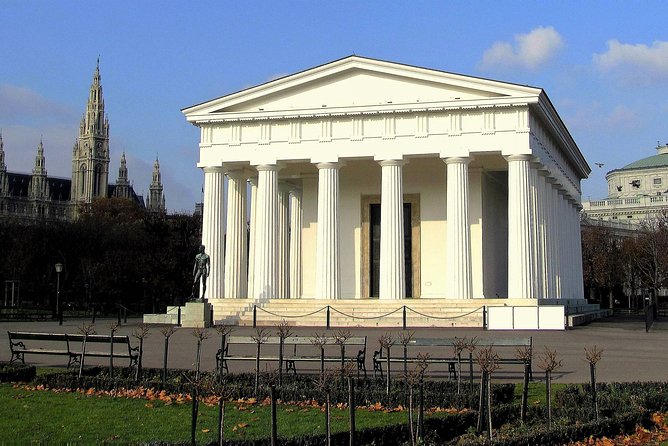
Stop 5: Volksgarten and Theseus Temple in a classic garden layout
Volksgarten slows things down in the nicest way. You’ll see the Theseus Temple and get a sense of the elegant garden layout that frames this part of the city.
In a short walking tour, garden stops are valuable. They give your brain a break from the big buildings and help you notice the city’s planning style. Vienna isn’t just grand facades; it’s also designed spaces.
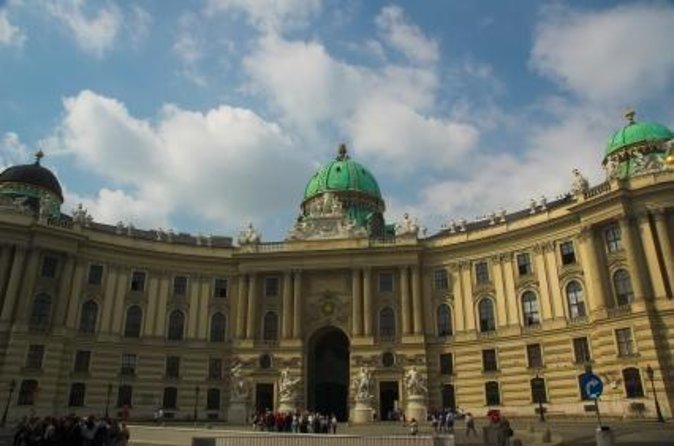
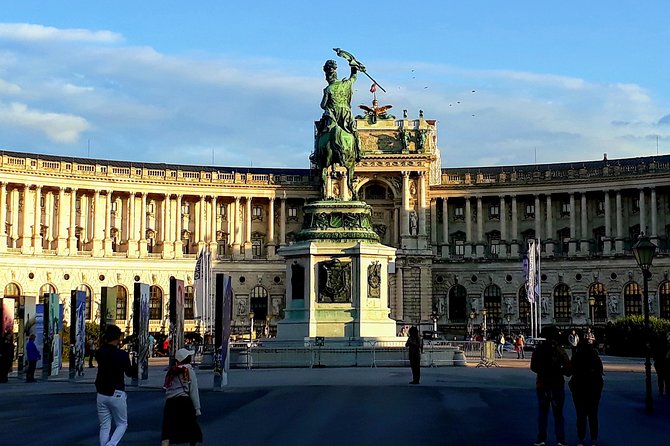
Stop 6: Heldenplatz, equestrian statues, and the 1938 balcony site
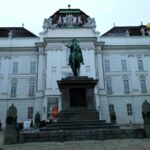
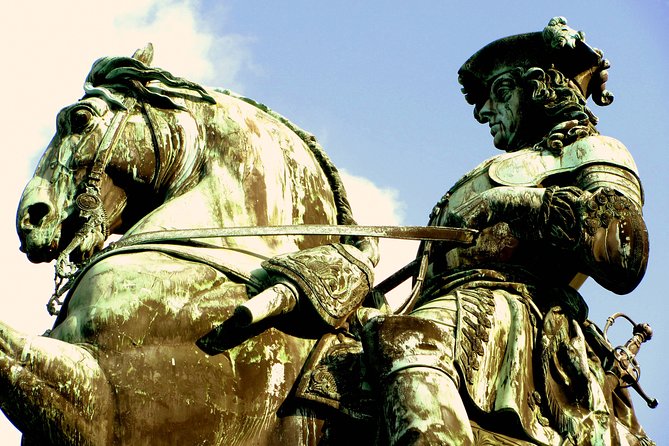
Heldenplatz is dramatic. You’ll look at the newest wing of the Hofburg complex and the two monumental equestrian statues that dominate the space.
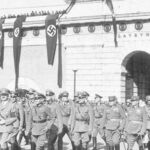
This is also where the tour turns from beauty into memory. You’ll hear about the infamous 1938 balcony moment connected to this location. The effect is sobering, and it’s one reason this tour feels more educational than “look at buildings.”
If you’re sensitive to heavy historical context, this is still handled within a short stop—but it’s not a fluff moment.
Stop 7: Hofburg and the long stretch of Habsburg rule
Then you enter Hofburg’s orbit—walking through a site tied to about 650 years of Habsburg history. The tour frames this continuity as something only surpassed by the Vatican.
Even if you’ve heard “Habsburg” a thousand times, a walk through Hofburg’s surroundings helps you connect names to place. It’s easier to remember the people when you can picture the setting they lived in and ruled from.
A practical consideration: Hofburg areas involve some walking and turning corners to orient yourself. Comfortable shoes matter here more than you’d think.
Stop 8: Goldenes Quartier and the Schwarze Kameel meet-up spot
Next is the Goldenes Quartier Vienna, a luxury district. You’ll also hear about the historic Schwarze Kameel, a local meeting spot since the early 1900s.
This stop is a nice pivot. It shows you that Vienna’s stories aren’t only about courts and palaces. They’re also about neighborhoods, regular people meeting for coffee, and brands living on top of older habits.
Stop 9: Graben and Kohlmarkt, plus the Plague Column symbolism
Graben and Kohlmarkt are prestige pedestrian streets linking Hofburg and St. Stephen’s Cathedral. This is “walk-on-the-right-streets” Vienna: easy to imagine strolling here long after the tour ends.
You’ll also see the Plague Column, a Baroque masterpiece known for its symbolism. This stop helps you learn how to look at art and monuments as more than decoration.
Stop 10: Stephansdom exterior, how to read stone, and then you explore inside
Stephansdom is Vienna’s spiritual heart in physical form. You’ll learn how to read the cathedral by paying attention to messages and stories hidden in stone.
Here’s the practical setup: your guide leaves you at the cathedral so you can explore the interior on your own. Admission to the cathedral interior is not included.
That split can be a plus. You’re not paying for someone to drag you through a building at a fixed pace. Instead, you get direction and then control your own time once you’re inside.
The public transport angle: you’ll come away more independent
This tour isn’t just about where to go. It’s about how to move like a local the next day.
In multiple experiences with different guides, people highlighted that they learned how to use Vienna’s efficient systems during and after the walk. One guide example involved showing how to get train tickets and use trams, while another included bringing a map and marking lines for later use. That’s the kind of help that makes your second day in Vienna feel easier.
If you’re planning to cover more ground afterward—like museums, music venues, or day trips—this “mobility confidence” is a real value add. You spend less time Googling and more time walking into places you actually chose.
How the tour’s pace and guidance feel in real life
You’ll notice a repeated theme in guide styles: the walk stays moving, but it isn’t rushed. Several groups praised guides like Sabine, Annelie, Walter, Alexander, and Brigitte for matching pacing to questions and interests.
It also helps that guides bring humor without turning the history into a joke. One guide approach was described as funny while still answering everything you asked. Another was praised for tailoring around needs like snack breaks and even shopping-related detours (because sometimes Vienna weather or shoes happen).
Bottom line: this tour is designed to be flexible. Private means you don’t lose your day to a rigid schedule.
Price and value: what $344.67 per group actually buys you
The price is listed as $344.67 per group, up to 10 people, for about 3 hours. That sounds steep if you think per person from the start. But with a group limit like this, the real comparison is: what’s your alternative if you want a guided orientation with doorstep pickup?
If you travel as a party of 2, you’ll feel the cost more because you’re paying for the whole group price. If you travel as a group of 6 to 10, the per-person cost can drop to something that starts to feel like a smart trade for time and confidence.
In practical terms, you’re paying for:
- a professional guide,
- door-to-door style pickup,
- a tight route through top sights,
- plus actionable advice you can use the rest of your stay.
And since multiple people described the tour as the best first introduction, it often functions as an “unlock” for everything else you plan. You’re not just seeing landmarks—you’re learning how to place them in your Vienna days.
Who this tour is best for (and who might want something else)
This is a strong fit if:
- you’re coming to Vienna for the first time and want a quick sense of where things connect,
- you want a private guide rather than a crowded group,
- you like architecture, major squares, and the story behind famous buildings,
- you’re planning more independent sightseeing right after.
You might want a different type of tour if:
- your priority is museum interiors and you’re hoping for long indoor stops,
- walking 3 hours outdoors with occasional weather exposure is hard for your group.
There’s also an obvious strategy: use this for orientation, then pick your deeper dives afterward (for example, palace interiors or other larger attractions).
Should you book Vienna at First Glance?
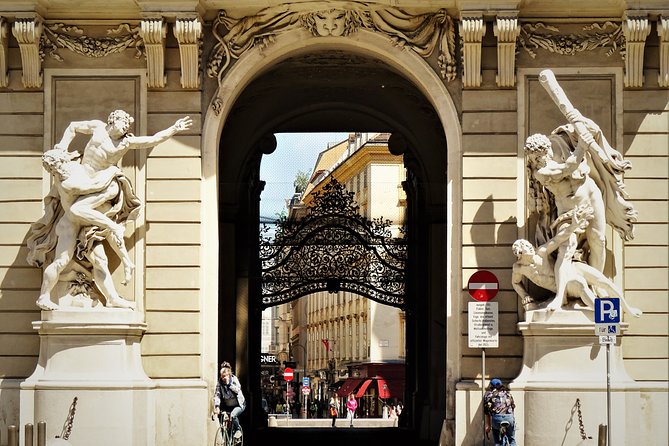
If you’re a first-time visitor who wants Vienna explained through the places you’ll actually walk past again, I’d book it. The doorstep pickup alone is worth real time savings, and the “top sights in a few hours” structure helps you stop feeling lost on day one.
My advice: do this early in your trip. Then use your guide’s route and public-transport tips to shape the rest of your plans—so your Vienna days feel chosen, not improvised.