REVIEW · ALBEROBELLO
Alberobello: Walking Tour among Trulli Houses with a Local
Book on GetYourGuide →Operated by Explorea di Guido Convertino · Bookable on GetYourGuide
Alberobello looks unreal, then the guide explains why. I love getting up close to the white cone-roofed trulli and seeing how the dry-stone technique really works. I also love the way a local storyteller ties legends and building methods together, so the town becomes more than a postcard.
One thing to plan for: parts of Alberobello can get busy and hot, and on crowded days it may be harder to hear every detail. The good news is the tour is short enough that you won’t feel stuck all afternoon, and your guide aims for comfortable pacing with photo breaks.
If you want a focused walk through Alberobello’s northern side—without spending your whole trip in museums—this tour is a strong, practical way to understand the town fast.
In This Review
- Key things you should know
- Why Alberobello’s trulli feel like a fairytale (and why UNESCO cares)
- Piazza Sacramento start: the quickest way to get your bearings
- Trulli Panoramic View: where the town makes sense
- Aia Piccola, Alberobello: the trulli neighborhood you want for real
- How the guide turns legends into street-level details
- Walking pace, route design, and how to plan your photos
- Price and value: is $43 worth it?
- What’s included (and what you’ll need to handle yourself)
- Who should book this trulli walking tour?
- Should you book Alberobello: Walking Tour among Trulli Houses with a Local?
- FAQ
- Where does the tour start?
- How long is the walking tour?
- Where does the tour end?
- What is included in the price?
- Is museum entry included?
- What languages is the guide available in?
- Is the tour wheelchair accessible?
Key things you should know
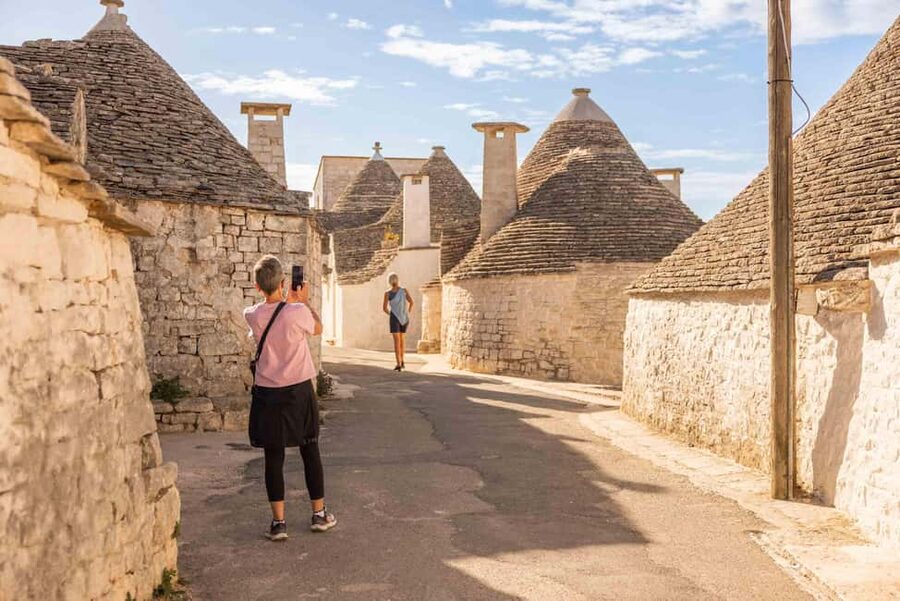
- UNESCO since 1996: you’re seeing a prehistoric building method recognized for its cultural value
- Local storytelling: facts plus legends, not just dates and definitions
- Photo stops with purpose: you’ll pause for viewpoints and a trulli-heavy neighborhood section
- Dry-stone construction in plain sight: you learn what you’re looking at as you walk
- Ends in a central spot: you can keep wandering, grab a coffee, or browse boutiques on your own
- English and Italian live guide: you’re not reading labels while you’re outside
Why Alberobello’s trulli feel like a fairytale (and why UNESCO cares)

Alberobello’s trulli are the reason people do the drive to the Itria Valley in the first place. Picture whitewashed walls and those distinctive cone-shaped roofs, with stonework that looks almost playful until you learn how serious the construction is.
This is one of those rare places where what you’re seeing is the point. The dry-stone tradition—building without modern mortar—takes skill, patience, and careful design, and UNESCO recognized that building logic as part of the site’s heritage (listed as a UNESCO Heritage Site since 1996).
What makes the tour worth your time is how the guide turns your eyes on. You stop seeing “cute houses” and start seeing a system: walls, roof shapes, and why the layout matters as you move through the town.
You can also read our reviews of more walking tours in Alberobello


Piazza Sacramento start: the quickest way to get your bearings
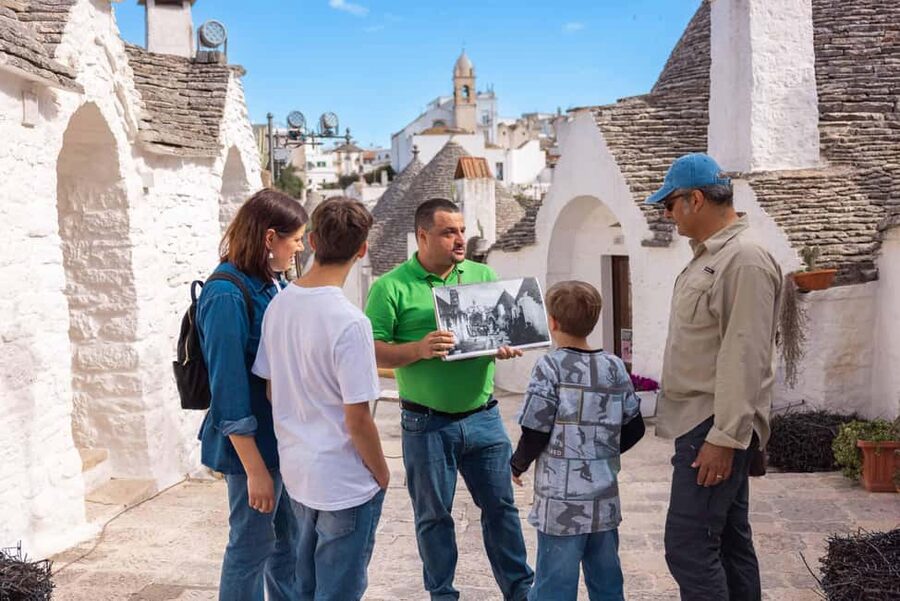
You begin at Piazza Sacramento, in the town center. That matters more than it sounds, because Alberobello’s streets can feel like a maze once you’re on your own. Starting with a local guide gives you a mental map early, so every alley later feels intentional instead of random.
From the start, expect a mix of orientation and storytelling. The guide explains what you’re about to see—trulli form, roof shapes, and the logic behind the walls—and then keeps tying those ideas to what’s right in front of you.
If you’re the type who likes asking questions, this tour is set up for that. Many guides on this route are also known for answering follow-ups clearly and (in more than one case) with a bit of humor, which helps you stay engaged even when you’re walking slowly through tight streets.
Trulli Panoramic View: where the town makes sense
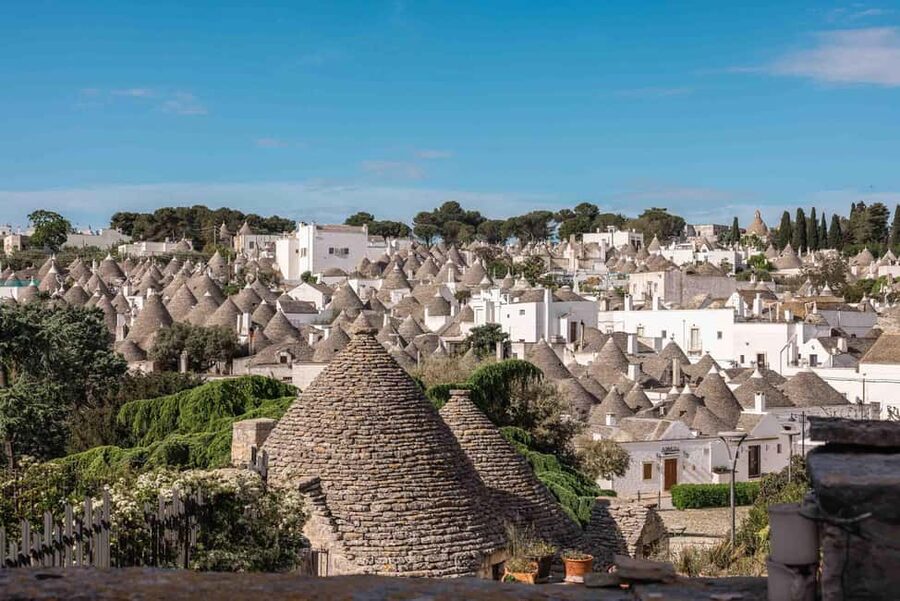
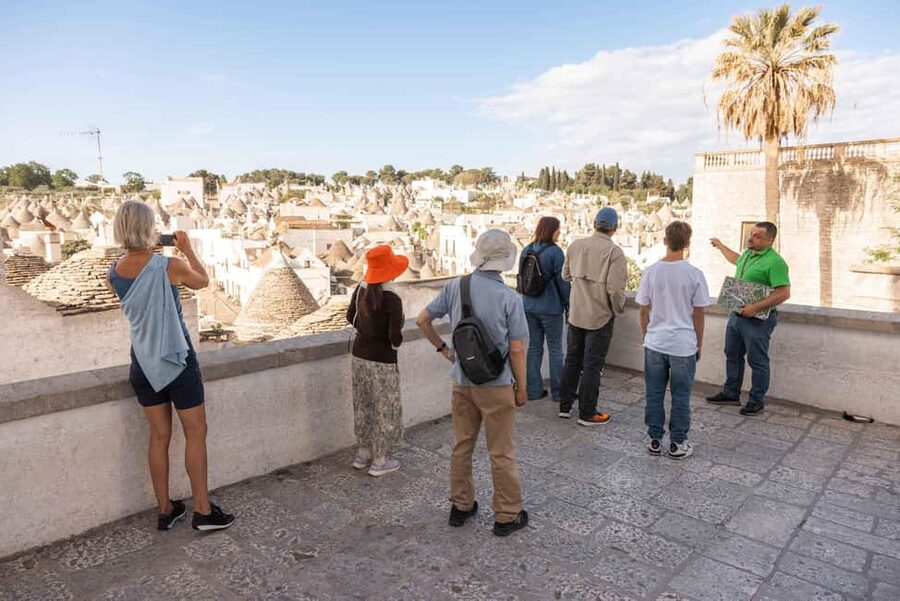
After you get oriented, you head to the Trulli Panoramic View stop for about 10 minutes. This short viewpoint segment is important: it’s the moment where you can step back and understand the overall shape of the area.
Here’s what you should do: don’t rush the photos. Use the stop to scan for rooflines and clusters of trulli, then carry that visual memory to the street level sections. It makes the rest of the walk easier to follow.
From what I’ve seen on this kind of guided walk, the best guides also point out details people usually miss from street corners. You’ll likely get a clearer idea of how the buildings relate to each other in the neighborhood pattern, not just how pretty each individual trullo looks.
Aia Piccola, Alberobello: the trulli neighborhood you want for real
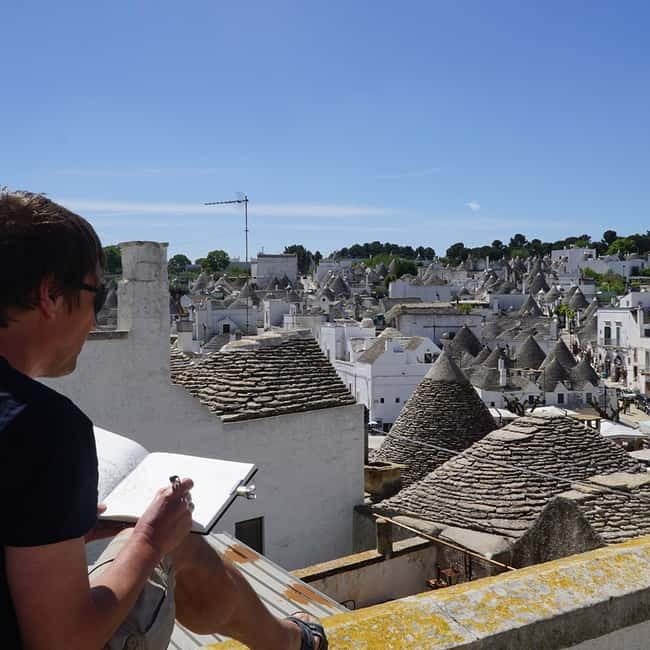
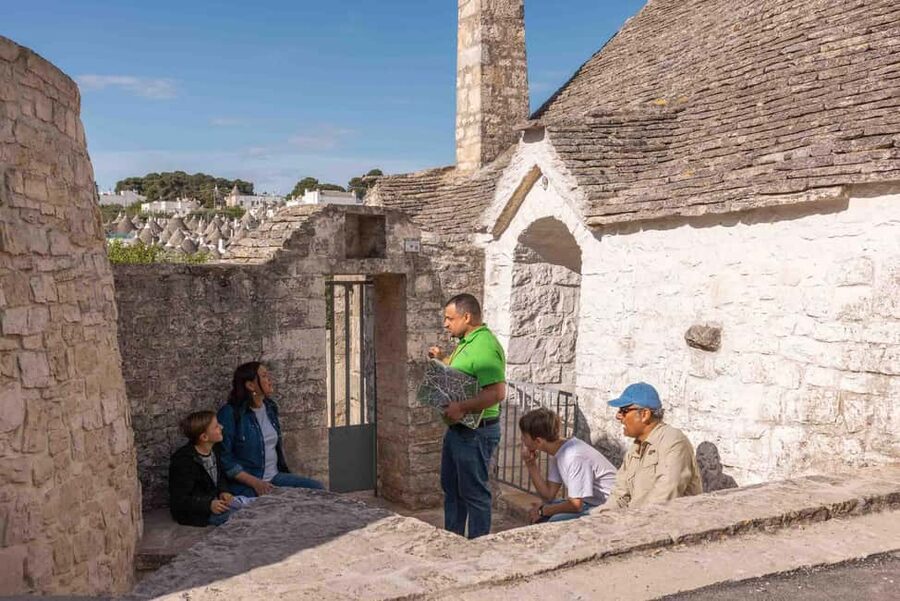
The next key moment is Aia Piccola, Alberobello, with about 20 minutes guided. This is where the tour starts to feel more “lived-in” than “museum-like.” You’re moving through a part of town where trulli show up in everyday context, which helps you understand why this heritage matters beyond sightseeing.
This stop is also where the dry-stone construction tradition becomes tangible. Instead of hearing theory, you can look for the cues the guide talks about—stonework choices, roof structure, and how these buildings manage form with the materials at hand. If you like architecture, this is your payoff time.
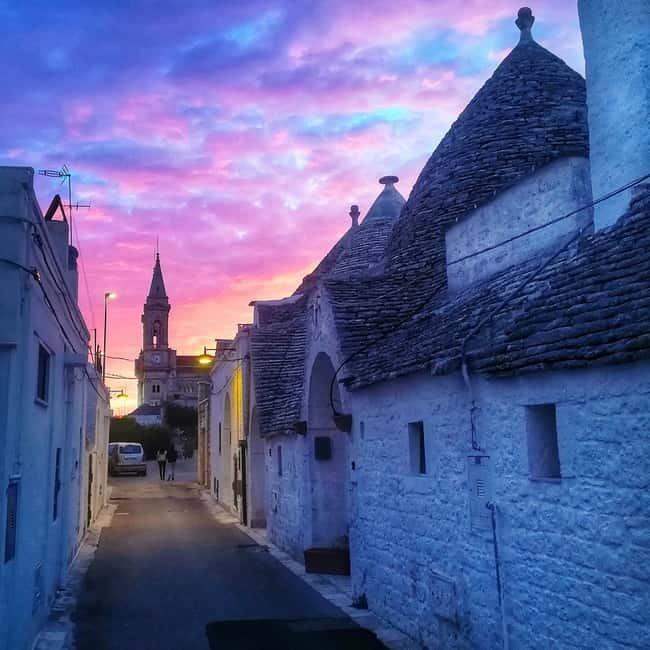
Photo-wise, Aia Piccola is often where you get the strongest sense of Alberobello’s mood: white walls against stone tones, cone roofs cutting the sky, and narrow lanes that frame views naturally. Keep in mind that crowding can happen here too, so if you want your clean shots, aim to take pictures during the pauses rather than halfway through walking.
How the guide turns legends into street-level details
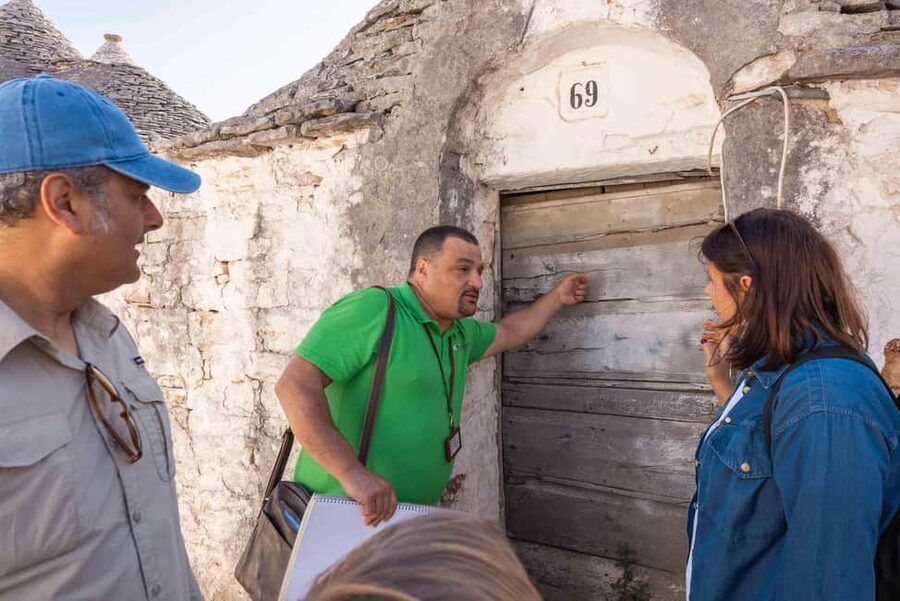
One of the most consistent strengths you’ll hear about on this experience is the guides. Many departures are led by locals, and names like Guido show up again and again in the feedback. People describe him as born and raised in the town, with stories that don’t feel borrowed.
You’ll also hear praise for guides using visual aids—including self-made photo books with old photos and maps. That’s not just entertaining. It helps you connect past and present: you can literally compare what the guide describes with what you see on the street today.
A few guide traits show up as practical wins:
- They tend to answer questions instead of rushing past them
- They often steer you toward quieter, more residential-feeling areas rather than only the most commercial routes
- They try to keep the group comfortable by finding shade when possible
That last point matters in Puglia. Alberobello can get hot, and walking those tight lanes under strong sun can wear you out fast. Even when it’s not blazing, shade breaks make a short tour feel like it lasts longer—because you can actually focus.
Walking pace, route design, and how to plan your photos
This tour lasts 2 hours, and that timing is part of the value. You get enough time to learn details and take photos, but not so much time that you’re exhausted before the afternoon begins.
The route takes you through the northern side of Alberobello’s town area. That’s handy because trulli coverage isn’t uniform; different parts of the town show different densities and street patterns. With the guide’s route, you avoid the common problem of seeing only the easiest-to-reach viewpoints and then wondering why the rest of town looks different.
Photo strategy tip: treat stops as mini “photo windows.” When the guide pauses, that’s your chance to shoot slowly—angles, rooflines, and street frames—then keep walking without constantly stopping and slowing the group. Your pictures will look better and the whole experience stays smoother.
Price and value: is $43 worth it?
At $43 per person for a 2-hour walking tour, you’re paying for three things: a local guide, focused interpretation, and guided time spent in the trulli areas. You’re not paying for museum entry because those tickets aren’t included.
Is that expensive? In some Italian towns, $40+ buys you a museum ticket plus a guide at best. Here, you’re buying something different: expert guidance that helps you understand what you’re seeing outside, in real time. If you’re the kind of visitor who learns best by looking and asking questions, this price usually feels fair.
Where the value shines:
- You learn about prehistory-era building technique and UNESCO recognition without a formal museum
- You get storytelling and practical context, not just a route
- You end in a convenient spot, so you can continue exploring immediately without transportation planning
Where to be cautious: if you already have strong background knowledge and plan to spend a lot of time in museums, this tour may feel lighter than a full-day plan. But for most people, it’s a great “orientation + understanding” bridge.
What’s included (and what you’ll need to handle yourself)
You get a live local guide and the walking tour, plus children’s activities. That last part is useful if you’re traveling with kids, because it suggests the guide isn’t only talking to adults.
Not included: museums entry tickets and pickup/drop-off. In practice, that means you should plan to meet your group at Piazza Sacramento on your own.
The tour also ends at Largo Martellotta (70011 Alberobello BA, Italy). That finish point is good for turning the walk into a longer day: you can wander, browse local shops, or stop for coffee without needing to re-check directions.
Who should book this trulli walking tour?
This is ideal if you:
- want a short, high-impact introduction to Alberobello’s UNESCO area
- enjoy local stories and legend-style explanations alongside architecture
- prefer walking with guidance over reading guidebooks at random
- like photo stops that are guided by viewpoint and timing, not just guesswork
It can be a good fit even if you’re traveling with kids, since children’s activities are included. And since the tour is listed as wheelchair accessible, it’s worth considering if you need that kind of support for a city walk.
Should you book Alberobello: Walking Tour among Trulli Houses with a Local?
Yes—if your goal is to understand trulli as a living construction tradition instead of just collecting photos. I’d book it if you want a guided route on the northern side, with real storytelling, clear answers, and a finish location that lets you keep exploring right away.
Skip it or rethink if you only want self-paced wandering, or if you’re expecting major museum time, because this is built around a guided walk (and museums aren’t included). For most visitors, though, the mix of local expertise, UNESCO context, and practical photo stops makes it a smart use of two hours in Apulia.
FAQ
Where does the tour start?
The tour starts at Piazza Sacramento.
How long is the walking tour?
The tour duration is 2 hours.
Where does the tour end?
The tour ends at Largo Martellotta, 70011 Alberobello BA, Italy.
What is included in the price?
It includes a local guide, the walking tour, and children’s activities.
Is museum entry included?
No. Museums entry tickets are not included.
What languages is the guide available in?
The live guide is listed as English and Italian.
Is the tour wheelchair accessible?
Yes, the tour is listed as wheelchair accessible.