REVIEW · MUNICH
Third Reich & WWII Walking Tour
Book on Viator →Operated by munich walk tours Ralph Luenstroth · Bookable on Viator
Munich can feel cheerful—until you hear what happened here. This Third Reich and WWII walking tour uses key Nazi-era sites to explain how Munich helped set the stage for the rise of the Nazi Party, then shows how people later resisted it. I really like the tight, landmark-to-landmark route, and I also like that the story includes resistance through the White Rose, not just propaganda and power.
One heads-up: it’s a heavy topic and you’ll be on your feet for close to three hours, with only short breaks. If you’re sensitive to dark subjects or you need frequent pauses, plan your expectations—and bring what you need to stay comfortable.
In This Review
- Key things that make this tour work
- Munich’s Nazi-era story in one 2h45 walk
- What you gain by doing it this way
- From Marienplatz start to Königsplatz finish: your route at a glance
- Königsplatz: where rallies and propaganda became public life
- A caution on expectations
- Feldherrnhalle: the failed grab for power you can’t forget
- What to watch for while you’re standing there
- Hofbräuhaus: the early mass meeting connection
- Why this stop matters for first-time learners
- Hofgarten and the White Rose resistance movement
- How the guides handle the hard parts (and still keep it moving)
- Price and value: what $35.09 buys you in Munich
- What I’d pack for comfort
- Who should book this, and who might want to skip it
- Best fit
- Consider skipping if
- Should you book this Third Reich walking tour in Munich?
- FAQ
- How long is the Third Reich walking tour?
- Where does the tour start and end?
- What is the price?
- Is the tour offered in English?
- Is food and drink included?
- Is the tour suitable for children?
- What if I cancel?
Key things that make this tour work
- A focused Nazi-era route with stops tied to the rise of power and the aftermath across central Munich
- Small-group feel (designed for small groups, capped at a higher maximum) so you can actually ask questions
- Stops you can picture fast: Königsplatz, Feldherrnhalle, and Hofbräuhaus are all part of the same narrative arc
- White Rose context through a stop in the Hofgarten, so resistance is part of the story
- Guides who manage the mood well, with room for questions and quiet reflection
- Practical city logistics: mobile ticket, near public transport, and a clear start at Marienplatz
Munich’s Nazi-era story in one 2h45 walk
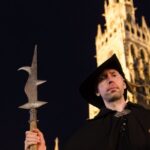
This is built for people who want more than facts in a book. You get a guided timeline in street-level form, moving through the places where rallies, political theater, and public life overlapped. The result is that the Nazi story stops feeling abstract. You can stand in the city and connect what you’re hearing to real addresses.
The timing matters, too. At roughly 2 hours 45 minutes, you’re far enough into the route that you’ll grasp how events link together, but not so long that you lose attention. You’ll also cover several major locations in central Munich, which is a plus if you’re only in town for a short stay.
The tour also aims for a group size that stays manageable. You’ll see both a small-group limit (10) and a maximum cap (30) listed, so don’t assume it’s a solo experience. But either way, it tends to be the kind of walk where you can talk, not just shuffle along behind a crowd.
You can also read our reviews of more walking tours in Munich
What you gain by doing it this way
A self-guided stroll can work, but it’s easy to get lost in names and dates. Here, the guide stitches the story into a clean line: post–World War I chaos, the Nazi movement’s early mass appeal, the failed power grab, and the way resistance later showed another path.
And because the tour includes how Munich itself was affected—ending with the city in ruins—it keeps the focus on consequences, not only the spectacle of politics.
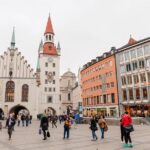
From Marienplatz start to Königsplatz finish: your route at a glance
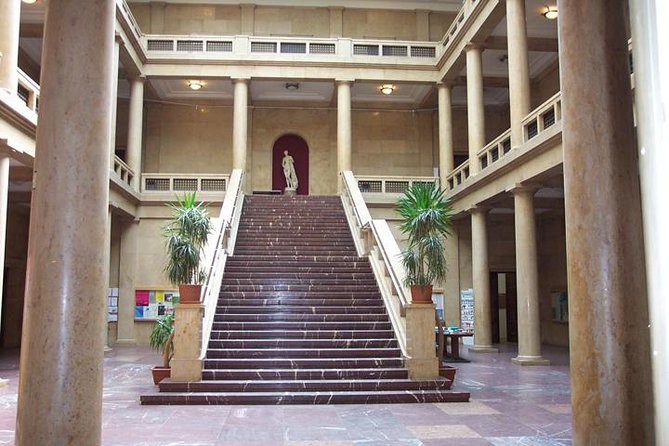
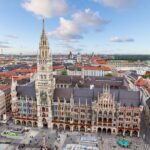
The walking route starts at Marienplatz (80331 München) and ends at Königsplatz 1 (80333 München). The finish point is described as ending at Hitler’s former headquarters, which is a strong anchor for the final phase of the story.
This end-to-end flow is practical for planning the rest of your day. You can treat it like a morning or early afternoon activity in the most tourist-heavy area of Munich, then either keep walking nearby or switch to something lighter afterward.
A couple practical notes that matter on the ground:
- It’s near public transportation, so you can reach the start with less hassle if your schedule is tight.
- You’ll be moving through busy streets and squares, so it helps to show up a bit early and stay close to the guide when you want to hear clearly.
In at least a few experiences, people noted meeting-point confusion or hearing challenges. That’s easy to fix: line up at the actual start location shown for the tour, and stay positioned where you can comfortably hear the guide.
Königsplatz: where rallies and propaganda became public life
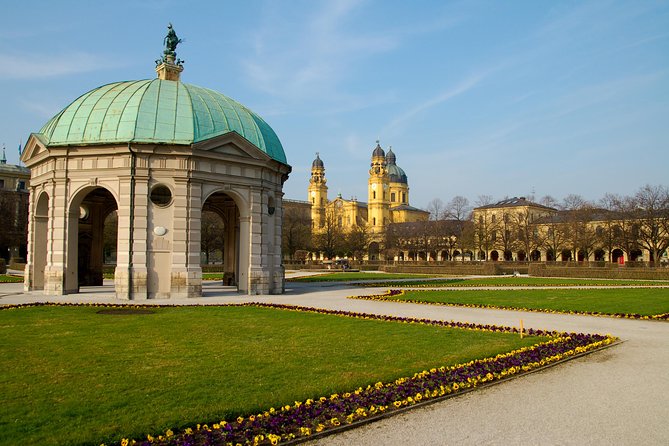
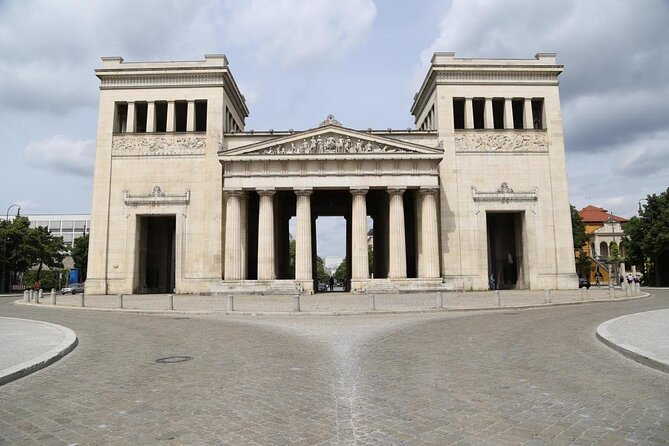
Königsplatz is the kind of place where architecture does some of the storytelling for you. This stop is framed as the setting where Munich’s post-World War I turmoil fed into the rise of the Nazi movement. You’ll hear how defeat, hyperinflation, political violence, and revolution shaped the environment the Nazis exploited.
What makes this stop valuable is the cause-and-effect framing. It’s not only about what happened there. It’s about why it could happen there. You’ll connect the Nazi message to the desperation and anger of the time, and then you’ll see why large public gatherings mattered so much to the Nazis’ growth.
If you like “reading” a city, this is one of those stops where you’ll start noticing details faster—how crowds behave, how public squares are set up for speeches, and how monuments can send a message even when no one is talking.
A caution on expectations
This part sets the tone. It’s not meant to be a cheerful sightseeing segment. If you want a tour that feels like standard history sightseeing, you might find the mood heavy right away.
Feldherrnhalle: the failed grab for power you can’t forget
Next comes Feldherrnhalle, tied to the Nazis’ failed attempt to seize power. In most city history tours, power struggles get covered like background noise. Here, you’re meant to understand why the event became usable political material later—how it fed public narratives and strengthened the movement’s identity.
This stop is where the story turns sharper. You’ll shift from the build-up to a moment of attempted control, then back to what that did for the movement afterward. It’s a key pivot point, and that’s why it deserves your attention even if you feel like you already know the basics.
What to watch for while you’re standing there
Even when you’re focused on the guide’s timeline, keep an eye on your surroundings. Feldherrnhalle is a place where public space and public performance meet. Listening with that in mind makes the explanation stick.
If you’ve ever wondered how political movements use spectacle, this stop gives you that answer without needing a separate lecture.
Hofbräuhaus: the early mass meeting connection
The tour links the Nazi movement’s rise to its early mass meetings at Hofbräuhaus. This is one of the more surprising turns for people who think the Nazis only spread through official channels. You’ll hear how the movement grew through popular gathering places, where people came to socialize—then found themselves in the orbit of a political message.
The value here is practical. Once you understand how early mass appeal worked, you can better interpret later events across Germany and across other eras. In other words, you’re not only learning what happened in Munich. You’re learning a pattern.
Why this stop matters for first-time learners
If you’re new to this subject, this kind of entry point helps. You go from big ideas and dates to a place where the story feels human: people gathering, talking, and being pulled into momentum.
And if you already know the outline, Hofbräuhaus gives you a clearer sense of the ground-level mechanics behind the headlines.
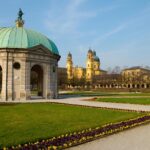
Hofgarten and the White Rose resistance movement
One of the tour’s strongest and most important elements is that it doesn’t end with Nazi power. It includes a stop in the Hofgarten to talk about the White Rose resistance movement.
This is where the walk becomes more than a timeline of atrocities. It adds agency. You’ll hear about brave people who pushed back against the regime, which helps the story land in a more complete way: not only how the Nazis took control, but also how others tried to resist.
From the way guides handle this, you can tell it’s treated with respect. People are given moments to process what they hear, and discussion is encouraged afterward. That balance matters, especially when you’re dealing with atrocities and propaganda.
How the guides handle the hard parts (and still keep it moving)
This is the section people seem to remember. Guides named Alex, Michael, Josh, Danielle, Joel, Ulrich, and Bridget are mentioned across experiences, and the common thread is handling a serious subject with factual grounding and a steady pace.
Here’s what that usually looks like in practice:
- You get a clear explanation at each stop so you don’t feel dropped into a random collection of landmarks.
- You’re encouraged to ask questions, not just sit and absorb.
- The guide keeps the group moving, even when the content is emotionally heavy.
- There are quiet pauses for reflection, especially around the darker moments.
One practical detail you’ll appreciate: a few experiences mention a mid-tour stop inside for about 15 minutes. That matters if you’re walking in cold weather or you need a reset.
Also, at least one experience noted the guide was hard to hear at times. The fix is simple: stay close, face the guide when possible, and don’t rely on hearing from the back if audio is an issue.
Price and value: what $35.09 buys you in Munich
At $35.09 per person, you’re paying for something you can’t easily copy on your own: interpretation. You’re not just visiting sites; you’re getting a guided narrative that explains how the pieces fit together.
A useful way to think about value is time. At about 2.75 hours, this is roughly $12–$13 per hour for a professional guide. If that same time were spent trying to piece together context from signage, maps, and multiple museum stops, the guided version becomes a bargain—especially if you only have one or two days in Munich.
You’ll also get a mobile ticket and a clearly defined route. That reduces friction on a day where Munich sidewalks can get packed.
What’s not included is food and drinks, and the tour does not include hotel pickup/drop-off. So think of this as a walking experience where you should show up fueled.
What I’d pack for comfort
Multiple experiences mention there’s little downtime. Do yourself a favor:
- Bring water.
- Bring a small snack.
- Wear warm layers if the weather is cold; you’ll be outside for most of the tour.
If you’re the type who gets antsy when standing too long, plan on using the scheduled indoor break and treat the rest like a slow, steady walk.
Who should book this, and who might want to skip it
This tour is designed for adults and older teens, and it’s specifically noted as not recommended for children under 12. That’s a good sign that the content is serious and may not fit younger kids’ ability to process it.
It’s also described as suitable for “most travelers,” but you should expect walking and standing for nearly three hours. One practical review note suggests it can feel tiring if you need frequent sitting breaks, so bring stamina.
Best fit
Book this if you want:
- A structured path through central Munich’s Nazi-era sites
- Context you can connect to real locations
- A guide who keeps the material honest and respectful
- Resistance and aftermath included, not just the rise
Consider skipping if
Skip it if:
- You need a very light, upbeat historical tour
- You strongly dislike heavy WWII-era topics
- You have trouble with long standing and cold-weather walking
Should you book this Third Reich walking tour in Munich?
I think this is a strong booking choice if your goal is context, not just sightseeing. For one set of 2h45, you’ll cover several major locations—Königsplatz, Feldherrnhalle, Hofbräuhaus—and you’ll end with the story anchored at Königsplatz 1 / Hitler’s former headquarters. The addition of the White Rose prevents the walk from becoming one-sided.
My main decision factor is your tolerance for heavy history. If you’re ready for a respectful, factual walk through one of the darkest chapters of modern Europe, this is the kind of tour that helps you understand how it happened where it happened.
If you want a straightforward “Munich highlights” day, pick a different plan. But if you’re here to learn, and you can stand for a long guided route, this is one of the most focused ways to do it.
FAQ
How long is the Third Reich walking tour?
It runs for about 2 hours 45 minutes.
Where does the tour start and end?
It starts at Marienplatz, 80331 München and ends at Königsplatz 1, 80333 München, with the tour ending at Hitler’s former headquarters.
What is the price?
The price is listed as $35.09 per person.
Is the tour offered in English?
Yes, it is offered in English.
Is food and drink included?
No. Food and drinks are not included.
Is the tour suitable for children?
It is not recommended for children under 12.
What if I cancel?
You can get a full refund with free cancellation if you cancel at least 24 hours before the experience starts.