REVIEW · MUNICH
Munich City Walking Tour, includes Third Reich & Viktualienmarkt
Book on Viator →Bookable on Viator
One good walk can change how you see a city. This one pairs Munich’s big sights with Third Reich context and practical local tips. I especially liked how the route feels like real Munich life, not a checklist.
I also liked the lunch stop at Viktualienmarkt and the chance to eat Bavarian food in the middle of the day. The main trade-off is simple: you’ll be outside for a good chunk of time, so weather matters.
The tour also has that small-group feel, capped at 20 travelers, which keeps it less chaotic and easier to ask questions. Guides like Ozzy/Ozzie are repeatedly mentioned for connecting history to how to actually move around Munich. The other thing to consider is pacing: some people love the storytelling depth, while others may want shorter stops when it’s cold.
In This Review
- Key things that make this tour worth your time
- Your Munich reset: why this walking tour works
- Starting point to city-center flow: how the route is paced
- A quick reality check on weather
- Frauenkirche: Munich’s twin towers and the legend you’ll hear
- Best way to use this stop
- German Hunting and Fishing Museum: a surprising Bavarian side quest
- A possible drawback
- Staatliches Hofbräuhaus: why this beer hall is more than beer
- How to make the most of it
- Isartor and Karl Valentin: a city gate with a comedian’s connection
- Marienplatz and the Glockenspiel: where Munich shows off
- Practical tip
- Max-Joseph-Platz and the Munich Residenz area: power meets theater
- Maximilianeum: a learning institution turned state parliament
- Platzl and St. Michael München: the old-center vibe you’ll want later
- St. Peter’s Church and Alter Peter’s tower views
- The value of this stop
- Wolfsbrunnen and the story behind the fountain
- Odeonsplatz: Italian-inspired architecture and heavy historical context
- Karlsplatz (Stachus): city gates, winter rinks, and everyday life
- Viktualienmarkt lunch break: market food without the fake stuff
- Who will love this lunch stop
- Should you book this Munich City Walking Tour?
- FAQ
- How long is the Munich City Walking Tour?
- What is the tour price per person?
- Is the tour offered in English?
- How many people are in the group?
- Where does the tour start and end?
- Are there admission tickets required for the main stops?
- Is food included during the tour?
- Does the tour cover the Third Reich?
- What’s the Viktualienmarkt stop like?
- Is free cancellation available?
Key things that make this tour worth your time
- Third Reich context built into real places, not just a lecture in the street
- Local navigation tips so you know how to plan the rest of your Munich days
- Mid-tour Viktualienmarkt break for Bavarian food and a market-style pause
- Small-group size (max 20) for a more personal experience
- A smart mix of Munich icons plus less-obvious stops like the German Hunting and Fishing Museum
- Lots of landmarks in about 3 hours 15 minutes, with frequent short breaks to reset
Your Munich reset: why this walking tour works
If Munich is your first stop in Bavaria, this tour is a fast way to get your bearings. You start in the city center and keep moving past places that shape how Munich looks and how it thinks. You also get practical guidance for what to do next, which is the part many tours forget.
What makes this one click is the balance. You get major landmarks like Frauenkirche and Marienplatz, but you also get stops that explain Bavarian culture in a more human way. The German Hunting and Fishing Museum, for example, sounds niche until you see it. Suddenly you understand that Bavaria has long traditions tied to sport, land, and identity—not just beer halls.
You should also know the tone. The Third Reich portion isn’t treated like a game or a headline. Instead, the guide frames the story with care, and some tours also connect past events to the present-day political context in Germany. That approach helps you connect the dots instead of just collecting photos.
You can also read our reviews of more walking tours in Munich
Starting point to city-center flow: how the route is paced
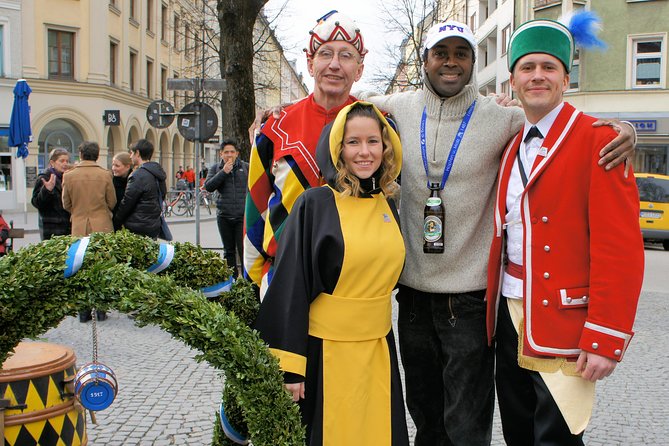
The walk begins at Schützenstr 11, 80335 München, and ends at Odeonsplatz (Odeonspl. 3, 80539 München). The end point is useful because it drops you near central sights and transit connections for your next move.
The total time is about 3 hours 15 minutes, and it’s designed as a sequence of short stops rather than one long speech. You’ll hit a mix of churches, squares, and museums, plus a real market break in the middle. Expect some waiting while you gather as a group, especially at major photo spots.
Group size is capped at 20, which you’ll feel immediately. Small groups keep the pace manageable and make it easier for the guide to spot who needs a question answered or a quick restroom stop.
A quick reality check on weather
Many of the landmarks here are outdoors or only partially sheltered. In winter conditions (snow, wind, near-freezing temps), it can feel like you’re standing around more than you planned. Pack accordingly, and don’t assume you can power through in just a light jacket.
Frauenkirche: Munich’s twin towers and the legend you’ll hear
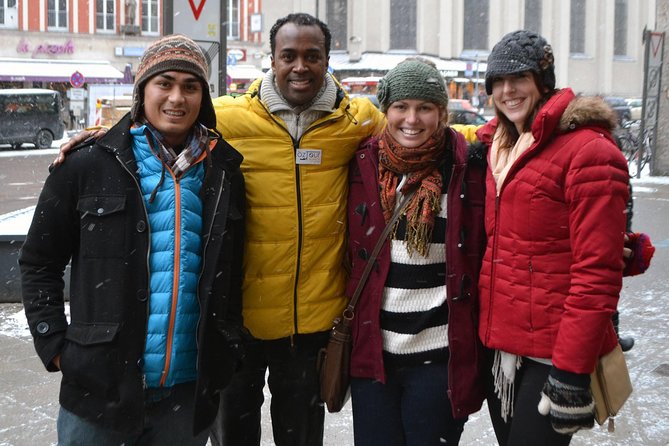
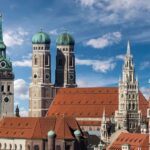
Your first big anchor stop is Frauenkirche, the iconic cathedral with two towers that basically act like a city landmark radar. It’s a late Gothic masterpiece built in the 15th century and serves as the seat of the Archbishop of Munich and Freising.
What’s worth your attention here isn’t just the exterior. Inside, you can explore the large interior and the historic crypt. The stop also includes the famous legend of the Devil’s Footstep, which turns a heavy building into a story you’ll remember.
Best way to use this stop
Go slow inside. Look up, then glance down. The scale can be surprising, and the crypt adds a different time layer without taking extra hours.
German Hunting and Fishing Museum: a surprising Bavarian side quest
Next is the German Hunting and Fishing Museum, housed in a former Augustinian church. That church setting matters because it makes the museum feel less like a warehouse and more like it belongs in Munich’s old-town fabric.
The exhibits cover about 3,000 square meters, with stuffed wildlife, antique weapons, and legends including the Bavarian Wolpertinger. If you think hunting history is all grim photos and old stories, this stop will surprise you by showing how deep Bavarian folklore runs—even in museum form.
A possible drawback
This is one of the stops most likely to be hit-or-miss depending on your interests. If you’re only in Munich for architecture and squares, you might treat it as a short cultural detour. If you like oddball history, it’s a standout.
Staatliches Hofbräuhaus: why this beer hall is more than beer

From museum into beer hall, and the mood shifts fast. The tour includes Staatliches Hofbräuhaus, known as Hofbräuhaus, and it traces the hall’s roots back to 1589. It began as a royal brewery and now works like one of Munich’s most famous social stages.
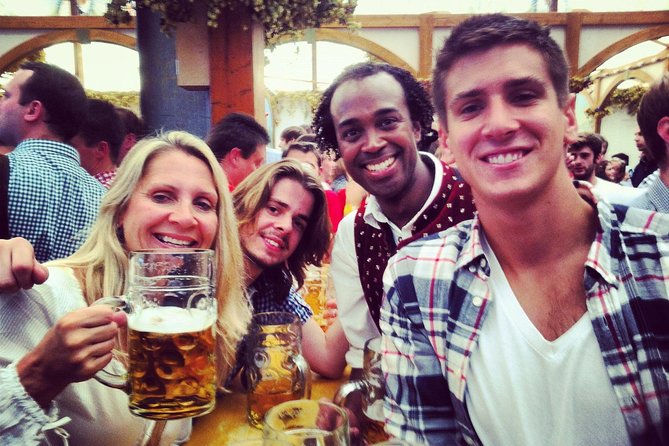
What you’ll likely notice first is the atmosphere: big halls, hearty Bavarian food culture, and live traditional music. This is also where the tour does something smart—mixing major landmarks with an experience you can actually feel with your senses.
How to make the most of it
Even if you don’t go big on a meal here, pay attention to what people do. This isn’t a quiet museum stop. It’s living culture, with visitors blending into the local rhythm.
Isartor and Karl Valentin: a city gate with a comedian’s connection
Then comes Isartor, one of Munich’s last medieval city gates, built in 1337 as part of the fortifications. You get the central tower, historic frescoes, and a smaller cultural layer through the Valentin-Karlstadt Museum, connected to Bavarian comedian Karl Valentin.
This stop is useful because it shifts your mental map from palaces and churches into street-level city structure. City gates aren’t just walls; they were the system that controlled movement and trade.
Marienplatz and the Glockenspiel: where Munich shows off
Marienplatz is the centerpiece square, established since 1158. This is where the New Town Hall and the famous Glockenspiel anchor the scene. You’ll also see the Mariensäule and a cluster of shopping streets that pull people in every day.
You’ll want to spend your time wisely here. Marienplatz is busy, and it’s easy to rush past because it looks obvious on postcards. Instead, treat it as a hub: learn what streets connect outward and you’ll use that knowledge all week.
Practical tip
Stand where you can scan multiple directions. The value of Marienplatz is less the single view and more the way it helps you orient the rest of the city.
Max-Joseph-Platz and the Munich Residenz area: power meets theater
At Max-Joseph-Platz, you’ll find the National Theatre and the Munich Residenz area. The architecture leans neoclassical, and the square is named for King Maximilian Joseph.
This stop works well because it connects cultural life (theater) to political and court history (the Residenz). It’s not just pretty buildings. It’s a map of who had influence and how that influence expressed itself.
Maximilianeum: a learning institution turned state parliament
Next is the Maximilianeum, a grand palatial building perched above the Isar River. It was founded by King Maximilian II in 1852 to support gifted students, and since 1949 it has housed the Bavarian State Parliament.
This is a good moment to think about civic continuity. The building’s purpose changed, but the big idea stayed: Bavaria invests in leadership and education.
Platzl and St. Michael München: the old-center vibe you’ll want later
Platzl is a charming square tied to traditional Bavarian atmosphere, cobblestones, historic buildings, and lively restaurants. It’s also strongly associated with the Hofbräuhaus area, which means you’ll recognize the neighborhood energy even if you don’t know the street names yet.
Then the tour moves to St. Michael München, Munich’s largest Renaissance church, built in the late 16th century as a center for the Jesuit order. Inside, the barrel-vaulted ceiling and early Baroque influences give you a very different feel from the Gothic style at Frauenkirche. Don’t skip the royal crypt in particular—it’s a reminder that churches here often function like archives of power.
St. Peter’s Church and Alter Peter’s tower views
St. Peter’s Church (called Alter Peter) is Munich’s oldest parish church, dating back to the 12th century. The tower is 91 meters, and it’s known for city views.
Inside, you’ll see a blend of Gothic, Baroque, and Rococo elements, including the high altar. The mix makes St. Peter’s feel layered rather than time-locked.
The value of this stop
It’s a great “short reset.” Even if you don’t climb for views, the architectural variety helps you understand how Munich kept rebuilding itself instead of staying stuck.
Wolfsbrunnen and the story behind the fountain
Wolfsbrunnen is an Art Nouveau fountain built in 1904 by Heinrich Düll and Georg Pezold. It features bronze figures of Little Red Riding Hood and a wolf, commissioned by the Wolf family to commemorate their name.
This stop is quick, but it’s useful. It shows how modern folklore and identity can appear in public art—small details that make a city feel personal instead of purely monumental.
Odeonsplatz: Italian-inspired architecture and heavy historical context
At Odeonsplatz, you’ll see a major central square designed in the early 19th century by Leo von Klenze. The area includes the Theatine Church, the Feldherrnhalle, and the Residenz, all tied together by Italian-inspired architecture.
This is also one of the spots where the tour’s historical framing becomes especially relevant. If you’re doing the Third Reich part of the experience, you’ll likely recognize how the city’s power symbols connect to that era. The guide’s job here is to keep the story grounded and respectful, and many participants appreciate that approach.
Karlsplatz (Stachus): city gates, winter rinks, and everyday life
Finally, you reach Karlsplatz, locally called Stachus. It’s one of Munich’s most famous squares, built in the 18th century after medieval city walls were demolished. You’ll see the Karlstor gate and a fountain that shows up at its best in warmer months. In winter, there’s an ice rink.
This is a good transition point because it shifts you from monuments back to everyday Munich. It also gives you an easy mental bridge to the last stretch of the walk.
Viktualienmarkt lunch break: market food without the fake stuff
The tour’s closing highlight is Viktualienmarkt, Munich’s historic open-air market. It’s been a vibrant food hub since the early 19th century, evolving from a farmers market into a place for fresh produce, Bavarian delicacies, and artisanal goods.
A few things make this stop practical for your trip planning:
- You see how locals shop and snack.
- You get ideas for what to eat after the tour.
- You can grab a mid-tour meal without feeling like your day is derailed.
The guide builds in a mid-tour break here for a freshly made Bavarian lunch. The sample options include Bavarian Bratwurst (spicy, cheese, or regular) or Bavarian potato salad with a pretzel—plus a Bavarian beer. You’ll also see a reusable beer bottle holder mentioned as part of the market snack culture.
There’s also a notable detail about the kind of food the guide steers you toward: selections are described as avoiding artificial flavors, colors, preservatives, additives, fillers, and GMOs. That doesn’t mean every option is perfect for every diet, but it does signal a filter that focuses on straightforward ingredients.
Who will love this lunch stop
If you like market food and you want to taste Bavaria without turning it into a formal restaurant meal, you’ll likely enjoy it. If you want quick and simple, you can treat it as a reset and keep your energy for the last quarter of the walk.
Should you book this Munich City Walking Tour?
I think this tour is a strong choice if you want:
- a first-day orientation in central Munich
- a route that connects big sights with culture and context
- small-group energy (max 20) and a guide who can explain how to navigate the city
I’d hesitate only if you know you hate outdoor waiting in cold weather, or if you prefer tours that move faster with fewer stories per stop. On a snowy day, the time spent gathered outside can feel long.
If you book, come dressed for the weather, plan to take photos slowly (not from a sprint), and use the guide’s navigation tips right away the next day. This kind of tour pays off most when you convert what you learn into your own plans.
FAQ
How long is the Munich City Walking Tour?
It lasts about 3 hours 15 minutes.
What is the tour price per person?
The price is $31.78 per person.
Is the tour offered in English?
Yes, the tour is offered in English.
How many people are in the group?
The tour has a maximum of 20 travelers.
Where does the tour start and end?
It starts at Schützenstr 11, 80335 München, Germany, and ends at Odeonsplatz (Odeonspl. 3, 80539 München, Germany).
Are there admission tickets required for the main stops?
The listed stops show Admission Ticket Free for the sites included in the route.
Is food included during the tour?
There is a mid-tour lunch break at Viktualienmarkt for a freshly made Bavarian lunch, and Bavarian beer is part of the snack options. Snacks are described as not included.
Does the tour cover the Third Reich?
The tour name includes Third Reich, and it is presented as part of the tour experience along the route.
What’s the Viktualienmarkt stop like?
You’ll have time at Viktualienmarkt, including a mid-tour lunch break where you can choose Bavarian market food and beer options.
Is free cancellation available?
Yes. You can cancel for a full refund up to 24 hours in advance of the experience start time.