REVIEW · MUNICH
Munich: Walking Tour Old Town and Viktualienmarkt
Book on GetYourGuide →Operated by Weis(s)er Stadtvogel GmbH · Bookable on GetYourGuide
Munich can feel huge until someone points out the right streets. This Old Town + Viktualienmarkt walk is a focused 1.5-hour route that strings together major landmarks and Munich food-market culture in a way that’s easy to repeat on your own. I especially love the Viktualienmarkt food market stop and the way the tour anchors you at Marienplatz with the New Town Hall and Glockenspiel area. One thing to plan for: the meeting point can be a little tricky around the Mariensäule area, so I’d arrive with extra time and double-check the exact instructions.
What makes this work is pacing and variety. You’ll move from churches to medieval lanes, then into famous beer-hall territory, and finally into the swankier parts of the center around Maximilianstraße and Odeonsplatz. You can choose a shared group or a private group, and the guide can talk in English or German, which helps if you want real explanations rather than just photo stops.
Quick heads-up for comfort: the tour is rain or shine, and it’s a walking route that calls for comfortable shoes. Also, the info says wheelchair accessible, but it separately notes it’s not suitable for people with mobility impairments—so if mobility is a factor, I’d confirm details with the operator before you book.
In This Review
- Key highlights I’d prioritize
- Why this 90-minute Munich walk makes sense
- Marienplatz, New Town Hall, and the Glockenspiel area
- St. Peter’s Church and Burgstraße: older Munich energy
- Viktualienmarkt: Munich’s classic food-market stop
- Old Town lanes to Hofbräuhaus: medieval feel, beer hall reality
- Maximilianstraße, Bavarian State Opera, and the luxury-to-royalty contrast
- Odeonsplatz and Theatinerkirche: Italian-Baroque flavor in Munich
- Group size, guide energy, and pacing that doesn’t feel rushed
- Price and value: what $282 per group really gets you
- What to bring, and how to prepare for the walk
- Who this tour fits best (and who should consider something else)
- Should you book this Munich Old Town and Viktualienmarkt tour?
- FAQ
- How long is the Munich Old Town and Viktualienmarkt walking tour?
- How much does the tour cost?
- Is there a private option?
- Where do I meet the guide?
- What major sights are included in the walk?
- What languages are the live guides available in?
- Does the tour run in bad weather?
- Are entrance fees, meals, or drinks included?
- Is transportation included to the starting point?
- Is it accessible for wheelchair users or people with mobility impairments?
- Can I cancel and get a refund?
Key highlights I’d prioritize
- Viktualienmarkt in a guided route with stops that make the market feel like part of the city’s story, not just a quick glance
- Marienplatz and the New Town Hall area for the classic Munich centerpiece and Glockenspiel views
- Old streets and courts via Burgstraße and the Alter Hof, tying you to the Wittelsbach era
- Hofbräuhaus as a must-see beer hall stop that connects history to a living tradition
- Maximilianstraße to Odeonsplatz for contrast between luxury storefronts and grand civic squares
- Theatinerkirche and Odeonsplatz architecture with the Italian-Baroque vibe that gives Munich its unusual style mix
Why this 90-minute Munich walk makes sense
Munich’s center can overwhelm you fast: big squares, ornate buildings, and streets that all look important. This tour is built to prevent that. In about 1.5 hours, you hit the kind of sites you’d otherwise bounce between across multiple days: Marienplatz, at least one “oldest” church stop, the big food market, the famous beer hall, and the high-end shopping and grand squares at the end.
The value here is not just that you see famous names. It’s that the guide ties them together. You’re not only checking off landmarks—you’re learning why that part of town matters, and how the streets connect from one era to the next. That makes your self-guided exploring afterward smoother, because you’ll recognize the route logic.
Also, the tour is live-guided (English and German), which is a big deal in Munich. Many of the details that make Old Town special are easy to miss if you’re just walking. A good guide helps you slow down just enough to notice the things that look like decorations but are actually history.
You can also read our reviews of more walking tours in Munich
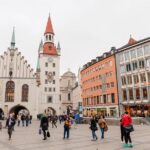
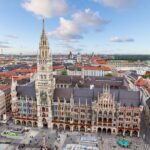
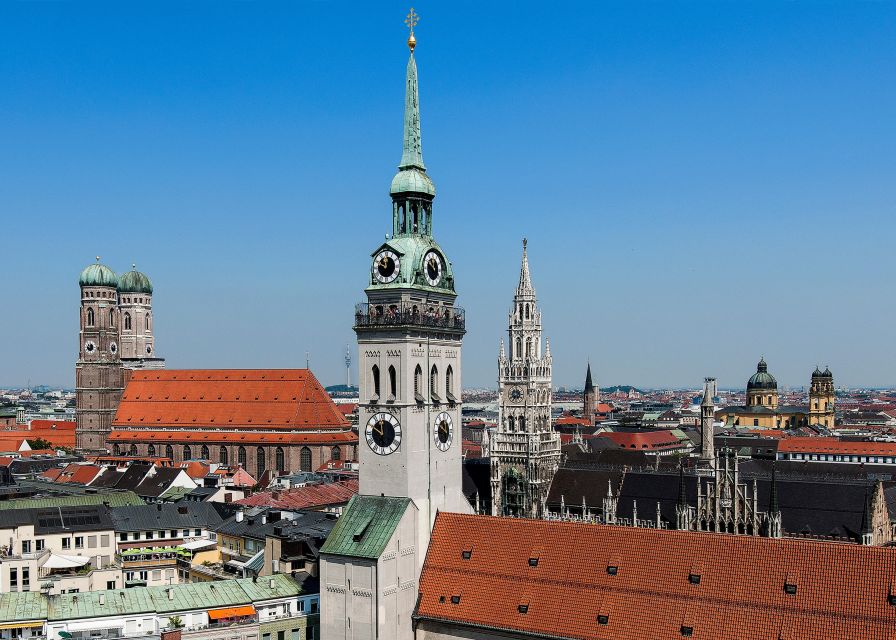
Marienplatz, New Town Hall, and the Glockenspiel area
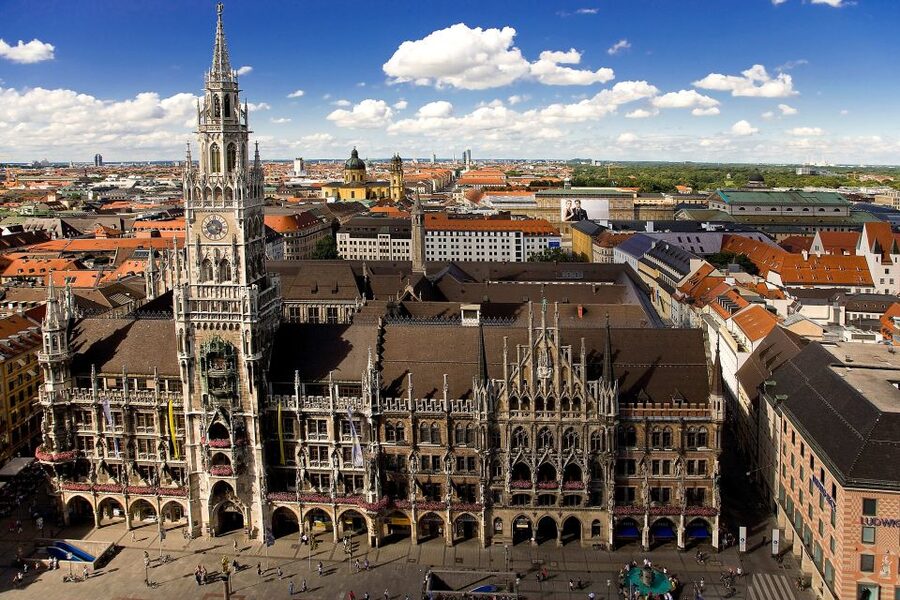
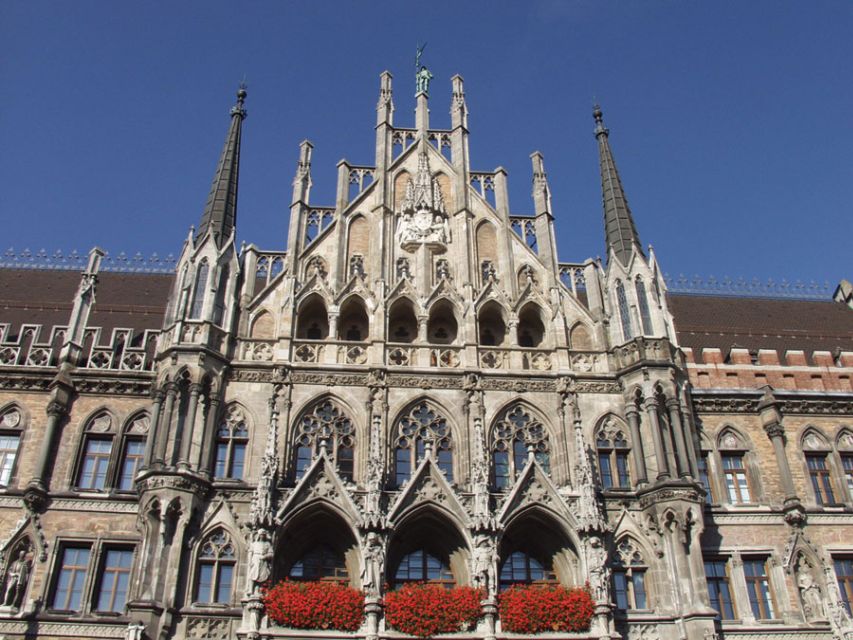
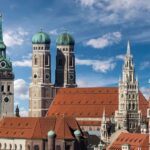
You start in the heart of the city, around Marienplatz—typically near the Neues Rathaus area, sometimes with a meeting point connected to the Mariensäule. This is the correct place to begin because everything important seems to radiate from here.
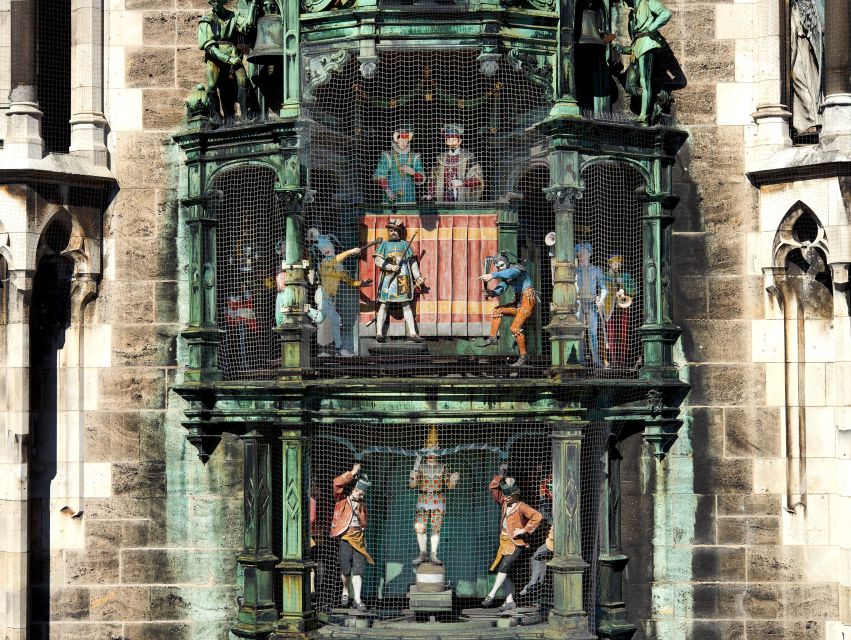
You’ll get the basic orientation fast: the New Town Hall’s striking style and the iconic Glockenspiel focus. Even if you’re not stopping to time the show, you’ll understand why this square is more than a postcard stop. It’s where Munich presents itself, and the architecture cues the tone of the rest of the walk: impressive civic pride mixed with local tradition.
Practical note: if you’re meeting around the Mariensäule, don’t assume it will be obvious which corner the guide uses. One guide-led route can start at several points around the same monument area, so arriving a touch early can save you stress.
St. Peter’s Church and Burgstraße: older Munich energy
From Marienplatz, the tour heads toward St. Peter’s Church, described as Munich’s oldest parish church. That alone is worth the stop. Older churches change how you see the streets around them—suddenly you’re not just looking at pretty facades. You’re stepping into a city that’s been rebuilding itself for centuries.
Next comes Burgstraße, one of Munich’s oldest streets. This is where the tour starts feeling like a proper walk, not a string of isolated sights. You’re moving along a street that has continuity, and the guide’s explanations (and quick “look here” cues) can make it easier to spot how Munich evolved.
Then you reach the Old Court (Alter Hof), former seat of the Wittelsbach dukes. The value of this stop is that it connects a political power center to the physical layout around you. You’re learning why these buildings exist where they do, and why this area has been so influential for so long.
Viktualienmarkt: Munich’s classic food-market stop
The best moment on this tour for many people is the Viktualienmarkt segment. It’s Munich’s largest and most traditional food market, and the route gives you just enough time to feel the place without turning it into a long food tour.
You’ll stroll through colorful stalls and get the sense of what makes this market part of everyday Munich life: bread, cheeses, and sausages called out as the kinds of aromas and sights you’ll notice while you’re there. Even if you don’t plan to buy much, the guided stop helps you understand what you’re looking at and why it’s still central to the city.
What to do during this time:
- Pause near a few stall areas and actually watch the flow of people and buying patterns. Markets tell you about local habits.
- If you do purchase something, treat it as a snack you can carry. The tour includes walking between major sights, so keep it light.
One drawback: because the tour is only 1.5 hours total, this market stop is time-boxed. You’ll leave feeling like you got the highlight version, not the full sampling experience. That’s not a problem if you plan to come back later on your own with more time.
Old Town lanes to Hofbräuhaus: medieval feel, beer hall reality
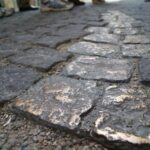
Between the big sights, the route runs through Platzlgassen alleys, where the city mixes medieval charm with modern daily life. This is a smart choice because it keeps the walk from feeling like a museum corridor. Narrow lanes help you understand the “in-between” Munich—the spaces that locals likely use, not just tourists.
Then you land at Hofbräuhaus München, which is described as world-famous and a historic beer hall that has hosted locals to royalty. This stop matters even if you don’t drink beer. The hall is part of Munich’s public identity. It’s where the city’s storytelling shows up in real crowds and real tradition.
If you’re into beer culture, this is one of those stops you’ll remember. And if you’re not, it still works as a human-scale landmark: you’ll see how a famous venue operates in the middle of a historic city.
Tip for comfort: Hofbräuhaus can be lively. If you prefer quieter sightseeing, take a moment to observe the entry area and exterior vibe, then step just far enough in to see the space before moving on.
Maximilianstraße, Bavarian State Opera, and the luxury-to-royalty contrast
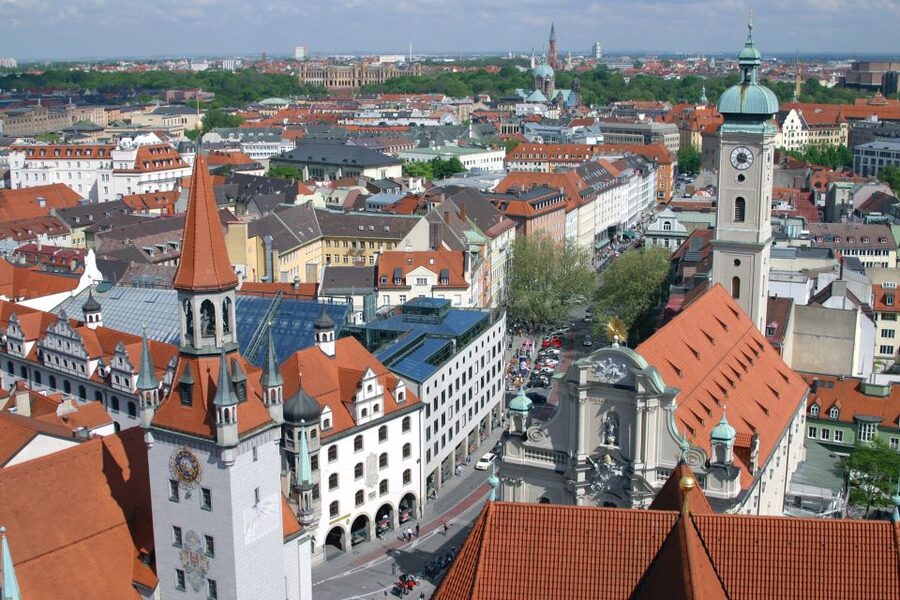
After the older-town segments, the tour shifts toward Maximilianstraße, described as Germany’s most exclusive shopping street. This contrast is intentional and useful. Munich isn’t just churches and beer. It also has big-money elegance, and the street is a quick way to see how the city’s style changes as you move through the center.
From there, the route continues past the Bavarian State Opera—neoclassical—and alongside the Residenz, former seat of Bavarian royalty. Even without going inside, the positioning is valuable. You get the sense of where power and culture lived, side by side with everyday streets.
This is also a place where your guide’s storytelling can really help. When you understand the Residenz role and the Opera’s position near it, the architecture feels less random. It becomes a map of what mattered to Munich historically and culturally.
Odeonsplatz and Theatinerkirche: Italian-Baroque flavor in Munich
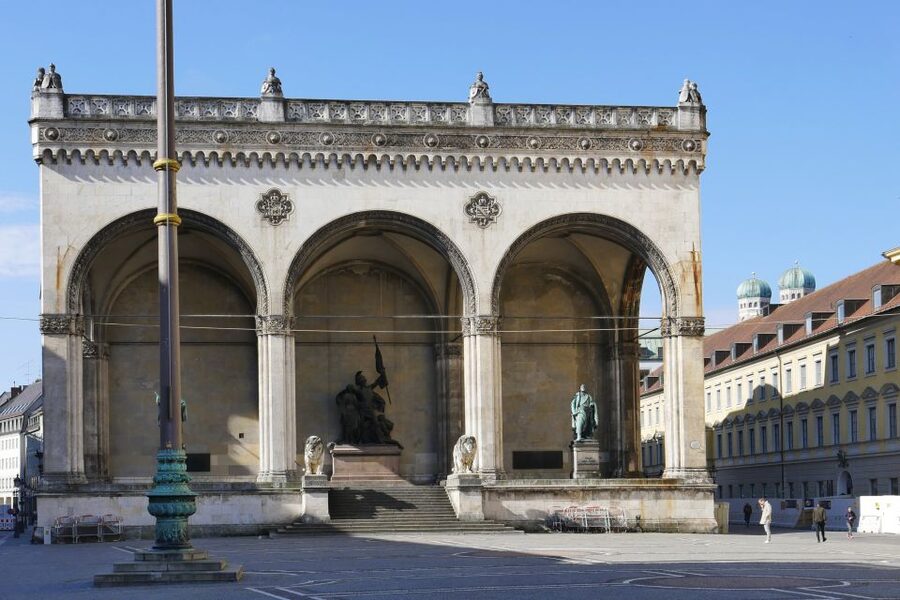
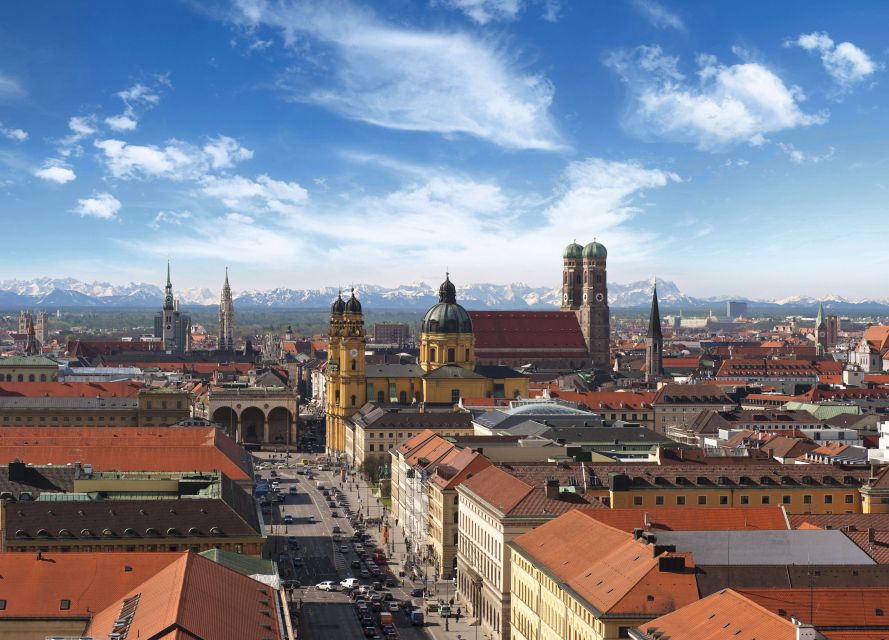
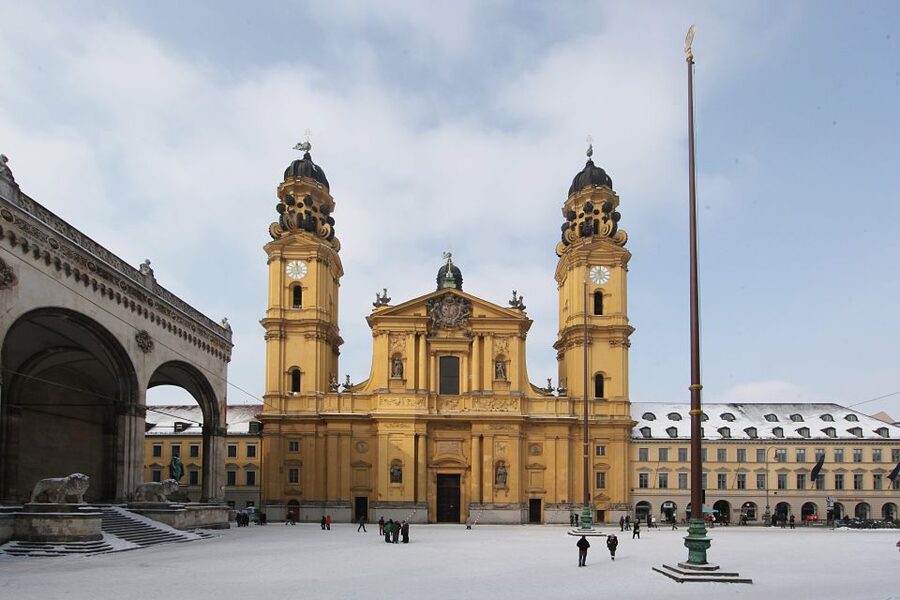
The tour ends at Odeonsplatz, a grand square surrounded by impressive buildings including the Feldherrnhalle. If you like dramatic civic spaces, this is where your eyes will get rewarded. Squares like this aren’t just wide-open areas—they’re designed for visual impact.
Opposite stands the Theatinerkirche, built in striking Italian Baroque style. The tour frames Munich as the northernmost city of Italy, and this church is the visual reason why. You’ll see the style shift compared to what you’ve already seen, and that’s the point: Munich’s identity isn’t locked into one architectural language.
Finally, Odeonsplatz gives you a natural pause point. By the time you’re here, you’ve walked from markets to beer halls to royal sites. It’s a good place to stop and take in the square before you continue on your own.
Group size, guide energy, and pacing that doesn’t feel rushed
This tour is offered as either a private group option or a shared group. The headline price is $282 per group up to 30, and the duration is 1.5 hours, so it’s built to be efficient rather than leisurely.
That’s the tradeoff. You’ll cover a lot of ground, which is perfect for a first-time Munich visit. But you won’t have hours to linger at every stop. If you want slow travel and long conversations at each site, this is more “best hits” than “deep study.”
Still, the guide component is a major strength. The feedback patterns point to guides who:
- handle different audiences well (including families),
- answer questions clearly,
- adjust the route focus based on what your group cares about.
Names that kept showing up with strong praise include Karen, Claudia, Gerhard, and Gitti. In particular, guides were recognized for tailoring the tour, with some focusing more on history or beer culture and others adding extra architecture time at the end. That flexibility matters because it turns a fixed route into a more personal experience.
Price and value: what $282 per group really gets you
At $282 per group up to 30 for a 1.5-hour guided walk, the price is best understood as group value. For bigger groups, the per-person cost can become very reasonable compared to paying for multiple separate private guides.
What you’re buying isn’t entry tickets (none are included) and not meals (also not included). You’re buying interpretation: a guided route through Munich’s highest-signal landmarks in a short window.
Where this is worth it:
- If it’s your first time in Munich and you want the quickest path to understanding the Old Town.
- If you like history but don’t want to build a custom route and research plan.
- If you want market and beer-hall culture without spending a whole day doing it.
If you already know Munich well and enjoy planning, you might skip the tour. But if you’re trying to get oriented and pick smart areas for later visits, this route gives you a strong foundation.
What to bring, and how to prepare for the walk
Bring comfortable shoes. That’s not just generic advice. The route mixes squares with older streets and alleyways, so you’ll feel the walking more than you might expect from the 1.5-hour time.
Also plan for weather. The tour runs rain or shine, so you’ll want a light rain layer even in cooler seasons.
One more practical point: because the tour includes both historic churches and central squares, you’ll likely spend time near busy areas. Keep your phone ready for photos, but don’t forget to look up. A lot of what you’ll learn is tied to architectural details.
Who this tour fits best (and who should consider something else)
This tour is a good match if you:
- want a first Munich orientation,
- care about the connection between political power, churches, markets, and beer culture,
- prefer a guided route that saves you time.
It may be less ideal if you need very long stops at each site. The entire experience is only 90 minutes, so the guide has to keep momentum.
On accessibility, you’ll see conflicting notes: it’s listed as wheelchair accessible, but it also says it’s not suitable for people with mobility impairments. If mobility affects your plans, I’d treat that as a reason to contact the provider before booking so you’re not guessing.
Should you book this Munich Old Town and Viktualienmarkt tour?
I’d book it if you want a high-signal walking route that connects Munich’s food-market culture with the city’s most recognizable historic landmarks. The combination of Marienplatz, St. Peter’s Church, Viktualienmarkt, Alter Hof, Hofbräuhaus, and the finishing stretch through Maximilianstraße to Odeonsplatz is a strong lineup for a short visit.
Choose it especially if you’re traveling with people who have different interests—history fans, food lovers, and architecture watchers. The best-rated guides (including Karen, Claudia, Gerhard, and Gitti) show a pattern of adapting to the group, and that turns a standard itinerary into something more satisfying.
If you already have plenty of time in Munich and you love slow, unguided roaming, you might skip this and build your own route. But for most first-timers, this is one of the most practical ways to get your bearings fast without missing the big anchors of central Munich.
FAQ
How long is the Munich Old Town and Viktualienmarkt walking tour?
The tour lasts 1.5 hours.
How much does the tour cost?
The price is $282 per group, up to 30 people.
Is there a private option?
Yes. A private group tour is available, and you can choose between a private or shared group tour.
Where do I meet the guide?
The meeting point may vary depending on the option booked. Two starting location options are listed: München 1, Mariensäule, or Neues Rathaus.
What major sights are included in the walk?
You’ll visit key Old Town spots including Marienplatz/Neues Rathaus area, St. Peter’s Church, Viktualienmarkt, Alter Hof, Hofbräuhaus München, Maximilianstraße, Munich Residenz (including the area by the Bavarian State Opera), and Odeonsplatz.
What languages are the live guides available in?
Guides are available in German and English.
Does the tour run in bad weather?
Yes. The tour takes place rain or shine.
Are entrance fees, meals, or drinks included?
No. Entrance fees and meals and drinks are not included.
Is transportation included to the starting point?
No. Transportation to the starting location is not included.
Is it accessible for wheelchair users or people with mobility impairments?
The activity is listed as wheelchair accessible, but it also notes it is not suitable for people with mobility impairments. If mobility is a concern, it’s best to double-check fit with the provider before booking.
Can I cancel and get a refund?
Yes. Free cancellation is available up to 24 hours in advance for a full refund.