REVIEW · MUNICH
Third Reich Walking Tour Munich
Book on Viator →Operated by Radius Tours GmbH · Bookable on Viator
Munich’s past is written on its streets. This Third Reich walking tour connects the Nazi propaganda machine to the real places in central Munich, with an English guide who can answer tough questions without turning it into a lecture. I especially liked the way the stories link Königsplatz and other major landmarks to the rise of Hitler, and the fact you’re meeting and moving with guides like Keith or Michael, who tend to bring the material into focus with clear explanations.
I also liked the respectful pacing and the chance to pay tribute at memorials for people who opposed Nazi ideology, not just sightseeing. The one drawback to plan for: it’s a 2.5-hour outdoor walk, so dress for cold or changeable weather and expect a lot to absorb in a short time.
In This Review
- Key things to know before you go
- Munich’s Third Reich tour: why this route matters
- The meeting point at Radius Tours and how the tour starts
- Königsplatz: where ideology met architecture
- Odeonsplatz: marches, memorials, and public spectacle
- A beer hall stop that’s about power, not just beer
- Old Town Hall: the story behind official power
- Marienplatz finish: you’re back in the heart of Munich
- What the guides do well (and why it shows)
- Is the price worth $45.95 for 2.5 hours?
- Where this tour fits best in your Munich trip
- Practical tips for a smoother walk
- Should you book the Third Reich Walking Tour Munich?
- FAQ
- How long is the Third Reich Walking Tour Munich?
- What language is the tour offered in?
- Where do you meet, and where does the tour end?
- Is there a mobile ticket?
- Is this a small group tour?
- What kind of weather does the tour require?
- Can I get a full refund if I cancel?
Key things to know before you go
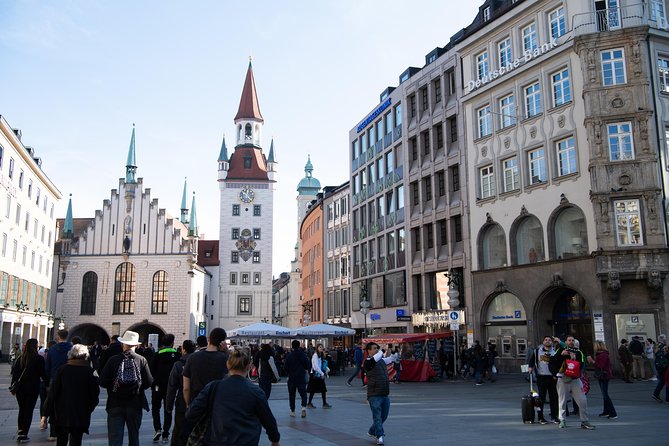
- Central Munich route: You start at Radius Tours near the old center and finish at Marienplatz, so you can keep sightseeing afterward.
- Small group size: Maximum 25 travelers, which makes questions easier and the pace more human.
- English mobile tour: A mobile ticket and an English-speaking guide.
- Landmarks tied to propaganda: Stops include Königsplatz, Odeonsplatz, and political gathering sites tied to beer hall culture.
- Memorial focus: The tour includes pauses to honor those who suffered or died opposing Nazi ideology.
- Weather-dependent: Good weather matters; if it’s canceled for poor conditions, you’re offered a new date or a refund.
Munich’s Third Reich tour: why this route matters
This walk isn’t about memorizing dates. It’s about understanding how power took shape—step by step—using the same streets and buildings you’ll pass on a normal sightseeing day. Munich is often thought of as beer gardens and church domes, but the city also has very visible proof of how political theater became real-world control.
What makes this tour valuable is the guide-led connection between place and meaning. I like that you’re not stuck at one monument, either. You move through the city in a logical arc, so the story builds as you go.
And because it’s an English tour with a small group, the tone tends to be thoughtful rather than rushed. You’ll hear context you can’t easily spot on your own while walking past plaques at normal walking speed.
You can also read our reviews of more walking tours in Munich
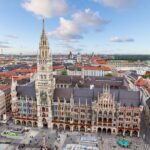
The meeting point at Radius Tours and how the tour starts
You meet at Radius Tours, Dachauer Str. 4 (near 80335 München). Check-in is quick, and then you head out on foot from a central starting spot that’s easy to reach.
This first section matters more than you might think. A good guide doesn’t throw names at you—they set expectations, explain how to think about propaganda, and help you understand why these locations matter. Based on what I’ve seen echoed by different guides like Jake, Nik, and Aileen, the opening usually frames the rest of the walk so it’s easier to follow even if you’re not a history major.
Tip: give yourself a few extra minutes to arrive on time. With a group size capped at 25, the tour depends on everyone starting together so you don’t miss the first context-setting piece.
Königsplatz: where ideology met architecture
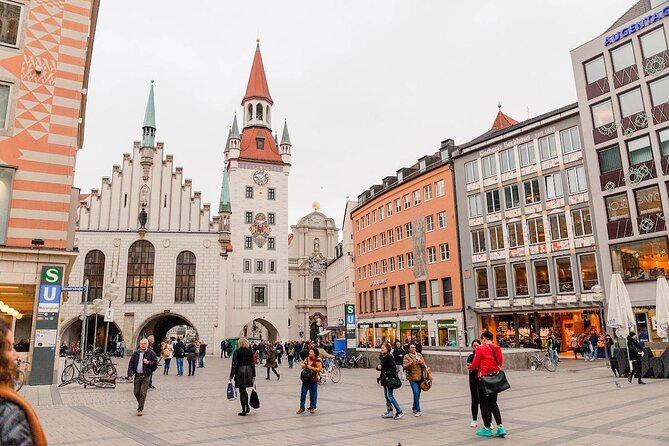
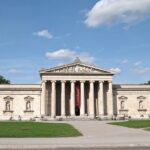
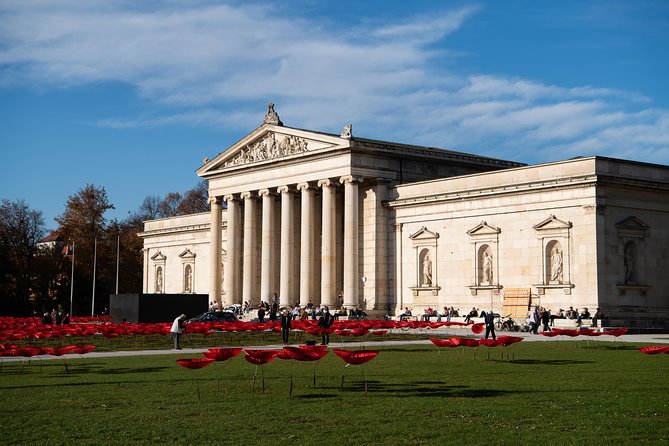
One of the tour’s biggest stops is Königsplatz, which had major importance for the Nazi Party. Even if you’ve seen photos of Nazi-era rallies, it’s different when you’re standing in the same open spaces where that kind of public messaging was staged.
The reason this stop works on a walking tour is simple: you can’t fully understand propaganda’s effect without seeing how it used space. Squares and corridors aren’t neutral. They’re part of the performance—where people gather, where leaders appear, and how crowds are shaped into a single message.
On this tour, you’ll get the context for why this place wasn’t just a backdrop. It’s also a lesson in how movements borrow symbols, scale events, and use visual design to make an ideology feel inevitable.
Odeonsplatz: marches, memorials, and public spectacle
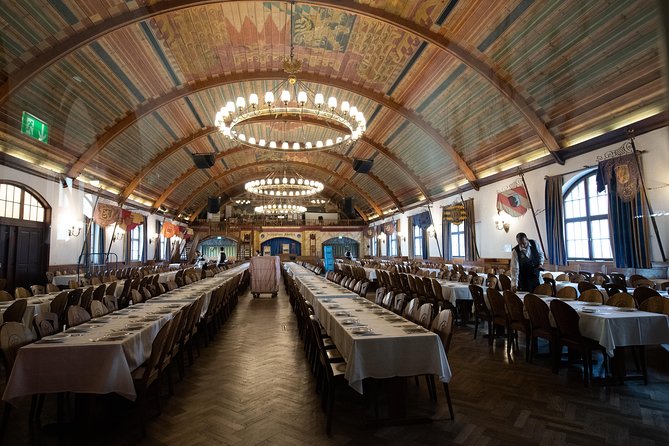
Next comes Odeonsplatz, another key site tied to how the Nazi Party used public space. This is where you start seeing the pattern: rallies weren’t random. They were planned. They were staged. They were meant to look permanent, strong, and organized.
The value here is interpretive. Instead of only pointing out buildings, the guide focuses on why certain ceremonies mattered and how they helped turn political ideas into public reality. If you’ve ever wondered how propaganda becomes normal life, this section is often the clearest answer.
Also, guides tend to keep questions welcome here—Michael and others are praised for answering openly and honestly, even when the topic gets uncomfortable. That’s important, because this is one of those histories where you’ll likely have questions.
A beer hall stop that’s about power, not just beer
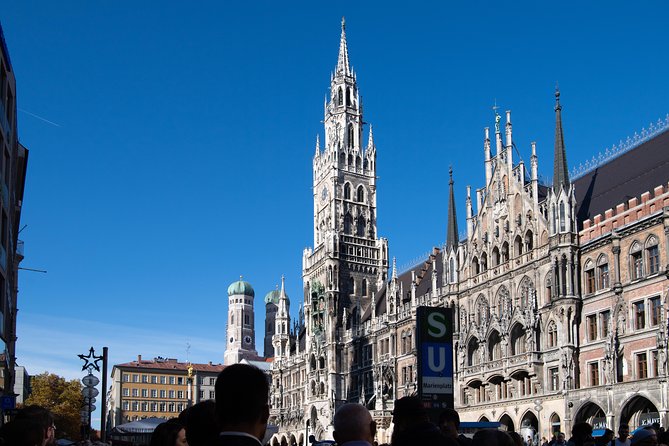
You’ll also stop at Staatliches Hofbräuhaus. Yes, it’s famous for beer and visitors. But on this tour, it’s treated as a historical structure tied to political gathering and influence.
That shift in framing is the whole point. Hofbräuhaus isn’t presented as a postcard. It’s used to explain how political movements find social spaces, recruit people, and turn everyday culture into a platform for ideology.
If you’re expecting only dark-and-dramatic speeches, you’ll get something more useful: the mechanisms. The guide helps you connect social life and politics, and you start to understand why hate-filled ideas can spread through ordinary routines.
Practical note: Hofbräuhaus is a popular area. If you want quiet photos or a slower moment, that’s easiest earlier in the stop.
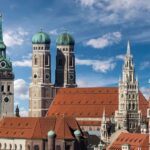
Old Town Hall: the story behind official power
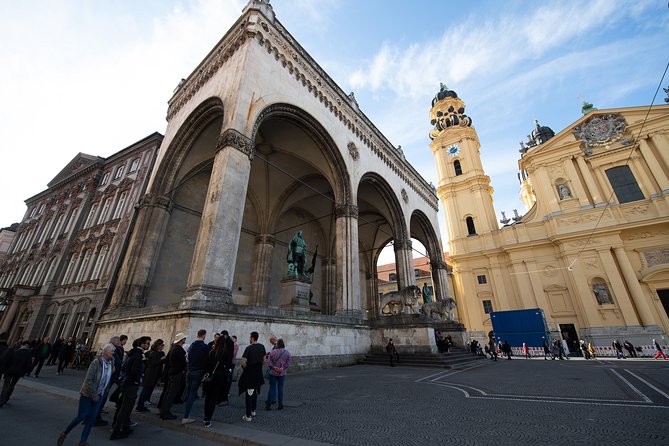
The tour continues to the Old Town Hall, another stop that reinforces the theme of power becoming official. Even without going deep into one building’s details, a town hall location makes the lesson sharper: governments don’t just react to movements. They can also legitimize them.
This is where the tour’s pacing matters. You’ll likely spend enough time to connect what you’re seeing with the previous stops, without being forced to memorize everything at once. Many guides are praised for keeping the walk organized and well-paced, which makes a heavy subject feel easier to handle.
If you’re sensitive to tone, it helps to know that guides often aim for a balance: factual, respectful, and not sensational. Some guides are noted as using light humor at the right moments, which can keep the experience human without changing its seriousness.
Marienplatz finish: you’re back in the heart of Munich
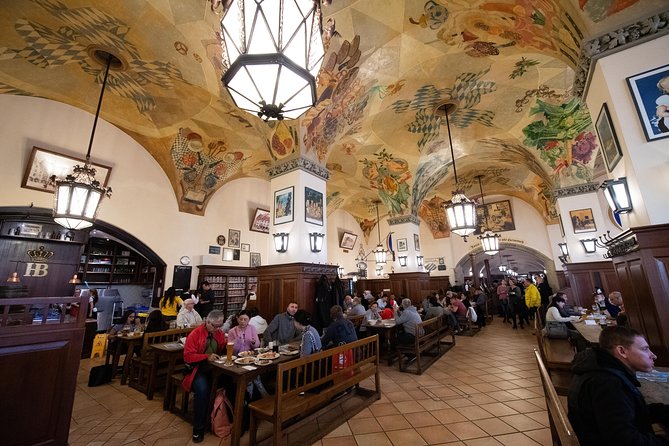
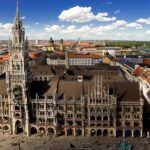
The walk ends at Marienplatz. That’s a smart choice, because it drops you back in Munich’s center where you can immediately continue with normal sightseeing—cathedral views, shops, cafes, and the general city rhythm.
Finishing here also gives you a quiet kind of reset. You’ve walked through a dark timeline tied to specific sites, and then you’re placed back where the city’s everyday life goes on. That contrast helps the message stick.
If you want to keep the theme going, you can use the rest of your day to compare what “public space” looks like now versus then—how people gather, how messages are displayed, and what kinds of leaders are celebrated.
What the guides do well (and why it shows)
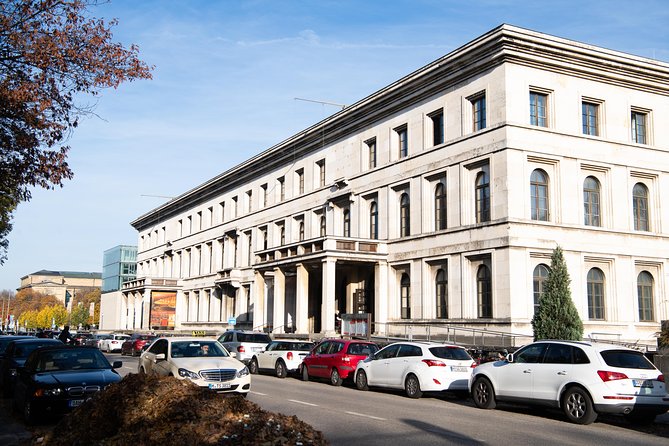
A big reason this tour earns a very high rating is guide quality. You’ll hear names across different groups—Nik, Aileen, Michael, Jake, Nicola, Paul, Scott, Steve, Alex, and Michelle come up in the feedback—and they share similar strengths.
Here are the patterns I’d look for:
- They explain the why, not just the what. The aim is to connect the Nazi Party’s rise to political and social factors, not only to individual villains.
- They keep things readable. Several people mention photos or visuals used to connect the story to what you’re seeing on the street.
- They make space for questions. Guides like Michael are specifically praised for answering openly, even on uncomfortable points.
- They respect pacing. You may get a short break when needed, with the group polled partway through—useful if you need a bathroom or coffee reset.
Is the price worth $45.95 for 2.5 hours?
At $45.95 per person for about 2 hours 30 minutes, this tour isn’t a bargain, and it also isn’t trying to compete with low-cost free-walk options. The value comes from the guide doing the hard work of interpretation.
You’re paying for:
- Focused storytelling tied to specific sites in central Munich
- English-speaking delivery
- A small-group experience (maximum 25)
- Time-efficient context you’d struggle to build on your own while walking
If your plan includes just a day or two in Munich, it’s a solid way to gain structured understanding quickly. It’s also a good fit if you want to add meaning to the city’s landmarks beyond what’s on standard plaques.
One note: because the subject is intense and the tour is outdoors, it helps to go into it with the right mindset. The best value comes when you’re ready to listen and take in a lot at once.
Where this tour fits best in your Munich trip
This is a strong choice if you:
- Like history, especially the connection between politics and everyday public life
- Want to see central Munich sights with a purpose
- Prefer guided context over self-guided reading
- Plan to do more than one activity that day and want a clear start-to-finish route
It may be less ideal if you:
- Hate long outdoor walks
- Want a very light, casual sightseeing experience
- Get overwhelmed by emotionally heavy topics in a short time
A smart strategy: schedule it earlier in your trip, so the rest of your Munich plans make more sense after you understand the background.
Practical tips for a smoother walk
- Dress for the weather. The tour depends on good conditions, and you’ll be outside for the full length.
- Wear comfortable shoes. It’s a walking tour with multiple stops.
- Bring a curious question. If something doesn’t make sense, ask. Guides are praised for being open with answers.
- Use the visual aids if your guide offers them. They’re meant to help you connect story points to the street-level view.
Should you book the Third Reich Walking Tour Munich?
Book it if you want a guided, city-based way to understand how Nazi ideology gained traction in Munich—using real locations like Königsplatz, Odeonsplatz, and a political-linked beer hall setting—and you appreciate respectful memorial time, not just landmark photos.
Skip it if you’re looking for a relaxed stroll with minimal emotional weight, or if you’re not up for a longer outdoor walk.
FAQ
How long is the Third Reich Walking Tour Munich?
It runs for about 2 hours 30 minutes.
What language is the tour offered in?
The tour is offered in English.
Where do you meet, and where does the tour end?
You start at Radius Tours, Dachauer Str. 4, 80335 München, Germany, and the tour ends at Marienplatz in Munich.
Is there a mobile ticket?
Yes, the tour includes a mobile ticket.
Is this a small group tour?
Yes. The maximum group size is 25 travelers.
What kind of weather does the tour require?
The experience requires good weather. If it’s canceled due to poor weather, you’ll be offered a different date or a full refund.
Can I get a full refund if I cancel?
You can cancel for a full refund up to 24 hours in advance. If you cancel within 24 hours, the amount you paid is not refunded.