REVIEW · HONG KONG SAR
Dark Side of Hong Kong – Kowloon Caged Homes Walking Tour
Book on Viator →Operated by Hong Kong Free Tours · Bookable on Viator
Hong Kong has a floor plan you can’t unsee. This Kowloon walking tour turns the city’s skyline talk into real size comparisons and hard policy context, all guided by a local who keeps it factual. I love how the stops translate the math of the housing crisis into scenes you can understand in minutes, especially the 500 sq ft apartment split into five 100 sq ft units. I also love stepping into the tiny 100 sq ft subdivided flat concept and seeing the caged-home design described for single residents. One consideration: you are not always shown an occupied, lived-in unit, and at least one stop can feel more like a display than someone’s daily home life.
You’ll start near Prince Edward and finish in Sham Shui Po after about 2 hours on foot with up to 30 people. It’s meant for people with moderate stamina and a willingness to face uncomfortable realities, not for a casual sightseeing wander. On a hot day, plan for pavement time, but the schedule includes short indoor moments where you can cool down and reset.
In This Review
- Key things you’ll notice on this Kowloon housing tour
- Why Dark Side of Hong Kong hits harder than typical sightseeing
- Getting your bearings: Prince Edward to Sham Shui Po on foot
- Cedar Street: the scale shock of subdivision and “500 sq ft” reality
- Ki Lung Street and Lui Seng Chun: the “perfect storm” behind the housing crisis
- Inside the 100 sq ft flat concept: what you will and won’t see
- Markets, backstreets, and the wealth contrast near Hai Tan Street
- Rooftops and SoCo: seeing Sham Shui Po beyond the street level
- Value at $32.82: what you’re really paying for in two hours
- Who should book, and who should think twice
- Practical photo and question tips (so you get more than snapshots)
- Should you book this tour?
- FAQ
- Where does the tour start and end?
- What time does the tour begin?
- How long is the tour?
- How much does it cost?
- Is hotel pickup or drop-off included?
- Does the tour require good weather?
- How many people are in a group?
- Do I need to bring a paper ticket?
- Are service animals allowed?
- Can I cancel for a full refund?
Key things you’ll notice on this Kowloon housing tour
- 500 sq ft becomes five units: you’ll hear the exact subdivision math tied to real streets in Kowloon.
- A 100 sq ft flat you can picture: the tour uses scale, layout, and function to explain cramped living.
- Policy causes, not just poverty: land limits, post-war population growth, and low-tax capitalism get connected to outcomes.
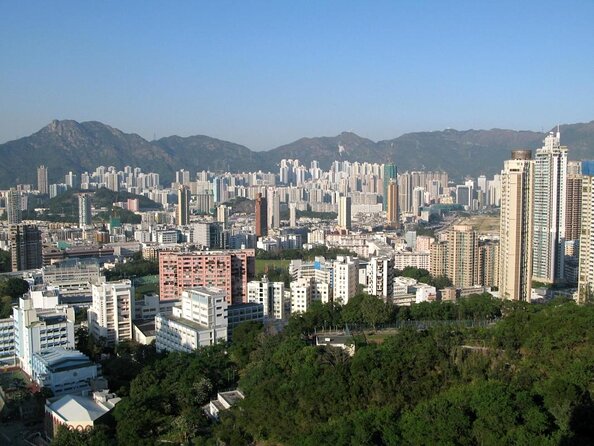
- Wealth contrast in the same neighborhood: you’ll see how new USD$ 1.5 million apartments can stand beside dense clusters of subdivided units.
- Sham Shui Po streets with conversation: markets, backstreets, and guided discussion bring the city’s social pressures into focus.
- A solutions stop with real NGO footing: you visit SoCo, a charity with 50 years of history advocating for marginalized people.
Why Dark Side of Hong Kong hits harder than typical sightseeing
This is the kind of tour that changes how you read Hong Kong. From the outside, it’s easy to treat housing as a backdrop—something you notice only when the numbers are mentioned in a news headline. On this walk, housing becomes the story. The guide connects what you see on streets—signs of subdivision, density, and older housing stock—to the larger forces that shaped them.
I like that it’s not sold as misery porn. The tone is direct, sometimes heavy, but still organized around explanation: why it happened, how people survive inside it, and what the city is doing (or not doing) in response. If you came for postcard views, you may feel like you’re breaking the rules of “normal” travel.
Still, there’s a practical value here. Once you understand how a 500 sq ft apartment can become five 100 sq ft units—and how even smaller setups like caged homes can exist—the rest of your Hong Kong trip stops being abstract. You’ll spot patterns faster, ask better questions on your own, and you’ll be less likely to accept surface-level answers.
Getting your bearings: Prince Edward to Sham Shui Po on foot
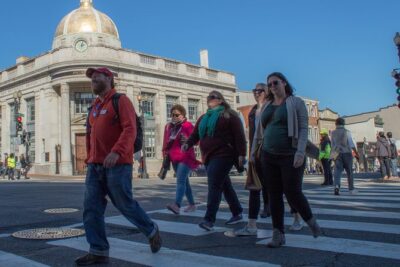
The tour runs from Nathan Rd, Prince Edward and ends around Sham Shui Po MTR Station. It’s scheduled for 11:00 am and runs about 2 hours. There’s no hotel pickup or drop-off, so you’ll want to arrive on time at the meeting spot and use public transport if you’re coming from anywhere else in Kowloon or Hong Kong Island.
The group size is capped at 30 travelers, which matters more than it sounds. Smaller groups usually mean you can hear the guide clearly and ask questions when something feels confusing or emotionally loaded.
One more practical point: the tour fits people with moderate physical fitness. That doesn’t mean hardcore hiking, but you should expect real walking and street crossings over the full 2 hours. If you have mobility limits, plan ahead and consider whether you can handle steady time on foot in Kowloon’s street grid.
Cedar Street: the scale shock of subdivision and “500 sq ft” reality
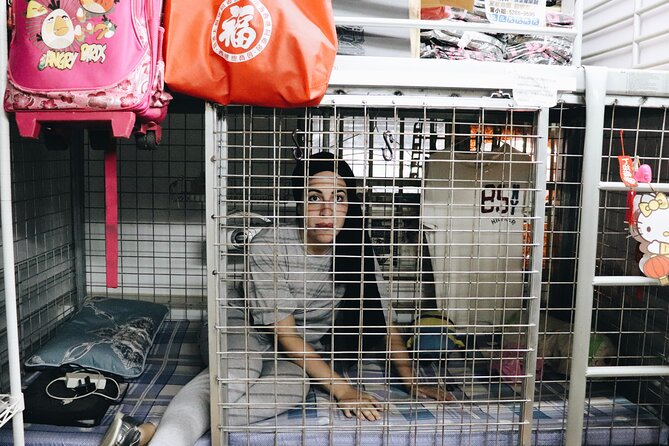
Cedar Street is where the tour’s biggest mental adjustment starts. The guide points you to the logic behind Hong Kong’s reputation as one of the world’s most difficult places to afford housing—then gets very specific about how apartments get split.
Here’s the core idea you’ll carry through the rest of the walk: a typical 500 sq ft apartment is described as being subdivided into five 100 sq ft units. That isn’t just trivia. It’s a visual framework. When you hear this, you’ll start imagining what fits in each unit and what doesn’t—where daily routines go when square footage is chopped up.
Then the tour adds another layer by revisiting Cedar Street later to show the concept in space. The stop is designed to help you understand a 100 sq ft subdivided flat, including the idea that the kitchen, bed, and living area may all exist within that minimal footprint for a minimum-wage household.
If you’re the kind of traveler who needs to see layout to understand a story, Cedar Street is the most satisfying start. You’ll likely leave with a much clearer mental picture than you had when you arrived.
Ki Lung Street and Lui Seng Chun: the “perfect storm” behind the housing crisis
After Cedar Street sets the scale, the tour shifts into causes. On Ki Lung Street, you’ll hear how post-war population growth, a low-tax capitalistic economic model, and scarce land supply formed a perfect storm. That’s the key: this isn’t framed as a single villain or a simple shortage. It’s framed as a system where demand and limited land collide with market incentives.
A lot of housing talk stays vague—too political to be useful, too general to be memorable. Here, the guide’s approach helps you connect dots. If you understand that land is limited and population pressure grew quickly, then housing subdivision starts to make grim sense, even if you never agree with the result.
Then at Lui Seng Chun, the tour pivots from theory to lived experience. The stop is designed around the guide’s firsthand account of navigating housing in a property market described as among the toughest in the world. This is where the story gets less like economics homework and more like human decision-making: how people find options, how they weigh risk, and how constraints narrow choices.
Inside the 100 sq ft flat concept: what you will and won’t see
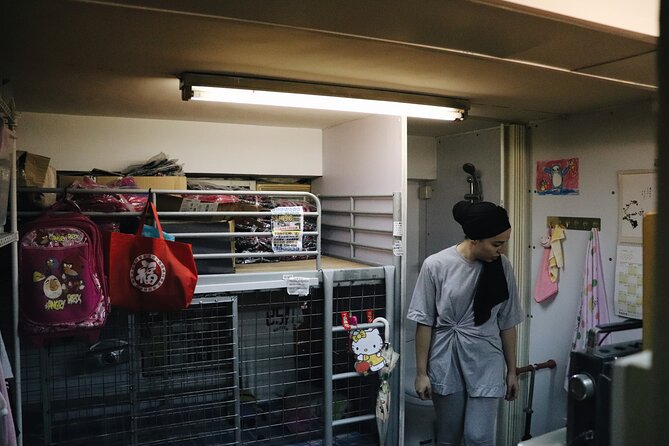
This tour includes a moment where you step inside a 100 sq ft subdivided flat concept and see a caged home designed for a single resident. That’s the headline promise, and it’s also the moment where your empathy can shift from abstract to physical.
One important consideration: you may not be shown a fully lived-in, occupied home setup. At least one participant reported that the subdivided flat they visited felt staged rather than a truly active unit. I’d go into this expecting a guided model of real conditions, not a documentary visit into someone’s private daily life.
So how do you get value from a staged display? Ask yourself what it teaches you:
- How does the layout compress living functions into one space?
- What feels hard to do—sleep, privacy, cooking, or just moving around?
- What gets cut first when square footage shrinks?
If you keep your focus on function and scale, you’ll still come away with a strong understanding of what “tiny” means in practice.
Also, based on the tour experience described, you can expect the guide to bring in housing context around what you’re seeing—so don’t treat the indoor stops as just photos. Treat them as points in an argument.
Markets, backstreets, and the wealth contrast near Hai Tan Street
As the walk heads deeper into Kowloon’s neighborhood texture, you’ll spend time around traditional market areas and lower-income streets. This part matters because it replaces stereotype with specificity.
At Yee Kuk Street, the guide discusses the hidden underworld in Sham Shui Po backstreets, including illicit ties between the drug and sex trades. This is not a tour for casual shock seeking. It’s presented as part of how social vulnerability and exploitation can cluster in high-pressure environments. Keep your expectations aligned: you’re learning the city’s pressures, not watching scandal.
Then comes Hai Tan Street, where the tour asks you to look at contrast directly. You’ll see new apartments priced around USD$ 1.5 million positioned near dense clusters of subdivided units and caged homes. That side-by-side placement is one of the tour’s strongest teaching tools. It shows the housing system doesn’t only create scarcity—it creates sharp separation in what people can access, even in the same urban area.
This is also where you might notice how the tour paces. Some stops include a neighborhood tea moment, which can feel either like a helpful break or like extra time depending on your style. Either way, it’s typically there to keep you connected to street life rather than bouncing only between major facts.
Rooftops and SoCo: seeing Sham Shui Po beyond the street level
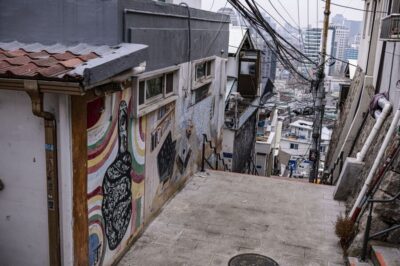
One of the most memorable ideas on this tour is taking you upward. At Pei Ho Street, you’ll ascend to a rooftop in central Sham Shui Po to explore hidden slums and see a Hong Kong that doesn’t show up in most travel photos.
Rooftops are a huge deal here because you get a different map of the city. At street level, it’s easy to assume everything is fixed and orderly. Up top, you can see how density and makeshift building appear—and how people carve out space when options are limited.
The final tone shift comes at Kweilin Street with a visit to SoCo, a charity with 50 years of history advocating for the marginalized. Instead of ending with only symptoms, the guide discusses solutions for Hong Kong’s future. That doesn’t erase the hardship you’ve been shown. It simply gives you somewhere to point your questions after the tour ends.
Value at $32.82: what you’re really paying for in two hours
At $32.82 per person for about 2 hours, this isn’t about buying a bundle of attractions. It’s buying explanation, context, and a route that takes you through real streets linked to housing pressure.
Here’s why I think it’s good value if you want to understand Hong Kong:
- The tour is structured around major concepts: subdivision math, policy causes, firsthand navigating, and wealth contrast.
- You’ll get a local guide and multiple stop types: street viewing, indoor scale viewing, and rooftop perspective.
- The group size is capped at 30, which supports a more controlled experience than the usual “herded group” tour.
The price can feel high if you expect a purely visual sightseeing tour with lots of quick entertainment. But if you want to translate what you see in Hong Kong into something you actually understand—then the cost makes more sense fast.
Who should book, and who should think twice
This is a smart match if you:
- Want a housing crisis walking tour that explains causes, not just conditions.
- Like asking questions and getting straight answers from the guide.
- Enjoy street-level learning and can handle emotionally heavy topics without needing a cheerful tone.
It’s a weaker match if you:
- Want only pretty scenes and iconic landmarks.
- Need an itinerary that focuses on shopping, nightlife, or easy photo moments.
- Expect to visit truly occupied cage homes as a kind of access experience. Even when the tour includes indoor flat concepts, you should assume it’s still controlled and educational—not a private household tour.
One more practical comfort tip: it’s built for a moderate pace, and some indoor stops are described as air-conditioned, which can help on hot days. Still, wear comfortable shoes. Your feet will do more than you think.
Practical photo and question tips (so you get more than snapshots)
If you like photography, this tour can be surprisingly rewarding. You’ll pass through street corners and rooftops that most visitors never walk to. Just remember: you’re photographing context and scale, not people as subjects.
A few questions worth having ready for your guide:
- How does the guide explain the shift from post-war growth to today’s housing outcomes?
- What role does land scarcity play compared with market pricing?
- When you step into the 100 sq ft flat concept, what function is most constrained first?
Also, be ready for fact-focused answers. Many participants highlight how smoothly guides handle questions, including guides such as Alice, Isaac, Grace Wu, Wind, Summer, and Simeone Lo. You don’t have to ask heavy questions to benefit. Simple clarifications can turn confusion into real understanding.
Should you book this tour?
Book it if you want Hong Kong explained through housing, space, and inequality—and you’re okay with a tour that’s serious and sometimes heart-wrenching. The combination of street context, scale-based indoor viewing, and rooftop perspective makes it more than a history lecture.
Pass or choose another option if you only want light sightseeing or if you’re expecting the tour to feel like an actual occupied home visit. The experience is designed around education and controlled viewing of concepts, not private access.
If you go in with curiosity—and a willingness to look at the city as it really functions—you’ll likely feel like you understand Hong Kong in a new, lasting way.
FAQ
Where does the tour start and end?
It starts near Nathan Rd, Prince Edward, Hong Kong and ends in Sham Shui Po, near Sham Shui Po MTR Station.
What time does the tour begin?
The listed start time is 11:00 am.
How long is the tour?
The duration is about 2 hours.
How much does it cost?
The price is $32.82 per person.
Is hotel pickup or drop-off included?
No. Hotel pickup and drop-off are not included.
Does the tour require good weather?
Yes. The experience requires good weather. If it’s canceled due to poor weather, you’ll be offered a different date or a full refund.
How many people are in a group?
The tour has a maximum of 30 travelers.
Do I need to bring a paper ticket?
No. A mobile ticket is provided.
Are service animals allowed?
Yes, service animals are allowed.
Can I cancel for a full refund?
You can cancel up to 24 hours in advance of the experience for a full refund.