REVIEW · MUNICH
Munich Old Town – Guided Walking Tour in English
Book on GetYourGuide →Operated by Walkative Tours · Bookable on GetYourGuide
Munich’s Old Town tells two stories. In 150 minutes, I love how this walk ties together Bavarian pride and the hard history that began here, while still keeping the pace friendly and the sights practical. You’ll cover the big-name places like Marienplatz and Hofbräuhaus, then hear why beer, power, and politics became so tangled in Munich.
What I like most is the way the guide builds a clear timeline—from Roman roots to the Wittelsbachs, then to 19th-century unification—without turning the walk into a lecture. I also like that you get context you can actually use once you’re eating, walking, and choosing what to see next, with guide styles that can be funny and human (I’ve seen Alex praised for a patient, fun approach, and Jean for storytelling and a light touch). One drawback to consider: the tour includes Nazi-era history, and if you’re hoping for a strictly festive “beer only” Munich intro, you might want to mentally prep for that heavier side.
In This Review
- Key Highlights You’ll Actually Feel on the Walk
- Starting at St. Peter, with a Yellow Umbrella in Hand
- Marienplatz: The Square Where Munich Performs Itself
- Hofbräuhaus: Beer Culture with Real Historical Roots
- Odeonsplatz and the Opera Block: Power in Plain Sight
- Max Joseph Platz and the Bavarian Kings’ Residences
- Munich’s Light and Dark Pages: From Beer Hall Putsch to Benedict XVI
- The Carillon Show: Worth a Look, Even If It’s a Letdown
- Winter Timing and Photo Strategy for a 150-Minute Walk
- Price and Value: What $29 Buys You in Munich Time
- Who This Walk Is For (and Who Might Want Another Option)
- Should You Book This Munich Old Town Guided Tour?
- FAQ
- FAQ
- Where do we meet for the tour?
- How long is the Munich Old Town guided walking tour?
- Is the tour offered in English?
- How much does the tour cost?
- Is hotel pickup and drop-off included?
- What sites will we see during the walk?
- Is there any extra payment required on the day of the tour?
Key Highlights You’ll Actually Feel on the Walk
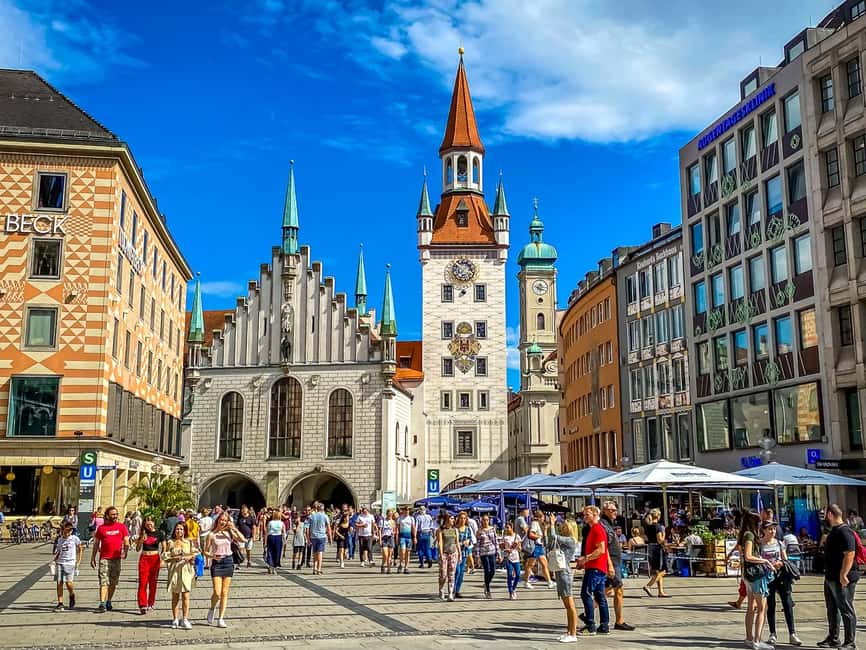
- Marienplatz in the center of it all: The New and Old Town Halls give you quick orientation in Munich’s heart.
- Hofbräuhaus and Bavaria’s beer culture: You’ll connect today’s traditions to how beer became identity here.
- Royal seats at Max Joseph Platz: You’ll walk where Bavarian emperors and kings lived—less postcard, more context.
- Odeonsplatz and the theater block energy: Big institutions, big streets, and a sense of how Munich projected power.
- Light and dark German history together: Expect both the pride and the difficult chapters, handled with sensitivity.
- A carillon show you may find underwhelming: The knightly figure fight is included, even if it’s not everyone’s favorite moment.
Starting at St. Peter, with a Yellow Umbrella in Hand
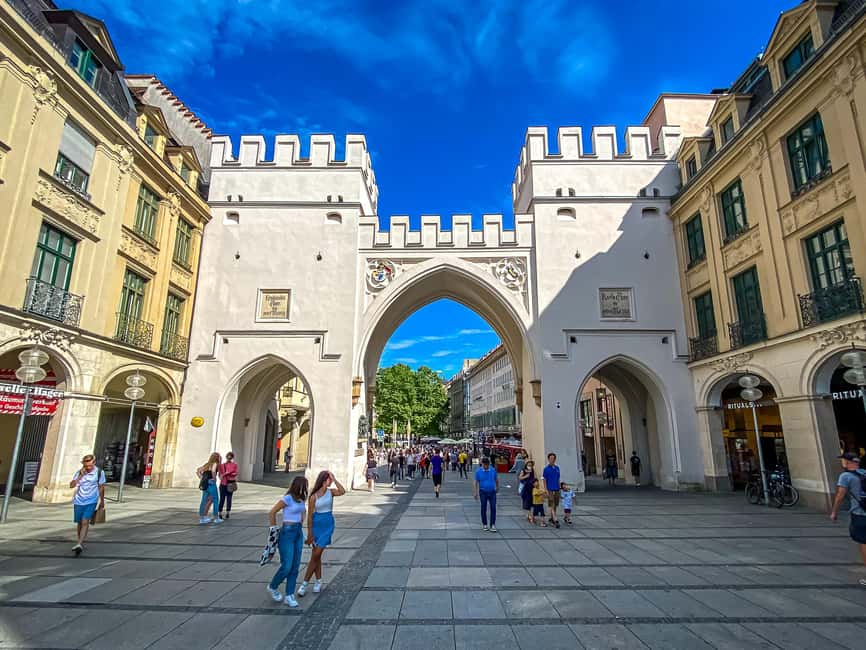
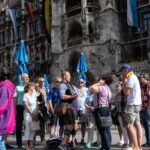
You meet at the main gate of St. Peter Church, and the guide holds a Walkative umbrella that’s easy to spot—yellow, so you shouldn’t have to play guess-the-leader. This start matters because St. Peter sits close to where most first-time orientation walks begin. You’ll quickly feel anchored in the Old Town layout instead of wandering around with a map that keeps lying to you.
The tour is live and in English (also offered in German), and it runs 150 minutes. I like this length for Munich because you get enough time to understand the city’s “why,” not just “where.” It’s also long enough to cover key squares and buildings without rushing the group into one photo stop after another.
You can also read our reviews of more walking tours in Munich

Marienplatz: The Square Where Munich Performs Itself
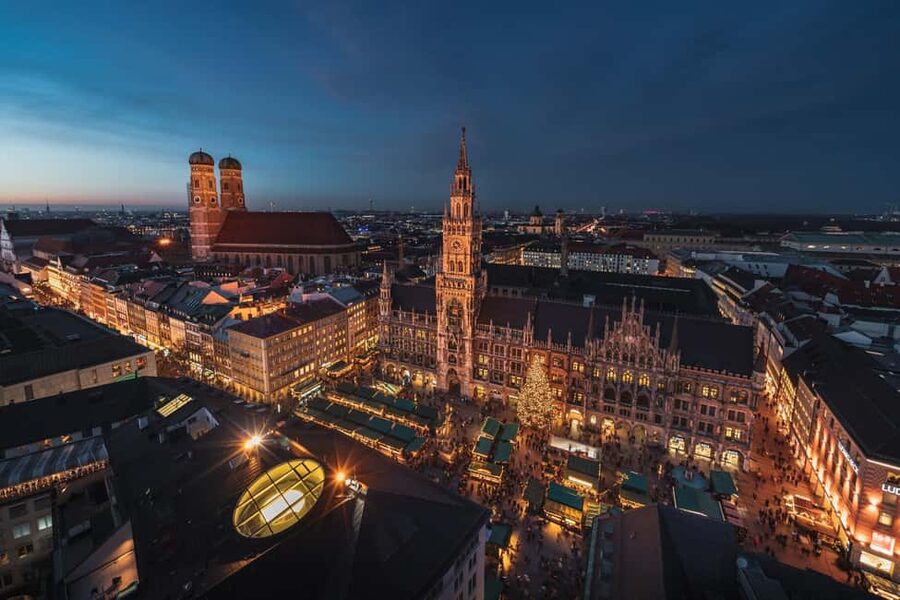
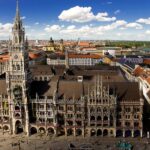
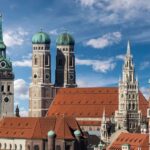
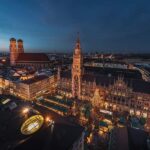
The walk’s centerpiece is Marienplatz, the main square that basically teaches you Munich’s rhythm in one stop. You’ll see the New and Old Town Hall—two buildings that help explain how this city organized civic life and displayed authority.
Why this square is worth your attention: Marienplatz is where your future decisions get easier. Once you’ve stood here, you can look at the Old Town streets and feel how they funnel toward the center. It’s the kind of place that makes you stop moving for a second, scan, then suddenly know which direction everything is.
Also, this is where the “Bavaria vibe” shows up visually. Even if you’re not into architecture nerd stuff, the town halls give you a sense of civic confidence—how Munich liked to look important and permanent.
Hofbräuhaus: Beer Culture with Real Historical Roots
Next comes Hofbräuhaus, and this stop is why I think the tour earns its value. The guide doesn’t treat beer like a costume. You’ll learn how Bavaria’s beer culture developed, and you’ll connect the modern image—big mugs, big atmosphere—to the older story behind it.
The key benefit here is meaning. If you only visit Hofbräuhaus as a tourist attraction, you might leave with a selfie and a beer. If you understand the background, you start noticing how Munich uses food and drink as part of its identity—practical, social, and proudly local.
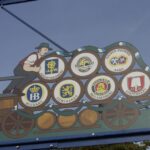
You’ll also hear entertaining city details along the way. One guide style that comes up in this tour’s past groups: Alex is often praised for weaving in stories that make the place feel personal, like the famous figure tied to Hofbräuhaus that helps explain why certain characters show up across Munich’s public life. That kind of detail is what turns a brewery visit into a lived-in experience.
Odeonsplatz and the Opera Block: Power in Plain Sight
From there, the tour moves toward Odeonsplatz and the National Theater and State Opera area. This part of Munich feels more monumental, more ceremonial. Even without getting lost in names and dates, you can read the city’s message: this is where culture and authority meet.
Why I think this works on a walking tour: after learning about beer and civic life, you start to notice a second Munich theme—institutions. Munich doesn’t just celebrate. It builds. It sponsors. It places art and performance in stone and status.
If you’re the kind of person who wants your sightseeing to connect to the bigger “how did this city get like this?” question, this section helps. It’s the bridge between everyday traditions and the grand public face of power.
Max Joseph Platz and the Bavarian Kings’ Residences
Then you’ll reach Max Joseph Platz and the residences of the Bavarian kings. This is where Munich shifts from squares and stages into lived history: where rulers spent time, where influence was housed, and where court life became the backdrop for the city’s long identity.
This stop is special because it adds a layer most first-time visitors miss. Munich’s story isn’t only about streets—it’s also about who controlled the space and how that shaped everything around it. The tour places the Wittelsbachs front and center as the powerful family that ruled for about 700 years, giving you an idea of continuity rather than random eras.
It’s also a useful mental anchor for later. After you’ve seen the royal context, you’ll understand why so many Bavarian symbols feel tied to tradition, ceremony, and loyalty to place.
You can also read our reviews of more guided tours in Munich
Munich’s Light and Dark Pages: From Beer Hall Putsch to Benedict XVI
This walk doesn’t shy away from the uncomfortable parts. It includes Munich’s role in the Beer Hall Putsch of 1923, including the fact that Adolf Hitler attempted to seize power by force here, ended up behind bars, and later wrote Mein Kampf. The tour also covers the birth of the NSDAP in Munich and how that ideology spread, leading into World War II.
Then the guide pulls the story forward and sideways. You’ll also hear about Joseph Ratzinger—later Pope Benedict XVI—and his work in the city while he was still an archbishop. That contrast is not meant to trivialize anything. It’s meant to show how one city can hold different layers of meaning, depending on who was in power and what they believed.
One practical consideration: because one major theme is the Nazi-era story, you’ll want to decide how much weight you want on that front. A past participant even wished the focus were less war-related, which tells me the tour can feel heavy if you came mainly for the festive postcard version of Munich. That said, the tone is described as sensitive and careful, with guides praised for handling complex events without turning them into spectacle.
The Carillon Show: Worth a Look, Even If It’s a Letdown
The tour also includes perhaps the most disappointing attraction mentioned for the city: a knightly figure fight in the carillon. I’d treat this as a quick “experience it once” moment rather than a must-see centerpiece.
Why include it anyway? Because it’s part of how Munich performs local tradition in public space. Even if you find it underwhelming, it’s a reminder that Old Town history isn’t only museums and palaces. It’s also small mechanical theater and the everyday rhythms of city life.
Winter Timing and Photo Strategy for a 150-Minute Walk
Snow-covered Alps and winter vibes are part of the Bavaria imagination the tour leans into, so in cold weather, you’ll want to dress for quick exposure. Plan to spend your energy on visibility and warmth, not on stopping for long breaks. For photo timing, focus on squares and building facades—those are the easy wins—rather than trying to frame every street corner in one go.
This tour works best when you keep your expectations aligned with its pace. You’re moving through a concentrated slice of Old Town in a short window, so you’ll get a high-value overview. If you want slow wandering and deep museum time, you’ll do that after the tour, using the orientation you earned.
Price and Value: What $29 Buys You in Munich Time
At $29 per person, this is a fairly straightforward “spend a little, save a lot of confusion” deal. Here’s why the value can be strong:
- You’re getting a structured, narrative guide (not just a checklist of stops).
- You hit the core Old Town anchors: Marienplatz, Hofbräuhaus, Odeonsplatz, Max Joseph Platz, plus more.
- The guide adds context that helps you understand what you’re seeing while you’re still there—so your later choices feel sharper.
One extra twist that affects value: the tour joins a general pay-as-you-wish walking tour setup, where the amount you pay covers a reservation fee and the guide’s payment in advance. If you want a smaller private tour, you can contact the supplier ahead of booking to arrange it.
That structure makes it easier to commit without stress. You can book early, then decide your personal contribution and trip rhythm without feeling stuck. It’s also why the “I only have a morning/afternoon” traveler tends to like this format.
Who This Walk Is For (and Who Might Want Another Option)
This is a great fit if you want:
- A fast Old Town orientation you can build on immediately.
- A balance of Bavarian identity (especially beer culture) and the bigger historical timeline.
- A guide who can keep stories moving, with humor and clear pacing. Past groups have specifically praised guides like Jean, Patrick, and Noel/Noel Byrnes for engaging storytelling and the ability to handle tough topics thoughtfully. Others like Karl have been called accommodating with questions, which matters in real life when you’re trying to understand what you’re looking at.
You might hesitate if:
- You’re looking for a purely festive introduction and would rather avoid heavy 20th-century history during your first day.
- You want lots of inside time (this is a walking tour built around public spaces and major sights).
Should You Book This Munich Old Town Guided Tour?
If it fits your schedule, I’d book it—especially for a first visit. The combination of Marienplatz + Hofbräuhaus + royal residences gives you the anchors, and the added historical framing makes those anchors mean something. You’ll walk away with a mental map and a sense of Munich’s contradictions: pride and pain living in the same streets.
Just go in with the right mindset. This isn’t only lederhosen-and-lemonade Munich. It’s Bavaria with layers, including the dark chapters that started here. If you can handle that mix, this is a strong use of 150 minutes.
FAQ
FAQ
Where do we meet for the tour?
You meet at the main gate of St. Peter Church, and the guide will be waiting with the yellow umbrella of Walkative.
How long is the Munich Old Town guided walking tour?
The tour lasts 150 minutes.
Is the tour offered in English?
Yes. The live guide provides the tour in English (and also in German).
How much does the tour cost?
The price is $29 per person.
Is hotel pickup and drop-off included?
No. Hotel pickup and drop-off are not included.
What sites will we see during the walk?
You’ll see major highlights such as Marienplatz (New and Old Town Hall), Hofbräuhaus, Odeonsplatz, National Theater and State Opera, and Max Joseph Platz plus the residences of Bavarian kings.
Is there any extra payment required on the day of the tour?
The tour joins a general pay-as-you-wish format. The amount you pay covers the reservation fee and the guide’s payment in advance, and if you join this format, no more payment is required on the spot.