REVIEW · BRUGES
Bruges: Nightly Tales and Untold History Walking Tour
Book on GetYourGuide →Operated by Ambassadors Tours & Activities · Bookable on GetYourGuide
Bruges turns quieter after dark. This 2-hour evening walk by Ambassadors Tours uses small-group storytelling to bring the city alive, from the area tied to the world’s first stock exchange to side streets, views, and ghost tales that stay fun, not scary.
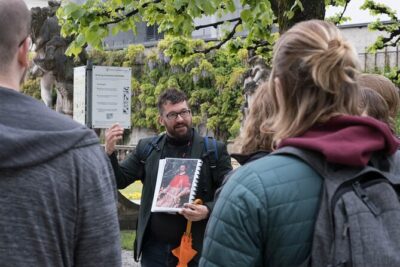
I especially like how the guides bring the buildings into the story. Names like Pascal, Arthur, Andy, Alastair, and Sophie pop up in recent tour experiences, and the common thread is how they make architecture and local lore feel like something you can actually picture.
One possible drawback: you’ll move through popular squares and streets, so on a crowded evening some people may struggle to hear the guide over noise and traffic. Also, if you want a heavy, full-on ghost tour, this one keeps the supernatural as a side dish, not the main course.
In This Review
- Key highlights to look for
- Bruges at night: why this walk feels different
- Finding your guide under the yellow umbrella
- Markt and the world’s first stock exchange context
- Burg Square and Sint-Jansplein: architecture you can actually read
- Beer culture stop: Bruges Beer Experience and the local “why”
- Choco-Story and Frietmuseum: food culture tied to place
- Huis Ter Beurze: the trading-era building that clicks
- Canal-side streets and the bridges: Potterierei, Augustijnenrei, Augustijnenbrug
- Gouden-Handrei and Cafe Vlissinghe: legends and hangout history
- Spiegelrei and Jan Van Eyck Square: finishing with a wider view
- Pace, group vibe, and hearing the guide in real life
- Price and value: is $51 for two hours fair?
- Who should book this Bruges night walk
- Should you book Bruges: Nightly Tales and Untold History?
- FAQ
- How long is the Bruges Nightly Tales and Untold History Walking Tour?
- Where do I meet the tour guide?
- Is the tour in English?
- Is this tour wheelchair accessible?
- How much does the tour cost?
- Is it a small-group tour?
- Does the tour include ghost stories?
- What kind of stops are included during the walk?
- What’s the walking time like?
- What are my options if plans change?
Key highlights to look for
- Meet by the Belfry Tower: find the storyteller under a yellow umbrella marked Ambassadors on the Market Square
- Two hours with a lively pace: walk enough to change how you see the city, without feeling stuck on your feet forever
- Trading history near Markt: you get context for the world’s first stock exchange, even if the square is busy by day
- Beer and chocolate stops: themed viewing moments that connect food culture to Bruges stories
- Canal-side legends and bridges: Augustijnenbrug and the nearby quays come with folklore you’ll remember
- Ghosts, but not just ghosts: you’ll hear eerie bits inside a history-and-folklore route
Bruges at night: why this walk feels different
Daytime Bruges can be loud in a good way. At night, the streets tighten up, the canals look darker and longer, and the city stops performing for day tourists.
That’s where this tour shines. It’s built around the moment when Bruges starts to feel like it’s holding secrets, then the guide uses stories to point out what you’d normally miss: the meaning behind a façade, the reason a square matters, and the kind of local myth that keeps getting repeated.
You get an alternative to the standard “hit the highlights and move on” approach. Instead, the walk guides you to quieter corners while still staying close enough to keep the whole thing doable in cool evening weather.
You can also read our reviews of more walking tours in Bruges

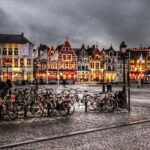
Finding your guide under the yellow umbrella
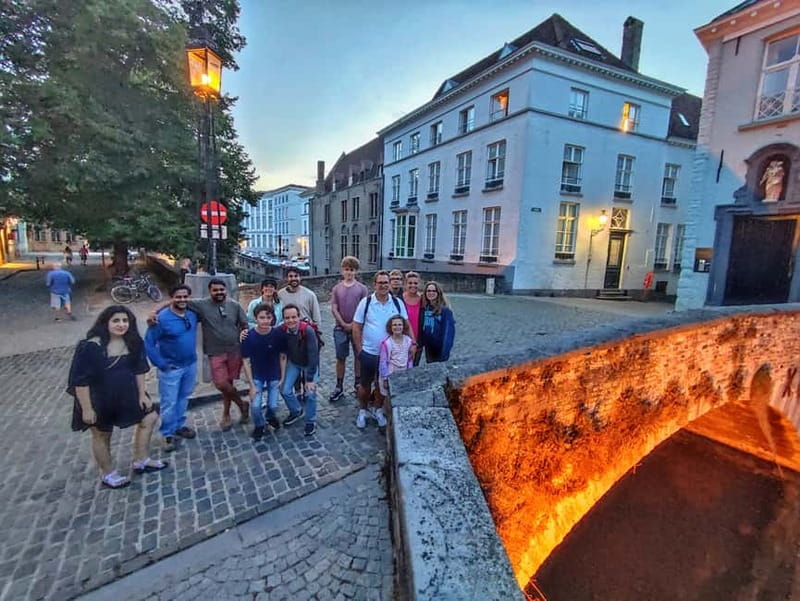
You meet in front of the Belfry Tower on the Market Square. The easiest way to spot your group is the yellow umbrella with Ambassadors on it, held by your local English-speaking storyteller.
This small detail matters more than it sounds. Bruges streets are twisty, and in winter or rain, a clear meeting point saves you from standing around guessing. People also mention the guides being helpful if they need to redirect you quickly.
From there, the tour doesn’t feel like a long lecture. It starts with the squares and the key landmarks, then shifts into side streets where the guide’s storytelling becomes the real “map.”
Markt and the world’s first stock exchange context
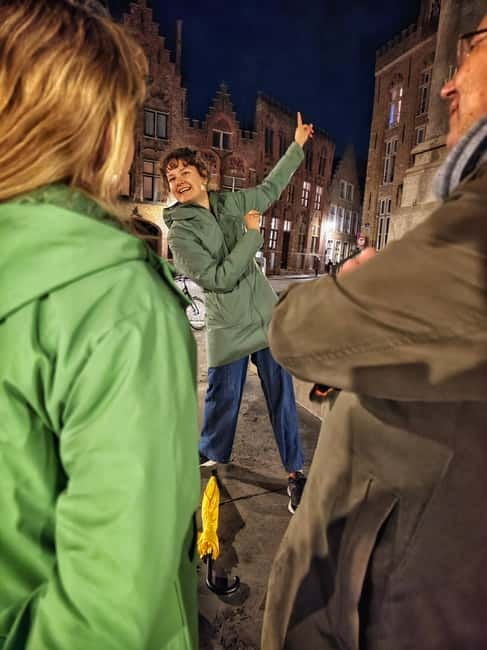
The walk begins at Markt, Bruges’s big central stage. By day, it can feel like everyone is rushing past the same buildings. By night, the same spaces let you see why this city mattered.
One thread the tour brings up early is how close this area is to the site associated with the world’s first stock exchange. Even if you don’t know the trade history, the guide connects the dots: who was trading, why Bruges rose so fast, and how that wealth shaped the look of the city you’re standing in.
If you’re a “show me why this building matters” kind of traveler, you’ll probably like this part a lot. It’s history used as a lens, not history used as a list.
Burg Square and Sint-Jansplein: architecture you can actually read
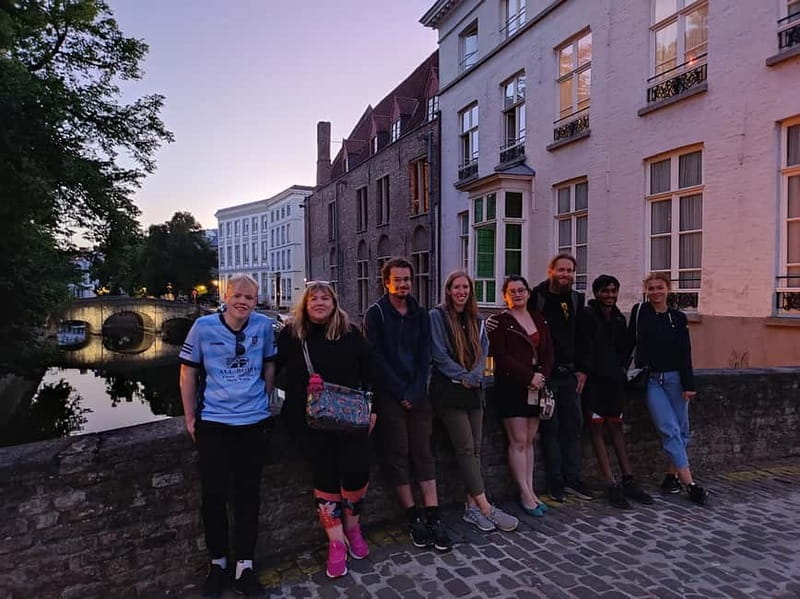
Next up are key squares like Burg Square, followed by Sint-Jansplein. The big win here is that the guide doesn’t only name places. They point out details so you start noticing patterns on your own: how buildings face the street, where power shows up in design, and what locals cared about when they rebuilt and expanded.
This is also a good moment for the guide’s humor. Different guides bring different energy, from witty and theatrical to gentle and calm. Either way, the pacing tends to keep the tour from feeling too serious even when the subject matter gets old.
Practical note: squares can be noisy. If the crowd thickens, you may need to angle your body slightly toward the guide so you don’t lose key lines.
Beer culture stop: Bruges Beer Experience and the local “why”
At one point you’ll make a stop connected to the Bruges beer scene. This isn’t marketed as a straight tasting or a pub crawl. It’s more about story and context—how beer fits into the city’s identity and how locals talked about it long before today’s tourism trends.
One helpful payoff from the tour style is that the guide often links the stories to practical next steps. For example, you might hear tips on where to try beer or which kinds are worth looking for. If you like doing your research once and then wandering confidently, that’s a real value.
Also, the guide’s tone matters here. People describe guides as funny and engaging, so the beer talk lands as part of the night’s overall theme, not as a random detour.
You can also read our reviews of more historical tours in Bruges

Choco-Story and Frietmuseum: food culture tied to place
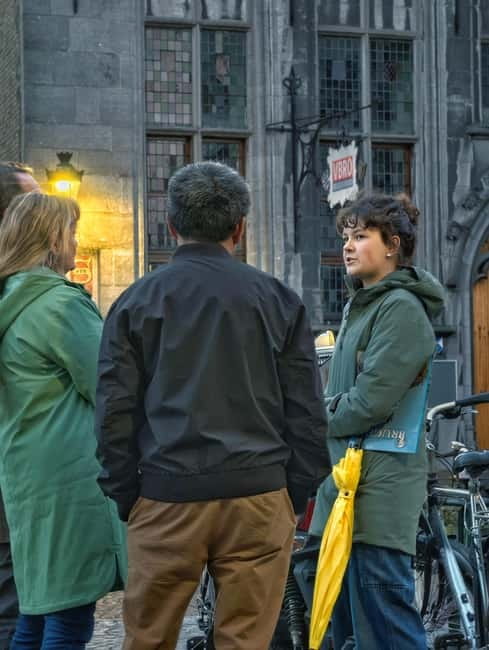
Two themed stops come up during the evening: Choco-Story and Frietmuseum. Think of these as moments where the guide connects culture to geography. Bruges doesn’t just have famous foods—it has a way of turning those foods into identity.
In practice, you’ll likely get guided viewing and explanation around these stops. You’ll come away knowing how to order smarter once you’re on your own, including the kind of chocolate and food pointers that make Bruges feel more personal.
If you’re traveling with kids (or teens), this is often where interest stays high. The tour aims to keep history readable for different ages, and food stops give the brain a break while still staying inside the story framework.
And if you’re visiting Bruges solo, these stops are also a friendly kind of shared topic. You can ask questions without feeling like you’re interrupting a silent history class.
Huis Ter Beurze: the trading-era building that clicks
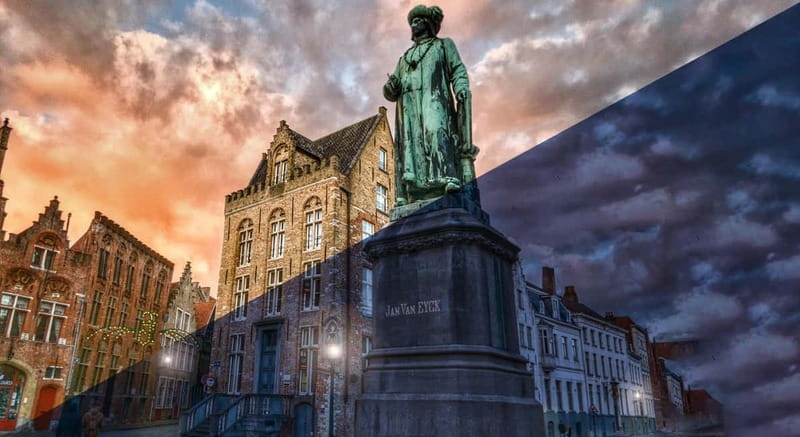
You’ll pass by Huis Ter Beurze, a name that shows up for a reason. This is the kind of building where architecture becomes proof of a larger story: commerce, public life, wealth, and civic pride.
What I like about having a guide connect this stop to earlier trading context is that it makes the night feel coherent. Instead of “square A, then street B,” it becomes “Bruges rose for a reason, and you can see it in the stone.”
This is where many people feel the tour flips from interesting trivia to a better mental picture of the city.
Canal-side streets and the bridges: Potterierei, Augustijnenrei, Augustijnenbrug
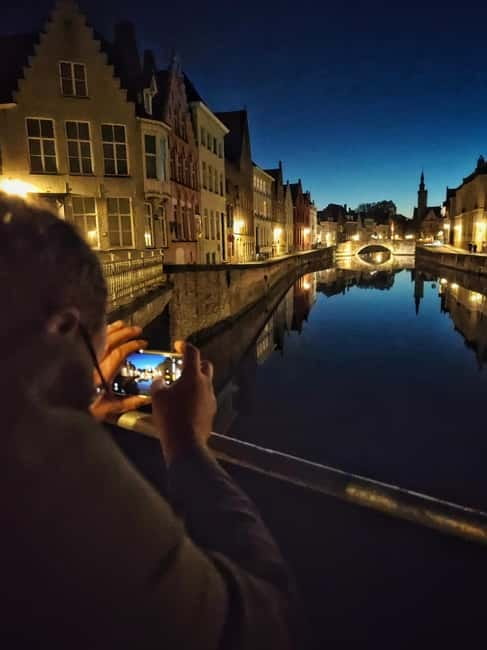
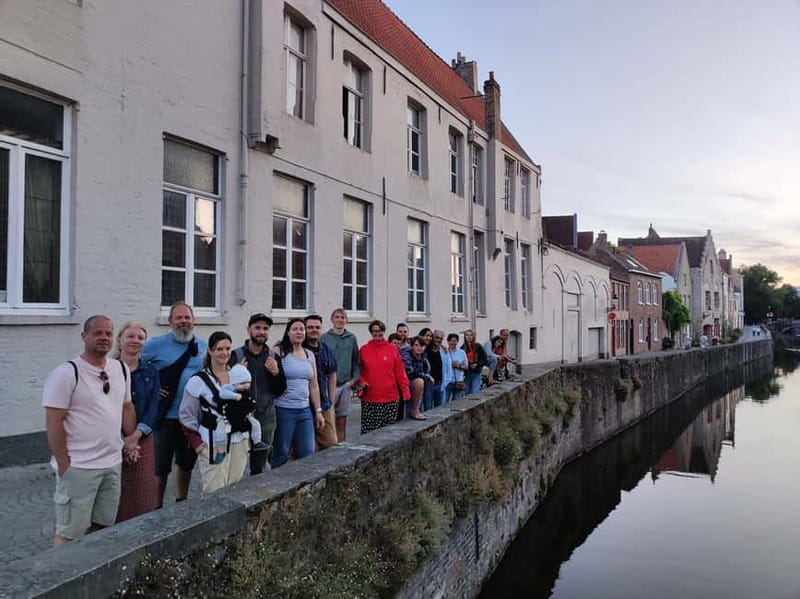
The tour spends time along canal-side areas such as Potterierei and Augustijnenrei, then crosses at Augustine Bridge (Augustijnenbrug). This is a strong stretch because canals at night create instant mood.
You get views that feel cinematic, but the guide still keeps them grounded. Expect stories that connect the water to the city’s everyday life—how locals lived with canals, used them, and built folklore around what they saw and depended on.
Bridges are also perfect for ghost-y moments. Not because the tour tries to shock you, but because legends love locations with mystery built in. So even if you’re not a big horror person, you’ll probably enjoy how the guide uses eerie bits as metaphor and entertainment.
Gouden-Handrei and Cafe Vlissinghe: legends and hangout history
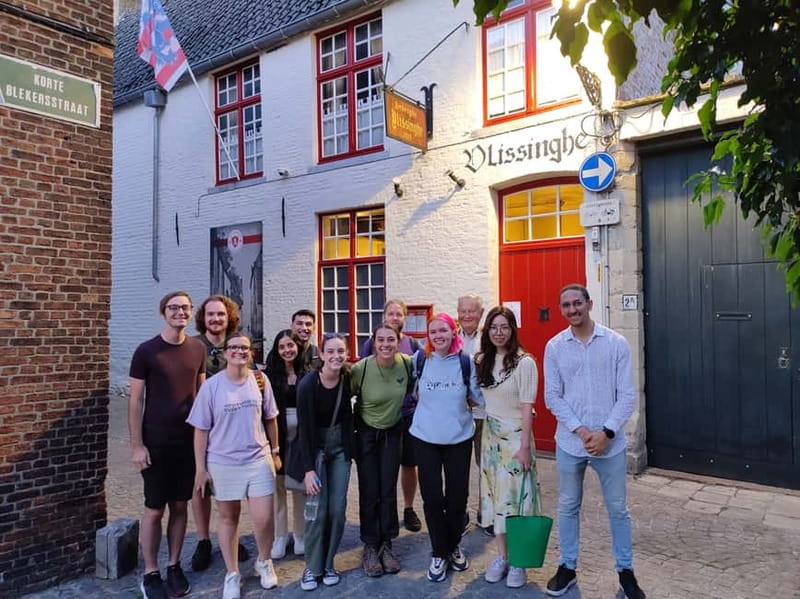
Next are spots like Gouden-Handrei and Cafe Vlissinghe. These stops work as story anchors: not every stop needs to be a museum or a big monument. Some of the best Bruges moments happen at the edge of a quay or in the corner of a historic pub.
In this tour style, you’ll hear how legends get told around places where people gathered. One guide-led theme that comes through is that Bruges has long had a “hangout” culture tied to real history, not just today’s vibe.
This is also where the tour can feel socially generous. A guide who’s comfortable answering questions can help you leave with a short list of what to do next—especially if you want to eat, drink, and explore with less aimless wandering.
Spiegelrei and Jan Van Eyck Square: finishing with a wider view
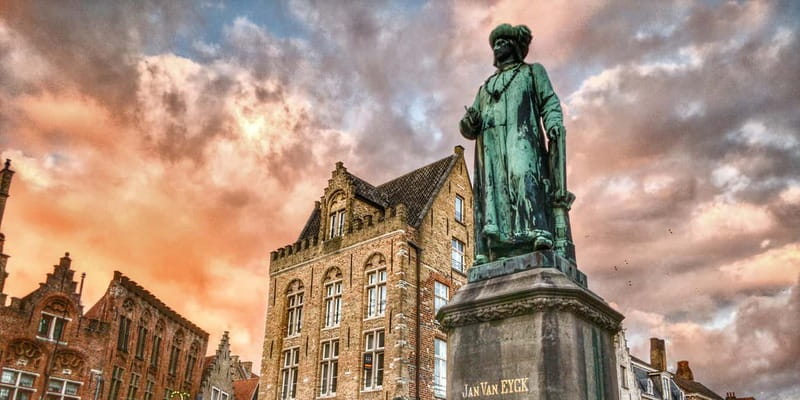
As you approach the end, you pass places like Spiegelrei and reach Jan Van Eyck Square. The last part is where the tour’s message clicks: you’ve walked enough that the city stops being a set of isolated postcard frames.
Even a short extra guided segment (listed as about five minutes) can help you land the ending in the right place—like the guide is giving you a final mental map for where to go next.
If you’re the type who likes to keep exploring after a tour, this ending matters. You want to finish feeling oriented, not just entertained.
Pace, group vibe, and hearing the guide in real life
This is a 2-hour walking tour. That length is the sweet spot for Bruges at night: long enough to move past the obvious routes, short enough that you still have energy to explore on your own afterward.
People also mention the walk isn’t overly far. That matters in winter. Bruges cobblestones are charming and also stubborn, and a tour that respects your legs feels like good planning.
Group size is described as small-group, and that usually means you’re not fighting for visibility. Still, crowded squares can be tough, and a few people noted hearing issues when the space is busy. If you’re sensitive to noise, arrive early and stand where you can clearly face the guide.
Also, bring a real coat. Even when the stories are warm, the route is outside.
Price and value: is $51 for two hours fair?
$51 per person sounds specific for a walking tour, so here’s how I’d judge value.
You’re paying for a local English-speaking storyteller plus a tightly managed route designed for night-time Bruges, not daytime sightseeing. That includes multiple guided stops tied to big themes: trading-era Bruges, food culture, architecture details, canal views, and folklore that ties it together.
What makes it feel worth it is the guide style repeatedly highlighted in recent experiences: engaging delivery, humor, and a pace that keeps you paying attention. If you’ve ever taken a city tour that felt like a script of dates, this one is built to avoid that trap by treating history like a story you can follow.
If you want to save money, you could do self-guided Bruges at night for free. But you’d lose the “why this detail matters” connections, plus the chances to ask questions and get targeted recommendations.
At $51 for two hours, I’d call it a fair bet if you’re there to learn and enjoy the city at a slower, more human speed.
Who should book this Bruges night walk
This tour fits well if you:
- Want Bruges after dark, when the city feels quieter and more personal
- Like history that’s told with stories, not just facts
- Enjoy architecture details and street-level views
- Travel with kids or teens who get bored with straight lectures
- Prefer a small-group experience over a large bus-style crowd
It may be less ideal if you:
- Want an intense horror-centered experience with lots of scares
- Prefer private tours for total control over pace and listening position
- Plan to cover Bruges at a sprint tempo with no time to settle into stories
Should you book Bruges: Nightly Tales and Untold History?
Book it if you want Bruges to feel like a living place, not a checklist. The guide-led blend of architecture, folklore, and night atmosphere is exactly the kind of experience that turns a familiar city into a memorable one.
Skip it only if ghost content is your top priority, because the supernatural is part of a broader history-and-myth route. Otherwise, this is the sort of tour that helps you get your bearings fast, then gives you enough local context to keep exploring after the walk ends.
FAQ
How long is the Bruges Nightly Tales and Untold History Walking Tour?
The tour lasts about 2 hours.
Where do I meet the tour guide?
Meet in front of the Belfry Tower on the Market Square of Bruges. Look for a yellow umbrella with Ambassadors on it.
Is the tour in English?
Yes, the live tour guide speaks English.
Is this tour wheelchair accessible?
Yes, it is listed as wheelchair accessible.
How much does the tour cost?
The price is $51 per person.
Is it a small-group tour?
Yes, it’s described as a small-group story-led walking tour.
Does the tour include ghost stories?
Yes, there are ghosts in Bruges, but it’s not described as a ghost tour only.
What kind of stops are included during the walk?
The route includes stops such as a Bruges Beer Experience and Choco-Story, plus sightseeing at Frietmuseum and a stop at Cafe Vlissinghe.
What’s the walking time like?
It’s a 2-hour evening walking tour, so you’ll want to be comfortable on foot for that length.
What are my options if plans change?
Free cancellation is available up to 24 hours in advance for a full refund, and there’s also a reserve now & pay later option.